Low Humidity on Bunny Ear Cactus: When Dry Air Matters
Quick answer
Bunny ear cactus (Opuntia microdasys) prefers dry, low-humidity air and rarely needs a humidifier. Slightly wrinkled pads, dull skin, or tan edges usually trace to underwatering, heating-vent placement, or spider mites in hot dry windows—not room humidity alone. First step: place a hygrometer near the pot for two to three days; if readings sit in the 25–50% range, weigh the pot and probe the mix before misting or humidifying.
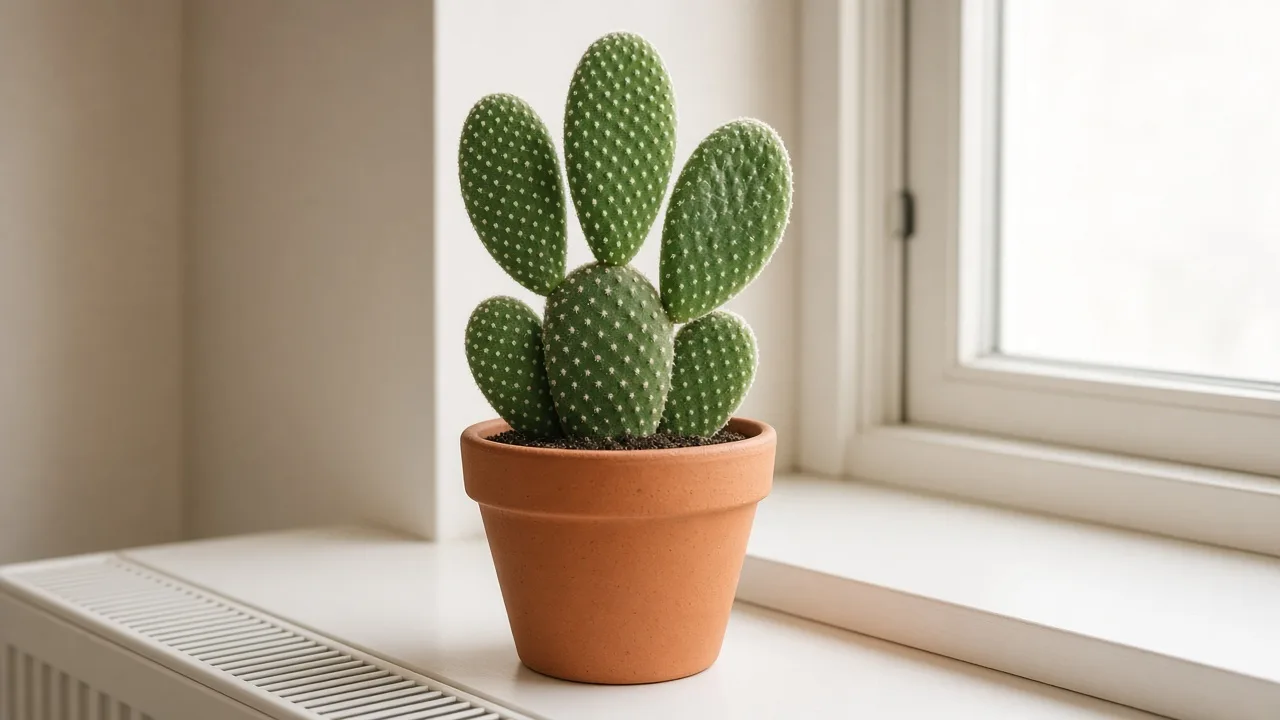
Low Humidity on Bunny Ear Cactus: Causes, Checks & Fixes
This guide covers low humidity on Bunny Ear Cactus. See also the general Low Humidity guide, watering, and light pages for this plant.
Low Humidity on Bunny Ear Cactus: Causes, Checks & Fixes
Quick answer
Bunny ear cactus (Opuntia microdasys) is a pad-forming desert cactus from northern Mexico built for full sun, gritty mix, and long dry intervals. NC State Extension notes it prefers dry and low-humidity conditions—the opposite of tropical foliage plants that chase steam and mist.
For how dry winter air crisp leaf edges on houseplants in general, see our low humidity hub. On bunny ear cactus, “low humidity” is usually a misdiagnosis—pad wrinkling, dull skin, or tan margins more often trace to underwatering, harsh glass beside a heat vent, or spider mites in hot dry micro-climates.
First step: place a hygrometer near the pot for two to three days. If readings sit in the 25–50% range most heated homes already provide, weigh the pot and push a dry skewer through the mix before buying a humidifier or misting the pads.
When to use this page vs other Bunny Ear Cactus guides
- Underwatering — use when pads wrinkle, feel thin, and the pot feels very light
- Brown tips — use when dry tan patches appear along pad edges or areoles
- Wilting or drooping leaves — use when whole pad segments soften or droop, not just slight surface dullness
- Sunburn scorched leaves — use when bleached or russet patches follow a bright window upgrade
- Spider mites — use when dry air coincides with stippling and fine webbing between glochids
- Overwatering or root rot — use when pads yellow and soften on damp mix, not when they look matte and firm
- Watering guide — use for soak-and-dry rhythm before assuming humidity is the issue
- Light guide — use when new pads lean or stretch in dim rooms mistaken for dry air stress
What low humidity looks like on Bunny Ear Cactus
Bunny ear cactus has no leaves—dry-air stress shows on paired oval pads and glochid-covered areoles, not crispy fern tips.
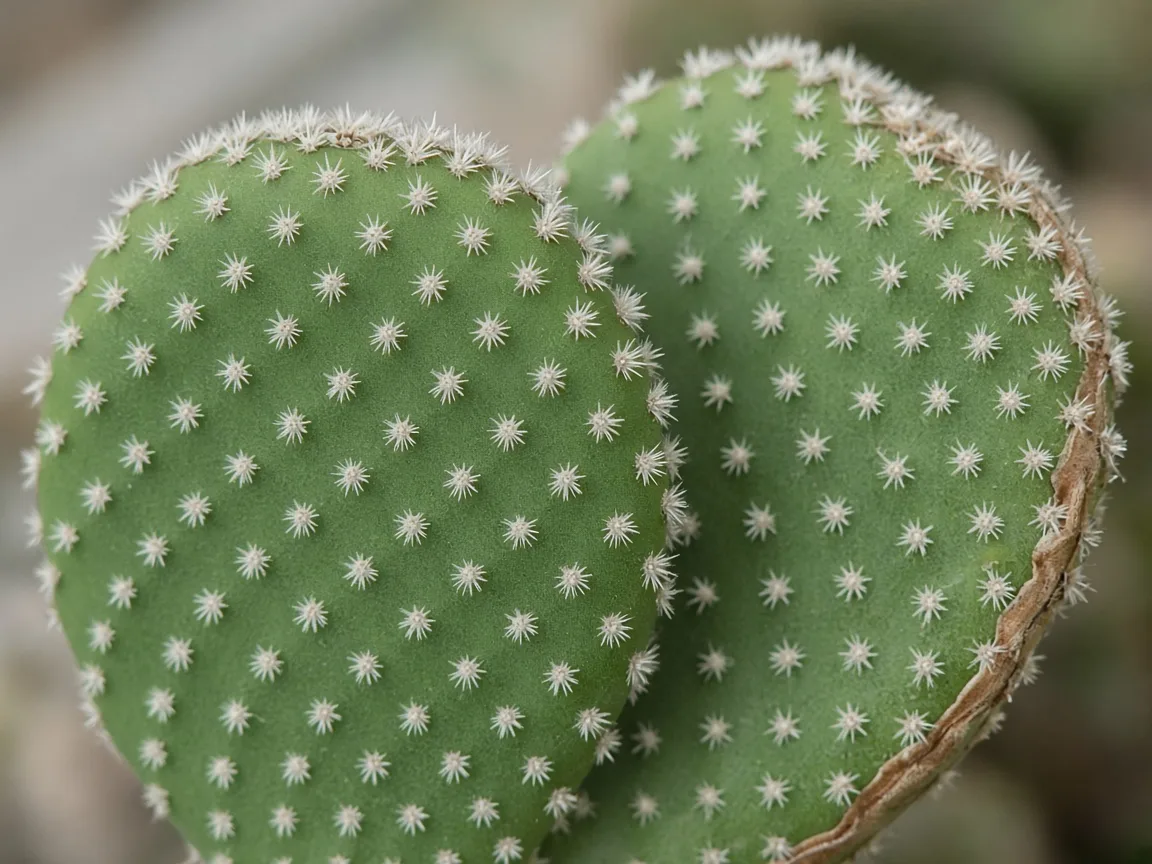
Low humidity on bunny ear cactus—slight pad wrinkling and dull skin on firm Opuntia microdasys pads; keep glochids dry, not misted.
Typical signs when dry air is actually involved:
- Slight pad wrinkling or thinning while the pad body stays firm—not mushy
- Dull, less glossy skin on the pad facing a heating vent, fireplace, or hot south glass
- Dry tan lines along pad margins localized to one side of the plant
- Slow change over weeks—not overnight pad collapse
- Fine stippling or webbing between areoles in the same hot window — mite overlap, not humidity tolerance limits
Usually not low humidity:
- Soft yellowing pads on heavy wet mix — overwatering
- Large bleached patches after a sudden move to stronger sun — sunburn
- New pads stretching toward a dim window — not enough light
- White cotton in areoles — mealybugs
Pad wrinkling vs drought: a pattern only Opuntia pads show
This distinction is mandatory for bunny ear cactus and wrong for most leafy houseplants.
Opuntia microdasys stores water in flattened, segmented pads that emerge in pairs at stem tips, giving the “bunny ears” look. When roots cannot replace moisture fast enough, the plant pulls water from pad tissue and pads look slightly shrunken—a drought signal, not proof your room lacks humidity.
| What you see | More likely cause |
|---|---|
| Subtle pad pinch + very light pot + bone-dry skewer | Drought — see underwatering |
| Tan pad edges only on the sun/heat side | Localized dry air beside a vent |
| Stippling + webbing between glochids | Spider mites in hot dry conditions |
| Soft yellow pads spreading from the base on wet mix | Wet roots — see overwatering |
NC State lists bunny ear cactus as drought tolerant with occasionally dry soil needs. Judge health by firm pads and slow new paired growth, not by whether pads stay perfectly plump year-round.
Why misting glochids is the wrong “humidity fix”
Bunny ear cactus pads are covered in barbed glochids—tiny bristles that detach at a touch. That morphology makes misting a risky default when owners think dry air is the problem.
Surface moisture without root drinks. Penn State Extension notes misting only raises humidity until water evaporates—often minutes—while pads stay physiologically dry if the mix is still drought-stressed.
Rot risk at the pad base. NC State recommends letting soil completely dry between waterings in fast-draining cactus mix. Misting pads and the soil surface keeps the crown damp longer in peat-heavy store mixes—the same conditions that lead to root rot on Opuntia.
No substitute for the watering guide. The bunny ear cactus watering guide already says not to mist. If pads wrinkle, fix deep dry-down and soak rhythm before any humidity gadget.
Why bunny ear cactus rarely struggles with low humidity
Native desert adaptation. Bunny ear cactus grows in desert plant habitats with full sun and good drainage. Thick pads minimize water loss between infrequent deep drinks—the same architecture that makes it drought tolerant indoors.
Prefers dry air over steamy rooms. Extension guidance is explicit: this plant prefers dry and low-humidity conditions. Running a humidifier beside the pot or parking it in a bathroom fights its biology and can slow soil drying in a small root zone.
Heated homes are usually still adequate. Penn State Extension notes ASHRAE recommends 30–60% indoor relative humidity for human comfort, with some cacti and succulents among the exceptions that tolerate drier air. RHS guidance adds that most indoor cacti cope well with the dry air in centrally heated homes. Bunny ear cactus falls in that tolerant group.
Spider mites, not humidity limits. Colorado State Extension reports dry weather greatly favors spider mites, and the twospotted spider mite is the most important mite species on houseplants. Bright south or west windows beside heating vents create exactly that hot, dry micro-habitat—damage can look like “low humidity” when the real issue is pests or drought.
Winter rest blurs the picture. RHS notes most indoor cacti need a cooler, drier winter rest with minimal watering. Slightly dull pads during a long dry winter pause are normal—check the watering guide and dormancy rhythm before humidifying.
The pot-weight check (firm pads, not leaf turgor)
On ferns you watch frond tips. On bunny ear cactus you watch pad firmness and pot weight.
- Lift the terracotta pot. A very light pot after weeks without water matches pad wrinkling better than low room humidity.
- Push a dry skewer to the bottom. Bone-dry mix throughout means underwatering, not a humidity crisis—see soil and drainage expectations.
- Press a mid-pad gently with tongs or folded paper (never bare skin—glochids embed). Firm green tissue with slight surface wrinkle = drought stress. Soft mushy tissue = wet roots.
- Read the hygrometer at pad height. Below roughly 20% for weeks beside a heat vent can matte pad skin; 25–50% is normal for Opuntia microdasys.
How to confirm the cause
Work in this order so you do not humidify a drought-stressed or mite-infested plant:
- Hygrometer log — three days at plant height; note spikes when heat runs
- Placement — distance from vents, radiators, and single-pane glass
- Pot weight + skewer — full dry-down vs chronic wet mix
- Pad pattern — one-sided tan edges (local dry air) vs all pads wrinkled with light pot (drought)
- Areole inspection — magnifying glass for stippling/webbing between glochids on the hottest face
- Light cross-check — leggy new pads in dim rooms mimic “slow growth from dry air”; see light guide
Confirmed low humidity as the primary stress is rare on bunny ear cactus and usually means extremely dry air (often below ~20%) plus a heat source hitting one pad face—not whole-home winter dryness alone.
The first fix to try
Move the pot out of the hot micro-climate before changing humidity.
Pull bunny ear cactus back from radiator ledges, heat registers, and single-pane glass that cooks one pad side. Give it full bright light without the blast—see the light guide for south/west window placement.
Only after relocation:
- If the pot is light and skewer-dry, run one deep soak and drain the saucer, then return to the watering guide dry-down schedule—not misting.
- If stippling or webbing appears on the same hot face, treat as spider mites rather than raising room humidity.
- If humidity readings are already 30–50%, do not add a humidifier; fix water and placement first.
Recovery timeline and what improves
Damaged pad tissue does not plump back once tan or thin. Recovery means:
- Wrinkling stops spreading to new pads
- New paired pads at tips emerge firm and evenly colored
- Pot weight and skewer tests settle into a predictable dry-soak rhythm
- Any mite stippling does not advance after isolation and treatment
Because bunny ear cactus is slow growing, expect meaningful change over one to two watering cycles (often several weeks indoors), not within days.
Mistakes to avoid
- Misting glochids to “raise humidity”—short-lived effect, rot risk, and embedded bristles
- Humidifier beside a cactus pot when readings are already in normal range
- Watering on calendar because pads look dull—confirm dry mix first
- Repotting and watering the same day while pads are stressed
- Fertilizing dull pads before fixing drought, light, or pests
- Handling pads with bare hands during inspection—use tongs or thick folded paper
How to prevent dry-air and lookalike stress
- Grow in mineral cactus mix with excellent drainage—see the soil guide
- Use unglazed clay so the small root zone dries evenly after soaks
- Keep bright direct light without baking one pad face against hot glass
- Rotate the pot occasionally so paired pads do not lean into a heat zone
- Inspect areoles each winter on window plants for mites
- Accept normal winter dullness during rest with minimal water—do not humidify through dormancy
When to worry
Escalate the same week if:
- Pads soften and yellow from the base upward on damp mix
- Black tissue spreads at the soil line
- Wrinkling accelerates after a proper soak and vent relocation
- Mite webbing covers multiple pad faces
Those patterns point to root rot, severe overwatering, or advanced spider mites—not humidity you can fix with a pebble tray. Penn State Extension notes pebble trays barely change room humidity anyway.
Related Bunny Ear Cactus guides
- Bunny ear cactus overview
- Bunny ear cactus problems hub
- Bunny ear cactus watering
- Bunny ear cactus light
- Bunny ear cactus soil
- Slow growth on bunny ear cactus
Related tool
Use the Humidity Calculator to narrow causes for low humidity on this plant before changing multiple variables at once.