Drooping Leaves on Calathea Zebrina: Causes, Checks & Fixes
Quick answer
Drooping leaves on Calathea Zebrina usually mean roots cannot support its large striped blades—too dry, too wet, or air below what this humidity benchmark needs. First step—probe the top 2 cm of mix and lift the pot before you soak, mist, or repot.
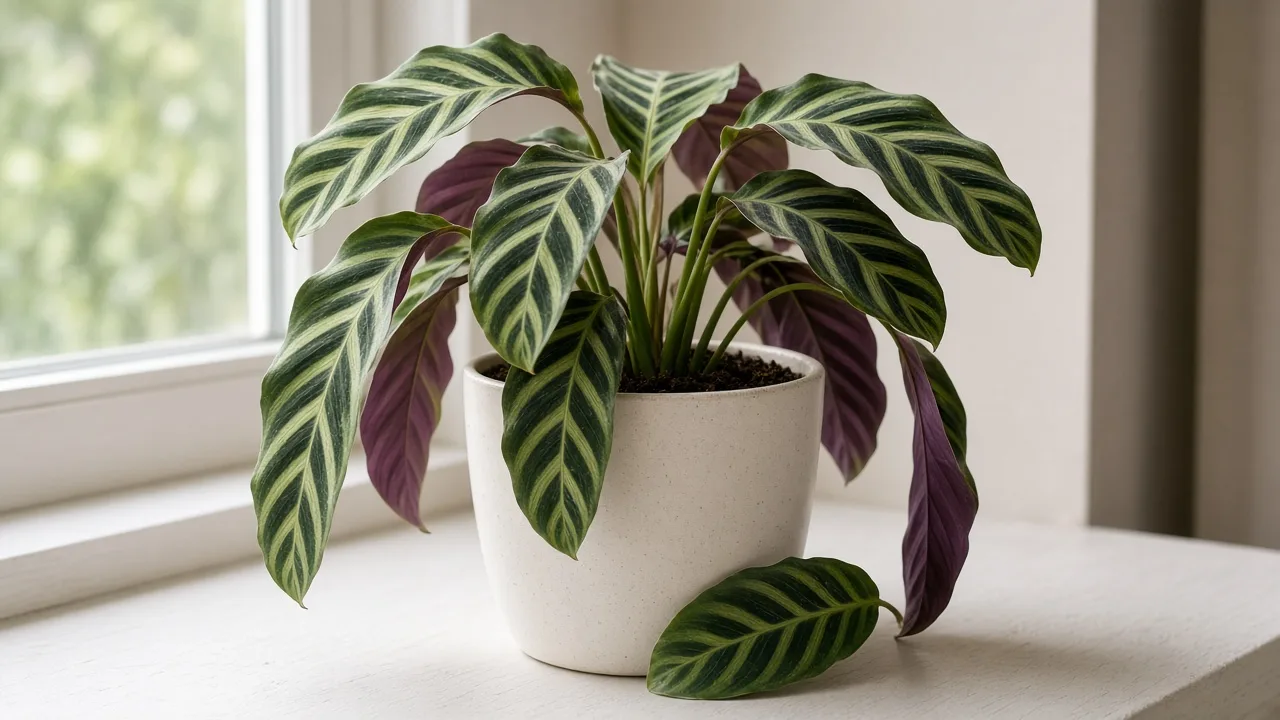
Drooping Leaves on Calathea Zebrina: Causes, Checks & Fixes
This guide covers drooping leaves on Calathea Zebrina. See also the general Drooping Leaves guide, watering, and light pages for this plant.
Drooping Leaves on Calathea Zebrina: Causes, Checks & Fixes
Quick answer
Calathea Zebrina (Goeppertia zebrina) droops when roots cannot keep its large velvety zebra-striped blades turgid—usually because the mix is too dry, too wet, or the room air is too dry for a humidity-loving Marantaceae houseplant.
First step: check the top 2 cm of soil and lift the pot before you water, mist, or repot. A light container with dry surface mix points toward thirst; a heavy pot that stays wet points toward impaired root uptake even though the big leaves look wilted. For how drooping works on houseplants in general, see the drooping leaves hub—on Zebrina, the pattern almost always ties back to moisture at the roots, humidity at the leaf surface, or both.
Full species context: Calathea Zebrina overview.
What drooping leaves look like on Calathea Zebrina
On this upright zebra plant, droop shows up as long oblong blades hanging from stiff-looking petioles instead of arching out from the clump. Dark green stripes on pale silvery-green bands may look washed out before a leaf fully collapses. Purple undersides stay visible, which helps you separate Zebrina from generic “sad houseplant” wilt.
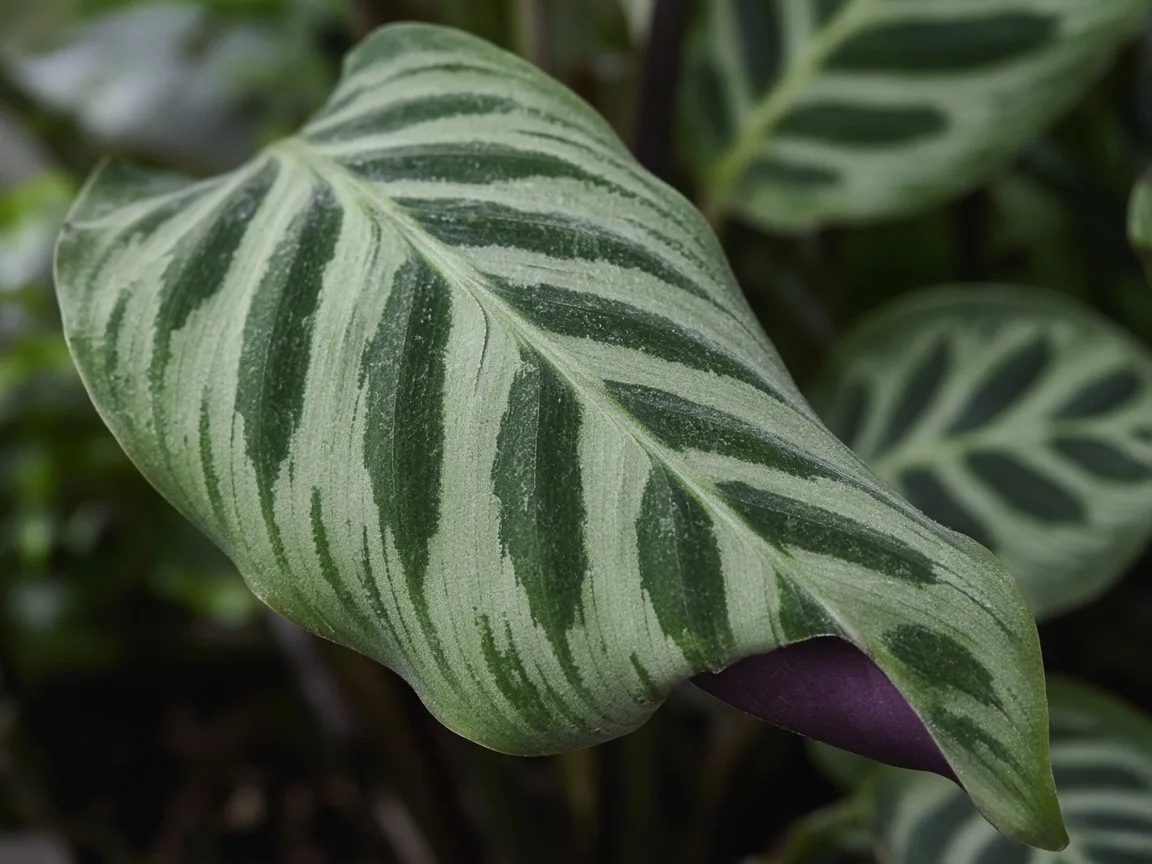
Drooping leaves on Calathea Zebrina—compare limp heavy blades with firm new spears on the same plant.
Typical patterns:
- Spear-first sag — Newest unfurling leaves go limp while older blades still hold shape; often thirst, low humidity, or hard tap water during unfurl.
- Whole-clump droop — Most large leaves hang at once after a missed watering week, a heat spike near a window, or chronic soggy mix.
- Lower-leaf yellow with hang — Bottom leaves soften and yellow while the crown stays wet; overlaps with overwatering on Calathea Zebrina and root rot.
- Daytime limp that is not night fold — True droop stays limp through bright hours; see the prayer-fold section below.
Night prayer fold vs true droop on Zebrina
Zebrina is a prayer plant: leaves move with the light cycle, standing more upright by day and folding slightly at night. That nyctinastic motion is normal and reversible on these large blades.
True droop differs:
| Signal | Normal night fold | Problem droop |
|---|---|---|
| Timing | More folded after dark; opens by morning | Limps through the day |
| Texture | Petioles feel firm | Petioles feel soft or rubbery |
| Bands | Zebra contrast stays crisp | Pale bands dull on several leaves |
| Soil | Matches your usual dry-down | Very dry or very wet vs your norm |
| New growth | Spears still push upright | New spears stall or brown while unfurling |
If the plant only changes posture with the clock, fix placement or humidity only when stripes fade—not because leaves touched the pot rim at midnight.
Heavy-blade droop vs compact calatheas
Zebrina’s large leaf area stores little water compared with its surface area, so one dry day can pull big blades down faster than on narrow-leaved prayer plants. The diagnostic fix is the same—confirm wet versus dry at the roots—but expect more dramatic visual sag and slower full recovery on the oldest, longest leaves. Judge the crown and newest spear, not whether every mature blade returns to a perfect arch.
Dry droop vs wet droop vs dry-air stress
| Signal | Dry droop (thirst) | Wet droop (root stress) | Low humidity |
|---|---|---|---|
| Pot weight | Light | Heavy days after watering | Normal |
| Top 2 cm | Dry | Wet or cool | May be evenly moist |
| Leaf color | Green, dull bands | Yellow lower leaves | Brown streaks on pale bands |
| Timeline | Hours after dry-down | Persists on wet mix | Gradual over dry weeks |
| First action | Soak with drainage | Stop water; inspect roots | Raise humidity; check water quality |
Excess water suffocates roots and produces the paradoxical picture—limp leaves on wet soil—that owners often try to fix with more water.
Why Calathea Zebrina gets drooping leaves
Zebrina is widely grown but still a high-maintenance, humidity-tolerant houseplant with thin leaf tissue and almost no drought reserve. Drooping usually traces to one of these Zebrina-specific triggers:
Underwatering and fast dry-down
Zebrina wants evenly moist mix during active growth—water when the top two inches feel dry on calatheas broadly, which on a typical Zebrina pot often maps to the top 2 cm beginning to dry every five to seven days in spring and summer. Bright east or filtered south light, large leaves transpiring heavily, and heating vents accelerate dry-down. Blades lose turgor before lower leaves yellow.
Overwatering and root failure
Soggy mix, closed cachepots, and winter watering at summer volume keep roots oxygen-starved. The plant cannot move water upward even though the soil feels damp—the same mechanism described for environmental overwatering. On Zebrina, watch for yellow bottom leaves, fungus gnats, and a heavy pot that never lightens.
Low humidity and transpiration loss
RHS notes calatheas risk wilting when humidity is low because leaves lose water faster than roots replace it. Zebrina is often used as a humidity benchmark: pale zebra bands lose crispness and big blades hang while soil still feels moderately moist. Winter heating and AC drafts are common culprits—see low humidity on Calathea Zebrina.
Water quality during unfurl
Calatheas are sensitive to minerals and chlorine in tap water; filtered, rainwater, or overnight tap reduces parallel brown streaks along pale bands and weak unfurls that droop and stall. A limp new spear with edge burn often points here more than simple thirst.
Light, heat, and repot shock
Too much direct sun bleaches bands and increases water loss on large blades; too little light weakens growth so the plant cannot recover from minor moisture swings—cross-check the light guide. Recent repotting or a cold draft can cause temporary limpness for several days if the rhizome was disturbed; persistent wilt on wet mix after repotting needs a root check per the repotting guide.
How to confirm the cause
Work through these checks in order:
- Pot weight — Light and easy to tilt usually means dry; heavy and cool means wet.
- Top 2 cm moisture — Dry crumbly mix confirms thirst. Wet clingy mix with limp leaves confirms uptake failure.
- Night-day posture — Rule out normal prayer folding before you soak.
- Stripe clarity and spear condition — Faded pale bands plus limp blades suggest dry air or bad water; yellow bases suggest wet roots.
- Drainage and saucer — Standing water rots calathea roots quickly; tip out cachepot runoff within 30 minutes.
- Stem base — Firm green crowns are reassuring; mushy stems at the soil line mean escalate to root rot inspection.
Match the pattern before you treat. Dry plus firm crowns get one thorough drink; wet plus soft leaves get a dry-down and root look—not another watering because big leaves look sad.
First fix for Calathea Zebrina
Decide wet versus dry, then do one thing.
- If the top 2 cm is dry and the pot feels light: Water until excess drains, empty the saucer, and recheck in a few hours. Use filtered or stood tap water if new spears brown along the pale bands.
- If the mix is wet and has stayed wet: Stop watering, move Zebrina to stable bright indirect light with airflow, and inspect roots within 24–48 hours if limp leaves persist or lower leaves yellow.
Do not fertilize, repot, and prune on the same day. Do not mist heavily as a substitute for root-zone correction—surface moisture does not fix soggy rhizomes under these large leaves.
Step-by-step recovery
Path A — Thirst (dry soil, firm crown)
- Water thoroughly until drainage runs free; empty the saucer.
- If water channels down dry sides without soaking the core, bottom-soak the nursery pot 20–30 minutes, then drain fully.
- Keep humidity toward 60% or higher—a humidifier beats repeated misting for Zebrina.
- Expect noticeable stiffening within 6–24 hours; full turgor on the longest old blades may take 48 hours.
Path B — Wet roots (soggy mix, yellow bases, sour smell)
- Gently unpot and rinse rhizomes with room-temperature water.
- Trim brown, mushy roots back to firm white or tan tissue.
- Repot into fresh moisture-retentive but draining mix in a pot with open holes—same size or only slightly larger.
- Water once lightly to settle, then let the top 2 cm dry before the next drink.
- Remove fully collapsed leaves that will not recover; they drain energy from regrowing roots.
Details: overwatering and underwatering sibling guides.
Path C — Dry air (moist soil, limp blades, crisp band loss)
- Raise humidity toward 60% or higher with a humidifier or pebble tray (pot above water, not sitting in it).
- Move off heating vents and drafty doors.
- Switch to filtered or overnight water if unfurls brown while limp.
Path D — Temporary shock (recent move or repot)
- Keep mix lightly and evenly moist—not wet—for one week.
- Avoid direct sun and cold drafts.
- If wilt worsens while soil stays wet, switch to Path B.
Recovery timeline
Simple thirst: Many Zebrinas perk within 6–24 hours after a correct soak. Judge by firm petioles and upright daytime posture, not perfect old blades.
Root stress: Stabilization often takes one to two weeks after wet cycles stop and decay is trimmed. Success means new spears opening with clean zebra contrast.
Humidity correction: Band crispness improves over one to three weeks once air stays steadier.
Worsening signs: Spreading yellow, crown softness, or limp leaves on wet mix for more than 48 hours means re-inspect roots rather than wait.
Lookalike symptoms
- Wilting on Calathea Zebrina — Faster whole-plant collapse; use when limp tissue appeared within hours and pot weight tells an urgent story.
- Yellow leaves — Often lower leaves on wet mix; droop may be secondary to root decline.
- Brown tips — Edge burn from dry air or minerals; blades may still feel firm while pale bands crisp.
- Not enough light — Weak pale growth and long petioles without acute limp hang; fix light after moisture is ruled out.
- Normal old-leaf fade — One bottom leaf yellows slowly while the crown stays firm; trim and adjust checks—no emergency soak.
Mistakes to avoid
Do not water because leaves look limp when the top 2 cm is already wet—that deepens root stress. Do not rely on misting alone in a dry heated room; Zebrina needs consistent humidity at the leaf surface on large blades.
Avoid cold tap on a stressed plant when unfurls are browning along pale bands; minerals and chlorine aggravate Marantaceae leaves. Skip fertilizer until watering is stable and new growth looks healthy.
Do not repot into a much larger pot after one dry spell—extra wet soil volume increases rot risk. Zebrina is non-toxic to pets, but inspect roots with clean hands or gloves if sap irritates your skin.
Calathea Zebrina care cross-check
Drooping often exposes a mismatch between Zebrina’s needs and your room:
- Water rhythm: Top 2 cm dry-down, slower in winter—see the watering guide.
- Humidity: Above roughly 60% when you can measure it; bathrooms work only if light is adequate.
- Light: Medium to bright indirect; harsh sun increases wilt speed on large leaves.
- Mix: Peat or coco with perlite—holds moisture without staying waterlogged per the soil guide.
How to prevent drooping leaves next time
Learn your pot’s dry-down rate instead of a calendar. Heft the pot every few days in summer; when the top 2 cm dries and weight drops, water thoroughly and empty runoff.
Keep humidity steady through winter heating. Use filtered or overnight water year-round if unfurls brown along pale bands. Size pots to the root ball, refresh compacted mix every two to three years, and never let Zebrina sit in saucer water. After buying or moving, quarantine and change one variable at a time so droop signals stay readable.
When to worry
Escalate same-day if the crown softens, mix smells sour, or multiple leaves yellow while soil stays wet. Slow droop after a dry week with a firm crown is lower urgency—soak and observe.
If advanced rot removes most roots, division from healthy rhizome sections may be the salvage path—see propagation while tissue is still firm.
Conclusion
Drooping leaves on Calathea Zebrina are a water-delivery or humidity problem, not a mysterious leaf disease. Confirm dry versus wet at the top 2 cm, rule out normal night folding, then either rehydrate with drainage or dry down and inspect rhizomes. Thirsty Zebrina recovers quickly when caught early; wet-root droop needs patience judged by clean new spears, not by saving every limp blade.
Practical checks
Urgency check
Treat as urgent if stems soften, damage spreads across the clump within 48 hours, or limp foliage persists on constantly wet mix. A single dry spell with firm crowns and quick perk after soak is lower urgency.
Best inspection order
Pot weight → top 2 cm moisture → day vs night posture → stripe clarity and spears → saucer water → stem base firmness → leaf undersides if stippling suggests spider mites.
Severity note
Use spreading yellowing, crown softness, and failure to perk after a correct soak—not one slightly folded leaf at bedtime—to decide how fast to unpot.
When to use this page vs other Calathea Zebrina guides
- Calathea Zebrina watering guide — Routine top-2-cm checks before assuming droop is the main issue.
- Wilting — Acute collapse within hours.
- Low humidity — Gradual limp with crisp band loss on moist soil.
- Calathea Zebrina problems hub — Browse all common issues on this species.