Underwatering on Calathea Zebrina: Dry Soil, Curl & Recovery
Quick answer
Underwatering on Calathea Zebrina shows as a light pot, dry mix 1 inch down, inward-curling velvety zebra leaves, and stalled new spears—not limp stems on heavy wet soil. First step: bottom-water with room-temperature filtered or rainwater until the top inch feels evenly moist, then drain fully.
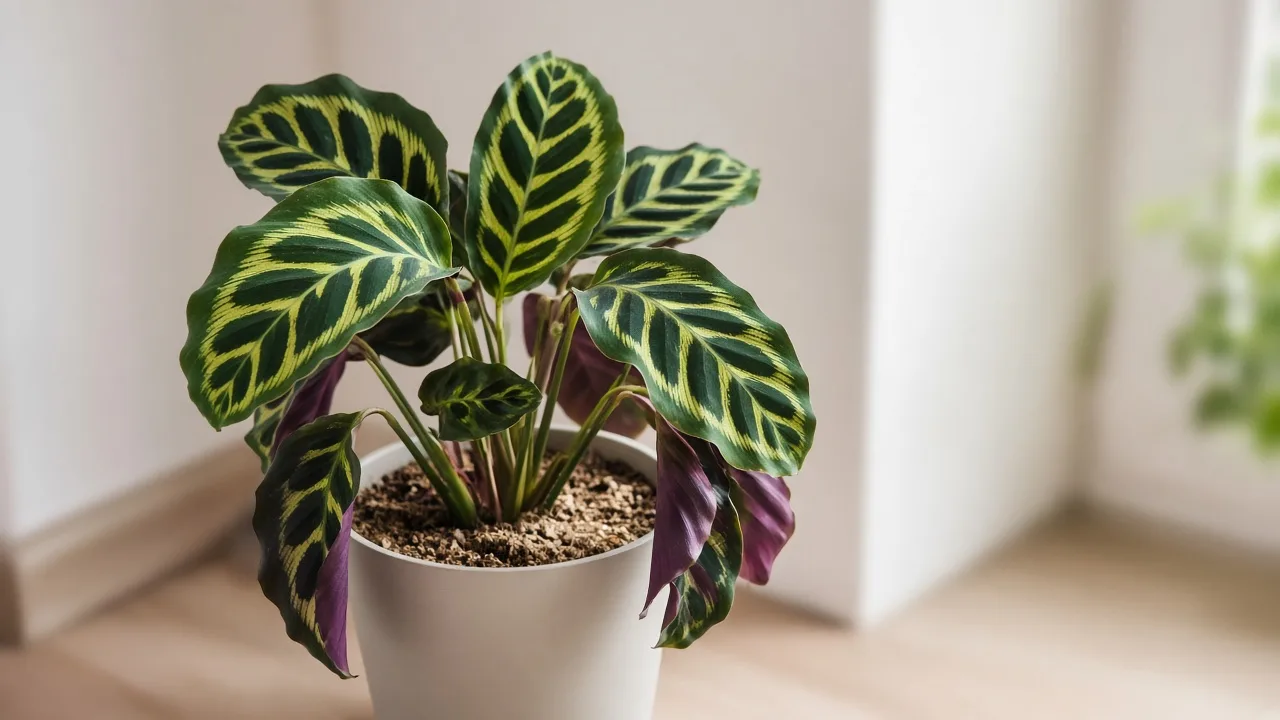
Underwatering on Calathea Zebrina: Causes, Checks & Fixes
This guide covers underwatering on Calathea Zebrina. See also the general Underwatering guide, watering, and light pages for this plant.
Underwatering on Calathea Zebrina: Causes, Checks & Fixes
Quick answer
Underwatering on Calathea Zebrina (Goeppertia zebrina) is a timing and volume problem in a large-leaved, humidity-loving prayer plant—not a mystery disease. Zebra plant’s velvety oblong blades with chartreuse zebra striping lose turgor fast when the root ball stays dry too long, especially in a warm room with air above 60% transpiration demand.
For how chronic dryness damages roots and leaves in general, see our underwatering guide. On Zebrina, the pattern is a light pot, dusty dry mix 1 inch down, leaves curled inward along their length (not just folded for night prayer), and new spears stuck half-unfurled—not yellow lower leaves on heavy sour wet soil.
First step: bottom-water with room-temperature filtered or rainwater until the top 1 inch of mix feels evenly moist, then let the pot drain completely. One thorough rehydration tells you whether roots can still take up water before you change light, humidity, or pot size.
When to use this page vs other Calathea Zebrina guides
- Drooping leaves — limp foliage from several causes; start here when the pot is light and mix is dry at depth
- Wilting — rapid whole-plant collapse after heat, chill, or root failure
- Overwatering — heavy pot, dark constantly damp soil, fungus gnats, soft stems
- Root rot — mushy roots after wet stagnant mix
- Brown tips — edge burn when watering rhythm is already adequate (often water quality or dry air)
- Low humidity — crispy margins with otherwise moist mix
- Watering guide — long-term top-1-inch rhythm after thirst is corrected
- Overview and problems hub — cluster navigation when symptoms overlap
What underwatering looks like on Calathea Zebrina
Zebrina’s compact upright clump with reddish-purple leaf undersides and large velvety blades striped light green on dark green makes thirst easy to spot once you know what is normal prayer-plant movement.
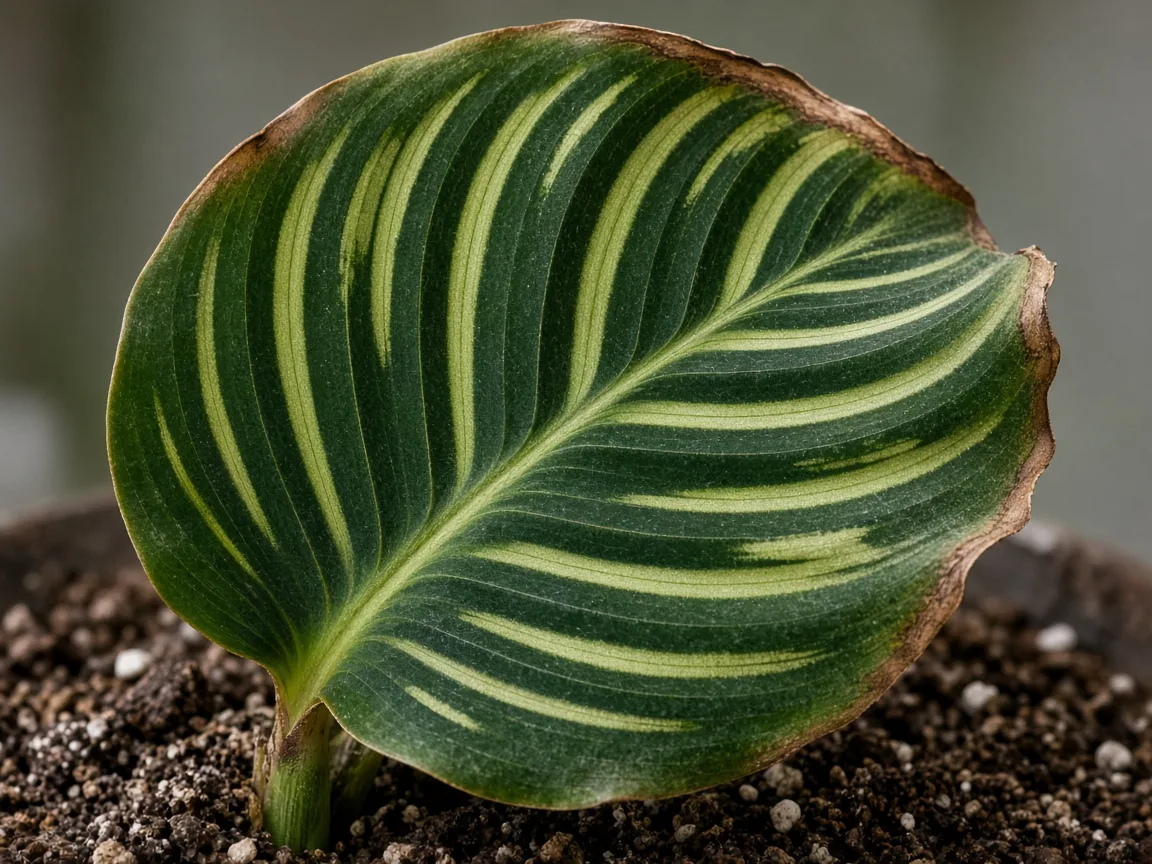
Stress curl on Zebrina—a broad velvety leaf rolled lengthwise with lost turgor and dry peat at the base; compare with healthy flat blades after a thorough soak.
Early thirst shows subtly dull stripes, stems hanging lower than usual during the day, and mix that looks pale or dusty in the top inch while the pot feels lighter than after your last full drink. New tip growth may pause without obvious pest damage.
Established drought brings inward lengthwise curl on multiple large leaves—the plant is reducing exposed surface to slow water loss. NC State notes that leaf curling results from inadequate water or low humidity. Dry peat may shrink and pull away from the pot wall. Soil at the drainage hole feels as dry as the surface.
Advanced dry-down includes widespread limp blades, brown crispy margins on older leaves (sometimes parallel to the pale bands), and new zebra spears stuck half-unfurled because the plant lacks moisture to expand them. Water poured from above may run down the sides and out the bottom while the core stays dry (hydrophobic peat).
What underwatering is not: sour-smelling wet mix, yellow lower leaves on a heavy pot, fungus gnats over constantly damp soil (overwatering), or stippling with fine webbing (spider mites).
Daytime droop vs nyctinastic prayer fold (Zebrina-specific)
Zebrina is a Marantaceae prayer plant: leaves fold upward at night and reopen by morning in response to light and temperature—normal nyctinasty, not a diagnosis by itself.
The underwatering tell is daytime behavior on dry mix:
- Normal: Large leaves may hang at a lower angle in bright afternoon light but feel firm; soil at 1 inch is still slightly cool or just beginning to dry.
- Thirst: Leaves stay tightly curled lengthwise through the morning, feel thin, and the pot is light with dusty dry soil 1 inch down.
If leaves firm up overnight but collapse again every afternoon on moist mix, suspect heat near glass or a heating vent before you soak again—cross-check the light guide.
Why Calathea Zebrina gets underwatered
Zebrina evolved as an understory rhizomatous perennial in Brazilian tropical rainforests. The RHS Calathea growing guide recommends keeping compost evenly moist during the growing season and, in autumn and winter, letting only the surface dry before rewetting while never letting compost dry out completely. NC State describes moist, well-drained peat-based mix—drought is not part of the indoor script.
Fear of overwatering is the top indoor trigger. Calatheas have a rot reputation, so owners skip drinks until dramatic leaves collapse. Severe underwatering also kills fine roots; the plant may then wilt even after you water—symptoms blur with rot unless you check soil weight first.
Zebrina-specific accelerators:
- Large leaf surface area — Blades up to 18 inches long transpire heavily; a bright warm room can pass the top-1-inch dry test every 4–6 days in summer while a winter calendar schedule leaves the plant chronically dry.
- Peat-heavy mix gone hydrophobic — Dry coir or peat repels water; surface sprinkling does not rewet the rhizome zone.
- Low humidity without soil backup — NC State lists humidity above 60% and notes curl from inadequate water or low humidity. Zebrina is a humidity benchmark species; dry air shortens the interval between drinks even when you mist leaves.
- Waiting for filtered water — Delaying a soak while mix goes bone dry still counts as underwatering; use overnight-stood tap in a pinch per the watering guide.
How to confirm the cause
Work through this sequence on one visit:
- Soil at 1 inch depth — Dusty dry throughout confirms drought. Cool, damp soil at depth means do not add more water yet.
- Pot weight — A light pot with curled leaves strongly suggests underwatering; a heavy pot with wilt points to saturated roots.
- Leaf pattern — Lengthwise curl with dry soil fits thirst. Crispy parallel streaks on moist mix may be low humidity or tap-water fluoride (brown tips).
- Recent watering history — When did you last give a full drink? Did water run through in seconds without darkening the surface?
- Drainage-hole probe — Dry at the bottom as well as the top confirms the whole root ball dried, not just the surface crust.
- Environment — Heating vents, fan blast, or hot glass accelerate drying on Zebrina’s broad leaves.
| Signal | Underwatering (this page) | Overwatering / rot |
|---|---|---|
| Pot weight | Light | Heavy, wet days |
| Top 1 inch mix | Dry, pale, may pull from sides | Dark, cold, waterlogged |
| Leaf curl | Inward lengthwise on dry mix | Curl/wilt on wet mix |
| Smell | Dry or neutral | Sour, anaerobic |
| After proper soak | Perks within hours if roots live | Stays limp, more yellow |
If mix is dry and the pot is light, treat underwatering as confirmed and proceed to the first fix.
First fix for Calathea Zebrina
Bottom-water the pot in filtered or rainwater until the top 1 inch feels evenly moist, then drain fully.
Set the container in a basin filled with water to roughly halfway up the pot. Bottom-water in a tray for 20–45 minutes—longer if mix was completely dry—until the surface darkens and feels soft. Remove the pot, let excess run out at least 15 minutes, and empty any cachepot.
Do not fertilize, repot, mist heavily, or prune zebra blades on day one. One proper rehydration is the diagnostic test: Zebrina often lifts noticeably within hours when thirst was the only problem.
Step-by-step recovery
After the first bottom soak:
- Stable placement — Bright indirect light per the light guide; keep 65–75°F (18–24°C) and away from cold drafts (NC State Zebrina culture).
- Raise humidity — Humidifier or pebble tray; dry air re-crisp edges even after soil is wet.
- Resume Zebrina rhythm — Water when the top 1 inch begins to dry in growth season; stretch toward 7–14 days in cooler months per the watering guide.
- Fix hydrophobic mix — Repeat bottom soaking until uptake is even; refresh overly old peat at the next planned repotting.
- Trim only dead tissue — Snip fully brown crispy sections once leaves firm up.
- Hold fertilizer — Wait until new spears unfurl cleanly for two to three weeks before feeding at half strength.
If leaves perk after one soak but wilt again within two days on moist soil, roots may have died back during the dry spell—inspect before the next heavy drink.
Recovery timeline
Hours to one day: Wilted leaves may perk within hours after a thorough bottom soak when roots are healthy.
One to three weeks: New large spears should roll up from the crown with firm velvety edges. Judge recovery by turgid new growth, not old brown margins.
Worsening signs: Continued collapse despite moist soil, blackening stems at the soil line, or sour smell—stop soaking and inspect for root rot.
Mistakes to avoid
- Misting instead of rewetting the root ball when the pot is light and mix is dusty.
- Drenching daily after one dry period—that swings care toward overwatering.
- Fertilizing drought-stressed Zebrina before moisture is stable.
- Repotting the same day unless mix cannot be rewet; add shock on top of thirst.
- Assuming every curl needs water when the pot still feels heavy—check soil first.
How to prevent underwatering next time
Match watering to how fast your Zebrina pot dries. During active growth, check every few days and water when the top 1 inch begins to dry—typically every 5–7 days in warm bright rooms, less often in winter. Use distilled or rain water when you can, and empty saucers after every drink.
Learn the pot’s weight after a soak so you notice a light container before spears crisp. Pair checks with humidity above 60% when possible (NC State humidity guidance). Review yellow leaves only after you rule out simple thirst on a light pot.
Related Calathea Zebrina guides
Use drooping leaves when limp foliage could be wet or dry—start with probe and lift. Use this page when the pot is light and the top inch is dry. Use overwatering when mix stays saturated. Use wilting for sudden collapse after heat or chill. Use slow growth when spread resumes only after moisture is fixed.
Related tool
Use the Plant Watering Calculator to narrow causes for underwatering on this plant before changing multiple variables at once.