Low Humidity on Calathea Zebrina: Zebra Stripes, Unfurl &
Quick answer
When Calathea Zebrina loses sharp zebra contrast, shows brown edges on large velvety unfurls, or holds a tight daytime curl while the top 2 cm of mix stays moist, dry air is the likely cause. First step: log RH beside the foliage and run a humidifier until readings hold at least 60% before you water more or repot.
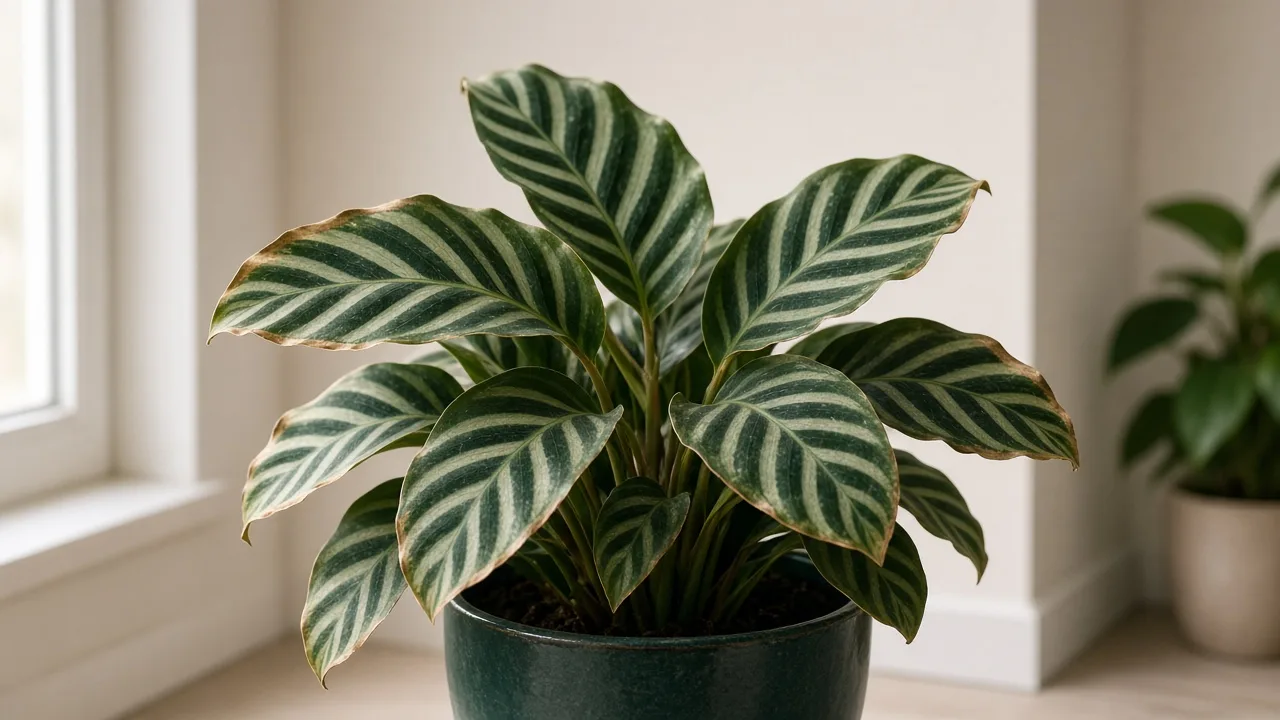
Low Humidity on Calathea Zebrina: Causes, Checks & Fixes
This guide covers low humidity on Calathea Zebrina. See also the general Low Humidity guide, watering, and light pages for this plant.
Low Humidity on Calathea Zebrina: Causes, Checks & Fixes
Quick answer
Use this page when Calathea Zebrina (Goeppertia zebrina, Zebra Plant) shows dull zebra banding, crispy margins on large velvety unfurls, or spears that stick while opening—but the top 2 cm of mix still feels evenly moist and rhizomes stay firm under the crown. That pattern means raise humidity, not water more.
For how dry air pulls moisture from foliage in general, see our low humidity hub. On Zebrina, the pattern shows on the stripes first: pale green zebra fields lose velvety sheen, dark bands look muddy instead of crisp, and the newest center roll tears or creases along the pale bands as it opens—because this species unfurls dramatic pattern on broad, moisture-hungry leaves in heated winter air even when roots are well hydrated.
First step: place a hygrometer within 30 cm of the canopy and run a humidifier until readings hold at least 60% at leaf height. Move the pot off heating vents, radiators, and cold window glass while you humidify. Do not keep soil soggy to compensate for dry air—that invites root rot on Calathea Zebrina on an already stressed prayer plant.
What low humidity looks like on Calathea Zebrina
Zebrina is an upright Goeppertia with large oblong velvety leaves, bold dark-green stripes on lighter green fields, and purple undersides that flash when leaves lift at night. The thinnest tissue along each margin and along the pale zebra bands is the first to desiccate when relative humidity drops.
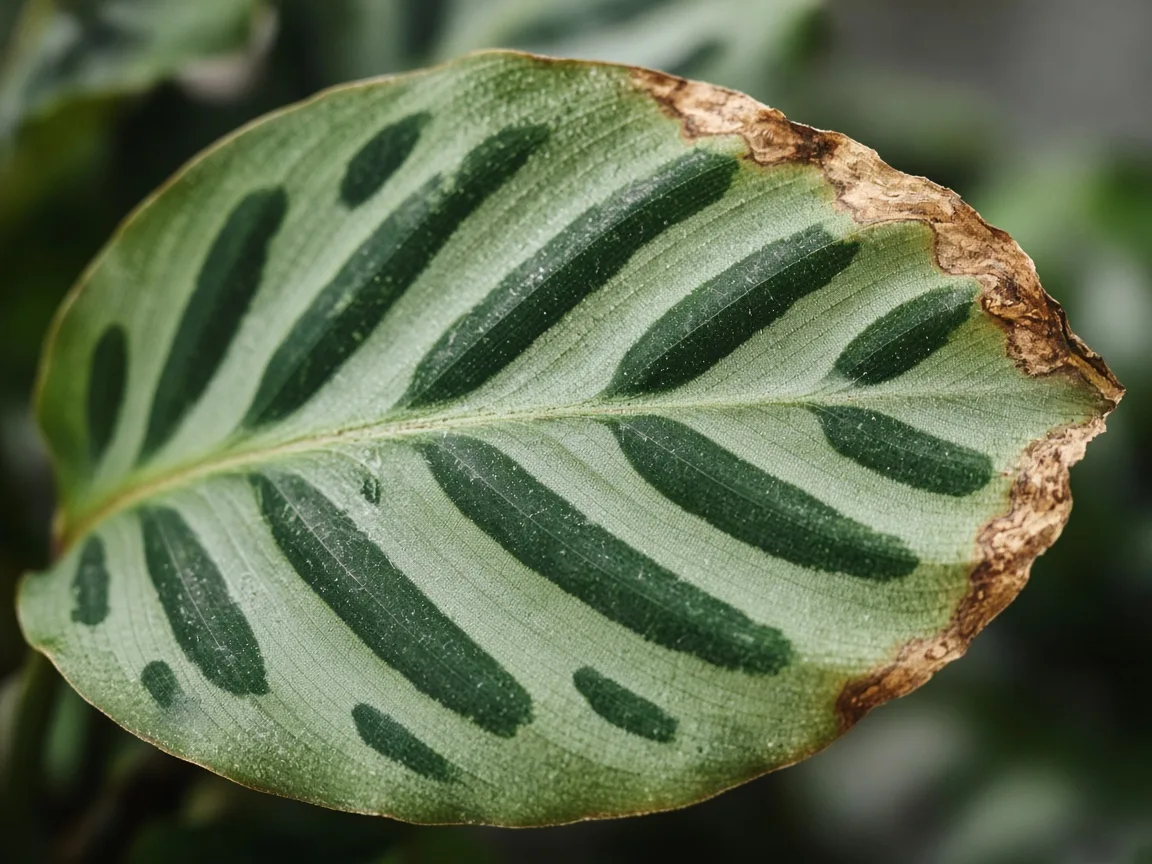
Low humidity on Calathea Zebrina — compare crisp zebra banding on healthy velvety tissue with tan margins and dull pale bands on the same blade.
Typical dry-air signs on Zebrina:
- Tan or brown crispy edges along broad leaf margins, often on the newest unfurling spear
- Washed-out zebra stripes — dark bands look muddy or gray-green instead of sharp contrast on velvety surfaces
- Tight daytime inward curl on moist soil, beyond normal nyctinastic folding at night
- New center spears that open slowly, stay small, or show brown creases along the pale bands
- Damage worse on the leaf side facing a radiator, heat vent, or cold window pane
- Wilting look on heavy, moist pots—the classic humidity signature that mimics thirst
What humidity stress usually is not:
- A dramatically light pot with dusty dry mix pulled from the pot wall — see underwatering on Calathea Zebrina
- Yellow lower leaves with soggy mix, soft stems, and fungus gnats — see overwatering on Calathea Zebrina
- Parallel brown streaks along pale bands with white crust on the pot rim — often tap-water minerals overlapping dry air; see brown tips on Calathea Zebrina
- Fine stippling with webbing on purple undersides — spider mites on Calathea Zebrina, often invited by dry air but a separate treatment
Damaged brown tissue on existing leaves will not revert to green. Judge recovery by the next large blades that unfurl with sharp zebra banding and clean purple undersides.
Zebrina velvet-band fade check
Zebrina’s large leaves make humidity stress easy to spot if you know what to compare:
- Healthy: dark zebra bands read clearly against lighter velvety fields; purple undersides look saturated when leaves fold up at dusk
- Dry air: bands blur together, pale fields look matte instead of plush, and the latest spear shows brown before it fully opens
- Pot check: mix at 2 cm still cool and damp on your normal watering rhythm while symptoms spread — humidity, not drought
Case example: A desk hygrometer read 47% in a heated January living room, but 39% RH beside Zebrina’s canopy on a plant stand above a floor vent. Zebra contrast dulled on two newest leaves while the pot felt heavy. After shifting the pot 1 m from the vent and running a small humidifier on a 62% target for two weeks, canopy RH held 64% and the next spear opened with intact margins—old brown edges stayed, but banding looked sharp again.
Why Calathea Zebrina struggles in dry air
Goeppertia zebrina evolved in warm, humid Brazilian rainforest understories where large velvety leaves lose water quickly when vapor pressure deficit rises. NC State Extension on zebra plant notes that low humidity and fluoride in tap water can cause browning of leaf edges and tips, and that leaf curling results from inadequate water or low humidity. The same reference recommends humidity above 60% and 65–75°F for this species indoors.
Indoors, central heating and air conditioning can leave winter rooms far drier than rainforest floors. The Spruce recommends humidity levels of 50% and higher for indoor calatheas, with humidifiers or pebble trays as practical boosts. Zebrina’s broad leaf surface area transpires faster than compact calatheas, so the same 45% room reading that barely bothers a small Network plant can crisp Zebrina’s newest unfurl in a week.
Heat and airflow amplify the problem. A tall Zebrina on a shelf over a vent transpires through velvety margins faster than roots can replace moisture from an already-moist peat-perlite mix. Dry air also weakens pest defenses; chronically low humidity invites spider mites on prayer-plant foliage, though raising RH alone will not cure an active infestation.
Nyctinastic fold vs humidity curl on Zebrina
Zebrina leaves rise at night and lower by day as part of normal prayer-plant movement on large blades. Humidity stress adds a different signal:
- Normal nyctinasty: smooth fold along the midrib; purple undersides visible at night; blades reopen relaxed by mid-morning on moist soil
- Dry-air curl: tight inward roll during the day on a heavy pot; margins crisp while the center band still looks green; fold does not fully relax overnight
If only the evening posture changes, you may be watching healthy Marantaceae rhythm. If broad blades stay rolled through afternoon on damp mix, log RH at leaf height before you soak the pot.
Low humidity vs underwatering vs brown tips
| Signal | Low humidity | Underwatering | Tap-water brown tips |
|---|---|---|---|
| Pot weight | Normal to heavy | Noticeably light | Normal to heavy |
| Soil at 2 cm | Cool, moist on schedule | Dusty dry | Evenly moist |
| Leaf pattern | Margin crisping; dull zebra bands | Whole-blade thin curl | Tip burn or pale-band streaks |
| Underside | Purple still vivid unless very dry | Dull, limp | Usually intact |
| Timing | Worsens when heat runs | Worsens after skipped watering | Builds slowly over months |
| First fix | Humidifier to 60%+ RH | Bottom-water once | Switch to filtered water |
If soil is moist and zebra margins keep crisping near a radiator in January, treat humidity—not drought. Cross-check brown tips when streaks run along pale bands but banding stays relatively sharp.
How to confirm low humidity
Work through these checks before repotting, fertilizing, or watering more:
- Hygrometer at leaf height — Desk readings can run 10–15 points higher than air around Zebrina’s canopy. Below 45% with crisp margins strongly suggests dry air. Log morning readings at both heights for three days.
- Placement audit — Note distance from radiators, forced-air vents, fireplaces, and cold window glass. RHS notes browning of leaf tips and edges is usually a result of low humidity (dry air) on calatheas.
- Pot weight and soil moisture — Lift the container. Heavy pot with cool damp top 2 cm makes thirst unlikely on your watering schedule.
- Newest-spear pattern — Humidity damage usually hits the latest center roll first on large velvety unfurls. Older blades with isolated tip burn may be legacy salt or fluoride damage.
- Water quality cross-check — NC State recommends distilled or rain water because fluoride in tap water can brown leaves even when humidity is adequate. If RH is already above 60% and only tips brown, prioritize filtered water before a second humidifier.
- Pest check — Tap a suspect leaf over white paper; look for moving specks or webbing on purple undersides.
If humidity reads low, placement is harsh, soil moisture is normal, and new zebra edges crisp, treat dry air as the primary issue.
First fix for Calathea Zebrina
Move the pot away from heating vents and cold drafts, then run a humidifier beside the plant until a hygrometer at leaf height reads at least 60% consistently.
This single step addresses the environmental trigger without stacking repotting, fertilizer, or extra watering. Set the humidifier within about 1 m of the canopy so Zebrina benefits—not a distant corner of a dry living room. Keep the pot base above any pebble-tray water line so roots do not wick standing water.
Hold your existing watering rhythm: water when the top 2 cm begins to dry per the Calathea Zebrina watering guide. Zebrina does not need wetter soil to compensate for dry air. Soggy mix in a humidified room still promotes root rot.
Do not rely on once-daily misting. NYBG notes misting alone does not supply the extraordinary humidity Marantaceae relatives need. The Spruce suggests humidifiers, pebble trays, or naturally humid bathrooms for calatheas—sustained RH beats brief leaf wetting on broad velvety blades.
Step-by-step recovery
After the humidifier runs and placement is corrected:
- Hold humidity steady for two weeks before judging results. Brief spikes from showers do not count; look for sustained 60%+ at the plant.
- Group prayer plants modestly if you grow other calatheas or marantas nearby. Shared transpiration raises local moisture slightly per RHS calathea guidance.
- Add a pebble tray only as a supplement under the pot—not touching the water surface.
- Trim fully brown margin sections with clean scissors if unsightly. Leave partially green tissue intact.
- Inspect weekly for spider mites while air was dry. Rinse purple undersides with lukewarm water if you see stippling; isolate heavily infested plants.
- Maintain Calathea Zebrina light so new spears have energy to unfurl cleanly—medium to bright indirect, never direct sun that bleaches zebra bands.
- Resume light feeding only after new leaves open cleanly for several weeks. Fertilizer on stressed tissue can worsen edge burn when salts accumulate in moist mix.
Hold off on repotting until Zebrina pushes stable new growth. Rhizome disturbance plus humidity stress slows recovery on this moderate grower.
Recovery timeline
Humidity corrections show up on the next one or two large leaves that unfurl, typically within two to four weeks of stable conditions. Old crispy margins remain brown permanently—expect sharper zebra banding on new foliage, not a full cosmetic reset of existing blades.
If edges keep browning on successive spears after four weeks with canopy RH above 60%, revisit light intensity, watering consistency, filtered water use, and pest checks before assuming humidity alone is solved.
Improvement signs: new leaves open with crisp zebra contrast, unfurling speeds up, and stem bases stay firm. Worsening signs: spreading brown into green tissue on new spears, soft stems with wet soil, or mite webbing despite humidification.
Lookalike symptoms to rule out
Underwatering — Whole blades curl inward and feel thin; soil pulls away from the pot wall. Edge crisping is more uniform than margin-only browning on moist soil.
Overwatering and root stress — Yellow lower leaves, soft stems, sour-smelling soil, and limp foliage despite damp mix. See wilting and drooping leaves when wilting appears on wet soil.
Tap-water mineral burn — Brown tips or parallel streaks on pale bands with white crust on the pot rim. Switch to filtered or rainwater rather than only humidifying.
Heat or draft scorch — Uneven crisping on the side facing a vent or hot window. Soil may be moist; fix placement before adding more room humidity.
Spider mites — Stippled yellowing with fine webbing on undersides. Dry air invites mites; treatment is separate from humidifying.
Normal nyctinasty — Zebrina leaves rise at night without tight daytime rolling or crispy margins. Check soil and RH before reacting to evening fold alone.
What not to do
Do not compensate for dry air by watering more often. Wet roots in a stressed Zebrina invite rot faster than crisp edges harm the plant cosmetically.
Do not place the humidifier across a large dry room and assume the shelf plant benefits. Measure at the canopy.
Do not mist heavily at night or in cold drafts—water sitting on velvety leaves can cause spot decay when air circulation is poor.
Do not move Zebrina daily between rooms hunting humidity. Stability matters more than perfect placement for one afternoon.
Do not prune heavily while humidity is still low. Each cut loses moisture through wounded tissue on a plant already struggling.
Do not ignore spider mites because you raised humidity. Treat active infestations separately.
Do not assume every brown edge is humidity. If you water with hard tap only, rule out fluoride burn on the brown tips page before buying a second humidifier.
Calathea Zebrina care cross-check
Low humidity rarely exists in isolation. Confirm these basics while you humidify:
- Light — Medium to bright indirect per the overview. Direct sun bleaches zebra bands and increases water loss.
- Water — Top 2 cm dry before watering; moisture-retentive but well-drained mix per the soil guide.
- Water quality — Filtered or rainwater reduces mineral edge burn that overlaps with humidity damage.
- Temperature — Roughly 18–24°C (65–75°F) per NC State guidance; protect from cold glass and sudden swings.
- Airflow — Gentle circulation is fine; constant hot or cold blasts from vents are not.
Because Calathea Zebrina is non-toxic to cats and dogs per ASPCA listings, toxicity is not a crisis concern here—still keep humidifiers on stable surfaces pets cannot knock into standing water.
How to prevent low humidity next time
Run a humidifier from early fall through heating season rather than waiting for dull zebra bands. Set a weekly hygrometer reminder when furnaces cycle.
Place new Zebrina purchases away from vents for the first month while you learn dry-down speed in your home. Quarantine and watch center spears before clustering with other prayer plants.
When buying in winter, transport wrapped and avoid leaving the plant in a cold car. Chilling plus dry air compounds margin burn on large velvety leaves.
Choose a stable bright shelf or side table rather than rotating the pot between rooms. Zebrina adjusts slowly to environmental swings even when humidity and water quality are otherwise correct.
When to worry
Treat as urgent when every new spear emerges mostly brown despite corrected humidity, growth stops for more than a month in warm weather, or spider mites spread webbing across multiple stems. Those patterns suggest combined stress—not cosmetic winter edge burn alone.
You do not need to discard a plant over old crispy margins if stems are firm and new growth is improving. Zebrina is recoverable when humidity, water quality, and watering align.
Chronic wet soil combined with aggressive humidification is more dangerous than dry air alone. If you humidify heavily and soil stays soggy, back off watering immediately and check roots before adding more moisture to the room.
Conclusion
Crispy margins and muddy zebra banding on Calathea Zebrina usually mean the air around the large velvety leaves is too dry—not that you failed at watering. Measure humidity at the plant, move it off vents, and run a humidifier to the 60%+ range before repotting or feeding. Old brown edges will not heal, but new broad blades should open with sharp stripes within a few weeks once conditions stabilize.
Related Calathea Zebrina problems
- Brown tips — tap-water burn overlapping with dry-air crisping
- Underwatering — drought curl when mix is bone dry
- Spider mites — dry-air pest risk on purple undersides
- Wilting — limp leaves on wet soil, not margin-only crisping
- Calathea Zebrina overview — baseline humidity targets and filtered water
When to use this page vs other Calathea Zebrina guides
- Calathea Zebrina watering guide — Use for routine moisture checks before assuming low humidity is the main issue.
- Calathea Zebrina problems hub — Browse common issues on this species.
- Brown tips on Calathea Zebrina — Different entry point when symptoms overlap with dry air.