Dracaena Lemon Lime Fertilizer Guide: When & How to Feed
Dracaena Lemon Lime Fertilizer Guide: When & How to Feed
Dracaena Lemon Lime Fertilizer Guide: When & How to Feed
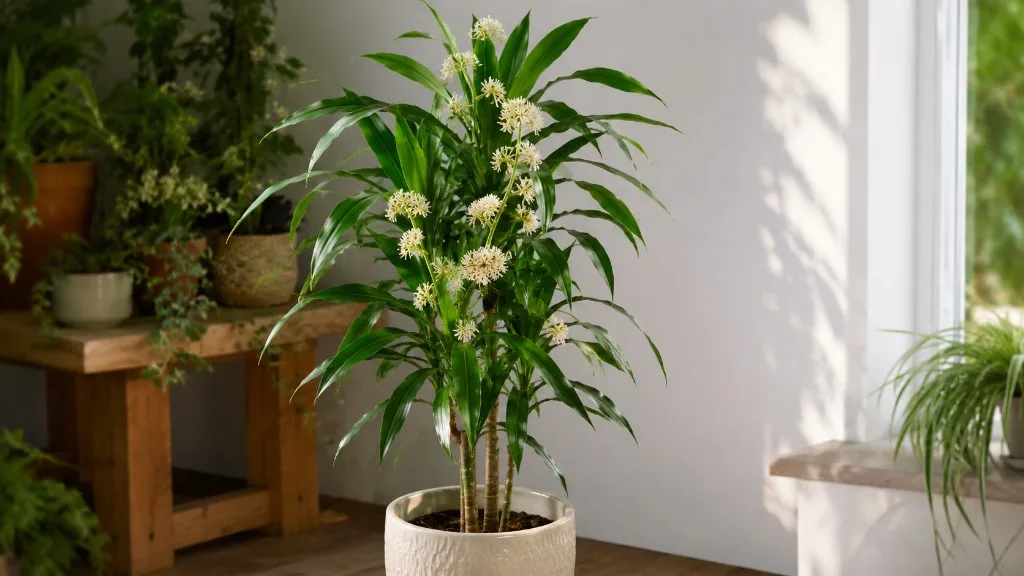
Dracaena deremensis ‘Lemon Lime’ is the chartreuse-striped Warneckii-line cultivar with narrow arching leaves banded in lime green and darker green. For fertilizer, that identity matters more than the word dracaena on a product label. Lemon Lime is a slow-growing deremensis type — not a thick-cane corn plant and not a drought-tough dragon tree. It is also highly fluoride-sensitive, so feeding mistakes show up as permanent brown necrosis on the narrow leaf margins long before the plant looks dramatically unhealthy.
Dracaena Lemon Lime fertilizer should be a light, seasonal supplement: dilute balanced liquid during active growth, nothing in winter, and always after light and watering are already stable. Fertilizer can support steady new leaves with crisp chartreuse bands. It cannot restore washed-out stripes in a dim corner, fix soggy roots, or undo years of fluoridated tap water. This guide covers when to feed, what formula to choose, how variegation and brightness change the schedule, and how to recover when salts or fluoride push past what narrow leaves tolerate.
Why Lemon Lime Needs Light Feeding, Not Heavy Doses
Lemon Lime grows on a slow to moderate clock indoors. The RHS Lemon Lime profile lists a 5–10 year maturity window to 1–1.5 metres — not the explosive summer push of a pothos on a bright sill. That pace reflects lean forest soils in tropical Africa, where dracaenas evolved as understory shrubs pulling modest nutrients from thin, well-drained ground.
Potting mix loses nitrogen, potassium, and trace elements over months of watering. A small top-up during growth season keeps new leaves opening at normal size and helps the cane extend without soft, leggy tissue. But deremensis roots absorb nutrients slowly. Excess fertilizer does not accelerate chartreuse color — it accumulates as soluble salts, stresses roots, and concentrates at leaf tips where transpiration ends. Clemson HGIC warns that leaf tips and margins may burn or yellow when dracaena is fertilized too heavily.
Think of feeding as maintenance nutrition, not a growth accelerator. One skipped month in summer hurts less than one double dose after a stressful repot.
Deremensis Cultivar vs Generic Dracaena Advice
Most houseplant fertilizer articles treat every dracaena the same. Lemon Lime follows deremensis rules shared with Janet Craig and Warneckii — not the heavier dry-down and different moisture profile of corn plants (Dracaena fragrans). The Pacific Northwest Pest Management Handbooks note that Dracaena deremensis should be kept evenly moist while D. fragrans should dry out between waterings (PNW Handbooks). Roots that stay too wet or too dry cannot use fertilizer efficiently; feeding a stressed Lemon Lime adds salts to a system already failing.
Lemon Lime also carries chartreuse variegation on narrow blades. Pale tissue has less chlorophyll buffer, and narrow margins show fluoride and salt injury faster than broad corn-plant leaves. Copying generic “feed every two weeks at full strength” advice onto this cultivar is a common route to crispy tips that owners blame on humidity.
When to Fertilize Dracaena Lemon Lime
Feed from spring through autumn when the plant is actively producing new leaves. For most Northern Hemisphere homes, that means roughly April through October, matching RHS dracaena guidance to feed from April to October with a general liquid houseplant fertiliser and to take care not to overfeed.
Before every application, confirm visible new growth — a fresh leaf unfurling from the crown, expanding chartreuse bands on the newest blade, or a shoot emerging below a spring cane cut. If Lemon Lime has not opened a new leaf in six weeks or more, skip the feed regardless of the calendar. The plant is not metabolizing enough to use nutrients.
Spring Through Autumn Feeding Window
The RHS Lemon Lime cultivation notes recommend applying a balanced liquid fertiliser monthly from spring to autumn and keeping the plant just moist in winter. Translated for indoor pots:
| Period | Action | Notes |
|---|---|---|
| March | Observe; water per watering guide | Wait for first new leaf before feeding |
| April–October | Feed every 4–6 weeks at half strength | Peak months May–August in bright placements |
| November–February | No fertilizer | Growth slows even in warm rooms |
In spring, resist feeding the moment days lengthen. Roots wake before top growth shows; fertilizer applied too early adds salts roots are not yet using. Wait for one clean new leaf, then start with a single half-strength dose.
Through summer, Lemon Lime in bright indirect light near an east window may warrant feeding closer to every four weeks. The same plant in moderate office light often does fine at five to six weeks. Match the interval to new leaves, not a phone reminder.
Why Winter Feeding Backfires
From late autumn through early spring, stop fertilizing entirely for typical indoor Lemon Lime. Day length shortens, transpiration drops, and roots slow even if your thermostat stays high. Fertilizer applied during this rest period does not disappear — it concentrates in the potting mix and raises salt stress on idle roots.
Symptoms — brown tips, yellow lower leaves, white crust on soil — often appear weeks after a winter feed that seemed harmless. Owners chase humidity or water quality when the trigger was nutrients applied while the plant was dormant. Resume feeding only when the first new leaf of spring opens, starting at half strength for one cycle before returning to your summer rhythm.
Best Fertilizer Type for Chartreuse Lemon Lime
The best dracaena lemon lime fertilizer is a dilute balanced liquid applied to evenly moist soil during active growth. Liquids dissolve fully, distribute through the root zone, and let you control dose — critical for a salt- and fluoride-sensitive container plant.
Balanced means nitrogen (N), phosphorus (P), and potassium (K) in roughly equal proportions. Standard houseplant liquids labeled 10-10-10 or 20-20-20 work for foliage-grown Lemon Lime. The RHS fertilisers overview explains that general-purpose products supply the macronutrients container plants lack over time. Avoid high-phosphorus bloom boosters — Lemon Lime rarely flowers indoors, and extra phosphorus adds salts without benefit.
Skip slow-release pellets in small pots unless you understand their release curve. One spring pellet can overfeed a slow deremensis cultivar for months unpredictably. For most owners, half-strength liquid once a month in growth season is simpler and easier to diagnose.
Balanced Liquid at Half Strength
Always dilute liquid fertilizer to half the label strength for Lemon Lime — and consider quarter strength for the first feed after repotting or when recovering from tip burn. Full-strength houseplant labels assume faster species and larger soil volumes.
Practical NPK choices at half strength:
- 10-10-10 — widely available balanced formula
- 20-20-20 — same balance, higher concentration; measure carefully
- 3-1-2 or 5-5-5 — slightly nitrogen-forward; acceptable when diluted
Organic options like fish emulsion work if heavily diluted and odor is acceptable. Synthetic balanced liquids are not harmful to Lemon Lime; concentration and fluoride content matter more than organic vs synthetic branding.
Fluoride, Superphosphate, and What to Avoid
Lemon Lime is among the most fluoride-sensitive houseplants you can grow. Both Dracaena deremensis and D. fragrans are documented as highly susceptible to fluoride toxicity. Fluoride is an accumulative poison in foliage — it moves in the transpiration stream and concentrates at leaf margins, causing necrotic brown tips on narrow Lemon Lime blades.
Fluoride reaches the plant from municipal tap water (often around 1 ppm), perlite-heavy potting mixes, and fertilizers containing superphosphate. Michigan State University Extension notes that single superphosphates in fertilizer are a significant fluoride source for sensitive crops including dracaena. Clemson HGIC advises not using fertilizer which contains superphosphate and keeping soil pH between 6.0 and 6.5 to limit fluoride injury.
For Lemon Lime specifically:
- Avoid superphosphate and high-fluorine raw materials on the label
- Mix fertilizer with rainwater, distilled, or reverse-osmosis water when possible
- Pair feeding with a low-fluoride soil mix — perlite helps drainage but can release fluoride; balance matters
Salt burn from over-feeding and fluoride damage look similar — brown crispy tips — but salt injury often follows a recent heavy feed, while fluoride worsens gradually across months of tap water plus modest feeding. Existing brown tissue does not green up; only new leaves tell you the fix worked.
How Light Level Changes Feed Frequency
Light is the throttle on how much food Lemon Lime can use. Chartreuse variegation pushes most specimens toward brighter indirect placement than solid-green Janet Craig. More light means more photosynthesis, faster dry-down, and higher nutrient demand — but only when roots and water quality support uptake.
A Lemon Lime on a bright east windowsill may need feeding every four weeks through summer. The same cultivar in a tolerable but dim north office may produce no new leaves for months and should receive lighter feeding or none until you improve light or add a grow lamp. Feeding a shaded plant on a bright-window schedule builds salts faster than the rosette can use them.
Fertilizer cannot restore faded chartreuse stripes caused by insufficient light. Pale, washed-out bands are a placement problem. Fix light first; then feed modestly once new growth shows stronger banding.
After any major light increase, recheck soil moisture for two weeks before adjusting fertilizer. Brighter conditions speed metabolism; overfeeding plus faster watering mistakes compounds stress.
Step-by-Step: Feeding Dracaena Lemon Lime Safely
Follow this sequence every time you fertilize to minimize root burn:
Confirm season and growth. You should be in the April–October window with at least one new leaf in the past six weeks. If not, skip.
Check soil moisture. Never feed dry soil. Water with plain low-fluoride water first, or feed immediately after a regular watering when the top 2 inches have dried and been re-soaked per your watering routine.
Mix at half strength. Measure with a dedicated spoon or syringe — do not eyeball concentrate.
Pour on soil only. Apply slowly until a little runs from drainage holes. Do not mist leaves; foliar feeding is unnecessary and can spot narrow blades.
Empty the saucer within 10–15 minutes so fertilizer runoff does not wick back.
Log the date to prevent accidental double-feeding.
Once monthly during the feeding season, replace one watering with a plain-water flush: water thoroughly three times in succession with low-fluoride water, draining fully each time. This leaches accumulated salts — one of the best preventive habits for deremensis types.
Wait four to six weeks after repotting before the first feed. Fresh potting mix often contains starter fertilizer, and cut roots need recovery time.
Signs Your Lemon Lime Is Getting the Right Amount
Correct feeding shows up as steady, proportional growth, not a sudden size jump. New leaves open at normal width for the cultivar with clear green and chartreuse banding. Stems stay firm; the soil surface stays free of thick white crust.
You should see a few new leaves per growing season in good light — normal for slow deremensis growth. Lower leaf loss stays gradual, not a sudden shed after feeding. If you fed four to six weeks ago and the plant looks stable with clean tips on the newest foliage, your dose and timing are likely right.
Pale, thin new leaves in bright light may indicate under-feeding or micronutrient lack — but rule out fluoride damage and root problems first. Interveinal yellowing on new growth despite correct watering warrants a diluted balanced feed, not a full-strength rescue dose.
Over-Feeding, Salt Burn, and Fluoride Tip Damage
Over-fertilizing is the most common feeding mistake on Lemon Lime, and symptoms overlap with fluoride toxicity and drought stress on narrow leaves.
Salt and over-feeding signs:
- Crispy brown tips appearing soon after a feed
- White or yellow crust on the soil surface
- Yellow lower leaves while tips burn
- Sudden leaf drop without obvious pests
- Stunted, small new leaves
Fluoride accumulation signs:
- Gradual tip burn worsening over months
- Damage on margins while mid-leaf tissue stays green longer
- Persistence despite reduced feeding when tap water is fluoridated
- Other fluoride-sensitive plants nearby showing similar tips
Trim old brown margins for appearance — they will not recover. Watch only new growth after you fix water, dose, and timing.
How to Flush the Pot After Over-Feeding
If you suspect over-feeding, act immediately:
- Stop feeding — no corrective second dose.
- Flush three times with room-temperature low-fluoride water until free drainage runs clear; wait 30 minutes between flushes on severe cases.
- Empty saucers completely after each flush.
- Hold fertilizer four to six weeks until new growth appears, then resume at half strength.
- Keep bright indirect light without hot direct sun on stressed foliage.
If heavy crust remains after two flush cycles, plan a spring repot into fresh well-draining mix rather than chasing salts in a exhausted root ball.
When NOT to Fertilize Lemon Lime
Hold off entirely when:
- Soil is dry — water first
- The plant was repotted within four to six weeks
- Active stress: widespread yellowing, drooping, pests, or soft cane
- Autumn through early spring dormancy without continuous new growth
- White salt crust is visible on the soil
- You fed within three weeks and the plant already looks worse
- Soil stays wet for weeks — fix drainage and roots before adding nutrients
Fertilizer is not medicine. It will not revive a struggling Lemon Lime and can accelerate decline when roots are compromised. Stabilize light, water quality, and soil first.
Fertilizer, Water Quality, and Soil Together
Every feed adds minerals to what tap water and potting mix already supply. Municipal water in many regions carries fluoride near 1 ppm; MSU Extension lists dracaena among crops most susceptible to fluoride from city water. Fertilizer salts stack on that load.
Fluoride does not evaporate from a bucket left overnight. For Lemon Lime, use rainwater, distilled, or RO water for both watering and mixing fertilizer. When flushing salts, use the same low-fluoride source — flushing with fluoridated tap water trades one problem for another.
Soil pH near 6.0–6.5 limits fluoride availability per Clemson guidance. Very alkaline hard water pushes pH up over time. A balanced soil mix with moderate perlite supports drainage without going perlite-heavy — a trade-off PNW sources flag for deremensis fluoride sensitivity.
Stack care in order: correct light, stable moisture, appropriate mix, then light feeding. Skip a layer and fertilizer becomes a liability.
Common Dracaena Lemon Lime Fertilizer Mistakes
Feeding at full label strength. Half strength minimum; quarter after stress.
Feeding on calendar autopilot in November. Winter doses cause delayed tip burn.
Using bloom boosters or superphosphate formulas. Extra phosphorus and fluorine without indoor flowering benefit.
Expecting fertilizer to fix faded chartreuse. Shade fades stripes; light fixes color.
Slow-release pellets in 6-inch pots. Unpredictable salt pulses on slow growers.
Micro-dosing every watering without flushing. Salts still accumulate.
Double-dosing after a missed month. One skip is safe; two catches are not.
Feeding before fixing fluoridated tap water. Tips brown regardless of NPK if fluoride keeps arriving.
Each mistake is preventable with a seasonal, low-dose mindset tuned to this deremensis cultivar.
When to use this page vs other Dracaena Lemon Lime guides
- Dracaena Lemon Lime overview — Start here for whole-plant identity, toxicity, and care summary before feeding details.
- Dracaena Lemon Lime light — Use when chartreuse bands fade or growth stalls; fix brightness before increasing fertilizer.
- Dracaena Lemon Lime watering — Read when brown tips might be fluoride from tap water rather than feeding dose.
- Dracaena Lemon Lime soil — Consult when perlite content, pH, or drainage interact with salt and fluoride retention.
- Dracaena Lemon Lime repotting — Turn here after over-feeding when flushing fails, or before first spring feed timing post-repot.
Related Dracaena Lemon Lime guides
- Dracaena Lemon Lime overview
- Dracaena Lemon Lime watering
- Dracaena Lemon Lime light
- Dracaena Lemon Lime soil
- Dracaena Lemon Lime repotting
- Dracaena Lemon Lime propagation
Conclusion
Dracaena Lemon Lime fertilizer demands restraint more than enthusiasm. Feed a half-strength balanced liquid — 10-10-10 or 20-20-20 diluted — every four to six weeks from spring through autumn, pause completely in winter, and never apply to dry or stressed plants. Match frequency to new leaf production in your actual light level, not a generic houseplant calendar.
Protect narrow chartreuse leaves from fluoride and salt injury: avoid superphosphate fertilizers, mix feeds with low-fluoride water, keep soil pH near 6.0–6.5, and flush salts monthly during the feeding season. Brown tips on old leaves will not heal — watch new blades for proof your routine works. When in doubt, skip a feeding. Lemon Lime survives missed nutrients far better than it survives excess.