Dracaena Lemon Lime Repotting Guide
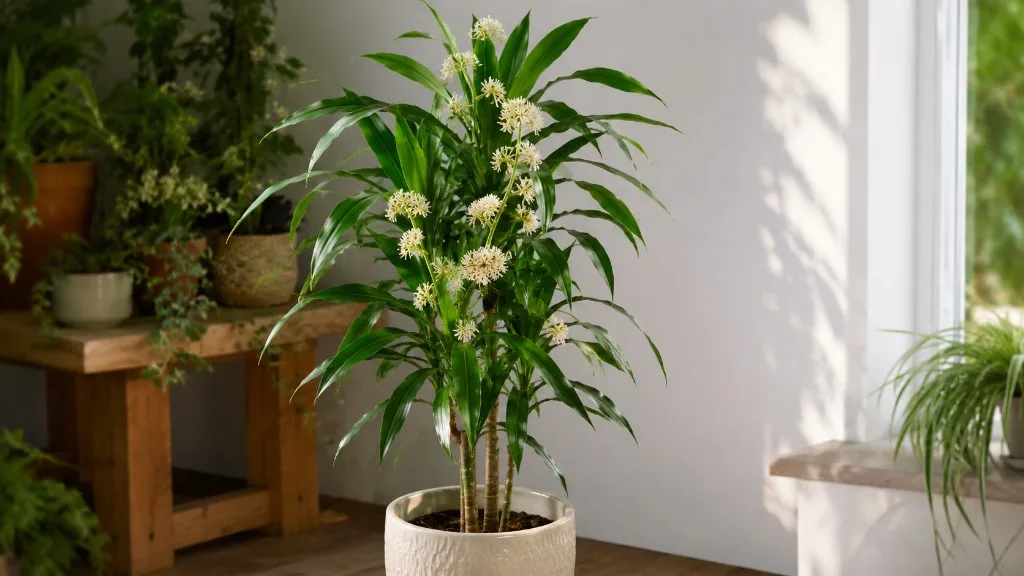
Dracaena Lemon Lime Repotting Guide
Dracaena Lemon Lime Repotting Guide
About this guide: Dracaena deremensis ‘Lemon Lime’ is the chartreuse-striped dracaena with narrow leaves banded in lime green and darker green. Color fades in dim corners and bleaches in harsh direct sun, so placement matters as much as watering. Otherwise it follows standard deremensis rules: let the top 2 inches of mix dry, use low-fluoride water, and avoid cold drafts below 50°F (10°C).
Dracaena Lemon Lime repotting is the moment you refresh depleted mix, give roots modest new room, and reset the balance between a slow-growing deremensis shrub and the pot it lives in. Dracaena deremensis ‘Lemon Lime’ — sold under the RHS name Dracaena fragrans (Deremensis Group) ‘Lemon Lime’ — is not a thick-cane corn plant and not a drought-tolerant dragon tree. It is a narrow-leaf Warneckii-line cultivar with arching chartreuse bands that needs moist but well-drained compost, fluoride-safe water, and pots only one size larger at a time.
Most healthy indoor Lemon Lime specimens benefit from a full repot every 2 to 3 years in spring, matching RHS dracaena guidance for slow houseplants and Clemson extension advice that slow growers may need repotting on that same interval. Done with fresh airy mix, a modest pot increase, and stable bright indirect light, the move is usually quiet: a week of slight adjustment, then new striped leaves. Done in winter, in an oversized decorative pot, or with roots stripped bare, the same operation can leave chartreuse fading, brown tips spreading, and soil that never dries at the pace your watering routine expects.
Why Repotting Matters for Chartreuse Deremensis Leaves
Repotting solves problems that eventually show up as leaf symptoms on Lemon Lime if you ignore the root zone long enough. Roots slowly fill the pot and circle the walls, reducing air pockets in the mix. Peat and coir compress over 18 to 36 months of regular watering, and perlite fines settle — the open structure that kept deremensis roots breathing disappears. Fluoride and fertilizer salts also accumulate at the root surface, which matters on a cultivar where fluoride toxicity causes tip burn on narrow variegated leaves.
Clemson HGIC states that root rot usually results from a mix that does not drain quickly or from overly frequent watering. Jumping to a much larger pot at repot time creates exactly that environment: excess wet compost around a modest deremensis root ball. Repotting is your chance to rebuild drainage and refresh salts before yellow lower leaves and mushy cane tissue appear.
What Fresh Mix Fixes in Narrow-Leaf Roots
Lemon Lime forms a compact rosette of narrow arching leaves on relatively slim stems — less water storage than a thick fragrans cane, but roots that still dislike stagnant wet soil. Fresh mix restores pore space so the top 2 inches can dry between soaks while lower roots access even moisture, which is the deremensis sweet spot the Pacific Northwest handbooks describe as evenly moist rather than bone-dry.
You will notice the difference in pot behavior after a good repot. A root-bound Lemon Lime often dries surface soil within a day or two of watering, then wilts slightly — water channels along the pot wall without rewetting the dense center. Replacing compacted mix and teasing outer circling roots lets the next soak penetrate evenly. That stability supports vivid chartreuse banding on new growth; pale washed-out stripes in a dim, chronically wet pot are often a root-zone problem masquerading as a light problem.
A repot also gives you the only easy moment to inspect for root rot — brown, mushy, sour-smelling tissue that must be trimmed before it spreads up the cane. Catching rot during repotting is far simpler than diagnosing from yellow lower leaves alone.
Why Lemon Lime Repots on a Slower Rhythm Than Fast Growers
Lemon Lime grows at a slow to moderate pace indoors, typically reaching 3 to 5 feet with leaves to about 24 inches long — smaller and slower than many floor-sized corn plants. Clemson HGIC indoor repotting guidance notes that fast-growing houseplants may need annual repots while slow-growing plants may require repotting every two to three years. Lemon Lime sits firmly in the second group.
Newly bought plants can often stay in their nursery pot for the first season unless mix is sour or pests are present — the plant-detail hub recommends not repotting on day one so you can learn dry-down speed and water quality first. The 2–3 year window is a check-in, not a calendar command. A young specimen in a generous pot may sit comfortably for three years; a mature plant whose soil dries within a day of watering may need attention sooner.
Signs Your Dracaena Lemon Lime Needs a New Pot
The clearest sign is visual: roots emerging from drainage holes or circling the surface when you lift the plant partway out. Equally reliable signals include water that runs straight through without absorbing, a pot that feels very light again within hours of a thorough soak, and growth that stalls even though light and feeding have not changed. When two or more of these appear during the active growing season, repotting is usually the right move.
Do not repot simply because one lower leaf turned yellow. Yellowing can mean overwatering, fluoride-heavy tap water, cold drafts, or natural aging on deremensis types. Repot when the root zone or soil structure is clearly the bottleneck.
Root-Bound and Fast-Dry Signals
Slide Lemon Lime out gently — if the root ball holds a perfect pot-shaped mold with little visible mix on the sides, you are looking at classic root-binding. Circling roots at the bottom are not an automatic emergency on dracaena, but they mean the plant has been asking for fresh media for a while.
Fast drainage after years of normal behavior often means water bypasses a hydrophobic or channelled root mass rather than the plant using moisture quickly. Salt crust on the soil surface or brown tips despite careful watering timing suggest mineral buildup that a full repot or aggressive top-dressing should address. Sour smell or soft tissue at the soil line points to rot that requires immediate attention regardless of season.
When Yellow Leaves Are Not a Repot Trigger
A single yellow lower leaf on an otherwise stable Lemon Lime is often natural senescence — deremensis types shed older foliage from the base over time. Clusters of yellow leaves on wet soil are more likely overwatering or failing drainage, which repotting can fix if roots are compromised, but not if the real issue is a summer watering schedule applied in a dim winter corner.
Brown papery tips without yellowing often trace to fluoride in tap water, not tight roots. Switch to rainwater or filtered water before repotting for tip burn alone. Repotting adds stress without fixing water chemistry.
Best Time of Year to Repot Lemon Lime
Timing matters because deremensis cultivars recover fastest when already geared for growth. Spring through early summer is the safest window for most indoor growers. Rising temperatures and lengthening days trigger root and shoot development, so the plant can colonize fresh mix before winter slowdown. Plan the check for mid-spring — roughly March through May in the Northern Hemisphere — when you can inspect roots and still have months of active growth ahead.
The RHS Lemon Lime profile lists propagation by semi-hardwood cuttings or leafless stem sections in spring with bottom heat, and notes that weak plants can be cut back to within 15 cm of the base in spring — the same season ideal for repotting and optional cane pruning.
Spring and Early Summer Windows
During active growth, Lemon Lime can resume pushing new striped leaves within two to four weeks after a well-executed repot if temperatures stay above roughly 18°C (65°F) and soil remains evenly moist but not soggy. Spring is also the best time to combine repotting with pruning a leggy cane, because deremensis types usually branch below the cut when the plant has energy to spare.
If you missed early spring, early summer still works. Avoid repotting during the hottest week if the plant sits in direct sun — heat plus root disturbance can drop more leaves than the same job in moderate conditions. Shade slightly for seven to ten days after a summer repot, then return to normal bright indirect placement.
When Winter Repotting Is Still Justified
Winter repotting is a backup plan. Growth slows, days are short, and disturbed roots sit in wet mix longer because the plant is not pulling water actively — increasing rot risk on a species that already dislikes cold, wet roots. Skip winter repotting if the plant is merely slightly tight but watering normally.
Repot in winter only when delay would clearly harm the plant: severe root-binding with repeated wilting, active root rot requiring trimming and fresh mix, a broken pot, or dangerous top-heavy tipping. Use a modest size increase, warm indoor temperatures, bright indirect light, and let the top 2 to 3 cm of mix dry slightly further between waterings until new growth appears in spring.
Choosing Pot Size for a Top-Heavy Shrub
The most important decision is diameter, not decoration. Lemon Lime wants one step up, not a mansion. RHS warns against overpotting because compost that stays too wet too long causes root rot — the fastest route to yellow lower leaves that look like a feeding problem but are really an oxygen problem at the root zone.
Measure the current inner diameter and choose a new pot 2 to 5 cm (about 1 to 2 inches) wider, with drainage holes. Clemson HGIC recommends selecting a pot 1 or 2 inches larger in diameter than the current one. For a Lemon Lime in a 20 cm (8 inch) nursery pot, 22 to 25 cm is appropriate. Repeat the one-size-up rule each repot rather than skipping sizes to save effort later.
The One-Size-Up Rule
Roots grow into soil progressively; until they do, excess mix is a water reservoir with limited uptake. Lemon Lime performs well when slightly snug, which is why the one-size-up rule is a ceiling, not a minimum — you are refreshing soil and adding modest room, not maximizing container volume.
A modest increase keeps watering rhythm predictable after repotting. If you find yourself waiting twelve to fourteen days before the top 2 inches dry, the pot is probably too large, too deep, or filled with mix that is too heavy. All three are easier to prevent upfront than to fix after leaf loss.
Stability for Arching Leaf Canopies
As Lemon Lime matures, arching leaves spread outward and the pot can feel small relative to the canopy — especially on a tall single-stem specimen allowed to reach 4 to 5 feet indoors. If the pot tips when brushed or rocks when watered, stability and root space are both in question.
Choose a pot wider at the base than at the rim when possible. Glazed ceramic adds mass that helps counterbalance leaf spread. Terracotta dries faster — useful for heavy-handed waterers but demanding more checks in bright rooms. Tall specimens in lightweight plastic on smooth floors benefit from a heavy saucer or plant caddy. Every pot still needs drainage holes; decorative cachepots without holes require a draining inner nursery pot.
Best Soil Mix at Repot Time
Lemon Lime wants well-draining potting mix with enough organic matter to hold moisture without staying soggy — the same target as the dedicated soil guide. The Missouri Botanical Garden describes deremensis types as thriving in organically rich, consistently moist, well-drained potting soil indoors. Target pH 6.0 to 6.5; Clemson HGIC recommends that range to reduce fluoride injury.
A reliable repot blend:
- 50% peat-free indoor potting compost
- 25% perlite, pumice, or coarse grit
- 25% medium orchid bark or coarse coco chips
That 2:1:1-style ratio drains within seconds of watering while holding enough moisture that deremensis roots are not cycling between flood and desert. Blend dry in a tub before backfilling — do not layer drainage materials at the bottom; Clemson HGIC notes that gravel layers actually slow water movement.
Fluoride-Safe Blend Choices
Lemon Lime is very sensitive to fluoride, with tip burn documented on deremensis types when irrigated with fluoridated water. Fresh repot mix often contains perlite, which can contribute fluoride — pairing a high-perlite refresh with unchanged tap water is a common reason brown tips appear on new growth right after repotting.
Keep soil pH near 6.0 to 6.5, avoid superphosphate fertilizers, and plan to use rainwater, distilled, or reverse-osmosis water for the first month after repot if tips have been a problem. Do not reuse old mix from a rot case; fresh media is simpler and safer.
Full repot — replacing essentially all old mix and teasing outer roots — suits bound, compacted, or sour soil. Top-dressing — removing the top 3 to 5 cm and replacing with fresh blend without disturbing roots — can buy another year when drainage is still acceptable but salts have built up, per Clemson guidance for large containers. Top-dressing will not fix circling roots at the bottom or a tipping canopy.
Step-by-Step Repotting Without Shock
Gather the new pot, pre-mixed soil, clean scissors, a chopstick, optional stake and soft ties, and low-fluoride water. Work at table height so arching leaves are not crushed.
Step 1: Water 24 hours before repotting so the root ball holds together without being soggy.
Step 2: Add fresh mix to the new pot so the root ball will sit with the previous soil line about 2 to 3 cm below the rim. Do not add a gravel drainage layer.
Step 3: Turn the plant on its side if needed and slide it out while supporting the stem base. Squeeze flexible nursery pots or run a knife around rigid pots if stuck.
Step 4: Inspect roots. Trim brown, mushy tissue. Tease circling outer roots gently outward. Avoid washing away the entire ball unless rot forces full cleaning.
Step 5: Set the plant so the previous soil line matches its old position. Do not bury the cane deeper — stem rot follows buried tissue on dracaena.
Step 6: Backfill with mix, working soil between roots with a chopstick. Firm lightly to remove large air gaps without compressing mix into a brick.
Step 7: Water thoroughly until excess drains. Empty the saucer. Place in bright indirect light, out of direct sun, for 7 to 14 days.
Step 8: Stake if the plant wobbles. Hold fertilizer for at least four weeks while roots settle.
Root Inspection and Teasing
The goal is to redirect growth, not destroy the root ball. Lemon Lime relies on fine root hairs for uptake; bare-rooting by washing every particle away strips those hairs and extends recovery on a slow cultivar. Keep most of the original mass intact while freeing the outer circling layer.
If roots are densely matted at the bottom, you may slice 1 to 2 cm off the base with a clean knife to stimulate new white tips. Avoid removing more than one-third of total root mass unless rescuing rot.
First Watering After the Move
The first soak settles mix and closes small air pockets. Top up if the soil level drops before roots grow into empty space. For the first two weeks, water when the top 2 inches feel dry — the same check as before repot, though expect the interval to lengthen slightly as soil volume increases.
Mild wilting or one to two yellow lower leaves in the first week is common. Wilting that worsens daily despite correct moisture usually means rot, oversized pot, or buried stem tissue — inspect accordingly.
Post-Repot Care for Striped Foliage
Recovery success shows in new leaves, not old blemishes. Brown tips on pre-repot foliage will not green up; watch whether fresh arching leaves open with bright chartreuse bands. That is the sign roots have found the new mix and light levels are adequate.
Mild transplant shock usually means slight leaf droop, a pause in new growth, or one to three dropped lower leaves for one to two weeks. Full root re-establishment typically takes four to six weeks in warm, bright conditions — longer after winter repots or on large specimens. Keep temperatures in the 18 to 27°C (65 to 80°F) comfort zone and avoid drafts below 13°C (55°F).
Do not chase recovery with fertilizer or extra water. Both extend shock on deremensis types. If wilting persists beyond three weeks, check for rot, buried stems, or an oversized pot. After recovery, re-learn dry-down speed — the calendar from before repot rarely transfers unchanged.
Common Repotting Mistakes on Lemon Lime
Oversized pots top the list. More soil without more roots means chronic bottom wetness and yellow lower leaves. Stick to one size up even if you expect fast future growth.
Bare-rooting or over-washing removes fine hairs that absorb water. Recovery on slow Lemon Lime can take six to eight weeks instead of three or four.
Immediate fertilizing after repot burns tender root tips in fresh, already nutrient-containing mix. Wait for new growth matching normal size and stripe color, then resume half-strength feeding if your routine includes it.
Repotting for the wrong reason — moving a plant yellowing from fluoride tap water or dim placement — adds stress without fixing the trigger. Diagnose first.
Fresh high-perlite mix plus fluoridated tap water invites tip burn on narrow variegated leaves. Change water source when repotting if tips have been chronic.
Ignoring pet safety during the messy phase: ASPCA lists dracaena as toxic to cats and dogs due to saponins, with vomiting and dilated pupils in cats. Keep fallen leaves and discarded soil out of reach while you work.
When to use this page vs other Dracaena Lemon Lime guides
Use this page when you need when to repot, pot size, root inspection, step-by-step transplant technique, and post-repot recovery timing. For mix recipes and drainage tests, see soil. For how fast the pot dries before and after the move, see watering. For window placement and stripe color after repot, see light. For when to resume feeding, see fertilizer. For cane cutback combined with spring repot, see pruning and propagation. For the full cluster picture, start at the overview.
Related Dracaena Lemon Lime guides
- Overview — identity, toxicity, and whole-plant care snapshot
- Soil — perlite-bark blend used at repot time
- Watering — top-2-inch rule after soil volume changes
- Light — brightness for chartreuse recovery on new leaves
- Fertilizer — when to feed again after root settle
Conclusion
Dracaena Lemon Lime repotting comes down to reading roots and mix condition, checking in every 2 to 3 years, choosing spring or early summer when you can, moving one pot size up with fresh well-draining blend, and using low-fluoride water so narrow chartreuse leaves recover cleanly. The cultivar grows slowly enough that a calendar reminder helps, but never repot on autopilot when the real problem is water quality, light, or a winter watering schedule left over from summer.
Get pot size, soil, and stability right and Lemon Lime rewards you with new striped leaves and years before the next move. Oversize the container, bare-root without cause, fertilize too soon, or ignore fluoride at repot time and the same plant will look punished for weeks. Treat repotting as a targeted refresh — not a reflex — and you will rarely set back a healthy deremensis shrub with a routine upgrade.