Dracaena Lemon Lime Care Guide: Light, Water & Size
Dracaena deremensis 'Lemon Lime'
Dracaena Lemon Lime care: bright indirect light for chartreuse stripes, fluoride-safe watering, deremensis cultivar tips, propagation, and pet toxicity.
Dracaena Lemon Lime Care Guide: Light, Water & Size
Start with wateringThe most common care mistake for Dracaena Lemon LimeWatering guide →Dracaena Lemon Lime care essentials
Light
Water
Water when top 2 inches are dry; every 7–14 days in summer; 14–21 days in winter.
Soil
Well-draining potting mix with perlite and coarse bark.
Humidity
40–60%
Temperature
18–27°C (65–80°F)
Fertilizer
Feed lightly with balanced liquid fertiliser at half strength during spring and summer; hold off in winter when growth slows.
About Dracaena Lemon Lime
Dracaena Lemon Lime is native to Tropical Africa, typically reaches 3–5 ft indoors; narrow arching leaves to 24 in (60 cm) with chartreuse-and-green stripes indoors, with slow to moderate growth. Dracaena Lemon Lime has a shrub like growth habit and part of the Asparagaceae family. It is also known as Lemon Lime Dracaena and Lemon Lime Warneckii.
| Detail | Information |
|---|---|
| Also known as | Lemon Lime Dracaena, Lemon Lime Warneckii |
| Native region | Tropical Africa |
| Mature size | 3–5 ft indoors; narrow arching leaves to 24 in (60 cm) with chartreuse-and-green stripes |
| Growth rate | Slow to moderate |
| Growth habit | Shrub Like |
| Scientific name | Dracaena deremensis 'Lemon Lime' |
| Family | Asparagaceae |
Dracaena Lemon Lime Care Guide: Light, Water & Size
About this guide: Dracaena deremensis ‘Lemon Lime’ is the chartreuse-striped dracaena with narrow leaves banded in lime green and darker green. Color fades in dim corners and bleaches in harsh direct sun, so placement matters as much as watering. Otherwise it follows standard deremensis rules: let the top half of the mix dry, use low-fluoride water, and avoid cold drafts below 50°F (10°C).
Dracaena Lemon Lime is sold for its electric chartreuse bands, but most decline stories start the same way: the pot lands in a dim corner, the stripes wash out to plain green, and brown tips appear while the owner adds more water. This cultivar is not a generic “dracaena” in practice — it is a variegated deremensis type with narrower leaves than Janet Craig, a bushier habit than a corn plant, and a higher light appetite than many striped dracaenas tolerate on paper. Get placement and water quality right and it becomes a slow, upright room anchor for years. Miss those two variables and even a forgiving plant looks tired within a season.
This overview covers what Dracaena Lemon Lime actually is, how large it grows indoors, the light and water rules that protect the stripes, soil and climate basics, propagation and repotting summaries, common mistakes, and pet safety. For step-by-step depth on any one topic, use the linked guides in the cluster below.
What Is Dracaena Lemon Lime?
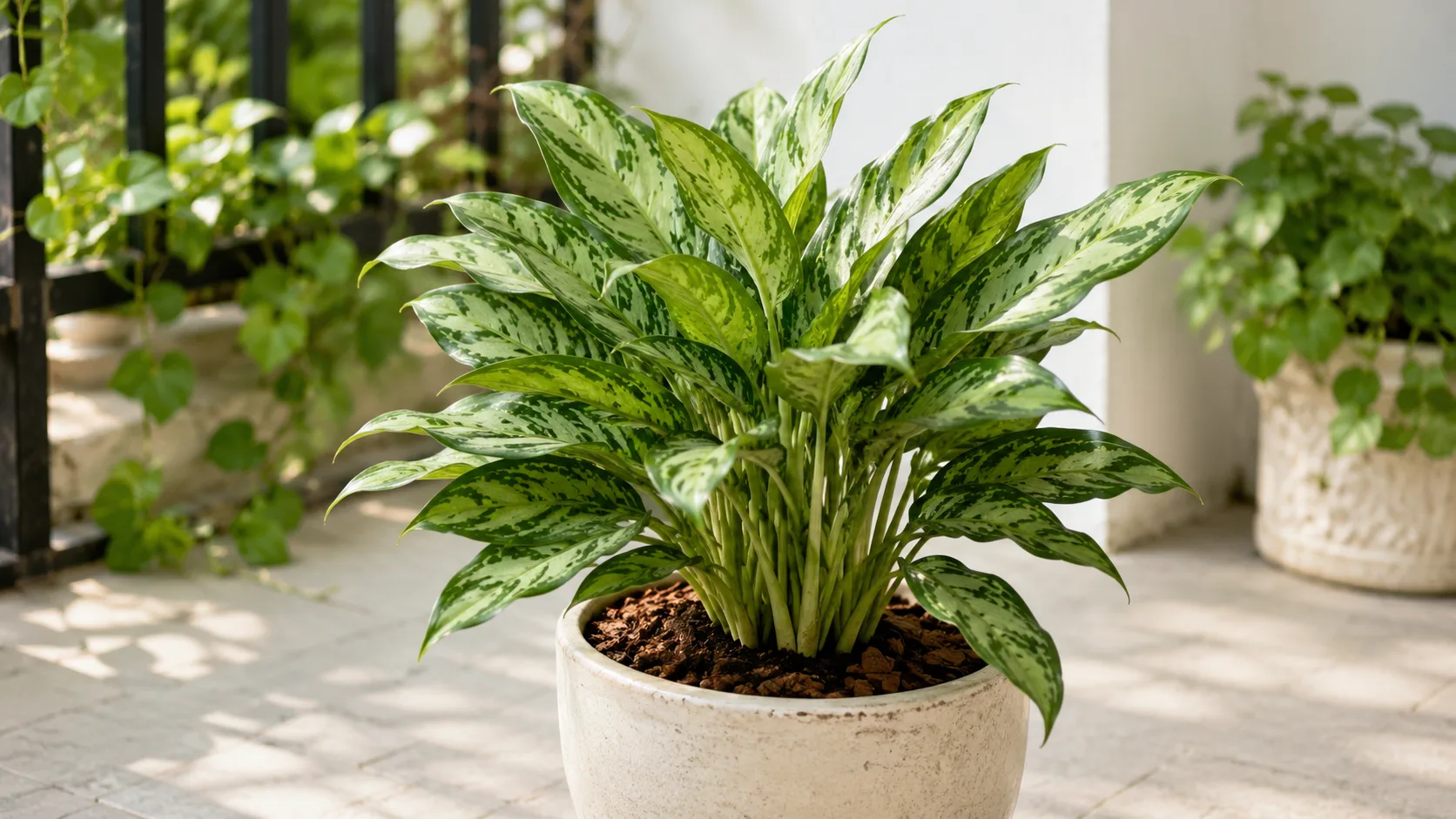
Dracaena Lemon Lime (Dracaena deremensis ‘Lemon Lime’, also listed as Dracaena fragrans (Deremensis Group) ‘Lemon Lime’) is a striped cultivar in the Warneckii lineage — the same deremensis group that includes white-edged Warneckii and solid-green Janet Craig. Missouri Botanical Garden describes Deremensis Group plants as striped dracaenas with undulating, sword-shaped variegated leaves, and notes that ‘Lemon Lime’ leaves carry cream, greenish-yellow, and lime stripes on blades that can reach about 2 feet (60 cm) long. The RHS profile calls it an erect evergreen shrub with narrow, arching leaves striped green and bright greenish-yellow, becoming branched with age.
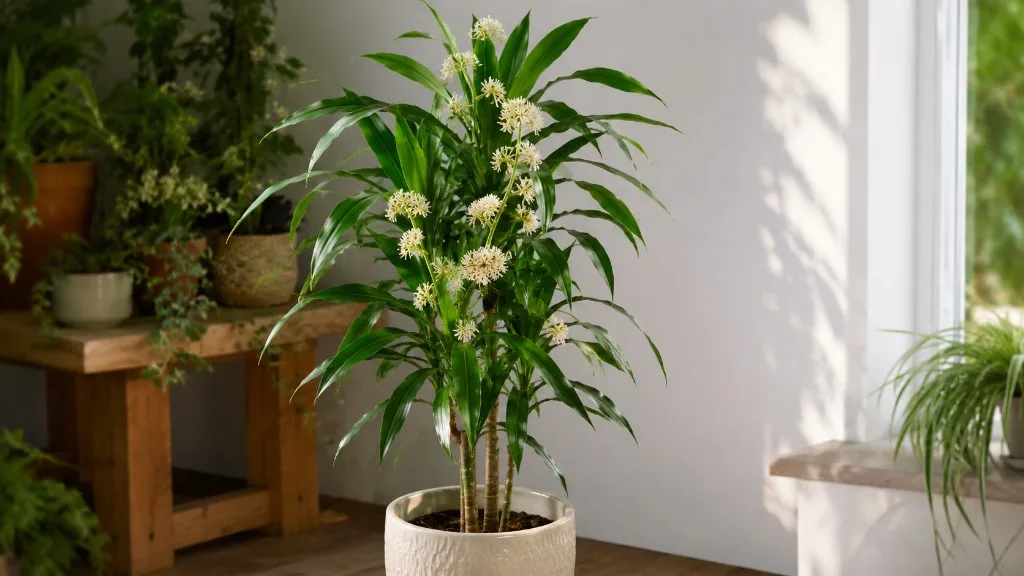
Indoors, you are not growing a palm or a bamboo — you are growing a woody-stemmed tropical shrub that sheds lower leaves as the cane lengthens, leaving a clean vertical silhouette topped by a rosette of arching straps. That growth habit is shared across dracaenas, but the Lemon Lime color pattern is the reason most people buy it, which means light guidance matters more here than on a solid-green Janet Craig.
Names You Will See on Tags
Retail labels are inconsistent. The same plant may appear as Lemon Lime Warneckii, dragon plant ‘Lemon Lime’, striped dracaena, or Lemon Lime Tips (a closely related trade form). Taxonomists and catalogs may file it under D. deremensis or the Deremensis Group within D. fragrans. For care purposes, treat all of these as the same cultivar class: compact deremensis stripes with yellow-green variegation, not a corn plant (D. fragrans Massangeana type) and not a dragon tree (D. marginata).
If the tag only says “Dracaena,” check leaf shape. Lemon Lime carries narrow, arching, multi-tone green straps. Corn plants have wider, corn-like leaves on thick canes. Dragon trees have slim red-edged swords on wiry stems. Matching the leaf fixes more care errors than memorizing every synonym.
How It Differs From Other Dracaenas
Three differences matter day to day. First, variegation: the chartreuse bands contain less chlorophyll than the dark green zones, so the plant needs brighter indirect light than solid-green deremensis types to keep contrast — a point Clemson Extension echoes for variegated Warneckii, which they list among the better variegated plants for lower light, but “tolerates” is not the same as “looks good” (Clemson HGIC). Second, watering: Pacific Northwest extension guidance notes that D. deremensis prefers evenly moist soil while D. fragrans should dry down more between drinks (PNW Handbooks). Lemon Lime still rots in soggy mix, but it is less drought-forgiving than a large corn plant in a dim office. Third, size and form: Lemon Lime stays bushier and shorter than a lobby corn plant — typically 3 to 5 feet (0.9 to 1.5 m) indoors per the RHS mature height range of 1–1.5 m, compared with corn plants that routinely pass 6 feet over time.
Growth Habit and Mature Size
Dracaena Lemon Lime grows as a slow-to-moderate upright shrub on one or more woody canes. New leaves emerge from the top of each stem in a rosette; older leaves on the lower trunk yellow and drop, which is normal cane maturation — not automatically a crisis. Side branches may develop on older specimens, especially after pruning or beheading, giving a fuller silhouette than a single-stem corn plant.
Indoor Height and Spread
Expect 3 to 5 feet (0.9 to 1.5 m) tall in most homes over several years, with a spread under 2 feet (60 cm) unless multiple canes fill out a wide pot. Missouri Botanical Garden lists outdoor potential of 5 to 10 feet in frost-free climates, but ceiling height and lower light indoors usually cap height well below that. Growth is not fast like a pothos; plan in seasons, not weeks, when judging whether a new placement is working.
What Healthy New Growth Looks Like
Healthy Lemon Lime pushes firm, arching leaves with crisp lime-and-green banding on the newest blade. Internodes stay relatively tight, and the cane feels solid when you gently press the base. If new leaves arrive smaller, paler, or mostly green, the plant is telling you it wants more light before you change fertilizer or repot. If new leaves show bleached patches or dry scorch, pull back from direct sun. The newest leaf is always the best diagnostic — old damaged foliage will not recover its stripes.
Light: The Variable That Holds the Stripes
Light is the master variable for this cultivar because variegation is the product. Dracaena Lemon Lime wants medium to bright indirect light for most of the day — strong ambient brightness without hours of direct sun on the leaves. A practical placement is near an east window, or several feet back from filtered south or west glass where the canopy sees sky light but not blazing beams.
Clemson Extension recommends bright, indirect light for most dracaenas, noting that plants moved from dim spots to brighter ones produce thicker, stronger new leaves (Clemson HGIC). The RHS dracaena growing guide likewise stresses year-round warmth and indirect light, and warns that fluoride in tap water — not just weak light — damages foliage. For Lemon Lime specifically, treat “tolerates lower light” as survival mode: the plant may live in a dim corner, but chartreuse bands fade toward plain green, lower leaves drop faster, and the pot stays wet longer because transpiration slows.
Best Window Placement
Aim for the brightest spot that avoids midday direct sun on the canopy. Morning rays through east glass are usually safe; unfiltered west-afternoon sun often causes round dry patches Clemson links to excessive sunlight (Clemson HGIC). Rotate the pot every two to three weeks so the cane does not lean permanently toward the glass. If the only bright exposure is direct, use a sheer curtain or move the pot back from the sill until leaves stay clean.
When natural light is weak in winter, a full-spectrum grow light 12 to 18 inches (30 to 45 cm) above the foliage for 10 to 12 hours daily prevents the stretched, top-heavy look variegated dracaenas develop as they reach for windows. Full detail lives in the Dracaena Lemon Lime light guide.
When Variegation Fades or Bleaches
Fading stripes almost always mean insufficient light, not nutrient deficiency. Move closer to the window, filter harsh direct sun rather than retreating deep indoors, or add supplemental light — then judge the next two leaves, not yesterday’s damage. Bleached or scorched patches mean too much direct sun or too fast an acclimation. Leggy cane with a small tuft at the top combines low light with time; pruning and brighter placement together fix structure faster than either alone.
Watering and Water Quality Basics
Watering Dracaena Lemon Lime is a balance between deremensis moisture preferences and dracaena rot risk. Let the top half of the potting mix dry before a thorough soak — or use the finger test: top 2 inches (5 cm) dry before watering in typical containers. That often works out to every 7 to 14 days in warm, bright months and every 14 to 21 days in cooler, slower months, but the pot always decides.
Water until a little runs from the drainage hole, then empty the saucer. Clemson HGIC advises allowing dracaenas to dry slightly between waterings and avoiding cold water straight from the tap. Never water on a calendar without checking — a Lemon Lime moved to a dimmer spot after summer may need half the previous frequency.
When to Water
Use a finger, skewer, or lift test before every pour. A heavy pot with cool, clinging soil at depth means wait. A light pot with dry upper mix means soak. Because Lemon Lime in low light uses less water, overwatering in dim corners is one of the most common killers — wet soil plus weak growth invites root rot on Dracaena Lemon Lime. The full dry-down workflow, seasonal shifts, and rescue steps are in the Dracaena Lemon Lime watering guide.
Fluoride Sensitivity and Brown Tips
Brown, papery leaf tips on an otherwise healthy watering schedule usually mean fluoride or salt buildup, not thirst. PNW Handbooks document that D. deremensis is very sensitive to fluoride toxicity from municipal water (~1 ppm in many systems). Fluoride accumulates in margins, inhibits photosynthesis, and causes necrosis that will not green up again. Switch to rainwater, distilled, or reverse-osmosis water for new leaves to emerge clean; trim old tips for appearance only.
Avoid superphosphate fertilizers and extremely perlite-heavy mixes, which Clemson links to fluoride injury (Clemson HGIC). If tips persist after a water change, flush the pot and review brown tips on Dracaena Lemon Lime before increasing humidity or feed.
Soil, Drainage, and Pot Choice
Grow Dracaena Lemon Lime in well-draining peat-free or loam-based houseplant mix with perlite and coarse bark for airflow. The RHS cultivar profile recommends moist but well-drained conditions; Missouri Botanical Garden suggests organically rich, consistently moist but never bone-dry indoor mix with bright indirect light. Those sound different, but the shared rule is even moisture without waterlogging — not a permanently wet root zone.
Target soil pH around 6.0 to 6.5 to limit fluoride uptake per extension guidance. Always use a pot with a drainage hole; cachepots are fine only if you empty runoff every time. Oversized decorative pots are a common hidden cause of overwatering on Dracaena Lemon Lime. Mix recipes, bark ratios, and repot soil refreshes are covered in the Dracaena Lemon Lime soil guide.
Temperature, Humidity, and Airflow
Dracaena Lemon Lime prefers stable indoor temperatures between 65 and 80°F (18 and 27°C) during active growth, aligning with Clemson HGIC day temperatures of 60 to 70°F (16 to 21°C) and slightly cooler nights. Cold is the sharp edge: exposure below about 50°F (10°C) from winter window glass, drafty doors, or AC blasts can cause sudden leaf drop or limp foliage that will not recover on damaged tissue — Missouri Botanical Garden advises bringing containers indoors before outdoor readings fall below 50°F.
Humidity around 40 to 60% keeps leaf margins cleaner in heated winter air. When only tips brown while the rest of the leaf stays green, suspect fluoride first, then humidity. Keep plants off radiator lines and away from direct AC jets; repeated hot-cold swings show up as spotty yellowing long before you notice the vent.
Feeding, Repotting, and Propagation at a Glance
Fertilizer Summary
Feed only during active growth — typically spring through summer — with a balanced liquid houseplant fertilizer diluted to quarter or half strength on already-moist soil. Clemson HGIC suggests monthly feeding in the growing season and skipping heavy doses that burn margins. Hold fertilizer after repotting, pest recovery, or root rot repair until new top growth appears. Avoid superphosphate. Details: Dracaena Lemon Lime fertilizer guide.
Repotting Timing
Repot roughly every two years, or when roots circle drainage holes, water runs straight through dry mix, or the plant dries out within a day of a previously normal watering. Best timing is early spring. Move up only one pot size to avoid wet, empty soil around a small root ball. Step-by-step: Dracaena Lemon Lime repotting guide.
Propagation Overview
Propagate with stem cuttings in spring or summer — remove a top rosette with several inches of bare cane, or cut a 6- to 12-inch (15 to 30 cm) cane section with at least one node. Root in moist perlite-bark mix, water, or potting mix in bright indirect light; the stub often sprouts new shoots below the cut. Clemson HGIC lists tip, stem, and air-layering methods for dracaenas. Full workflow: Dracaena Lemon Lime propagation guide.
Common Mistakes on Dracaena Lemon Lime
Buying for color, then placing in a dim corner is the top mistake — stripes fade, growth stalls, and the owner assumes the plant is “easy” and needs more water. Watering on a calendar without checking soil causes rot when light or temperature drops. Using untreated fluoridated tap water while chasing humidity fixes produces permanent tip burn on a cultivar PNW Handbooks flags as fluoride-sensitive. Oversized pots and saucers left full suffocate roots within days. Cold window contact in winter causes sudden yellowing that looks like disease. Treating lower single-leaf yellowing as an emergency wastes effort — on cane plants, one bottom leaf at a time is often normal senescence; clusters of yellow leaves with soft cane mean overwatering or cold injury.
Pet Safety and Handling
Dracaena Lemon Lime is not pet safe. The ASPCA lists Dracaena species as toxic to cats and dogs, with saponins as the toxic principle. Ingestion can cause vomiting (occasionally with blood), depression, anorexia, hypersalivation, and dilated pupils in cats. The RHS notes the plant is harmful if eaten by pets. Keep pots completely out of reach of chewers on floor level or low shelves; choose a non-toxic species for pet-heavy homes. Wear gloves if sap irritates your skin when pruning.
Conclusion
Dracaena Lemon Lime rewards a simple pairing: bright enough light to hold the chartreuse bands, and honest dry-down watering with low-fluoride water to keep margins clean. It is a compact deremensis stripe — bushier than a corn plant, narrower than Janet Craig, and more demanding about light than generic dracaena advice suggests. Let the top half of the mix dry, avoid cold below 50°F (10°C), repot on a modest spring schedule, and propagate from cane cuttings when height needs managing.
When something looks wrong, read the plant in order: new leaf color and size first, cane firmness second, soil moisture third, water chemistry fourth. Faded stripes mean brighter placement. Soft cane on wet soil means stop watering and inspect roots. Tip burn on a correct schedule means change the water, not the humidity tray. Use the main Dracaena Lemon Lime hub and sibling guides below whenever one topic needs full depth.
When to use this page vs other Dracaena Lemon Lime guides
- Dracaena Lemon Lime hub — Start here for the full cluster map and quick plant identity.
- Dracaena Lemon Lime light — Open when stripes fade, canes stretch, or you are choosing windows and grow lights.
- Dracaena Lemon Lime watering — Open when scheduling soaks, fixing fluoride brown tips, or rescuing wet soil.
- Dracaena Lemon Lime problems — Symptom-first path when you already know something is wrong.
Related Dracaena Lemon Lime guides
- Dracaena Lemon Lime watering
- Dracaena Lemon Lime light
- Dracaena Lemon Lime soil
- Dracaena Lemon Lime propagation
- Dracaena Lemon Lime fertilizer
- Dracaena Lemon Lime repotting
- Dracaena Lemon Lime pruning
- Brown tips on Dracaena Lemon Lime
- Yellow leaves on Dracaena Lemon Lime
- Root rot on Dracaena Lemon Lime
- Overwatering on Dracaena Lemon Lime
- Underwatering on Dracaena Lemon Lime
How to care for Dracaena Lemon Lime?
When should you water Dracaena Lemon Lime?
Water when top 2 inches are dry; every 7–14 days in summer; 14–21 days in winter.
- Push finger 2 inches into soil; water only when dry at that depth - Water when top 2 inches are dry; every 7–14 days in summer; 14–21 days in winter.
- Drain excess water - Water when top 2 inches are dry; every 7–14 days in summer; 14–21 days in winter.
What soil works best for Dracaena Lemon Lime?
Well-draining potting mix with perlite and coarse bark.
- standard peat-free potting compost - Well-draining potting mix with perlite and coarse bark.
- perlite (20%) - Well-draining potting mix with perlite and coarse bark.
- coarse grit or bark - Well-draining potting mix with perlite and coarse bark.
Grower notes for Dracaena Lemon Lime
What makes Lemon Lime different from Warneckii
Dracaena Lemon Lime is the chartreuse-striped deremensis cultivar — not the white-striped Warneckii and not the thick-cane corn plant. Its narrow leaves band in bright greenish-yellow and darker green, and the RHS gives it an Award of Garden Merit for that vibrant variegation. It needs brighter light than solid-green Janet Craig to hold its color, but it is still fluoride-sensitive like every dracaena.
Best placement in a real home
Place Lemon Lime where bright indirect light is realistic for most of the day — near an east window or several feet back from south or west glass. Stripes fade in dim corners and bleach in harsh direct sun. Water when the top 2 inches of mix dry. Humidity target: 40–60%. Temperature comfort zone: 18–27°C (65–80°F).
Before you buy this plant
Choose plants with crisp new leaves showing clear yellow-green stripes, firm stems, and soil that does not smell sour. Be cautious if stripes look washed out in the nursery's dim corner, brown tips cover fresh growth, or the pot stays wet in poor light. A pale plant in deep shade may not recover its chartreuse without a brighter spot.
First month after bringing it home
Do not repot on day one unless the mix is failing or pests are obvious. Quarantine the plant, learn how fast the pot dries, and switch to filtered or rainwater if your tap water is fluoridated. Watch for brown tips, yellow lower leaves, and mushy canes. Fix water quality and drainage before stacking fertilizer, repotting, and pruning.
Safety note for Dracaena Lemon Lime
Lemon Lime dracaena is toxic to cats and dogs. The ASPCA lists saponins as the toxic principle, with vomiting and dilated pupils in cats. Keep stems and fallen leaves out of reach on floor pots and low shelves.
How to tell Lemon Lime is settling in
New leaves opening with bright chartreuse stripes on narrow arching blades are the best sign the plant has found its spot. If the stem gets too tall, cut the cane back in spring — deremensis types usually branch below the cut. Semi-hardwood stem sections root readily with bottom heat.
Is it pet safe?
Dracaena Lemon Lime is toxic to cats and dogs.
Contains saponins. Causes vomiting (sometimes with blood), anorexia, depression, and dilated pupils in cats. Keep completely out of reach of pets.
Watering Dracaena Lemon Lime
For Dracaena Lemon Lime, push finger 2 inches into soil; water only when dry at that depth and water every 7–14 days in summer; every 14–21 days in winter. Reduce frequency significantly in winter; dracaena tolerates dry spells better than waterlogging.
| Detail | Information |
|---|---|
| How often | Every 7–14 days in summer; every 14–21 days in winter |
| How to check | Push finger 2 inches into soil; water only when dry at that depth |
| Seasonal changes | Reduce frequency significantly in winter; dracaena tolerates dry spells better than waterlogging |
Signs of overwatering
- Yellow lower leaves
- soft mushy cane at soil level
- soggy soil that never dries
Signs of underwatering
- Drooping or curling leaves
- brown and dry leaf tips
- very light pot
Soil & potting for Dracaena Lemon Lime
Use a mix of standard peat-free potting compost, perlite (20%), coarse grit or bark for Dracaena Lemon Lime. Good drainage essential to prevent root rot. Target soil pH around 6.0–6.5. Repot every 2 years or when roots are very compacted, ideally in spring.
| Detail | Information |
|---|---|
| Recommended mix | standard peat-free potting compost, perlite (20%), coarse grit or bark |
| Drainage | Good drainage essential to prevent root rot |
| Soil pH | 6.0–6.5 |
| Repotting frequency | Every 2 years or when roots are very compacted |
| Best season to repot | Spring |
Signs it needs repotting
- Roots growing from drainage holes
- soil drying within a day of watering
- plant becoming top-heavy
Humidity & temperature for Dracaena Lemon Lime
Dracaena Lemon Lime prefers 40–60%, though normal home humidity is usually fine. Keep temperatures around 18–27°C (65–80°F).
| Detail | Information |
|---|---|
| Humidity | 40–60% - normal home humidity is fine. |
| Ideal temperature | 18–27°C (65–80°F) |
Fertilizer & pruning for Dracaena Lemon Lime
Use feed lightly with balanced liquid fertiliser at half strength during spring and summer; hold off in winter when growth slows. for Dracaena Lemon Lime.
| Detail | Information |
|---|---|
| Fertilizer type | Feed lightly with balanced liquid fertiliser at half strength during spring and summer; hold off in winter when growth slows. |
Common problems on Dracaena Lemon Lime
Yellow Leaves
MediumLikely cause: Common on this plant type; confirm with recent watering, light, and root checks.
Quick fix: Inspect the plant and correct the most likely care stressor before stacking treatments.
Full fix guide →Brown Tips
MediumLikely cause: Common on this plant type; confirm with recent watering, light, and root checks.
Quick fix: Inspect the plant and correct the most likely care stressor before stacking treatments.
Full fix guide →Root Rot
MediumLikely cause: Common on this plant type; confirm with recent watering, light, and root checks.
Quick fix: Inspect the plant and correct the most likely care stressor before stacking treatments.
Full fix guide →Overwatering
MediumLikely cause: Common on this plant type; confirm with recent watering, light, and root checks.
Quick fix: Inspect the plant and correct the most likely care stressor before stacking treatments.
Full fix guide →Underwatering
MediumLikely cause: Common on this plant type; confirm with recent watering, light, and root checks.
Quick fix: Inspect the plant and correct the most likely care stressor before stacking treatments.
Full fix guide →Spider Mites
MediumLikely cause: Common on this plant type; confirm with recent watering, light, and root checks.
Quick fix: Inspect the plant and correct the most likely care stressor before stacking treatments.
Full fix guide →Mealybugs
MediumLikely cause: Common on this plant type; confirm with recent watering, light, and root checks.
Quick fix: Inspect the plant and correct the most likely care stressor before stacking treatments.
Full fix guide →Aphids
MediumLikely cause: Common on this plant type; confirm with recent watering, light, and root checks.
Quick fix: Inspect the plant and correct the most likely care stressor before stacking treatments.
Full fix guide →Leggy Growth
MediumLikely cause: Common on this plant type; confirm with recent watering, light, and root checks.
Quick fix: Inspect the plant and correct the most likely care stressor before stacking treatments.
Full fix guide →Slow Growth
MediumLikely cause: Common on this plant type; confirm with recent watering, light, and root checks.
Quick fix: Inspect the plant and correct the most likely care stressor before stacking treatments.
Full fix guide →Wilting
MediumLikely cause: Common on this plant type; confirm with recent watering, light, and root checks.
Quick fix: Inspect the plant and correct the most likely care stressor before stacking treatments.
Full fix guide →Drooping Leaves
MediumLikely cause: Common on this plant type; confirm with recent watering, light, and root checks.
Quick fix: Inspect the plant and correct the most likely care stressor before stacking treatments.
Full fix guide →Low Humidity
MediumLikely cause: Common on this plant type; confirm with recent watering, light, and root checks.
Quick fix: Inspect the plant and correct the most likely care stressor before stacking treatments.
Full fix guide →Not Enough Light
MediumLikely cause: Common on this plant type; confirm with recent watering, light, and root checks.
Quick fix: Inspect the plant and correct the most likely care stressor before stacking treatments.
Full fix guide →Fungus Gnats
MediumLikely cause: Common on this plant type; confirm with recent watering, light, and root checks.
Quick fix: Inspect the plant and correct the most likely care stressor before stacking treatments.
Full fix guide →Mold on Soil
MediumLikely cause: Common on this plant type; confirm with recent watering, light, and root checks.
Quick fix: Inspect the plant and correct the most likely care stressor before stacking treatments.
Full fix guide →