Dracaena Lemon Lime Watering Guide: Schedule & Soil Checks
Dracaena Lemon Lime Watering Guide: Schedule & Soil Checks
Dracaena Lemon Lime Watering Guide: Schedule & Soil Checks
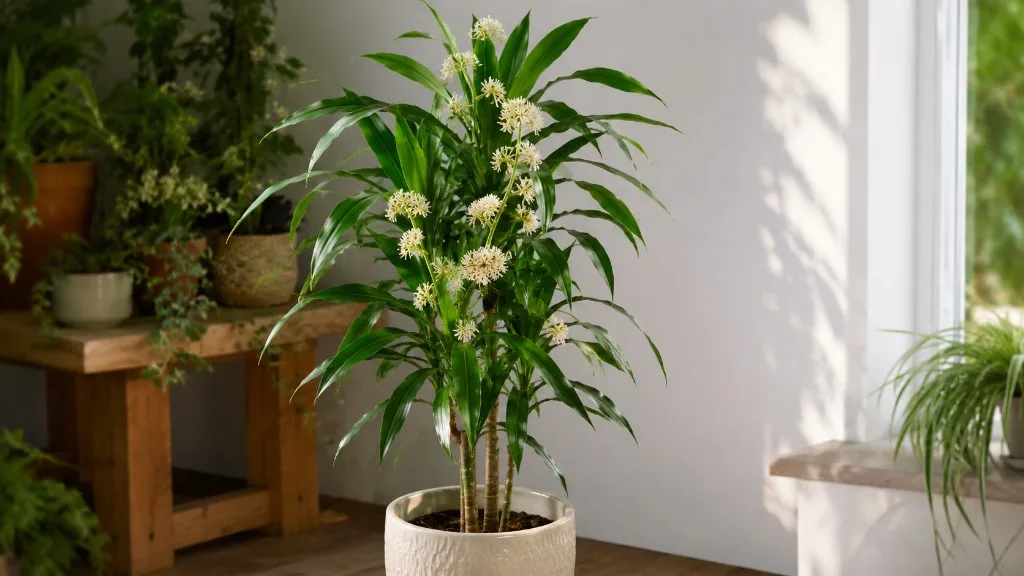
Dracaena deremensis ‘Lemon Lime’ is the chartreuse-striped dracaena with narrow leaves banded in lime green and darker green. Color fades in dim corners and bleaches in harsh direct sun, so light placement matters as much as how often you reach for the watering can. For watering specifically, Lemon Lime follows deremensis rules — not the heavier dry-down rhythm many guides copy from corn plants (Dracaena fragrans).
Dracaena Lemon Lime watering is less about a fixed weekly date and more about reading the pot. This Warneckii-line cultivar wants the top 2 inches of mix to dry before the next deep soak, steady moisture without waterlogging, and low-fluoride water so the narrow striped leaves do not develop permanent brown necrosis at the tips. Check soil at depth every time, empty the saucer after watering, and treat soggy mix as an emergency — not a schedule slip you can ignore.
This guide covers the top-2-inch rule, how variegation and light change dry-down speed, why fluoride burns Lemon Lime harder than many houseplants, seasonal adjustments, overwatering and underwatering signs, and the first steps to take when you are unsure.
Why Watering Lemon Lime Differs From Generic Dracaena Advice
Most dracaena watering articles lump every species under one rule: let half the pot dry, water every two weeks, move on. That works roughly for thick-cane corn plants, but Lemon Lime is a deremensis cultivar with a different moisture sweet spot. The Pacific Northwest Pest Management Handbooks note that Dracaena deremensis should be kept evenly moist, while D. fragrans should dry out because it is easily overwatered (PNW Handbooks). Copying corn-plant advice onto Lemon Lime is a common reason striped Warneckii types stay too dry in summer or too wet in winter.
Lemon Lime also carries chartreuse variegation on narrow leaves. Variegated tissue has less chlorophyll, so the plant often sits in brighter light to hold its color — and brighter light means faster evaporation and more frequent checks. A dim, faded Lemon Lime in a hallway uses water slowly; the same cultivar near an east window may need water a week sooner. Watering must follow the plant in its actual spot, not a generic dracaena label.
Roots still need air between drinks. Clemson HGIC warns that root rot follows mix that does not drain quickly or watering that is too frequent. Lemon Lime tolerates brief dry spells better than chronic sogginess, but repeated full desiccation damages fine roots and shows up as drooping arching leaves. The target is dry in the upper zone, slightly moist below, then one thorough soak — not daily sips and not months of neglect.
Deremensis vs Corn Plant: Two Dry-Down Styles
Think of two dracaenas on the same shelf. A corn plant in a large pot can safely wait until the top half of the mix loses moisture before the next drink. Lemon Lime in a typical 6–8 inch nursery pot dries faster at the surface; the practical check is top 2 inches dry, which often equals roughly the upper third of a smaller root ball. Warneckii-line plants also form compact rosettes of narrow leaves on relatively slim canes — less stem water storage than a thick fragrans cane, so they show drought stress sooner when you wait too long.
If you also grow generic dracaenas, keep the species straight on the tag. Lemon Lime is not a dragon tree (D. marginata) either — marginata tolerates more drought but is even more notorious for fluoride tip burn. Lemon Lime sits in the middle: steady deremensis moisture, strict water quality, moderate dry-down.
The Top-2-Inch Dry Rule for Dracaena Lemon Lime
The most reliable dracaena lemon lime watering habit is simple: push your finger 2 inches into the soil; water only when that depth feels dry. For most indoor pots in the 6–10 inch range, that translates to every 7 to 14 days in warm, bright months and every 14 to 21 days in cooler slow-growth months — but the calendar is only a reminder to check, not permission to pour.
When the top 2 inches are dry, water thoroughly until a little runs from the drainage holes, then empty the saucer within 10–15 minutes. Shallow top-ups keep the surface damp while the middle stays stale — one of the fastest routes to anaerobic roots on deremensis types. One deep watering re-wets the whole root zone; three small splashes do not.
Do not wait for the entire root ball to go bone-dry unless you are correcting chronic overwatering. Missouri Botanical Garden guidance for Warneckii-line dracaenas calls for uniformly moist soil during the growing season with slightly drier conditions from fall through late winter — never letting soil totally dry out. That aligns with Lemon Lime: real dry-down in the upper layer, not desert conditions throughout.
How to Test Soil Moisture Before You Pour
Surface color lies, especially in peat-heavy blends that crust over. Use at least one of these checks every time:
Finger test: Insert your finger to the second knuckle — about 2 inches. Cool, clinging soil means wait. Dry, crumbly soil at that depth means the upper zone has dried enough to water.
Skewer test: Push a dry wooden skewer to mid-pot depth. Moisture darkens the wood. Dry wood at the top 2 inches confirms the check.
Lift test: Learn how your pot feels after a fresh watering versus when the top 2 inches have dried. A noticeably lighter pot usually means it is time to check with your finger.
Moisture meter (optional): A reading in the lower third of the dry range at 2 inches deep can confirm your finger. Meters misread very chunky or very compacted mixes — treat them as a second opinion.
Consistency beats gadgetry. After a month of checking before every watering, you will sense how your Lemon Lime dries in your room.
How Light and Variegation Change Your Watering Schedule
Water use follows photosynthesis. A Lemon Lime in bright indirect light transpires steadily, dries its pot on a predictable rhythm, and needs the top-2-inch check every 5 to 7 days during active growth — watering only when dry at depth, which may mean a deep soak every 7 to 10 days in summer.
Move the same plant to a dim corner to preserve chartreuse color and you get the opposite problem: growth slows, stripes fade toward plain green, and the pot stays wet longer. Many winter overwatering cases are really low-light underuse — the grower pours on a summer schedule while the plant is barely active. If soil stays damp more than 18–21 days in a cool room, skip the next watering even if the calendar says otherwise.
Variegation adds another layer. Cream and chartreuse zones carry less chlorophyll, so growers often compensate with more light — which increases water demand. If you recently moved Lemon Lime closer to a window to restore stripe contrast, recheck dry-down speed before assuming the old interval still works. New growth with vivid lime banding and firm leaves means the light-water balance is right. Pale new leaves and wet soil mean pull back on water or improve drainage before chasing fertilizer.
Fluoride, Tap Water, and Brown Tips on Narrow Leaves
Brown, dry, papery tips on otherwise green Lemon Lime leaves are one of the most common complaints — and one of the most misdiagnosed. Growers raise humidity and cut fertilizer while the real culprit keeps arriving through the watering can: fluoride in municipal tap water.
Both Dracaena deremensis and D. fragrans are very sensitive to fluoride toxicity, according to the Pacific Northwest Pest Management Handbooks. Fluoride is an accumulative poison in foliage; it moves through the transpiration stream and concentrates at leaf margins and tips, causing permanent necrosis. Lemon Lime’s narrow leaves make that damage obvious — a thin brown line along the chartreuse edge is hard to miss.
Fluoride tip burn has a recognizable pattern: necrosis starts at the very tip or leaf margin while the rest of the leaf stays green and the plant otherwise grows normally. Low humidity often causes broader edge browning on multiple leaves at once. Underwatering produces limp foliage and dry soil throughout the pot, not isolated margin lines on otherwise turgid leaves. If only tips are affected and your top-2-inch timing is reasonable, change the water before adjusting humidity.
Michigan State University Extension lists dracaena among crops most susceptible to fluoride toxicity from city water. Other fluoride sources include perlite in potting mix and fertilizers with superphosphate. Clemson HGIC recommends keeping soil pH between 6.0 and 6.5 and avoiding superphosphate fertilizers to limit fluoride injury.
Better Water Sources for Sensitive Foliage
Tap water is fine for many houseplants but risky for Lemon Lime if brown tips keep returning. Letting water sit overnight removes chlorine, not fluoride. Better options:
Rainwater collected from a clean surface is ideal where rainfall is sufficient. Store covered to keep debris out.
Distilled or reverse-osmosis water consistently lacks fluoride and dissolved salts. RO systems or distilled jugs are the most predictable fix for persistent tip burn.
Filtered water only helps if the filter actually removes fluoride — standard pitcher filters often do not. Verify before relying on them.
You do not need special water on day one if tips look clean. The moment new brown necrosis appears on fresh growth while timing is correct, switch water before chasing other variables. Trim old brown tips with clean scissors — the damage is permanent on that tissue, but new leaves can arrive clean.
How to Water Dracaena Lemon Lime the Right Way
Technique matters as much as timing. Follow this sequence:
Check the top 2 inches with finger or skewer. Confirm dryness at depth, not just on the surface.
Water at the soil line, not over the foliage. Pour in stages so mix absorbs evenly instead of channeling down the pot wall.
Soak until steady runoff from drainage holes confirms the root zone received moisture.
Empty the saucer within minutes. Never let the pot sit in stale runoff. If the plant lives in a decorative cachepot, lift the nursery pot, water at the sink, drain fully, then return it.
Note how many days the pot took to reach the 2-inch dry point. You are building a personal baseline for this spot.
Avoid misting as a substitute for root-zone watering. Misting adds negligible soil moisture and can encourage foliar spotting. If humidity is below 35–40%, a pebble tray or humidifier supports leaf comfort without confusing your watering logic.
Seasonal Watering Through the Year
Lemon Lime growth — and water use — follows seasonal light and temperature even indoors. Treating January like July is how winter overwatering happens.
Spring and Summer Active Growth
From mid-spring through summer, longer days push new striped leaves from the rosette. Roots are active, transpiration rises, and the pot dries faster. Check every 5 to 7 days; water when the top 2 inches are dry. Many plants need a deep soak every 7 to 14 days, though bright placements can shorten that interval.
Summer air conditioning can fool you. A plant near a cold vent may dry its surface quickly while the root ball stays cool and damp below. Always test at depth. Vigorous new growth with firm chartreuse banding means timing is likely right. Stalled growth with wet soil means reduce frequency even in summer.
Fall and Winter Slowdown
Shorter days slow photosynthesis. Cooler rooms reduce evaporation. Lemon Lime may produce few new leaves from late fall through early spring, yet growers keep summer schedules because the plant still looks green. Soil that dried in 10 days in July may take 3 to 5 weeks in January. NC State Extension advises keeping soil moist during active growth but cutting back on water in winter.
Check every 10 to 14 days in winter and expect long gaps between actual watering. Some cool, low-light specimens need water only once every 4 to 6 weeks — normal, not neglect. One yellow lower leaf on an otherwise stable plant is often natural aging. Multiple yellow leaves within a week on wet soil is a different story.
Hold off on repotting, heavy fertilizing, and pruning during winter slowdown unless you are correcting active rot.
Signs You Are Overwatering Dracaena Lemon Lime
Overwatering kills more indoor dracaenas than drought. Clemson HGIC lists too much water among the main home problems, with root rot following poor drainage or overly frequent watering. Warning signals include yellow lower leaves in clusters, especially when soil has been wet for days; soft, mushy cane at the soil line — healthy cane is firm when pressed gently; drooping leaves on wet soil — limp foliage with damp mix is overwatering, not thirst; soggy mix that never dries at the interval your room normally allows; sour or fermented odor from the pot; fungus gnats breeding in persistently moist surface soil.
One old yellow leaf is not panic. Three or more leaves yellowing within a week on a regularly watered plant is a red flag. Stop watering, move the plant to brighter indirect light if it has been in deep shade so soil can dry, and inspect roots if the cane feels less than solid.
Underwatering and Drought Stress
Lemon Lime shows drought sooner than thick-cane corn plants. Signs include drooping or curling arching leaves, a very light pot, and crispy brown tips — though tips alone often mean fluoride, not drought. Confirm with soil: if the top 2 inches and much of the root ball are dusty dry and leaves are limp, soak thoroughly and adjust your check interval.
Repeated full dry-outs damage fine root hairs. When water returns after chronic neglect, the plant may shed lower leaves or show tip burn. Steady top-2-inch dry-down prevents that cycle.
Pot, Soil, and Drainage Effects on Moisture
Watering logic fails if the root environment works against you. Lemon Lime needs well-draining soil with perlite and coarse bark so the top 2 inches can dry while lower roots still access moisture. Dense, peat-heavy mix that stays waterlogged for weeks forces you into a lose-lose: water rarely and starve roots, or water on schedule and rot them.
Drainage holes are non-negotiable. Cachepots without drainage trap runoff. Oversized pots hold excess moisture — especially dangerous after repotting when roots have not filled the new volume. Terracotta dries faster than glazed ceramic; adjust checks accordingly.
If soil smells sour or water runs straight through without absorbing, the mix may be hydrophobic or compacted. A full soil refresh at repotting fixes what watering tweaks cannot.
When to use this page vs other Dracaena Lemon Lime guides
Use this page when you need when and how much to water, moisture checks, fluoride-safe water choices, and overwatering or underwatering diagnosis. For stripe color and window placement, see the light guide. For mix recipes and drainage, see soil. For feed timing — which interacts with fluoride and salt buildup — see fertilizer. For pot size and root inspection, see repotting. For the full cluster picture, start at the Dracaena Lemon Lime overview.
First Actions When You Are Unsure
If you are not sure whether to water today, default to waiting and recheck in two days — overwatering is harder to reverse than a brief dry spell on deremensis types. If the top 2 inches are dry and leaves look firm, water deeply and empty the saucer. If soil is wet and leaves are yellowing, skip water, improve light airflow, and consider unpotting to inspect roots if the cane softens.
If brown tips are spreading on new growth despite correct dry-down, switch to low-fluoride water before changing anything else. If you recently moved the plant to a brighter spot for variegation, expect faster dry-down and check more often — do not keep the old winter calendar in summer light.
Related Dracaena Lemon Lime guides
- Overview — identity, toxicity, and whole-plant care snapshot
- Light — brightness for chartreuse stripes; ties directly to dry-down speed
- Soil — drainage and perlite content affecting fluoride and moisture
- Fertilizer — low-fluoride feeding to avoid tip burn
- Repotting — when wet soil never dries because the pot or mix is wrong
- Propagation — cane cuttings after you stabilize watering on the parent
Conclusion
Dracaena Lemon Lime watering comes down to three habits: check the top 2 inches before every soak, keep steady deremensis moisture without waterlogging, and use low-fluoride water so narrow chartreuse leaves stay clean at the margins. Match your check frequency to light and season — brighter active growth dries faster; winter dim spells need patience. When tips brown despite good timing, fix the water. When leaves yellow on wet soil, stop pouring and inspect the cane. Get those calls right and this striped cultivar stays upright and vivid for years.