How to Propagate Dracaena Lemon Lime: Stem & Cane Guide
How to Propagate Dracaena Lemon Lime: Stem & Cane Guide
How to Propagate Dracaena Lemon Lime: Stem & Cane Guide
Dracaena Lemon Lime propagation works when you treat Dracaena deremensis ‘Lemon Lime’ as a node-bearing cane plant, not a pothos you can restart from a single leaf. This cultivar — the chartreuse-and-green striped Warneckii type with narrow arching leaves — roots reliably from top stem cuttings, leafless cane sections, and air layering, the same toolbox Clemson Cooperative Extension lists for dracaenas generally. What fails every time is rooting a detached leaf blade with no stem node attached. The growth tissue that builds new roots and shoots lives along the slim upright cane, not in the variegated leaf alone.
The practical goal is to multiply a healthy plant while keeping the lime-and-green banding strong on new foliage. That means rooting in spring with warmth, using filtered or rainwater to avoid fluoride burn on fragile new tips, and giving cuttings bright indirect light — the same level you would target on the Dracaena Lemon Lime light guide. Dim propagation corners produce pale, washed-out stripes even when roots form. Match moisture to a well-draining soil mix and the top-half dry watering rhythm once cuttings are potted, and you avoid the soggy conditions that rot narrow deremensis stems faster than they root.
What Makes Lemon Lime Different to Propagate
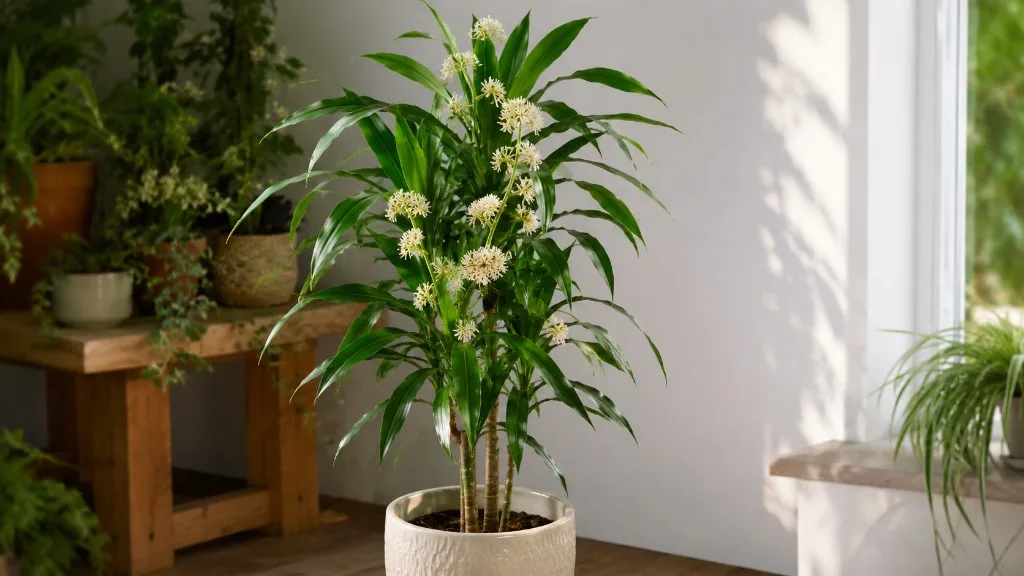
Dracaena deremensis ‘Lemon Lime’ grows as an erect evergreen shrub with narrow, arching leaves striped in green and bright greenish-yellow, maturing to roughly 3–5 feet indoors on a tree-like stem according to Missouri Botanical Garden. Young plants are usually a single unbranched cane with foliage clustered at the top; older specimens can branch and push side shoots. That architecture is slimmer than a thick Dracaena fragrans corn-plant trunk but follows the same rule: each ring or leaf scar along the cane is a potential node where dormant buds can wake to form roots or new vertical shoots.
The RHS plant profile for ‘Lemon Lime’ recommends propagation by semi-hardwood cuttings or leafless stem sections in spring with bottom heat — language that fits how most indoor growers behead a leggy specimen or slice a bare lower stem into sections. UF/IFAS commercial guidance groups ‘Lemon Lime’ with other D. deremensis cultivars whose long narrow leaves cluster on an unbranched stem, noting that tip cuttings, air layering, and cane cuttings are the primary propagation routes for the genus. You are not working with a radically different biology than other dracaenas — you are working with a variegated deremensis habit where stripe quality and fluoride tolerance matter more during the rooting window.
Why Leaf Cuttings Fail on Variegated Deremensis
A broken Lemon Lime leaf — even one with vivid chartreuse bands — cannot become a new plant because it lacks meristematic node tissue. Leaves photosynthesize; nodes build stems and sustained root systems. You may see thin roots emerge from a petiole base in water, but without cane tissue the cutting cannot push the next generation of striped leaves indefinitely. Social posts showing a single dramatic leaf in a jar rarely follow up six months later when the leaf yellows with no stem.
If your goal is a full Lemon Lime dracaena, take stem or cane material with at least one node, ideally two for insurance. Compost detached leaves. The variegation pattern is carried in stem buds, not in isolated leaf blades you root separately.
Reading Nodes on Narrow Warneckii-Type Canes
On Lemon Lime canes, nodes appear as horizontal lines, slight ridges, or old leaf scars where arching leaves once attached before they senesced and dropped. Run your finger along the stem — the bumps are easier to feel than see on slim green tissue. When you take a top cutting, the lowest node on the stem segment is your rooting zone; arching striped leaves above it fuel photosynthesis while roots form below.
Always cut just below a node on the piece you intend to root. Cutting between nodes leaves a dead-end segment with no growth points. Polarity matters on cane sections: mark which end was uppermost on the parent plant before you slice a bare stem into pieces. Buds orient upward; upside-down sections stall or rot.
Tools and Setup Before You Cut
Gather supplies before you cut a plant you cannot instantly replace. You need a sharp bypass pruner or sterile knife, 70% isopropyl alcohol for blade wipes between sections, a narrow clear glass for water rooting, small pots with drainage holes for soil rooting, fresh potting mix cut with perlite or coarse bark (roughly half and half for cuttings), optional rooting hormone, damp sphagnum moss and clear film for air layering, and a propagation dome or loose humidity bag supported so plastic never rests on leaves.
Because Lemon Lime is toxic to cats and dogs — the ASPCA lists dracaena as containing compounds that cause vomiting and other symptoms if ingested — keep cuttings, pruned leaves, and rooting water out of pet reach for the entire rooting period. Wear gloves if sap irritates your skin.
Fluoride-Safe Water and Mix for Rooting
Fluoride sensitivity is not a minor footnote on this cultivar. Clemson HGIC warns that dracaena is very sensitive to fluoride, which causes yellowing or dead scorched leaf margins — damage that shows quickly on new propagules using municipal tap water. UF/IFAS production notes tie high fluoride to chlorotic or necrotic leaf tips on D. deremensis cultivars including ‘Lemon Lime’. For propagation, default to rainwater, distilled water, or reverse-osmosis water in both jars and watering cans.
Use a standard peat-free houseplant mix amended with perlite for drainage, matching what you would use on an established plant per the Dracaena Lemon Lime soil guide. Clemson cautions that very high perlite percentages can release fluoride when paired with fluoridated irrigation — control the water first, then adjust mix if tips keep browning on otherwise healthy cuttings.
Best Timing for Lemon Lime Propagation
Propagate during active growth — spring through late summer — when warmth and longer days support cell division at nodes. Clemson HGIC states dracaenas propagate readily from air layering, tip or stem cuttings, or basal shoots in spring or late summer. The RHS ‘Lemon Lime’ profile specifically pairs spring with semi-hardwood and leafless stem sections plus bottom heat — a heated propagation mat under soil trays raises success in cool homes.
Winter attempts can work but expect rooting timelines to double or triple and rot risk to climb in dim, cool rooms where water and mix stay wet too long. Take material only from a firm, green cane pushing healthy striped leaves — not from a plant you are still stabilizing after repotting shock, shipping stress, or chronic drought. Water the parent thoroughly one day before cutting so stems are fully hydrated.
Method 1: Top Stem Cuttings With Nodes
Top stem cuttings are the first method most Lemon Lime owners need. You remove the leafy crown — typically the upper 4 to 8 inches (10 to 20 cm) with several arching striped leaves — and root it while the bare parent cane resprouts below. This resets a leggy single-stem plant and gives you a shapely new specimen. Include at least one node on the stem portion; two nodes provide backup if the lowest fails.
Cut just below a node with a sterile blade. Strip any leaves that would sit below the water line or bury in soil, leaving enough upper foliage to photosynthesize. Let the cut end air-dry one to four hours in warm shade so the wound surface is not dripping wet when it contacts water or mix. Optional rooting hormone on the lowest node zone can speed rooting on slower deremensis tissue, though many cuttings root without it in warm bright conditions.
Rooting Top Cuttings in Water
Water propagation suits slim deremensis canes well — the stem diameter on Lemon Lime is closer to Warneckii than to a thick corn-plant trunk, so the base is less prone to the soft rot that plagues massive D. fragrans canes in jars. Fill a clean narrow glass with room-temperature filtered water. Submerge one node while keeping all striped leaves above the surface. Place the glass in bright indirect light — an east window or several feet back from filtered south or west glass. Direct sun on the jar overheats water and cooks developing roots.
Change water every five to seven days, rinsing the stem and glass if biofilm appears. Roots often show as white nubs at the submerged node within two to four weeks in warm spring conditions; cooler rooms may need five to eight weeks. Pot when roots reach 1 to 2 inches (2.5 to 5 cm). Do not leave cuttings in water past six to eight weeks — stems can soften at the base even when roots look fine.
Rooting Top Cuttings in Potting Mix
Soil rooting builds sturdier roots from the start and skips the water-to-soil transition shock. Moisten perlite-heavy mix until it feels like a wrung-out sponge. Insert the cutting 2 inches (5 cm) deep with at least one node buried. Enclose the pot in a loose humidity dome or bag with airflow gaps so plastic does not touch leaves. Keep medium lightly moist, not wet, in the same bright indirect light.
Test with a gentle tug after four to six weeks — resistance suggests rooting. New striped leaf unfurling is a better signal than repeatedly uprooting the cutting. Bottom heat toward 75–80°F (24–27°C) at the media surface matches the RHS spring recommendation and speeds deremensis rooting in air-conditioned homes.
Method 2: Cane Section Cuttings
Cane section cuttings multiply plants from the bare lower stem after lower leaves drop and only the striped crown remains at the top. If you behead the top for a cutting and still have 12 to 24 inches (30 to 60 cm) of leafless cane, slice it into segments instead of composting it. Each piece needs one to three nodes and at least 3 to 4 inches (7 to 10 cm) of length.
Let cut surfaces air-dry briefly. Root sections vertically (bottom end buried, top end up) or horizontally (laid on moist mix like logs). Horizontal placement is efficient: multiple nodes on one section can each push a shoot, giving several small plants before you separate them. Missouri Botanical Garden’s cutting guide notes that many cuttings root more reliably in soil-less mix than in water, with perlite improving drainage for species prone to rot — a good default for leafless cane pieces without photosynthesizing leaves.
Vertical vs Horizontal Cane Placement
Vertical sections bury the bottom end 1 to 2 inches (2.5 to 5 cm) with at least one node below soil and one above. The upper node pushes new arching leaves; the lower node roots. Horizontal sections are pressed halfway into moist mix so underside nodes contact moisture while the upper surface stays exposed. Both orientations need high humidity, warm bright indirect light, and careful moisture — leafless sections transpire little but still rot in cold saturated mix.
Vertical placement is simpler for beginners. Horizontal placement maximizes plant count from one pruning session when you are comfortable waiting longer before separation.
Method 3: Air Layering for Tall Specimens
Air layering roots a stem section while it stays attached to the parent, so the cutting keeps receiving water and sugars from roots below the wound. Use it on tall top-heavy Lemon Lime plants where you want guaranteed roots before severing, or when water rooting on a thickening lower cane feels risky.
Choose a firm green section 12 to 18 inches (30 to 45 cm) below the leafy crown. Wipe the zone with alcohol. Make an upward-slanting cut one-third to halfway through the stem, or remove a narrow bark ring — interrupt cambium flow without severing the cane. Hold the cut open with a toothpick, dust with rooting hormone if available, and pack damp sphagnum moss around the wound. Wrap clear plastic tightly above and below the moss bundle, sealing with twist ties while keeping the moss visible.
Check weekly that moss stays moist but not soggy. Roots typically appear inside the plastic within four to eight weeks in warm spring conditions, sometimes longer in cool rooms. When roots are at least 1 inch (2.5 cm) long and dense, cut just below the rooted zone and pot without disturbing the root ball more than necessary. The parent stem below usually pushes new shoots within weeks.
Rooting Conditions That Protect Stripe Color
Every propagation method on Lemon Lime converges on warmth, bright indirect light, balanced moisture, and fluoride-aware water. Cold wet mix rots slim canes before they root. Dim corners root slowly and — critically for this cultivar — produce pale new leaves with weak chartreuse banding even when the cutting survives. Variegated tissue needs more total light than solid-green dracaenas to maintain stripe contrast; propagation stations should match or slightly exceed the brightness of the parent plant’s happy spot.
Temperature, Light, and Humidity Targets
Aim for 65–85°F (18–29°C) air temperature around cuttings, with 75–80°F (24–27°C) media temperature under soil setups if you use a heat mat. Humidity 60–80% under domes helps leafless cane sections, but never seal plastic against foliage — stagnant air encourages fungal rot on arching leaves.
Realistic rooting timelines for slim deremensis-type cuttings: water top cuttings often root in two to four weeks in warm spring conditions; soil top cuttings commonly need four to eight weeks; cane sections may need six to twelve weeks; air layering often takes four to twelve weeks before severing. Cool or dim conditions stretch every range.
Aftercare From First Roots to a Stable Plant
Rooting is not the finish line. Water-rooted cuttings potted too early or into soggy mix collapse after apparent success. Pot at 1 to 2 inches of root length into airy moist mix, keep humidity high for two weeks, and water lightly when the top inch dries — the same conservative approach as established Dracaena Lemon Lime watering. Soil-rooted cuttings should have humidity domes removed gradually over a week once stems resist a gentle tug.
Hold fertilizer until you see active new striped growth — typically four to eight weeks after confirmed rooting. Young roots in fresh mix do not need feeding; when growth resumes, follow the diluted schedule on the Dracaena Lemon Lime fertilizer guide. Repot into a slightly larger container only when roots circle the pot — not immediately upon rooting.
Watch new leaves as your quality check. Firm leaves with crisp lime-and-green bands mean the setup works. Brown tips on fresh growth often mean fluoride in tap water, not failed rooting — switch to filtered water before assuming the cutting is lost. Yellow newest leaves or soft cane bases mean excess moisture; let the mix dry further and improve light airflow.
What Happens to the Parent Cane After You Cut
When you remove a top cutting or complete an air layer, the remaining cane does not die. Dormant buds below the wound typically push one or more new shoots within two to eight weeks in warm bright conditions. Clemson HGIC notes plainly that if stems become too long and bare, you can cut them at the desired height and new leaves will soon appear — how a single leggy Lemon Lime becomes a multi-stemmed specimen after a hard prune. The RHS profile also allows cutting weak plants back to within 15 cm of the base in spring to restart growth.
Leave the parent in its original pot for at least one growth cycle unless roots were already compromised. Water on your normal schedule, provide bright indirect light, and avoid heavy feeding until new shoots harden. If nothing breaks after ten warm weeks, confirm the cane is still firm and green, that viable nodes remain below the cut, and that cold wet soil is not suppressing metabolism. Mature Lemon Lime plants may also offer basal side shoots you can sever as rooted cuttings — treat them like small top cuttings when they reach 6 inches (15 cm) or taller.
Common Propagation Failures on Lemon Lime
Mushy stem base in water means the cutting sat too deep, water was stagnant or cold, or the cane was declining before you cut — discard soft tissue and restart from firm material. Cane sections that shrivel usually indicate low humidity, dry mix, or a dehydrated parent — increase dome humidity and verify moisture without saturation. Green leaves but no roots after ten weeks often trace to too little light or too cool a room — move to brighter indirect exposure and add bottom heat under soil trays.
Blackened nodes signal rot from airless wet conditions — improve airflow, reduce watering, and callus cut ends before insertion. Water roots that collapse after potting mean transition happened too early or mix stayed too wet — wait for longer roots and use a perlite-heavy blend. Pale washed-out new stripes mean insufficient light during rooting, not a “bad cutting” — brighten the station. Brown tips on new growth during rooting point to fluoride — switch water sources before adding hormone or fertilizer.
If several sections from one cane fail, pause and stabilize the parent plant’s overall health before taking more material. Propagation multiplies thriving plants; it does not rescue chronic stress. Pair severe legginess with the Dracaena Lemon Lime pruning guide so you cut with a plan for both the new cutting and the reshaped parent.
Conclusion
Dracaena Lemon Lime propagation rewards growers who think in nodes, slim canes, and stripe-preserving light — not leaves in a jar. Top stem cuttings reset height fastest on single-stem specimens. Cane sections — vertical or horizontal — turn bare lower stem into multiple plants. Air layering secures roots on tall stock before you cut. All three need spring warmth, bright indirect light, moisture without sogginess, and fluoride-free water while new chartreuse bands form.
Choose firm cane with visible nodes, cut cleanly with sterile tools, and give both the new cutting and the parent stem steady care while buds wake below and roots form above. Done correctly, one leggy Lemon Lime becomes several striped plants — and a shorter, bushier parent — in a single growing season.
When to use this page vs other Dracaena Lemon Lime guides
- Dracaena Lemon Lime overview — Start here for whole-plant context, toxicity, and buying checks before you multiply a specimen.
- Dracaena Lemon Lime watering — Use when brown tips or soggy mix appear on parent or newly potted cuttings; propagation success still depends on correct moisture after rooting.
- Dracaena Lemon Lime light — Use when new propagules push pale leaves with weak stripes; brightness during rooting should match established-plant targets.