Dracaena Lemon Lime Light Needs: Placement Guide
Dracaena Lemon Lime Light Needs: Placement Guide
Dracaena Lemon Lime Light Needs: Placement Guide
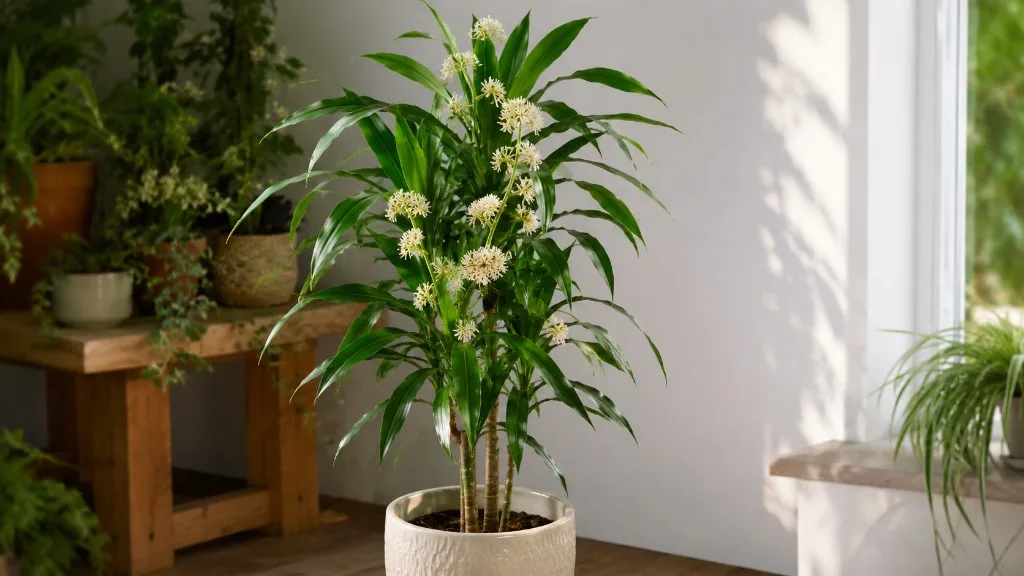
About this guide: Dracaena deremensis ‘Lemon Lime’ is the chartreuse-striped dracaena with narrow leaves banded in lime green and darker green. Color fades in dim corners and bleaches in harsh direct sun, so placement matters as much as watering. Otherwise it follows standard deremensis rules: let the top half of the mix dry, use low-fluoride water, and avoid cold drafts below 50°F (10°C).
Dracaena Lemon Lime is bought for its vivid chartreuse bands — and lost when those bands wash out in a dim hallway or bleach against hot glass. Unlike solid-green Janet Craig dracaenas that can coast in office fluorescents, this deremensis cultivar carries large zones of yellow-green tissue with less chlorophyll than plain green leaves. It needs medium to bright indirect light for most of the day to keep stripes crisp, grow at a steady pace, and dry its pot on a predictable rhythm. Park it in a dark corner and it may survive; park it in unfiltered afternoon sun and the chartreuse turns papery white. The sweet spot is bright enough that new leaves keep strong lime-and-green contrast, filtered enough that no leaf surface cooks in direct rays for hours.
Clemson Cooperative Extension notes that most dracaenas grow best in bright, indirect light, though many tolerate lower light, and that round dry patches and streaks on leaves may be caused by excessive sunlight on the foliage. The RHS profile for Dracaena deremensis ‘Lemon Lime’ recommends growing under glass in full light with shade from hot sun while noting the cultivar is tolerant of low light levels indoors — a combination that captures the real trade-off: Lemon Lime will live in moderate shade, but it will not look like the nursery photo unless you give it real brightness. This guide covers how much light that means in a home, where to place the pot by window direction, when grow lights help, and how to read the leaves before you blame watering problems or fertilizer for color loss.
How Much Light Dracaena Lemon Lime Actually Needs
Dracaena deremensis ‘Lemon Lime’ grows as a slow, shrub-like indoor specimen with narrow arching leaves typically reaching 60 cm (about 24 inches) on mature foliage, striped green and bright greenish-yellow according to the RHS cultivar description. In tropical African forest margins — the native context shared by the deremensis group — plants receive bright days under filtered canopy, not all-day blazing sun on a single leaf. Missouri Botanical Garden guidance for striped deremensis types places them in part shade indoors with bright indirect light protected from significant direct sun, tolerating some low light but warning that too much sun may prevent the best foliage color from developing.
Translated to a living room, the practical target is bright indirect light for 10 to 12 hours daily during active growth — enough photons that the canopy photosynthesizes steadily, not the intensity a cactus wants on a south sill. That usually means within 1 to 3 feet (30 to 90 cm) of an east window, or 3 to 5 feet back from south or west glass filtered by sheer curtain, blinds, or building shade. A spot that feels bright to your eyes at noon can still be too dim for Lemon Lime if the pot sits across the room; dracaena leaves do not harvest reflected ceiling glow the way you might assume from how the corner looks to you.
NC State Extension lists the genus as preferring bright, indirect sunlight and tags dracaena as partial-shade tolerant — direct sun only part of the day, roughly two to six hours — which aligns with morning exposure through east glass rather than baking afternoon beams. Clemson HGIC adds that if a dracaena growing in dim light moves to a brighter spot, new leaves will be thicker and stronger and the growth rate will increase — proof the dim site was limiting even when the plant looked acceptable. For Lemon Lime specifically, judge success by new leaf color: firm leaves with wide chartreuse bands mean the current light works; smaller new leaves with narrow yellow margins mean step brighter.
The Short Answer for Busy Growers
If you only remember four rules, use these. Default placement: bright indirect light near an east window or filtered south/west exposure, pot close enough that light lands on leaves. Low light keeps the plant alive but not the color — stripes fade toward plain green in dim offices and interior corners. Avoid prolonged direct sun, especially hot afternoon rays; brief acclimated morning sun may work, but midday and afternoon direct light commonly bleaches chartreuse zones. Read new growth, not old scars — only leaves produced after a placement change tell you whether light is right. Give any move 10 to 14 days before deciding it failed; Lemon Lime responds slowly compared to pothos.
Why Chartreuse Stripes Need Brighter Light Than Plain Green Dracaena
The reason Lemon Lime is pickier than Janet Craig or plain Warneckii is not marketing — it is leaf physics. Chartreuse and yellow-green bands contain less chlorophyll per square inch than the dark green zones beside them. Those pale sections cannot photosynthesize at full capacity, so the remaining green tissue must capture more total daily light to support the whole leaf. Under insufficient brightness, the plant simplifies the leaf toward green because building chlorophyll is cheaper than maintaining decorative chartreuse that costs energy without paying it back.
Clemson HGIC calls ‘Warneckii’ — Lemon Lime’s white-striped deremensis relative — one of the best variegated plants for low light among dracaenas. That ranking is relative: Warneckii tolerates moderate dim better than extreme variegates like ‘Florida Beauty’, not an invitation to hide any striped dracaena in a windowless bullpen. Lemon Lime’s broader chartreuse fields push it toward the brighter end of the deremensis range if you want the color you paid for. A Warneckii in medium indirect light may keep crisp white edges; Lemon Lime in the same spot often shows muted, gray-green yellow bands within one to two leaf cycles.
This cultivar also differs from dragon tree (Dracaena marginata) and corn plant (Dracaena fragrans) in leaf shape — narrow arching straps in a rosette rather than sword leaves or broad corn-like blades — but the light principle is the same across variegated dracaenas: more non-green surface area means more total brightness required. Do not copy placement from a solid-green office dracaena and expect Lemon Lime to keep nursery contrast.
How Variegation Fades When Light Is Too Low
Fading chartreuse on Lemon Lime follows a predictable sequence if you know what to watch. First, new leaves emerge slightly darker overall, with narrower lime bands and wider green centers. Next, older leaves may look dull rather than vivid, and the plant adds cane height slowly or not at all. Then, lower leaves yellow and drop as the plant sheds tissue it cannot support — a pattern often misread as overwatering when the real throttle is insufficient light slowing water use. Finally, in chronic shade, new growth looks nearly solid green; the plant is reallocating chlorophyll to survive.
Recovery requires brighter placement — not more fertilizer. Move closer to the window, filter harsh direct sun rather than retreating deep into the room, or add a supplemental LED. Improved striping appears on new leaves only; older faded foliage will not regain chartreuse. Trim cosmetic damage after the plant stabilizes if it bothers you.
Bright Indirect Light: What It Means for Lemon Lime Leaves
Bright indirect light for Lemon Lime means the leaf surface is well lit from sky brightness and room reflection, but no sun disk traces across the foliage for hours. You should be able to read comfortably at the plant’s location at midday without a lamp, yet not feel sharp heat on your skin from sunbeams hitting the leaves directly. The chartreuse zones should look luminous, not shadowy; the green stripes should read as deep forest green, not olive-gray.
The RHS dracaena growing guide recommends positioning dracaenas in bright but indirect light — such as an east- or west-facing window, or south-facing glass shaded by sheer curtains — and keeping plants out of direct summer sun, which can scorch leaves. That framing fits Lemon Lime exactly: it wants the brightness south glass provides in winter, with the diffusion sheer fabric adds in summer when rays intensify. Filtering peak hours matters more than maximizing total hours for this cultivar.
Reading Brightness at the Canopy, Not the Room
The most common placement mistake is judging light where you walk, not where leaves sit. A tall Lemon Lime on the floor may receive a fraction of the brightness hitting the windowsill a meter above. Likewise, a plant tucked beside a bright sofa can sit in permanent shadow from the couch back. Canopy-level brightness is the metric — the topmost rosette where new leaves unfold.
Use the new-growth test after two weeks in a candidate spot. The newest leaf should match the cultivar’s expected size and show clear green and chartreuse banding. If every new leaf is smaller than the one below it, or bands are shrinking, the spot is too dim even if the room feels cheerful. Rotate the pot a quarter turn weekly so canes do not lean permanently toward the glass.
Best Window Placement for Dracaena Lemon Lime Indoors
Compass direction is a starting guess, not a verdict. A labeled south window blocked by a porch roof may deliver less usable light than an open east pane. Lemon Lime succeeds when canopy brightness matches cultivar needs for enough hours daily — typically 10 to 12 hours of meaningful indirect brightness during spring and summer, with reduced totals in winter acceptable if growth slows.
Place the pot within three feet of the glass on the chosen exposure when possible, not on a distant console where the plant sees sky but receives little flux. For multi-cane specimens, ensure the upper rosette receives light, not just the lower trunk in floor shadow. Pair placement with the soil and drainage basics from the cluster — bright light increases dry-down speed, and deremensis roots still need air between waterings.
East, North, South, and West Exposures Compared
An east-facing window is the most reliable default for Lemon Lime. Morning sun is bright but cooler than afternoon sun, giving strong indirect light for the rest of the day after one to two hours of soft direct rays. Most Lemon Lime specimens perform well east without heavy filtering; watch only for cold winter sill drafts, not light intensity.
A north-facing window delivers consistent but lower-intensity light in the northern hemisphere. Lemon Lime may persist on north exposures in summer at mid-latitudes, but chartreuse bands often fade October through March without supplementation. Expect slower growth and longer intervals between watering checks; do not treat north placement as optimal for display color.
A south-facing window offers the strongest winter sun — excellent for Lemon Lime pulled back from direct rays or behind sheer curtain. In summer, south glass can overheat and bleach chartreuse zones; diffuse peak hours or move the pot four to six feet inward when bleaching appears on the glass-facing side.
A west-facing window delivers intense afternoon sun that burns Lemon Lime faster than east morning exposure. West works when filtered by curtain or when the pot sits far enough back that direct rays never touch leaves. Unprotected west glass in July is a common source of sudden bleaching after a well-intentioned move toward “more light.”
Direct Sun on Dracaena Lemon Lime: What Works and What Burns
Lemon Lime is not an all-day direct-sun houseplant. Prolonged direct sunlight — especially midday and afternoon through clear glass — damages the large chartreuse zones faster than solid-green dracaena leaves because pale tissue has less pigment buffer against photobleaching and heat.
Clemson HGIC links excessive sunlight on dracaena foliage to round dry patches and streaks on leaves — distinct from the thin brown tips caused by fluoride in tap water on many dracaenas. NC State Extension notes that direct sunlight can scorch dracaena leaves. The classic failure mode is moving a nursery-shaded Lemon Lime to unfiltered west glass “because variegated plants need more light.” They need more brightness, not more beam intensity on the leaf surface.
Brief, acclimated morning sun through east glass can work for established plants, but it is not required for health. Bright indirect alone is sufficient. If you experiment with direct rays, increase exposure over 7 to 14 days, watch the sun-facing side of newest leaves daily, and retreat at the first sign of bleaching.
Recognizing Bleached and Scorched Chartreuse Zones
Sun-stressed Lemon Lime shows patterns you can separate from other problems if you look at which leaf zones failed and how fast damage appeared.
Bleached or whitened chartreuse bands on the sun-facing side indicate photobleaching — pigment breakdown before tissue dies. This hits yellow-green zones first because they already carry less chlorophyll protection.
Round, dry, tan or brown patches mid-leaf match Clemson HGIC’s description of excessive sunlight damage. They feel papery and crisp, not soft like rot.
Crisp margins appearing within days of a window move suggest scorch or heat, especially if only the glass-facing half of the leaf is affected.
Sudden leaf drop after relocation without soft stems or sour soil often signals light shock from too large a jump, not disease.
Do not confuse directional sun patches with fluoride brown tips — those tips are usually thin, repeated on many leaves regardless of sun direction, and tied to water chemistry rather than a sun-facing patch pattern. Less light intensity fixes scorch; filtered water fixes fluoride. Misdiagnosis wastes weeks.
Low-Light Tolerance: Survival vs Stripe Quality
The RHS Lemon Lime profile states the cultivar is tolerant of low light levels indoors, which explains why Lemon Lime appears in offices and lobby plantings. Tolerance means the plant keeps living, not that it keeps the chartreuse bands that justify the purchase. In dim conditions, expect slower cane extension, smaller new leaves, wider gaps between nodes, and washed-out yellow-green stripes as the plant sheds decorative color to survive.
Low light also traps growers in a watering trap. A dim Lemon Lime uses less water, stays wet longer, and becomes vulnerable to root problems if you water on the schedule that worked near the window. Clemson HGIC’s observation about thicker new leaves after a brightness upgrade applies in reverse: chronic shade produces thin, weak new growth and unpredictable moisture in the pot. If you must keep Lemon Lime in a genuinely dim location, accept display compromise — or add supplemental LED light and keep the cultivar.
Compared with solid-green Janet Craig, Lemon Lime is a poor choice for a dark corner if color matters. Compared with white-striped Warneckii, Lemon Lime often needs a step brighter to hold chartreuse. Honest genetics-to-placement matching beats hoping fertilizer will restore stripes.
Grow Lights for Dracaena Lemon Lime
When natural light falls short — north windows in winter, interior desks far from glass, short days above 45° latitude — a full-spectrum LED grow light closes the gap more reliably than hunting for a darker myth about dracaena toughness. Lemon Lime does not need cannabis-grade intensity; it needs consistent moderate brightness across the rosette for 10 to 12 hours daily.
Choose a fixture labeled for houseplants or seedlings, typically 4000K to 6500K white spectrum. Position the lamp 12 to 18 inches (30 to 45 cm) above the tallest leaf tip as a starting point. If leaves pale or stretch toward the lamp, lower slightly or extend duration; if edges crisp only under the bulb, raise the fixture or reduce hours. Run lights on a timer for predictable day length.
Coverage beats pinpoint intensity. A single bulb over the center of a wide rosette leaves outer leaves in shadow. Use a bar or panel spanning the pot, or rotate weekly under a clip-on lamp. When you add artificial light, recheck soil moisture after two weeks — brighter total daily light speeds dry-down even if the window did not change.
How Light Level Changes Your Watering Rhythm
Light is the throttle on Lemon Lime metabolism even though watering gets blamed first. Brighter light increases photosynthesis and transpiration; dim light slows both. A watering rhythm that worked on a bright windowsill will overwater the same plant after you move it to a dim hallway because the root zone stays saturated longer.
After any light increase, check soil moisture more frequently for the first month, but still follow the top-half dry rule — deremensis roots need air between drinks even when bright. After a light decrease, extend dry intervals and pause fertilizer until new growth confirms the plant is still active. Do not feed your way out of insufficient light.
Growth pace should match brightness. In bright indirect light, a few new leaves per season is normal for slow deremensis growth. In low light, months without visible new leaves may still mean the plant is alive. Match expectations and watering to that reality.
Light also influences propagation success. Stem cuttings root more predictably when parent plants and rooting stations receive moderate to bright indirect light. Dim shelves produce slow, rot-prone cuttings because energy input is too low for clean callus formation.
Warning Signs Your Lemon Lime Has the Wrong Light
Lemon Lime communicates light stress through leaf color, texture, and growth pace rather than dramatic wilting. Use a two-week observation window after any placement change. Old damage is historical; new leaves and cane tips after the move tell the truth.
Too little light typically shows as absent or very slow new growth, smaller new leaves, loss of chartreuse band width, darker overall green, elongated internodes as the rosette reaches toward brightness, and soil that stays moist too long. Pest pressure like fungus gnats increases when root zones stay wet in dim, cool conditions.
Too much light or heat shows as bleached white or yellow patches on chartreuse zones, crisp brown edges on the sun-facing side, sunken scorched areas that feel papery, sudden leaf collapse after an unacclimated move to strong south or west glass, and repeated afternoon curling that unfolds overnight but returns daily.
When both seem possible — hot glass in a dim winter room — remove direct beam and heat first. Scorch can happen in a week; low-light stasis takes months. After stabilizing, reassess total brightness and add a grow light if growth remains absent.
When to use this page vs other Dracaena Lemon Lime guides
- Dracaena Lemon Lime overview — Start here for whole-plant identity, toxicity, and care summary before deep-diving light placement.
- Dracaena Lemon Lime watering — Use when soil moisture, fluoride brown tips, or overwatering signs are the main issue rather than placement.
- Dracaena Lemon Lime soil — Read when drainage, mix composition, or repot timing interact with how fast the pot dries in your light level.
- Dracaena Lemon Lime fertilizer — Consult after light and watering are stable; fertilizer cannot restore faded chartreuse from shade.
- Dracaena Lemon Lime propagation — Turn here when taking cane cuttings; bright indirect light supports rooting success.
Related Dracaena Lemon Lime guides
- Dracaena Lemon Lime overview
- Dracaena Lemon Lime watering
- Dracaena Lemon Lime soil
- Dracaena Lemon Lime fertilizer
- Dracaena Lemon Lime repotting
- Dracaena Lemon Lime propagation
- Dracaena Lemon Lime pruning
Conclusion
Dracaena Lemon Lime light care comes down to one distinction beginners skip: survival tolerance is not color maintenance. Dracaena deremensis ‘Lemon Lime’ will endure moderate shade longer than many showy houseplants, but it only keeps vivid chartreuse bands in medium to bright indirect light — roughly the brightness of an unobstructed east window at moderate distance, or filtered south exposure with enough setback to avoid hot direct glass.
Place the pot where new growth proves the light works, not where the room looks nice. Use morning direct sun cautiously after acclimation; avoid unfiltered afternoon beams through west and south panes in heat. Treat north windows and interior desks as survival or grow-light placements, not as homes for display-quality stripes. When natural light falls short, a simple full-spectrum LED on a 10–12 hour timer closes the gap reliably.
If something looks wrong, read the newest leaf and adjust one variable at a time. Step light changes gradually, link watering to dry-down speed, and remember that old scorch scars never heal — but the right placement today still produces clean chartreuse bands on tomorrow’s leaves.