Underwatering on Dracaena Lemon Lime: Causes, Checks & Fixes
Quick answer
Underwatering on Dracaena Lemon Lime shows as drooping narrow leaves, dry crispy tips without a yellow halo, and very light pot weight when the top 2 inches of mix have been dry too long. First step: water thoroughly until runoff drains freely, then wait until the top 2 inches dry again before the next drink.
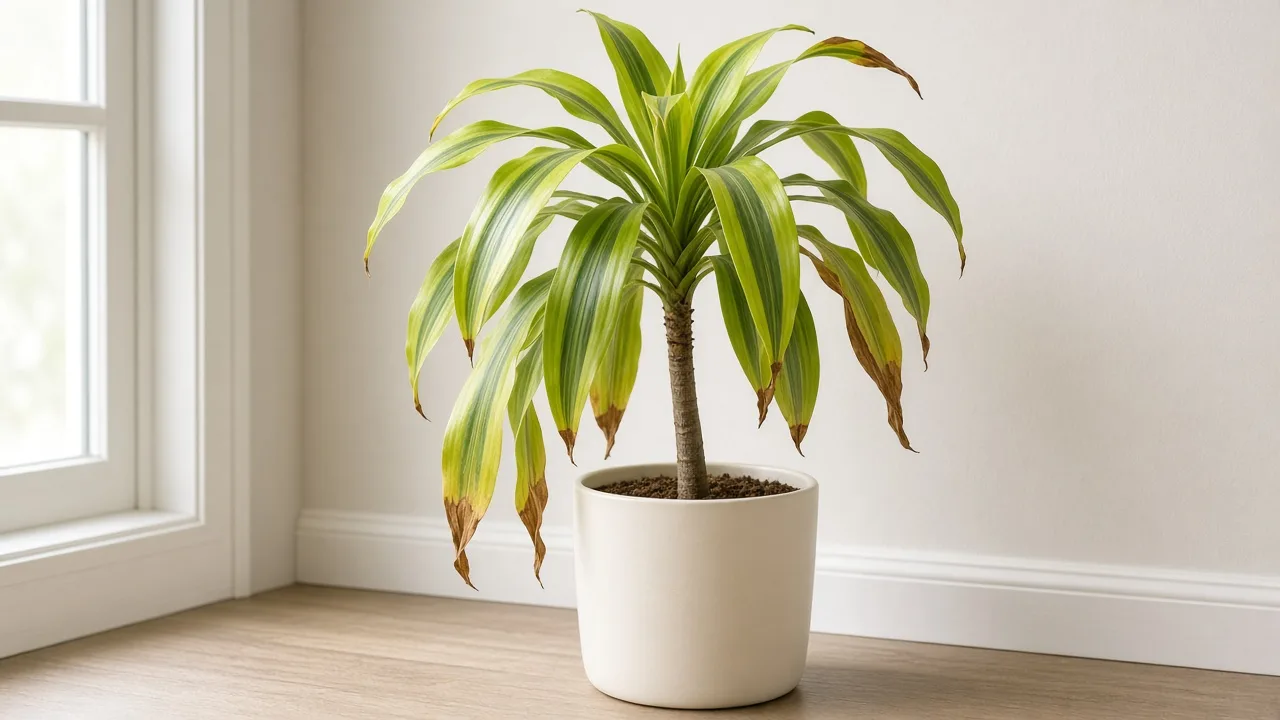
Underwatering on Dracaena Lemon Lime: Causes, Checks & Fixes
This guide covers underwatering on Dracaena Lemon Lime. See also the general Underwatering guide, watering, and light pages for this plant.
Underwatering on Dracaena Lemon Lime: Causes, Checks & Fixes
Quick answer
Dracaena Lemon Lime (Dracaena deremensis ‘Lemon Lime’) stores less water in its narrow cane than a thick corn-plant trunk, so skipped drinks show up as drooping arching leaves, dull chartreuse stripes, and dry brown tips while the top 2 inches of mix stay dusty for days. For how chronic dryness stresses roots in general, see our underwatering guide. On Lemon Lime, the pattern usually starts on the longest outer blades and a suddenly light pot—not yellow mushy canes.
First step: Water slowly until excess drains from the holes, empty the saucer, and recheck moisture at 2 inches deep in three to five days. Do not fertilize, repot, and prune on the same day.
When to use this page vs other Lemon Lime guides
This page is the drought-first entry when you suspect the pot dried out too long.
- Drooping leaves — overlaps underwatering but also covers sudden cold drafts and root damage
- Wilting — use when collapse happened quickly after a care change
- Brown tips — primary entry when tips are brown but leaves still feel firm and soil is moist (fluoride or low humidity)
- Overwatering — yellow lower leaves and soggy mix, the more common dracaena mistake
- Root rot — mushy cane at soil line with wet mix, not a light dry pot
- Watering guide — long-term dry-down rhythm after you confirm drought
Why Lemon Lime dries out faster than you expect
Lemon Lime is a deremensis warneckii-type dracaena with slim chartreuse-striped blades on a woody cane—not a succulent. It tolerates dry spells better than constant wet feet, but it still needs regular rehydration when the root zone empties. NC State Extension notes that dracaena leaves naturally droop as they lengthen, so a slight arch is normal; underwatering adds a limp, thin feel and widespread hang on blades that were firm yesterday.
Common triggers on this cultivar:
- Calendar watering in winter while the plant still sits in a heated, bright room—growth slows, but dry air and radiators pull moisture from narrow leaves.
- Bright indirect light without more frequent checks. Lemon Lime needs brighter light than Janet Craig to hold its chartreuse; more light means faster dry-down. See the light guide if stripes faded before drooping started.
- Small pots and terracotta in sunny windows—the pot can go from moist to dusty at 2 inches within a week.
- Hydrophobic peat after weeks without water; surface sprinkles run down the sides while the center stays dry (The Spruce notes curling and drooping from both over- and underwatering on corn plant dracaenas).
- Fluoridated tap water stress masking drought—brown tips from salts can appear even when soil is dry; fixing water quality comes after you confirm the root ball was actually dry.
Underwatering is less common than overwatering on Dracaena Lemon Lime, but office neglect, vacation gaps, and “dracaenas are drought tolerant” advice push many Lemon Limes past the safe dry window.
Chartreuse stripes as a drought gauge
Variegated deremensis leaves tell you two stories at once. When well hydrated, lime and dark green bands look crisp and the leaf feels slightly leathery. As the cane dehydrates, stripes wash dull, the blade feels thin, and the arch steepens toward the floor. Unlike not enough light, which slowly bleaches color without making the pot feather-light, drought pairs faded chartreuse with dry mix at 2 inches and crispy tip margins without a yellow halo.
Newest leaves at the cane tip are the last to show stress—if only outer blades droop while the top cluster stays firm, you are often catching underwatering early.
What underwatering looks like on Dracaena Lemon Lime
On this cultivar, underwatering has a recognizable combo of leaf, pot, and soil cues:
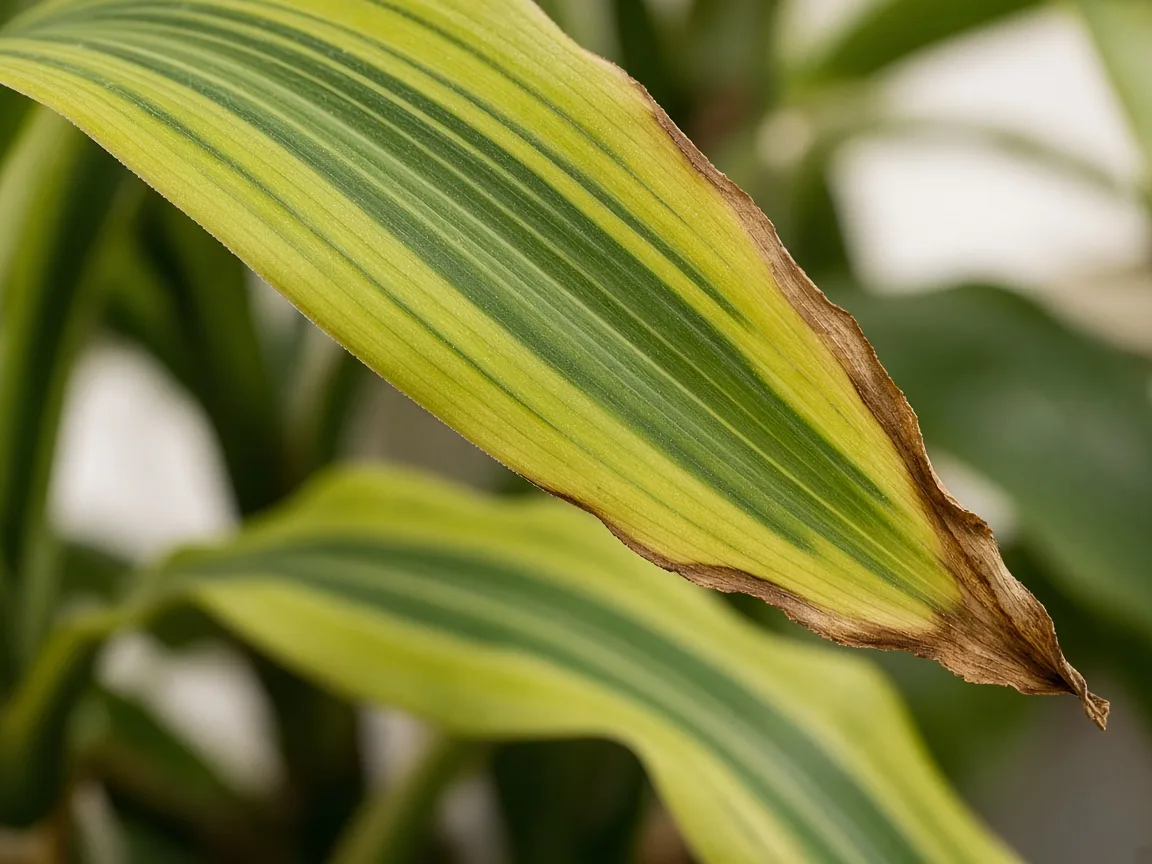
Underwatering symptoms on Dracaena Lemon Lime — compare crispy dry margins with still-green tissue on the same blade.
- Drooping or curling along narrow sword-shaped leaves, often worst on the longest lower blades
- Brown, dry leaf tips and edges that crumble when pinched—typically without yellow soft tissue above them
- Very light pot weight and soil pulling slightly away from the pot wall
- Dust-dry mix when you push a finger to the 2-inch depth used in the watering guide
- No sour smell and firm cane at the soil line—mushiness points to overwatering instead
The RHS lists wilted leaves and brown, crispy leaf edges among signs a houseplant is not getting enough water—always pair those leaf cues with a moisture check a few centimetres down, not a blind extra drink.
How to confirm the cause
Work through these checks before you change multiple variables:
- Two-inch moisture test. If soil is dry at that depth and the pot is light, drought is likely. Damp soil plus droop suggests root damage or rot, not thirst.
- Cane firmness. Gently press the stem at the soil line. Firm wood with dry tips fits underwatering; soft, wrinkled cane with wet mix does not.
- Tip pattern. Dry crispy tips on firm leaves with dry soil match drought. Brown tips on moist soil with no droop often fits low humidity or fluoride—NC State recommends non-fluoridated water when dracaena tips brown.
- Recent environment shifts. Did the plant move closer to a west window, sit above a heat vent, or miss two watering cycles during travel?
- New growth. If the top cluster still opens narrow striped leaves but outer blades hang, rehydration usually restores turgor quickly. Collapsing new shoots after long dryness need water now.
First fix for Dracaena Lemon Lime
Make one correction first: rehydrate the root zone.
If the mix still absorbs water: Water slowly and evenly until excess runs from the drainage holes. Empty the saucer within 30 minutes. NC State advises keeping dracaena soil moist during the growing season while cutting back in winter—your “cut back” should still mean moist at depth after a proper drink, not leaving the center dust-dry for weeks.
If water channels around shrunken soil: Bottom-water for 20–30 minutes in a basin, then drain fully. Confirm the center of the root ball feels moist, not just the rim.
Do not repot, prune heavily, or fertilize on the same day. Let the plant respond for several days so you can read whether drought was the real issue.
Step-by-step recovery
For mild to moderate underwatering with a firm cane:
- Water thoroughly or bottom-water as above.
- Return the plant to bright indirect light—avoid baking dehydrated leaves in hot afternoon sun.
- Wait until the top 2 inches dry before the next watering; in most homes that lands near every 7–14 days in summer and 14–21 days in winter, per the overview care profile.
- Trim fully brown, papery tips only after blades firm up; cosmetic damage on old tissue will not revert to chartreuse.
- If the plant dries out again within two or three days, inspect whether it is root-bound or in a mix that drains too fast—see soil and repotting after it stabilizes.
Recovery timeline
Drooping Lemon Lime leaves often begin to lift within 24–72 hours after a thorough watering if roots are intact. Crispy tips stay brown permanently; recovery means firm arching blades and bright stripes on new foliage, not perfect old margins.
Severe neglect—many weeks of dust-dry soil with most leaves limp—may take one to two weeks before new growth looks normal. If leaves stay limp after a good drink while soil stays wet, inspect roots for rot before watering again.
What not to do
- Do not water on a fixed weekly schedule without checking the 2-inch depth—bright rooms and small pots shorten the interval.
- Do not keep pouring if soil is already wet and the cane is soft. That worsens root rot.
- Do not fertilize a stressed plant until leaves firm and new growth appears in spring or summer.
- Do not blame underwatering for every brown tip—fluoride and dry winter air are constant dracaena issues; confirm soil dryness first.
- Do not leave the pot in a full saucer after recovery watering.
Causes to rule out
| What you see | Likely cause | Quick check |
|---|---|---|
| Drooping leaves, dry 2-inch soil, light pot | Underwatering | Deep water; recheck in a week |
| Brown tips only, moist soil, firm leaves | Fluoride, salts, or low humidity | Flush; use filtered water; see brown tips |
| Yellow lower leaves, wet soil, sour smell | Overwatering / root rot | Dry down; inspect cane |
| Sudden limp after cold window | Cold damage | Move off cold glass |
| Pale stripes, no droop, moist soil | Low light | Brighter indirect spot |
| Crispy tips + spiderwebbing | Spider mites | Inspect undersides |
Fluoride brown tips vs true drought
Lemon Lime is fluoride-sensitive like other dracaenas. NC State notes that brown tips may respond to non-fluoridated water and monthly salt flushing. Drought tips are usually paired with drooping blades and a light, dry pot; fluoride burn can brown margins while soil stays evenly moist and leaves stay upright. Fix water quality after you confirm the root ball was dry—not instead of watering a limp, dusty plant.
How to prevent underwatering next time
- Check the pot, not the calendar. Terracotta, bright light, and small nursery pots all shorten time between drinks.
- Learn your dry-down speed for the first month after purchase by lifting the pot weekly.
- Use filtered or rainwater if tap water is heavily fluoridated—helps tips once moisture rhythm is correct.
- Watch outer blades first—they droop before the cane tip collapses.
- Refresh hydrophobic mix if water repeatedly runs around dry soil; a top dress or eventual repot into well-draining mix may be needed every two years.
Practical checks
Urgency check
Underwatering is usually medium severity on Lemon Lime—not an emergency unless most leaves are limp after prolonged dryness or new shoots collapse. Soft canes with odor are urgent for rot, not drought.
Best inspection order
For Lemon Lime, check 2-inch soil moisture, pot weight, leaf arch and tip texture, cane firmness at the soil line, then recent light or heating changes—in that order.
Escalation point
Inspect roots if the plant stays limp after two proper waterings separated by a full dry-down cycle, or if soil never re-wets despite bottom-watering—compacted or damaged roots may block uptake.
Safety note
Dracaena is toxic to cats and dogs if chewed. Bag trimmed crispy leaves instead of leaving them on the floor while you recover the plant.
Related Dracaena Lemon Lime guides
- Dracaena Lemon Lime overview — cultivar traits and normal care rhythm
- Watering — 2-inch dry-down method and seasonal shifts
- Soil — drainage without staying waterlogged
- Overwatering — the more common dracaena failure mode
- Brown tips — fluoride and humidity when soil is not dry
- Drooping leaves — shared symptom, different first checks
- All Lemon Lime problems
Related tool
Use the Plant Watering Calculator to estimate how often your pot should dry at the 2-inch mark before you change light, soil, and watering all at once.