French Beans Repotting Guide: Pots & Timing
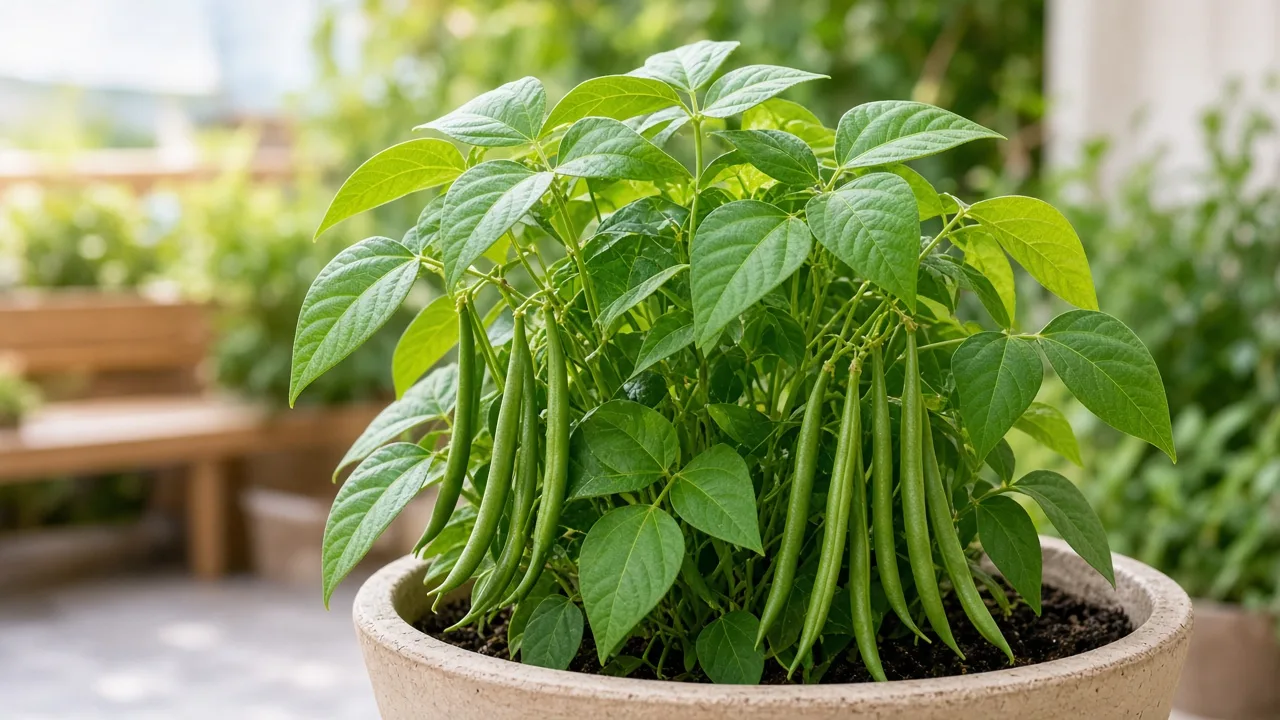
French Beans Repotting Guide: Pots & Timing
French Beans Repotting Guide: Pots & Timing
French beans repotting for terrace and kitchen-garden growers is about choosing the final warm-season container up front—not refreshing a perennial root ball every spring. Phaseolus vulgaris snap cultivars (French beans, green beans, haricot vert) are fast annual legumes with roots that do not like to be transplanted, according to Cornell’s bush bean profile. Most success comes from direct sowing into the pot or bed where plants will finish the season, with at most one careful move from a small outdoor module if you must protect germination.
This guide explains when a container truly needs upsizing, recommended pot width and depth for dwarf bush types versus climbing pole beans, how to handle a root ball without stalling pod production, warm-season timing on Indian balconies, and how to settle plants after a move with steady moisture from the French Beans hub.
French beans repotting: the quick answer
Plan for zero to one container moves per plant life cycle: (1) sow directly into a sufficiently large final pot when soil is warm, or (2) if you started seeds in small outdoor cells, transplant once while stems are still small and the root ball stays intact. RHS French bean guidance describes sowing either into small outdoor pots for later planting out or straight into large containers as the final site—both are warm-season approaches, not houseplant upsizing every year.
For dwarf bush French beans, choose a pot about 30–45 cm (12–18 in) wide, sow 5 cm (2 in) deep and 15 cm (6 in) apart, and expect plants to trail over the rim without supports. For climbing pole types, use a container at least 75 cm (30 in) wide and 45 cm (18 in) deep, heavy enough to resist a 2.5 m wigwam, and sow two seeds at the base of each cane. LeafyPixels hub data suggests bush containers should be at least about 20 cm deep for healthy roots—shallower novelty pots dry out and overheat on railings.
After the final placement, focus on even watering, modest fertility once growth resumes, and frequent harvest—not another mid-season repot.
Why French beans are not on a houseplant repot schedule
Houseplant repotting refreshes a long-lived root system and often happens on a calendar. French beans complete their useful life in one warm season, then are composted after the last pick. The plant invests in rapid leaf, flower, and pod growth when nights stay mild; disturbed roots pause uptake, which shows up as wilting or stalled growth even when mix looks moist.
Cornell lists propagation by seed only and warns that beans do not like to be transplanted. That is stricter than some brassicas, which tolerate bare-root moves. RHS still includes French beans among vegetables raised in cell trays or small pots when growers need a bridge—but the underlying biology favors minimal disturbance. Serial upsizing through summer—common advice for monsteras—usually checks a bean more than it helps, especially once flowering begins.
Oversized decorative pots with a tiny seedling stay cold and wet in unseasonable rain; undersized cups flash-dry twice a day on a sunny terrace. Both patterns damage roots before pod set. The goal is right-sized final volume at warm sowing time, with trellis hardware installed before pole roots spread.
Signs your French beans need a bigger pot—or just thinning
Repot or transplant only when evidence points to root or volume limits, not every yellow lower leaf on an aging annual.
Useful triggers include:
- Roots circling a nursery cell or visible through drainage holes while the stem is still short and flexible.
- Mix that dries within hours in mild weather despite thorough watering—common when bush beans outgrow a cup before the first harvest flush.
- Several seedlings sharing one small pot after germination—you may move one strong plant to a prepared final container and thin extras rather than pricking out a crowded clump.
- A production container shallower than about 20 cm for bush types you intend to harvest from for weeks.
- Climbing cultivars in a pot too light or narrow to anchor a wigwam once vines gain height.
If plants are already flowering heavily or filling pods, a mid-season upsize rarely pays for the shock. Refresh watering and soil fertility first, or sow a fresh batch via French Beans propagation instead of chasing one vine with bigger pots.
When seedlings are merely crowded, thinning at soil level—snipping extras rather than pulling—often solves the problem without moving anyone. RHS transplanting advice stresses minimising root damage because the growth check delays maturity and can reduce yield.
Direct sowing vs transplanting Phaseolus vulgaris
Direct sowing into the final pot or bed wins when frost risk has passed, soil is warm, and supports are ready for pole cultivars. NC State’s common bean profile notes beans prefer full sun and fertile, well-drained soils—conditions you should establish in the final container before seed goes in, not chase later with repeated moves.
Germination is strongest around 21–27°C (70–80°F) and poor in cold, wet seedbeds, matching the warm-soil emphasis on the French Beans overview. Sow about 2.5 cm deep, keep the seedbed evenly moist until emergence, and avoid soaking seed before planting.
Transplanting makes sense when you must protect germination from heavy monsoon rain, birds, or a cool snap, or when you bought a plug from a nursery. Treat modules as a short bridge: move plants while roots have just filled the cell, not after they spiral and the top flowers in the tray. Epic Gardening’s green bean guide echoes extension practice that sensitive roots favour direct outdoor sowing once weather cooperates.
When small modules still make sense
Outdoor modules on a sheltered table can warm faster than a massive half-barrel in a cool week. Use them when:
- Nights are almost warm enough but a freak rainstorm would crust over an open seedbed.
- You need to harden off plants started under cover before they live on an exposed railing full-time.
- Space is tight and you will pot up within days of roots touching the cell walls.
If store-bought transplants look root-wrapped or flowering in tiny cups, expect a longer pause after any move than with younger seedlings.
Best season to repot or transplant in India and warm climates
Align any move with warm, stable growth. On Indian plains and similar tropics, that usually means after the coolest nights have eased and soil stays warm—often late winter through spring sowings, with another window where autumn stays mild, as described on the French Beans overview. Cold, wet mix slows germination and invites seedling rot; heat with steady moisture supports fast establishment after a move.
Morning transplants lose less water than midday moves. Avoid shifting plants during a heat spike or when dry wind is forecast right after repotting. Complete the final container move before pole beans attach extensively to neighbouring pots—you will break stems trying to reroute a mature vine.
Harden off before the final outdoor pot
Seedlings started indoors, on a shaded veranda, or bought from a sheltered nursery need hardening off: gradually exposing them to brighter, breezier conditions before they live full-time on an open terrace. RHS hardening-off guidance describes about two weeks of lengthening outdoor time to reduce transplant check. Move trays outside for increasing periods, keep mix from drying completely, and bring plants in if unseasonable cold returns.
Choose container size for bush vs pole French beans
Drainage matters more than ornament. Every production pot needs multiple holes and should not sit in a sealed saucer that holds stagnant water. RHS container vegetable advice warns that small volumes force constant watering and nutrient stress on fruiting crops.
Dwarf bush French beans fit 30–45 cm wide pots; plants cascade over the sides and need no trellis in that setup. Climbing French beans need 75 cm width, 45 cm depth, and a heavy base so a 2.5 m cane wigwam does not topple in wind—dimensions taken from RHS French bean culture. Install the wigwam before sowing at each cane base so you are not piercing established roots later.
Match ambition to cultivar: a fine filet bush for a small railing can live in a modest wide pot with attentive watering; a pole cultivar meant for weeks of picking needs generous depth and a stable trellis from day one.
Soil and mix when you move French beans
Use the same priorities as the French Beans soil guide: well-drained, fertile loam or container mix near pH 6.0–7.0, with moderate organic matter. When moving a young plant, fresh mix replaces collapsed, salt-heavy media and restores air pockets around roots.
A practical blend aligned with hub data: roughly 50% quality potting mix or screened loam, 30% mature compost, and 20% perlite or coarse sand for aeration. Pre-moisten mix before filling so the root ball does not sit in a dry crater after the first surface watering. Because legumes fix nitrogen with rhizobium at the roots, NC State notes that heavy nitrogen pushes leaves over pods—lean on compost worked in before sowing rather than strong feed immediately after a stressful move.
Step-by-step: one gentle move into the final pot
- Water lightly an hour before so the root ball holds together but is not dripping.
- Prepare the final container with drainage, moist mix, and—for pole types—wigwam canes already positioned.
- Slide the plant out by pushing up from the drainage hole or squeezing a flexible cell—support the root ball, not the stem.
- Keep the root ball intact. Do not bare-root or aggressively wash soil from bean roots.
- Set at the same depth as before—RHS transplanting advises planting no deeper than the transplant sat in the original container. Buried crowns rot in wet mix; exposed roots dry within minutes on a terrace.
- Backfill, firm gently, and water in until excess drains. Empty any saucer.
- Shade lightly for the hottest afternoon for one to two days if a heat wave follows the move.
Protect the root ball
Water plants well beforehand and disturb the rootball as little as possible—that habit prevents more balcony failures than any secret fertilizer. If multiple seedlings germinated in one pot, snip extras at soil level rather than pulling, which jostles the keeper plant. If roots show only slight circling on a young plant, loosen the outer 1 cm; skip heavy teasing on stressed plugs.
Install supports at repotting time for pole types
Climbing French beans need canes, netting, or a balcony trellis installed during the final container setup, not after vines are knee-high. Sow two seeds 5 cm deep at the base of each cane per RHS French bean instructions. Anchor trellis independently when possible so harvest pulling does not rock a lightweight pot. Bush types in wide containers do not need supports; let them trail over the rim.
Care after repotting or transplanting
Expect transplant shock: slight wilting or paused growth for several days while roots explore new mix. Beans recover quickly in warm weather if moisture stays even without saturating the crown.
For the first week after the final move:
- Water at the base when the upper 2–3 cm begins to dry—RHS notes that beans are thirsty, especially in containers during flowering and pod fill.
- Avoid soaking foliage at night so leaves dry before cooler evenings.
- Delay strong fertilizer for about a week unless plants sit in sterile seed mix with no compost; then follow the French Beans fertilizer guide once new growth resumes. Container beans may later need fortnightly high-potassium liquid feed per RHS container practice—still lighter on nitrogen than leafy crops.
- Watch for wilting with wet mix—that pattern suggests oxygen-starved roots from overwatering or poor drainage, not a need for yet another pot.
Common mistakes that cause transplant shock
- Starting seeds indoors against Cornell guidance, then moving tender shoots into cold terrace mix.
- Holding seedlings too long in modules until roots spiral and tops flower in the cell.
- Bare-rooting or splitting the root ball “to encourage growth.”
- Planting deeper than the original soil line.
- Skipping hardening off for plants moved straight from sheltered culture to full afternoon sun.
- Repotting a flowering bush mid-season instead of sowing a second crop.
- Oversized final pot with a tiny seedling, keeping mix cold and waterlogged.
- Forgetting a wigwam on pole cultivars, then disturbing roots when retrofitting canes.
When not to repot French beans
Skip the move when:
- Pods are already sizing and the plant is established—adjust water and harvest rhythm instead.
- Plants show serious disease pressure; repotting spreads contaminated mix without curing infection.
- Soil is still cold after unseasonable rain; wait for warmth or sow fresh seed.
- The issue is weak light—fix placement per French Beans light before changing containers.
- Roots are waterlogged from poor drainage; fix holes and watering before upsizing.
- Seedlings only need spacing—thin rather than transplant.
Often the best “repot” for an exhausted late-season plant on a hot terrace is composting the finished crop and direct-sowing in fresh mix when weather allows.
When to use this page vs other French Beans guides
Use this repotting guide when you are moving a young French bean between containers, choosing final pot volume for a terrace crop, or deciding between direct sow and one gentle transplant. For daily moisture on railing pots, start with French Beans watering. For mix recipes and drainage, see French Beans soil. For seed timing, spacing, and succession sowing, read French Beans propagation. For sun exposure that affects post-move recovery, see French Beans light. For harvest-driven vine management, see French Beans pruning. For a full crop picture, open the French Beans overview.
Related French Beans guides
- French Beans overview — bush vs pole habit, warm-soil sowing, and cluster roadmap.
- French Beans watering — steady moisture for container beans after transplant.
- French Beans soil — compost-rich mixes that drain without flash-drying on railings.
- French Beans propagation — when to sow direct in the final pot instead of moving seedlings.
- French Beans fertilizer — feeding after roots re-establish without excess nitrogen.
Conclusion
French beans repotting is a short, warm-season decision for young Phaseolus vulgaris plants—not a yearly houseplant ritual. Direct-sow into a sufficiently large final container when soil is warm, or transplant once while stems are small, the root ball stays intact, and outdoor seedlings are hardened off. Match pot volume to habit—wide 30–45 cm pots for dwarf bush types, deep 75 cm-class containers with a wigwam for climbers—and install supports before pole roots spread. When plants are already flowering or the season is winding down, succession-sow in fresh mix rather than chasing one crop with bigger pots. Gentle handling, correct depth, and even moisture after the move keep wilting brief and tender snap pods coming.