French Beans Watering Guide: Moisture & Pod Set
French Beans Watering Guide: Moisture & Pod Set
French Beans Watering Guide: Moisture & Pod Set
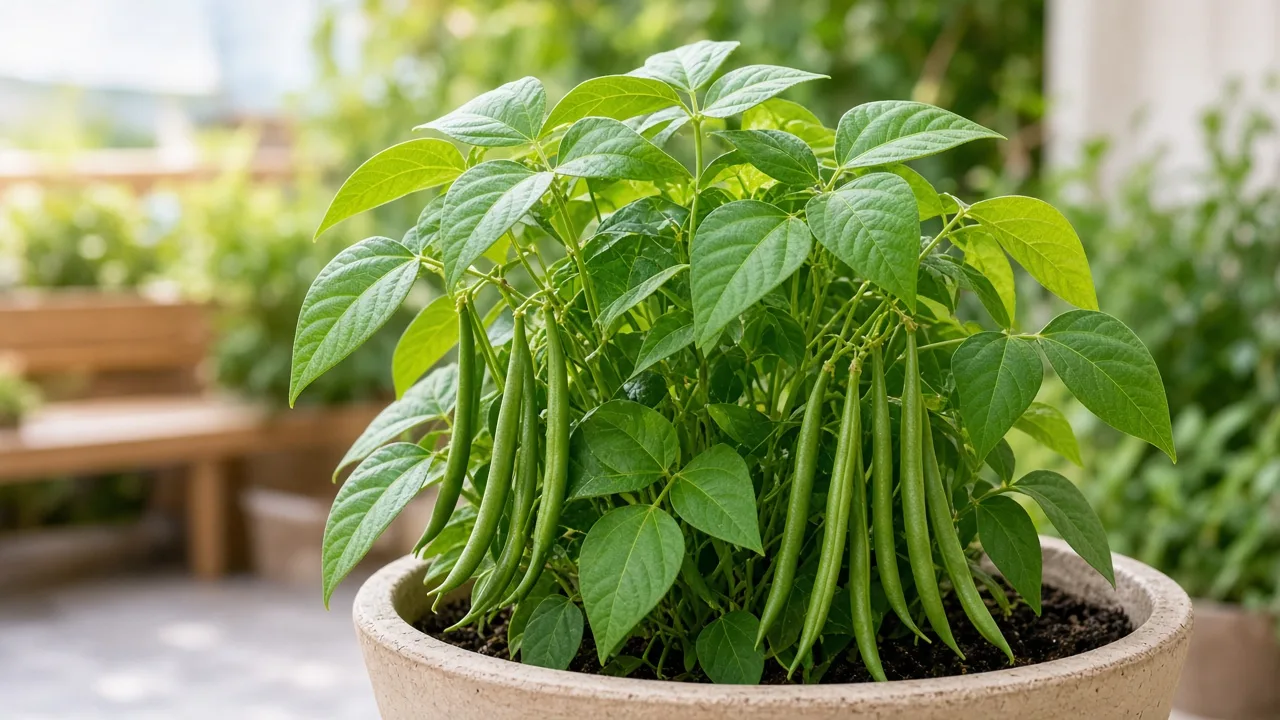
French beans watering is less about memorizing “every Tuesday” and more about keeping Phaseolus vulgaris roots evenly moist through the weeks that matter: germination, flowering, and pod fill. French beans—snap cultivars of the common bean, also sold as green beans, filet beans, or haricot vert—are fast warm-season legumes, not drought-hardened houseplants. They want well-drained soil that still holds steady moisture, especially while blossoms open and pods swell. Cornell Home Gardening tells bush bean growers to maintain even moisture—about 2.5 cm (1 inch) of water per week—with extra attention when plants flower and develop pods. Let foliage dry after irrigation, and water early in the day when you can.
If you are new to the crop, read the French beans overview for bush vs pole habit and sowing timing. This page covers how to check dryness, how terrace pots change the schedule, what over- and underwatering look like on snap beans, and the first step when leaves wilt but you are not sure whether the mix is too dry or too wet.
Why French Beans Need Even Moisture (Not a “Dry Out” Schedule)
French beans evolved as annual kitchen vegetables that pump water through large leaves to build tender pods quickly. Unlike succulents or many indoor foliage plants, they do not benefit from letting the entire root zone go bone dry between every watering. Cornell lists bush beans as preferring well-drained soil with consistent moisture—drainage prevents rot, but chronic dryness during bloom still costs you flowers and pods.
Legumes can fix some nitrogen with rhizobium bacteria in the root zone, yet that biology does not make vines drought-proof. Dry stress at the wrong moment produces limp leaflets, blossom drop, and thin or poorly filled pods—the same symptoms many growers misread as a fertilizer problem. Fix light and moisture before you chase feed on the fertilizer page.
How Much Water French Beans Need Each Week
Think in depth and evenness, not splashy top sprinkles. For in-ground rows and large beds, many extension guides use a weekly total as a starting frame: about 2.5 cm (1 inch) of water per week across the season, with the critical window during flowering and pod development (Cornell Home Gardening). That inch is rain plus irrigation combined—track what monsoon clouds already delivered before you refill a pot.
The extension benchmark for snap beans
The inch-per-week figure is a benchmark, not a calendar command. Sandy terrace mix may need two or three shorter soakings to keep the middle of the root ball damp; heavy clay that dries slowly might need less frequent but deeper drinks. NC State Extension notes that common beans—including green bean types—grow best in fertile, well-drained soil where roots can access both air and water. Your job is to keep that balance: moist enough for pod set, never waterlogged for days.
The Finger-Depth Check Before Every Drink
Replace “water every day” with check every day, water only when needed—which on a hot Indian terrace can still mean daily irrigation in a shallow pot.
Press a finger or small trowel 2–3 cm into the mix beside the stem, matching the hub’s French beans finger-check method. Water when the surface is dry but the layer just below still feels slightly cool and barely moist. If the whole column feels dusty and pulls away from the pot wall, you are already behind—soak slowly until water runs from drainage holes. If the top looks dry but deeper soil clings cold and wet to your skin, wait.
Lift containers after a full soak and again two days later; weight is often faster than sight on peat-heavy mixes. Climbing pole types with large leaf area on a windy railing may cross the dry line sooner than compact bush blocks in the same sun.
Water at the Soil Line and Keep Foliage Dry
Basin or soil-line watering is the default for French beans. Apply water low, under the leaf canopy, until the root zone is wetted to depth—then stop. Cornell warns to avoid wetting foliage, which encourages disease, and to water early so leaves dry quickly. That matters on humid nights after monsoon showers when bacterial blights spread on films of water left on leaves.
Overhead sprinklers are a last resort for snap beans. If you must use them, run early morning and prefer drip or a gentle can at the stem for terrace pots. Pair dry leaves with the soil guide’s drainage rules so water reaches roots instead of pooling on a saucer.
Watering French Beans by Growth Stage
Moisture priorities shift as the plant moves from seed to harvest. Match water to the stage, not a single rigid interval.
Germination and young seedlings
From sowing until the second set of true leaves, French beans need a consistently moist seedbed—not a flood. RHS advice on watering vegetables notes that freshly sown seed and young plants need consistent moisture, and recommends wetting the seed drill before sowing so moisture sits where the seed sits. Keep the upper few centimetres evenly damp until emergence (often about a week in warm soil), then ease toward deeper, less frequent soakings as roots expand.
Seedlings in cold, wet mix are prone to damping-off; warm soil and open drainage matter as much as the watering can. Direct-sow into the final pot when possible, as explained in propagation and repotting guides—disturbed roots dry unevenly and stall.
Flowering and pod fill
This is the non-negotiable window. Cornell ties deformed pods to drought stress during bloom. Legumes are famously sensitive to dry spells while flowers open and small pods swell; the overview links the same pattern to flower or pod drop on stressed vines.
During peak flowering on bush cultivars, missing a hot afternoon can mean empty harvests even if plants recover visually the next morning. Pole types may flower over a longer season—keep moisture steady across waves of bloom, not only the first flush. RHS groups peas and beans as crops that need plenty of water at flowering for pods to set, while noting that climbing French beans are less sensitive to some dryness than runner beans—helpful context if you grow both on the same terrace.
Late season when growth slows
As nights cool or plants exhaust their determinate bush flush, transpiration drops. Stretch the interval between soakings when the finger test shows the mix stays wet longer, but do not abandon water while pods are still filling. Yellowing leaves with soggy soil in cool weather often mean pull back; limp vines with dry soil during a late warm spell still need a drink.
Bush French Beans vs Climbing Pole Types
Bush French beans concentrate flowers in a shorter window; a dry spike during that flush hits hard. Climbing pole beans spread harvest over more weeks and carry more leaf area, so a single missed watering on a hot day shows up as midday wilt on upper growth. RHS vegetable watering guidance notes that climbing French beans require less water than runner beans, but that does not mean “ignore them”—it means you still irrigate through bloom, with slightly more forgiveness between soakings than for thirstier runner cousins.
Install trellises at sowing so you are not wrestling vines and breaking roots while hauling a hose. See pruning for airflow without stripping the leaves that drive transpiration.
Terrace Containers vs In-Ground Kitchen Beds
Containers dry faster than in-ground rows—sometimes dramatically on concrete that radiates heat. RHS container guidance suggests that from spring through autumn you may need to confirm compost is still damp at root depth, and that daily watering in dry spells is common for pot crops (RHS watering containers).
Use wide pots with multiple drainage holes; never leave saucers full overnight during monsoon weeks. Bush types in 20 cm+ depth and pole types in deeper, heavier pots hold moisture longer than skinny nursery tubs. In-ground beds benefit from mulch after true leaves develop—Cornell recommends mulching once the second set of true leaves appears to help retain moisture.
Watering French Beans in India, Heat, and Monsoon Spells
On many Indian plains, French beans go in after the coldest nights ease—often late winter through spring, with another window where autumn stays mild (see overview). Pre-monsoon heat on a west-facing terrace can pull a 30 cm pot dry in a single afternoon; check daily and shade young seedlings briefly if needed while roots are shallow.
Monsoon shifts the risk from drought to waterlogging. Pause irrigation when rain already soaked the bed, confirm saucers are empty, and improve drainage per the soil page before roots sit anaerobic for days. Epic Gardening’s green bean guide reminds growers that seeds struggle when soil stays cold and wet—relevant if you sow too early into cool, saturated mix.
When unseasonable rain follows a dry spell, do not assume plants need more water—feel depth first. Fungal leaf spots love damp foliage overnight; keep morning soil-line watering the habit when skies clear.
Signs You Are Overwatering French Beans
French beans in saturated mix yellow, wilt paradoxically, and stall flowering even as soil smells sour. Watch for:
- Yellowing leaves with soil that stays wet for days after rain or irrigation
- Wilting midday while the root zone feels cold, heavy, and soggy
- Soft stems or seedling collapse (damping-off) in cool, wet seedbeds
- Brown leaf spots that spread when leaves stay wet overnight
- Saucers or beds that never fully drain after monsoon downpours
If several signs align, stop watering, clear standing water, improve drainage, and let the upper profile dry slightly before the next cautious soak. Chronic wet feet invite root decay; pairing with wrong soil structure makes the problem worse.
Signs of Underwatering and Drought Stress
Underwatered French beans tell a different story—often crisp wilt in afternoon sun on dry, pulling-away mix:
- Limp or curled leaflets that recover overnight until the next hot day
- Flower or small pod drop after a dry spell during bloom
- Dry mix shrinking from pot edges on a terrace
- Tough, thin, or poorly filled pods when moisture failed during swell
Cornell links drought during development to deformed pods. A deep morning soak and mulch are the first fixes—not extra nitrogen.
Drought Wilt vs Soggy-Root Wilt: What to Do First
Both problems can look like wilting leaves, so always check 2–3 cm down before you pour.
| What you feel | Likely issue | First action |
|---|---|---|
| Dry, warm mix; pot light | Underwatering | Slow soak at soil line until drainage runs; mulch if plants are established |
| Wet, cool mix; sour smell | Overwatering / poor drainage | Stop irrigation; empty saucers; improve drainage; wait until top dries slightly |
| Dry surface, wet deep layer | Shallow watering habit | Water longer at the base so the whole root ball wets once |
If wilt pairs with wet soil, more water is the wrong medicine. If wilt pairs with dry soil during flowering, act the same day—legumes do not forgive bloom-stage drought as easily as they forgive a missed drink during early leaf growth.
Mulch, Saucers, and Drainage That Protect Roots
After French beans develop their second set of true leaves, a thin organic mulch—compost, dried leaves, or straw—reduces evaporation from terrace pots and in-ground rows (Cornell). Keep mulch off direct stem contact to avoid collar rot in wet weather.
Drainage holes must stay open; a clogged hole turns a heat-loving bean into a bog plant. Saucers can catch runoff for a few minutes, then dump them. For heavy monsoon beds, raised rows or extra compost improve percolation—details live with soil mix recipes.
When to use this page vs other French Beans guides
- French beans overview — identity, bush vs pole habit, sowing season, and harvest rhythm before you tune irrigation.
- French beans light — full sun placement; bright terraces dry pots faster than shaded corners.
- French beans soil — mixes and drainage when water sits or runs through too fast.
- French beans fertilizer — feeding after moisture and light are adequate; excess nitrogen is not a drought fix.
- French beans propagation — direct sowing and seedbed moisture for germination.
- French beans repotting — why beans stay in their sowing container for the season.
- French beans pruning — airflow without stripping leaves that drive water loss.
Related French Beans guides
- French beans overview — warm-season snap legume framework and Indian terrace timing
- French beans light — six-plus hours of sun that increases transpiration on pots
- French beans soil — drainage and mixes that make “even moisture” possible
- French beans fertilizer — compost-first feeding without overwatering mistakes
- French beans propagation — moist seed drills and direct sowing practice
Conclusion
French beans reward steady, deep moisture at the soil line from a warm, drained root zone—not a rigid calendar and not a succulent-style dry-down. Use a finger check 2–3 cm deep, aim for roughly 2.5 cm (1 inch) of water per week as a bench mark in the ground (Cornell Home Gardening), and never let bloom-stage drought steal flowers or deform pods. On Indian terraces, expect faster drying in sun and heat, and slower drying with monsoon risk; adjust checks, not just clock time. When wilt appears, decide whether soil is too dry or too wet before you add another drink—then align light, soil, and watering so the next flush of tender snap pods has the moisture to fill.