Garlic Light Needs for Pots & Patios
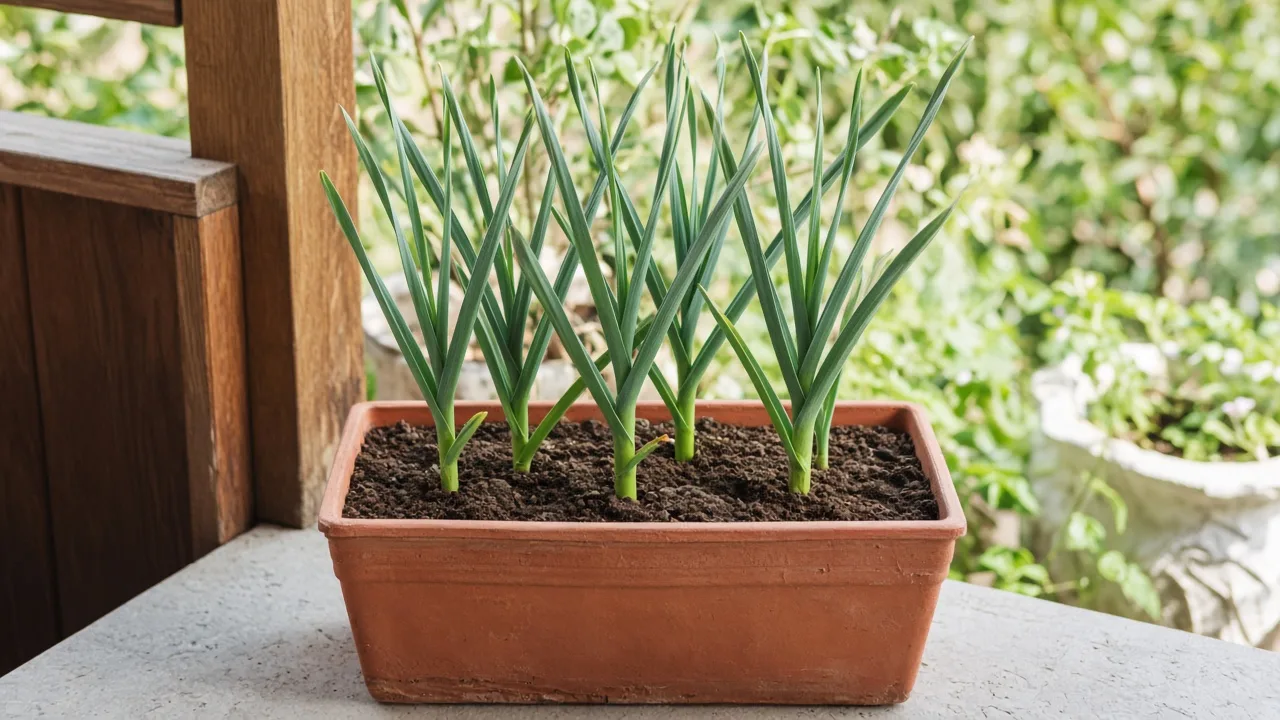
Garlic Light Needs for Pots & Patios
Garlic Light Needs for Pots & Patios
Garlic Light Needs: The Quick Answer
Garlic (Allium sativum) is a sun-loving cool-season bulb crop, not a shade-tolerant houseplant. For the months when leaves are actively feeding the underground head, plan on at least six hours of direct sun each day—and six to eight hours is a safer target for container growers who want full-sized bulbs. The Royal Horticultural Society describes garlic as suited to a warm sunny site with free-draining soil, and notes that plants need full sun, with weeds removed so neighboring growth does not shade the crop. Epic Gardening likewise places garlic in full sunlight and recommends beds receive at least six to eight hours of sun per day for the entire life cycle once growth is active (Epic Gardening — garlic).
The practical goal on a patio or terrace is not the brightest possible window in December while cloves are dormant underground. It is the sunniest open station you can give the pot from late winter through spring bulbing, when flat blue-green leaves are manufacturing the sugars that swell each clove. Weak light during that window produces floppy, pale foliage and smaller heads—a pattern many growers misread as a watering or fertilizer problem. Start with placement, then cross-check moisture in Garlic watering and drainage in Garlic soil.
Why garlic is a full-sun cool-season crop
Garlic did not evolve as a forest-floor perennial. University of Wisconsin Extension summarizes wild relatives from harsh continental climates: hot, dry summers with intense sunlight, long cold winters, rapid spring shoot growth, and bulb completion before summer heat dries the soil (UW Extension — garlic). Modern Allium sativum in a pot follows the same broad rhythm: roots and chill after planting, explosive leaf growth when days lengthen, then maturation as foliage senesces. Light fuels that spring sprint; missing sun during bulbing cannot be fully recovered with extra water or nitrogen later.
Wild origins and the seasonal light rhythm
In nature, garlic finishes its above-ground work early. That is why northern calendars emphasize fall-planted cloves that sit through winter and surge in lengthening days. In mild-winter India, growers often sow lahsun in the cool Rabi window instead, but the spring sun requirement does not disappear—only the planting month changes. A softneck cultivar matched to a mild winter still needs strong direct light while leaves expand, as noted in the Garlic overview grower notes. Treat winter as the chill and root-establishment phase, and spring as the photosynthesis phase.
What light drives: leaves, roots, and bulb size
Garlic leaves are the solar panels for bulb growth. UW Extension states plainly that garlic does best in full sun in well-drained, organic-rich soil (UW Extension — garlic). Shade during active growth steals leaf energy at exactly the moment cloves divide and swell. Roots matter too—garlic has a relatively shallow root system sensitive to stress during bulbing—but roots cannot substitute for photons. If leaves look weak while mix moisture is correct, suspect placement before you chase Garlic fertilizer.
How much direct sun garlic needs
“Full sun” in vegetable guides means unobstructed direct rays on the leaf canopy for most of the day, not merely a bright room. For containers, The Spruce recommends positioning pots where they get at least six hours of direct sunlight on most days (The Spruce — garlic in containers). Epic Gardening’s container guide tells growers to move pots to full sun once green shoots appear in late winter or early spring, defining full sun as six or more hours of daily direct sunlight (Epic Gardening — garlic in containers).
The six-to-eight-hour baseline
Use six hours as the minimum for acceptable container crops and six to eight hours as the target when you want plump, well-wrapped bulbs. Hardneck types with stiffer scapes and softneck types with floppy tops both follow the same light budget during leaf growth; variety choice changes cold tolerance and storage, not the need for spring brightness. On a clear day, check your station at mid-morning, noon, and mid-afternoon—buildings, railings, and taller pots can steal late-day sun you assumed was there.
Partial shade versus useless shade
Garlic tolerates light shade at the margins better than deep understory, especially where morning sun is strong and afternoon heat is brutal. Epic Gardening notes garlic can be somewhat more tolerant of shade depending on orientation, but still insists on the six-to-eight-hour daily total for proper development (Epic Gardening — garlic). A north-facing balcony that never sees direct sun, or a courtyard shaded by walls all day, is not a garlic home without grow lights. Dappled shade under a deciduous tree that leafs out after your garlic harvest is a different story—and rare on urban terraces.
Light through the garlic calendar
Light needs change by season even though the clove stays in one pot. Thinking in phases prevents the common mistake of judging a dormant winter pot by summer standards—or leaving a spring crop in a winter holding spot.
After planting when shoots are still underground
After you plant cloves in their final deep container (Garlic propagation covers depth and spacing), shoots may not surface for weeks. Cloves are building roots and experiencing cool soil, not demanding terrace sun yet. Outdoor winter placement should prioritize cold exposure and drainage, not maximum photons. Epic Gardening suggests frost cloth over pots during hard freezes, removing covers during the day so sunlight and fresh air reach plants (Epic Gardening — garlic in containers). That daytime sun on emerging tips is helpful; dragging pots into a dark, heated room is not—it can weaken chill cues and invite rot when combined with wet mix.
Spring leaf growth and bulbing
When days warm and shoots poke up, shift to your sunniest location and keep it there through bulbing. This is the non-negotiable window: full sun, steady moisture, open airflow. RHS advises weeding so garlic does not get shaded by faster weeds (RHS — grow garlic). In pots, “weeds” are often tall herbs, stacked planters, or a new trellis—relocate obstacles instead of letting leaves compete for light.
Scapes, yellowing leaves, and pre-harvest weeks
Hardneck plants send up scapes while leaves are still active; removing them redirects energy to bulbs (Garlic pruning). Light remains important until lower leaves yellow and bulbs mature. After that, your job shifts toward dry-down and harvest in the watering guide—not chasing more sun. Curing is separate: The Spruce directs growers to cure harvested garlic in a well-ventilated, warm area out of direct sun (The Spruce — garlic in containers). Post-harvest shade with airflow protects wrappers; growing-season full sun builds them.
Best placement for containers and terraces
Containers amplify both light capture and heat stress. A garlic trough on casters can chase sun; a heavy ceramic pot cannot. Choose the final spring station before leaf growth peaks so you are not dragging saturated mix across a terrace daily.
Sunniest station, spacing, and neighbor shade
Place pots where no wall blocks the low winter sun and no summer furniture will cast afternoon shade on lengthening leaves. Space cloves 10–15 cm apart in a deep planter so outer plants do not shade neighbors as blades lengthen. If one end of a trough is darker, rotate the container weekly only if you can do so without breaking brittle leaves—better to plant fewer cloves in a brighter pot than to overcrowd into shade.
Heat, pot color, and afternoon sun in India
Indian terrace growers often have excellent sun and punishing heat on the same site. Black plastic nursery pots and dark metal troughs can overheat roots even when leaves still want light. Mitigate with afternoon shade cloth, lighter-colored outer pots, or mulch on the mix surface—not by moving the crop into a dim room. Morning-to-midday sun with filtered afternoon light beats all-day shade for bulb size. Pair heat management with the watering finger checks in Garlic watering because hot sun dries mix faster on an open roof.
Winter light without a heated room
Garlic needs seasonal cold for proper bulbing in most cultivars; it does not need grow-room warmth. Winter light on dormant or barely emerged shoots is secondary to avoiding waterlogged cold mix. Keep outdoor pots bright enough that covers can come off by day, but do not confuse “bright” with “warm indoors.” A glass balcony that stays cool and bright often outperforms a warm kitchen that breaks dormancy and rots cloves. Match variety to your winter using the overview, then let weather and drainage—not ceiling lights—carry the dormant months.
Grow lights when a window is not enough
Indoor garlic without a dedicated lamp rarely produces worthwhile bulbs. A south-facing sill may support green leaves for a while, but six hours of weak winter glass light is not six hours of outdoor sun. If you must grow indoors, use a full-spectrum LED positioned close enough to cast a sharp shadow on leaves, run 12–14 hours daily during active growth, and keep bulbs cool—heat from cheap panels can mimic terrace stress without outdoor airflow. Honest expectation: grow lights are for experimentation or microgreens of young leaves, not a substitute for a sunny spring terrace if you want storage-sized heads. For clove planting timing and outdoor chill, stay with Garlic propagation.
Warning signs of too little light
Too little light shows up as structure, not instant death. Watch for pale, yellow-green leaves, excessive flop despite firm roots, thin blades compared to neighboring outdoor garlic, and small heads at harvest when moisture and fertility were otherwise adequate. Stems may lean toward the brightest direction if only one side of the terrace gets sun. Soil that stays wet for weeks can be a secondary sign—shaded pots evaporate slowly and invite rot that looks like overwatering. Fix placement first; then re-read watering if mix still stays soggy.
Too much sun, heat stress, and leaf burn
Garlic wants sun, not oven conditions. Crisp brown leaf tips, wilting at midday on hot terraces, and bleached patches on exposed blades often mean heat and root-zone temperature stress, especially in dark containers with limited root volume. Unlike some houseplants, garlic rarely needs a permanently shady life—adjust heat, not light total, when possible. Increase watering checks during heat waves (without keeping mix soggy overnight), use mulch, and ventilate balcony corners. If scapes appear early on stressed plants, follow Garlic pruning but treat heat and root heat as the underlying issue.
Fixing light mistakes mid-season
If you discover weak growth in early spring, move the pot immediately to the sunniest viable spot. Trim competing shade sources rather than stripping garlic leaves. Do not compensate with heavy fertilizer—that pushes soft, weak tissue. If only part of the trough is shaded, harvest smaller early heads from the dark side rather than expecting uniform size. For chronic low light, plan a better station next season with deeper pots and fewer cloves; garlic does not suit mid-season repotting for light fixes (Garlic repotting).
When to use this page vs other Garlic guides
Use this light guide for hours of sun, terrace placement, seasonal shifts, grow lights, and leaf warning signs. Visit Garlic watering when moisture—not brightness—is the question, especially pre-harvest dry-down. Read Garlic soil if drainage fails even in full sun. See Garlic fertilizer only after placement is correct. Garlic propagation covers clove depth, chill, and spacing; Garlic pruning handles scapes; Garlic repotting explains final container depth.
Related Garlic guides
- Garlic overview — variety choice, planting depth, harvest cues, pet toxicity
- Garlic watering — moisture checks, monsoon drainage, dry-down before lifting bulbs
- Garlic soil — loose mix, pH, and drainage that make full sun safer for roots
- Garlic fertilizer — modest feeding during active leaf growth in bright sites
- Garlic propagation — seed garlic, spacing, and seasonal planting windows
- Garlic pruning — hardneck scapes and energy redirect to bulbs
- Garlic repotting — deep final containers and why mid-season moves fail
Conclusion
Garlic rewards honest full sun during the spring bulbing window: aim for six to eight hours of direct light on active leaves, move containers to your sunniest station when shoots appear, and keep neighbors, weeds, and balcony clutter from stealing rays. Winter is about chill and drainage, not ceiling-light substitutes in heated rooms. When leaves look pale and floppy, fix placement before you change water or feed. After harvest, cure out of direct sun with good airflow so wrappers tighten without scorch.
Match cultivar to your winter using the overview, give the crop a deep, drained home, and let strong spring light finish what fall planting started. The next season’s bulb size is decided in the lengthening days—not the week before harvest.
Try the Plant Light Requirements Tool with garlic selected to compare your balcony exposure against common vegetable benchmarks, then confirm with a midday shadow check on the leaves themselves.