Garlic Watering Guide for Containers & Beds
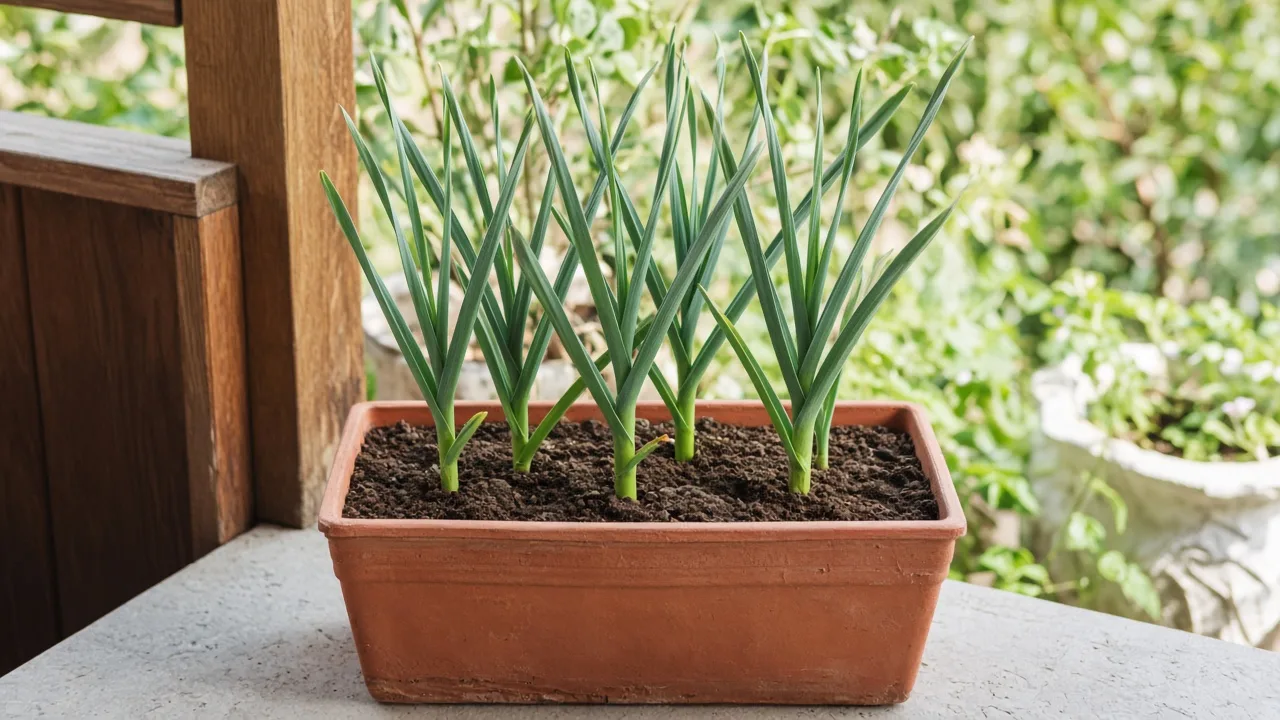
Garlic Watering Guide for Containers & Beds
Garlic Watering Guide for Containers & Beds
Garlic (Allium sativum) is not a thirsty tropical foliage plant, and it is not a desert succulent either. Each clove you plant in autumn or early cool season spends many months in the same container while roots spread, leaves expand, and the underground head swells. Watering mistakes usually show up late—as soft cloves, stained wrappers, or bulbs that refuse to store well—because the crop tolerates short dry spells better than it tolerates cold, soggy mix around dormant cloves.
The workable rule for most home growers, especially on patios and terraces: keep garlic evenly moist during active spring leaf growth and bulbing, check dryness at the top 3–5 cm instead of following a fixed weekday, taper as lower leaves yellow, and stop irrigating about one to two weeks before harvest so bulbs lift in drier conditions. That pattern matches the Garlic overview hub and the long cool-season cycle Allium sativum needs.
Why garlic breaks the usual watering calendar
Houseplant advice often says “let the soil dry completely.” Garlic partly agrees and partly refuses. University of Wisconsin Extension notes that garlic has a relatively shallow root system and is sensitive to moisture stress during bulbing, when lack of water produces smaller bulbs and earlier maturity (UW Extension — garlic). Yet the same crop rots easily when mix stays wet and cold around cloves—a common container failure in winter and during heavy monsoon spells.
Shallow roots and bulb swelling
Most feeder roots sit in the upper soil profile, so the top few centimetres of mix control daily comfort more than the deep bottom of a tall pot. During bulbing, steady moisture helps cloves partition into plump segments; drought at that stage steals size you cannot recover with a late flood. Harvest to Table, drawing on decades of field experience, recommends even moisture from spring through early summer for best bulb formation and warns that letting the bed go dry hinders development (Harvest to Table — grow garlic).
Months in one pot
Container garlic is planted once and left in place until summer harvest—often eight months or more from fall planting (The Spruce — garlic in containers). A shallow decorative pot dries out in days; an oversized trough holds water for weeks. Neither extreme suits garlic. Deep planters (about 25–30 cm) buffer swings better, but you still must match water to season and leaf stage, not to whatever schedule worked for your pothos. See Garlic repotting for final container depth and clove spacing before you lock in a watering rhythm.
The quick answer
After planting, water once to settle mix, then rely on seasonal rainfall or light checks unless weather stays bone dry. Through winter dormancy, keep containers barely moist, never waterlogged—wet cold mix is a leading cause of clove rot. When spring shoots appear, irrigate when the top 3–5 cm feels dry, then soak until excess drains. Many guides cite roughly 25 mm (1 inch) of water per week from rain plus irrigation during active growth, with more on sandy mixes and less when skies deliver steady rain (RHS — grow garlic).
About one to two weeks before you plan to lift bulbs, stop watering so skins tighten and harvest happens in drier mix. Wisconsin Extension advises stopping when foliage begins to wither to avoid stained bulbs and disease (UW Extension — garlic). Harvest to Table suggests allowing soil to go just dry for about three to four weeks before harvest to improve flavour and finish maturity (Harvest to Table — grow garlic). Treat those windows as overlapping guidance—your cue is yellowing lower leaves plus a test bulb, not a calendar date copied from another climate.
Check moisture before you water
Surface colour lies, especially in peat-heavy potting mix on a sunny terrace. Use at least one check every time you reach for the can.
Top 3–5 cm finger test
Press a finger or knuckle 3–5 cm into the mix—the same depth the plant-detail profile uses for garlic. If soil clings and feels cool, wait. If it is dry and crumbly, water soon. Epic Gardening’s container guide recommends irrigating after the soil surface dries, using your finger to judge wetness below (Epic Gardening — garlic in containers). For germination of other crops you might keep constant surface moisture; garlic cloves are already underground—your target is moist root zone, not a wet blanket on top.
Lift the pot
Lift the container after a thorough drain and note the weight when mix is properly moist. When the pot feels noticeably lighter and the finger test matches dry top layer, soak again. Never let pots sit in full saucers of old runoff; garlic roots need oxygen as much as they need water. Pair checks with Garlic soil drainage—dense, compost-heavy blends stay wet longer than gritty vegetable mix.
Season-by-season watering
Garlic’s water needs follow phenology, not a single summer schedule.
Planting and fall root establishment
Plant point-up cloves in their final deep container, cover with about 2.5–5 cm of mix, and water once to settle (Epic Gardening — garlic in containers). Roots begin anchoring before top growth appears; a light drink after planting is enough unless autumn stays rainless for many days. In cool-winter regions, fall planting is standard; in mild or low-chill areas, follow regional seed-garlic timing from Garlic propagation rather than copying a northern calendar.
Winter: barely moist, never sodden
While shoots are dormant or minimal, reduce frequency sharply. The goal is preventing saturated cold mix, not keeping foliage lush—there is little foliage to support. Move pots so they drain freely after storms; elevate them if standing water pools on a terrace. If you overwinter containers under eaves, an occasional light check beats automatic weekly soaking.
Spring growth and bulbing
Once green shoots rise and days warm, garlic enters its hungriest water phase. The Spruce advises keeping container soil moist but not soggy with at least six hours of sun (The Spruce — garlic in containers). RHS recommends watering during dry spells in spring and early summer to improve bulb size, directing water to the base and avoiding wet leaves that invite fungal issues (RHS — grow garlic). Align feeding with this active window via Garlic fertilizer so nitrogen does not replace fixing drainage.
Hardneck types may push scapes in late spring; removing them redirects energy to bulbs (Garlic pruning). Scape season still needs steady moisture—do not interpret scape harvest as a signal to dry the pot down early.
Dry-down before harvest
When several lower leaves brown while upper foliage is partly green, brush soil from a test bulb. If heads are sizing well, stop irrigating about one to two weeks before lifting the crop. Continuing to water once bulbs are mature risks rot, split wrappers, and poor curing. Lift when soil is dry if possible; Wisconsin Extension notes bulbs store best unwashed because surface moisture encourages disease (UW Extension — garlic). Move cured garlic to a cool, dry pantry—not back into a wet growing mix.
How pots and mix change the schedule
Small pots dry faster in spring wind; large troughs may need fewer drinks but punish overwatering longer. Sandy, gritty mix wants more frequent light checks; compost-heavy blends need longer intervals and sharper drainage amendments. Mulch moderates temperature and evaporation—Epic Gardening suggests mulch after planting to retain moisture and regulate soil temperature (Epic Gardening — garlic in containers). Do not mulch so thickly that winter mix never dries between monsoon rains.
Pair watering with Garlic light: weak shade slows transpiration and keeps mix wet longer, mimicking overwatering stress without extra irrigation.
Overwatering warning signs
Chronic wetness is more dangerous than a missed drink for garlic.
Watch for yellowing leaves while mix stays dark and cool, a sour smell from the container, and soft or mushy cloves when you brush soil away from the base. Leaf tips may yellow from water stress even when fertility is fine—Wisconsin Extension notes yellow tips can appear under stress (UW Extension — garlic)—but yellowing plus wet mix points to rot risk, not thirst. Stalled spring growth in an otherwise sunny pot often traces to cold, anaerobic roots.
First actions: stop watering, confirm drainage holes are open, move the pot to airflow and sun, and inspect cloves. Replace saturated mix only if rot is localized and you still have time in the season; otherwise treat it as a learning season and fix soil structure before replanting.
Underwatering warning signs
Dry garlic announces itself more honestly.
Thin, curling leaf tips, very light pots between expected waterings, and stalled leaf expansion in hot, windy weather suggest the bulbing root zone dried too long. Bulbs may mature early but small—the pattern Wisconsin Extension ties to moisture stress during bulbing (UW Extension — garlic).
Recovery: one deep soak until water runs free, drain fully, then return to dryness-guided checks. Do not compensate with daily shallow sprinkles that wet only the top inch while roots below stay dry.
Watering techniques that keep foliage dry
Water at the soil line in the morning when possible so leaves dry quickly—RHS specifically warns that wetting foliage can encourage fungal problems (RHS — grow garlic). A watering can with a narrow rose, a gentle hose, or a soaker hose along the row works better than overhead sprinklers on a balcony.
For multiple containers, group pots with similar exposure so one dry corner does not get skipped. After monsoon downpours, empty saucers and probe depth—rain wets the surface while inner mix still drains.
India, terraces, and monsoon humidity
Indian growers often plant lahsun in cool Rabi months on rooftops and in raised beds. Success depends less on a US “inch per week” figure and more on drainage during cloudy, humid weeks when evaporation slows. During pre-monsoon heat, terrace pots may need daily finger checks; during steady monsoon rain, skip irrigation and focus on preventing waterlogged mix—elevate pots, refresh perlite or grit in the blend, and avoid saucers.
Low-chill softneck types suit many mild-winter regions; they still need full spring sun and even moisture while leaves are active. Do not park winter pots in a heated room that removes seasonal chill while also keeping mix artificially wet—that combination confuses bulbing and invites rot. Match variety to your winter using the overview’s grower notes, then water to local weather, not to a foreign blog calendar.
When to use this page vs other Garlic guides
Use this watering guide for when to irrigate, how to test dryness, seasonal taper, and pre-harvest dry-down. Visit Garlic soil for mix recipes and drainage fixes that make watering easier. See Garlic light if leaves are pale and floppy despite correct moisture. Read Garlic fertilizer for spring feeding—not extra water—when growth is pale. Garlic propagation covers clove planting depth and timing; Garlic repotting explains why garlic rarely moves mid-season. Garlic pruning is the place for scape removal, not drought stress.
Related Garlic guides
- Garlic overview — variety choice, planting depth, harvest cues, pet toxicity
- Garlic soil — loose mix, pH, and drainage that prevent clove rot
- Garlic light — six-plus hours of sun for strong leaves and bulb size
- Garlic fertilizer — modest feeding during active leaf growth
- Garlic propagation — seed garlic, spacing, and seasonal planting windows
- Garlic pruning — hardneck scapes and what to cut (and when)
- Garlic repotting — deep final containers and drainage troubleshooting
Conclusion
Garlic watering is the art of matching moisture to a long bulb crop: barely moist in dormancy, steady but drained moisture while spring leaves and bulbs expand, and a deliberate dry-down before harvest so heads cure clean and store well. Check 3–5 cm of dryness, lift pots for weight, and water at the soil line instead of sprinkling leaves. When lower foliage yellows, stop irrigating and lift a test bulb before the whole crop splits or rots. Pair this rhythm with sharp drainage from the soil guide and strong spring sun from the light guide, and water becomes a tool for bulb size—not a gamble on the calendar.
Try the Plant Watering Calculator with garlic selected to estimate baseline needs for your pot volume and climate, then adjust with finger checks every season.