Leggy Growth on Golden Barrel Cactus: What to Check First
Quick answer
Golden Barrel Cactus can become more oval as it matures. Suspect low-light stretch when the newest crown is unusually narrow, pale, or leaning after a dim period. Compare new growth with the older globe; if light is the likely cause, increase exposure gradually instead of watering or pruning.
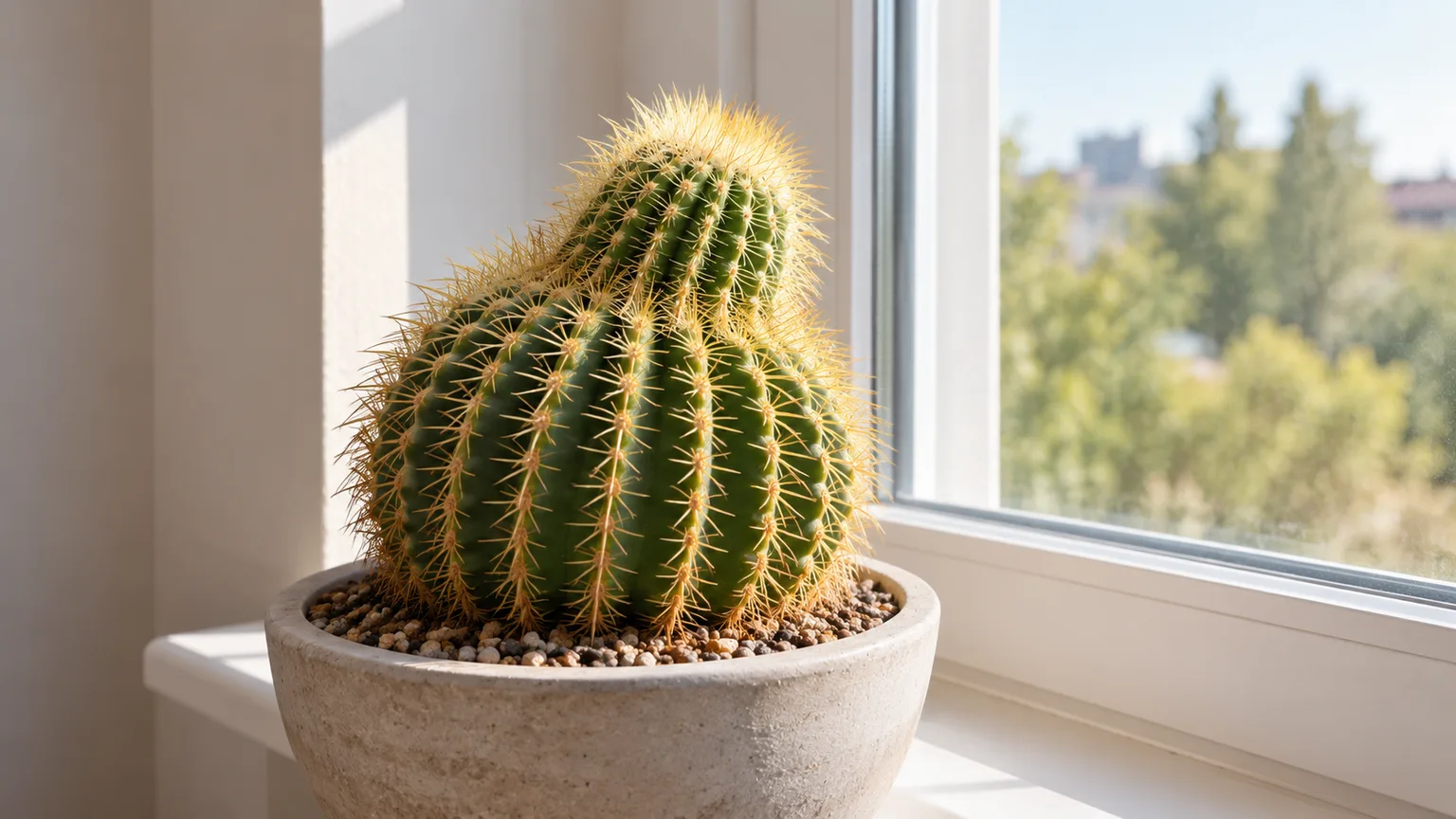
Leggy Growth on Golden Barrel Cactus: Causes, Checks & Fixes
This guide covers leggy growth on Golden Barrel Cactus. See also the general Leggy Growth guide, watering, and light pages for this plant.
Leggy Growth on Golden Barrel Cactus: Causes, Checks & Fixes
Quick answer
Golden Barrel Cactus is a slow, rounded cactus, not a vine that makes long gaps between leaves. Its outline can become more oval as it matures, so height alone does not prove a problem. The useful clue is a recent change at the crown: new stem growth that is noticeably narrower or paler than the older body, especially when it leans toward the nearest window. Compare that change with the plant’s light history before changing care.
If the crown has started stretching after a move to a dimmer shelf, a shaded retail period, or a cloudy season, increase light gradually. Do not try to fix a stretched silhouette with extra water, fertilizer, or pruning. The general leggy-growth guide explains low-light stretching across plants; this page focuses on how to read that pattern on a barrel-shaped cactus.
What leggy growth looks like on Golden Barrel Cactus
The golden barrel’s body is one ribbed stem with golden spines. A normal plant keeps a sturdy, rounded outline; an older one may slowly look less circular. Fine Gardening notes that the golden barrel’s rounded form eventually elongates.
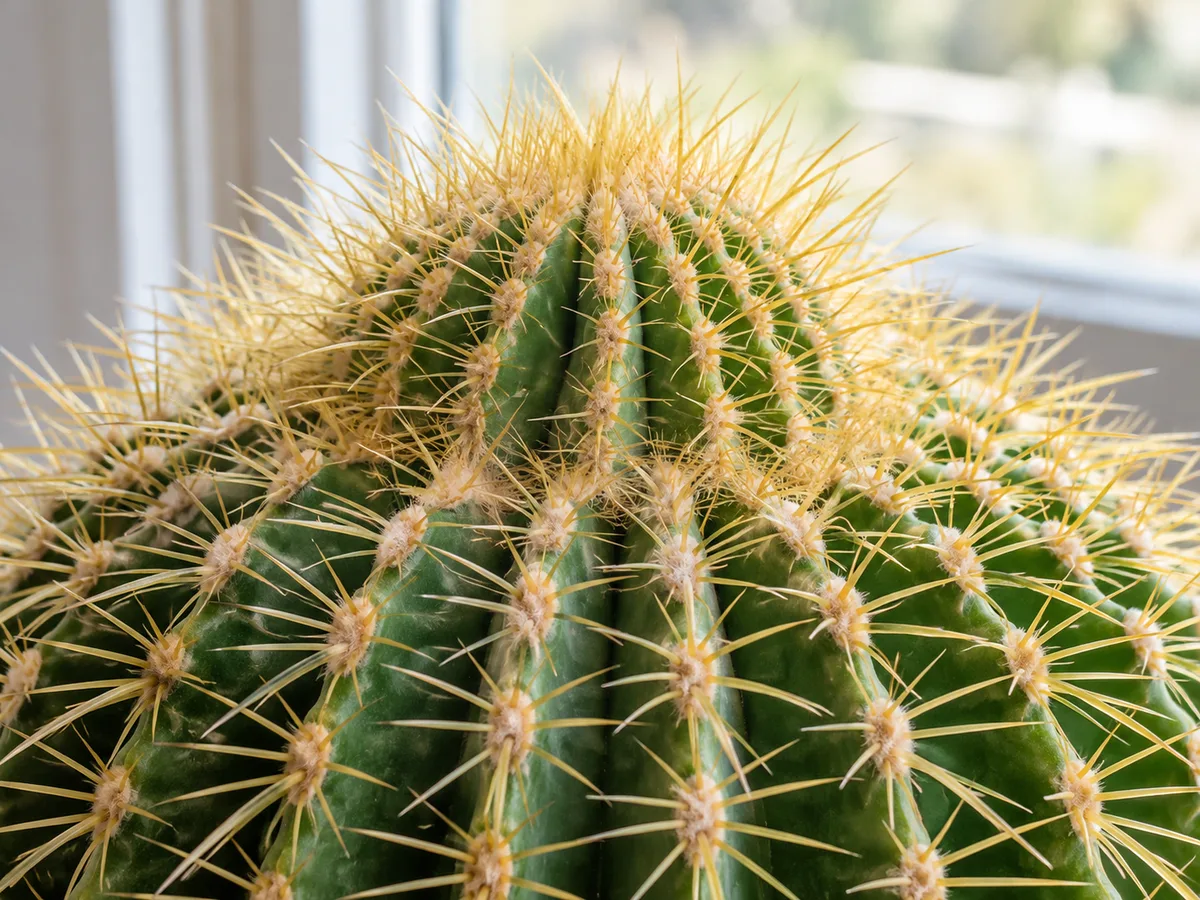
Compare the newer crown with the older ribs; a slow, even change can be age-related, while a sudden narrow section after low light deserves a closer check.
On this cactus, “leggy” does not mean a long vine, a bare stem with leaf nodes, or a plant that needs pinching. It means the newest part of the globe seems to be reaching upward or sideways in a way the older body did not. A suspected light response is more convincing when the crown is both newly elongated and oriented toward a weak light source. A healthy, firm body that has changed evenly over a long period may simply be maturing.
Separate normal age-related shape from low-light stretch
Golden Barrel Cactus starts out nearly round and can become more oval as it grows. The Spruce describes that gradual change in the golden barrel, while RHS describes Echinocactus as a slow-growing cactus with a barrel-shaped, ribbed stem. These sources support an important distinction: a gradual change across the whole plant is different from a newer, narrow section that appeared after light conditions worsened.
Low light is a plausible cause when the youngest crown has stretched compared with the older globe and the plant has been kept far from a bright window, behind a screen, or in a darker winter position. University of Maine Cooperative Extension defines etiolation as elongated, spindly growth associated with insufficient light. Its general description mentions pale leaves and stems; Golden Barrel has a succulent stem rather than ordinary foliage leaves, so use the shape and color of the new stem as the clue rather than looking for leggy leaf stalks.
Use old photographs if you have them. Take one from the same angle and compare the crown, not just the total height. A slow change that remains symmetrical, evenly green, and firm fits natural growth better. A recent narrow point or one-sided reach toward light makes etiolation more likely. A single photograph cannot confirm the cause, but the sequence can show whether the shape changed suddenly or gradually.
The Golden Barrel Cactus overview shows the plant’s normal globe form and baseline care. If the crown is firm and the shape changed slowly, keep monitoring rather than treating an age-related outline as damage.
Check light direction and recent placement
Golden Barrel Cactus needs a bright position. NC State’s Echinocactus profile lists full sun as best, with some shade tolerated, and Clemson’s indoor-cacti guide says arid cacti need bright sunlight. A south- or west-facing window is often the brightest indoor option, but the actual exposure depends on nearby buildings, trees, glazing, curtains, and the season.
Trace the light history for the period when the crown changed. Did the cactus move from a sunny sill to a desk? Was it brought home from a shaded shop and placed several feet from the window? Did a curtain, shelf, or neighboring plant begin blocking the light? Was the plant moved outdoors and then returned to a darker room? A low-light diagnosis fits best when the newest growth began stretching after one of these changes.
To make the comparison useful, write down the window, distance from the glass, and any shade from curtains, balconies, trees, or neighboring buildings. Note when direct sun reaches the pot rather than judging the room by how bright it feels. This is a placement history, not a precise light measurement, but it can help you identify what changed before the crown did. Keep the same photo angle and compare the newest point after a change. If light reaches the cactus from one side, include that direction in your notes; avoid spinning the pot repeatedly while you are checking whether the crown still leans.
Look at the direction of the newest growth without turning the cactus by hand. If the top leans consistently toward a window while the older globe stays upright, the exposure may be uneven. If the crown is centered and the whole plant is slowly becoming oval, age is a better explanation. Do not handle the spines to check firmness; observe the stem’s outline and use a stable pot surface for comparison.
Rule out water stress and a soft base
Golden Barrel Cactus prefers dry soil. If the ribs look pinched but the body remains firm, check the mineral mix through the pot before watering. The watering guide explains the plant’s dry-through-the-container check. Do not use a weekly schedule or give a small drink to “fix” a narrow crown.
A soft, dark, or yellowing base is a different warning from low-light stretch. If the pot stays wet, inspect drainage and the soil line before changing light or adding fertilizer; poor drainage or frequent watering can cause cactus root and stem rot. The cactus’s soil guide covers the fast-draining mineral mix that helps keep the root zone from remaining damp. If the body is firm and the base is clean, there is no reason to unpot it just because the crown is narrower.
Use a wooden skewer at the pot’s inside edge or compare the container’s weight instead of reaching between the ribs. Check moisture at depth rather than relying on a quick surface check. If the skewer comes out damp or the pot remains heavy, wait; watering won’t make an elongated crown rounder. If the body is firm but the ribs look pinched, check mix moisture before watering and keep that check separate from the light diagnosis.
A cactus that leans without a visibly stretched crown may have shifted in its pot or be responding to one-sided light rather than showing true etiolation. Use the drooping-looking Golden Barrel guide when the whole globe is tilting or losing firmness; that page separates posture and base problems from foliage symptoms.
First fix: increase light gradually
If the newest crown is narrow or pale, the change is recent, and the plant has been in dim light, make one correction first: move it toward the brightest suitable window in stages. Do not take a cactus that has been shaded for months and place it straight into the strongest midday sun. Sudden exposure can scorch tissue that is not acclimated. University of Maine Extension recommends gradual acclimation when moving plants toward sunnier conditions; Clemson recommends partial shade at first for outdoor moves.
Start by moving the pot closer to the bright window or removing an obstruction. If it has been in deep shade, give it a short period of brighter but filtered exposure, then increase direct sun over several days as the stem tolerates the change. Outdoors, begin in partial shade and work toward more sun. Do not use a fixed light-hour target from another plant; the window, season, and local intensity all affect exposure.
For a home without a reliably bright window, a grow light can supplement natural light. Position it so the whole crown receives even illumination and follow the fixture instructions for distance and timing. The goal is a bright, steady source, not heat pressed against the cactus. If the plant is firm and its current shape is clearly age-related, do not make abrupt changes simply to chase a rounder silhouette.
Why pruning and extra fertilizer do not reshape the globe
Do not cut off the narrowed crown to make the cactus look round again. NC State describes Echinocactus stems as unsegmented and usually unbranched, unlike a vine with leaf nodes; pruning cannot trigger a tidy set of compact side shoots. A cut also removes living stem tissue and can leave a permanent mark. The repotting guide is for a damaged or unstable root ball, not for correcting the outline of healthy growth.
Do not fertilize to make a thin crown thicken. More nutrients cannot replace the light needed for compact growth. Golden Barrel Cactus is a slow-growing cactus, so give the corrected light time to affect the next crown growth. If the globe is firm, the ribs are stable, and the crown is not getting narrower, keep the normal care routine rather than feeding for speed.
Likewise, do not water more often because the crown looks narrow. Golden Barrel Cactus is adapted to dry soil and should be watered thoroughly only after the mineral mix has dried through the container. Repeated watering in damp soil can damage roots without shortening the stretched area. Keep the watering routine steady while you correct a confirmed light issue.
Recovery: judge the next crown, not the old outline
Do not judge recovery by expecting the old stem to contract to its previous width. Look for the crown to stop stretching toward weak light and for later growth to become more centered and proportionate to the globe. New evidence can take time to appear, so compare photos rather than moving the cactus repeatedly to force a fast response.
Keep a dated photo from the same angle and compare the newest growth after the light adjustment. If it remains firm and the crown’s outline is stable, the correction is helping even if the whole plant still looks oval. If the shape continues to change, review whether the bright position is actually bright enough and whether another object is casting shade.
If the lower stem becomes soft, dark, or yellow, treat that as a separate problem rather than waiting for the crown to recover. A wet root zone or a change at the soil line points back to drainage and watering checks. The problems hub helps route that new symptom to the right page.
Prevent another stretched crown
Keep the cactus in the brightest position it can tolerate and acclimate it whenever you change its exposure. In a cloudy home, use a grow light rather than moving the plant into harsh sun in one step.
Avoid shifting the cactus between dark and bright areas repeatedly. If it moves outdoors for summer, start in partial shade and increase exposure gradually; when it returns indoors, choose its brightest available location. In winter, judge the plant by its firm shape and the condition of the newest crown rather than expecting rapid growth.
Keep the mineral mix fast draining and water only after it has dried through the pot. Good light and dry-down are separate parts of care: watering cannot make a dim cactus grow compactly, and bright light does not make a wet, poorly draining mix safe. The soil guide and watering guide cover those routines if you need to adjust them.
When to use this page versus other Golden Barrel Cactus guides
Use this page when the newest crown appears narrower, paler, or more extended after a change in light. If the main issue is the whole globe leaning or losing firmness, use the drooping-looking guide. If the plant is simply quiet but still firm and evenly shaped, its slow growth may be normal; do not use pruning or extra water to force a quick change.
The Golden Barrel problems hub lists other plant-specific diagnoses. Use the light, soil, and watering guides for care changes, and the repotting guide only when the mix or pot actually needs attention.
Related Golden Barrel Cactus guides
For a light-specific placement decision, read the Golden Barrel light guide. If the crown shape is stable but the plant’s growth rate seems unusually slow, use the Golden Barrel Cactus overview to compare its normal pace and care needs. Check the soil and watering guides before changing either routine; a stretched crown by itself is not a signal to water or repot.
Related tool
Use the Plant Problem Diagnosis Tool to compare the crown shape, light history, and other visible signs before making another change.