Jackfruit Repotting Guide: Pot, Timing & Roots
Jackfruit Repotting Guide: Pot, Timing & Roots
Jackfruit Repotting Guide: Pot, Timing & Roots
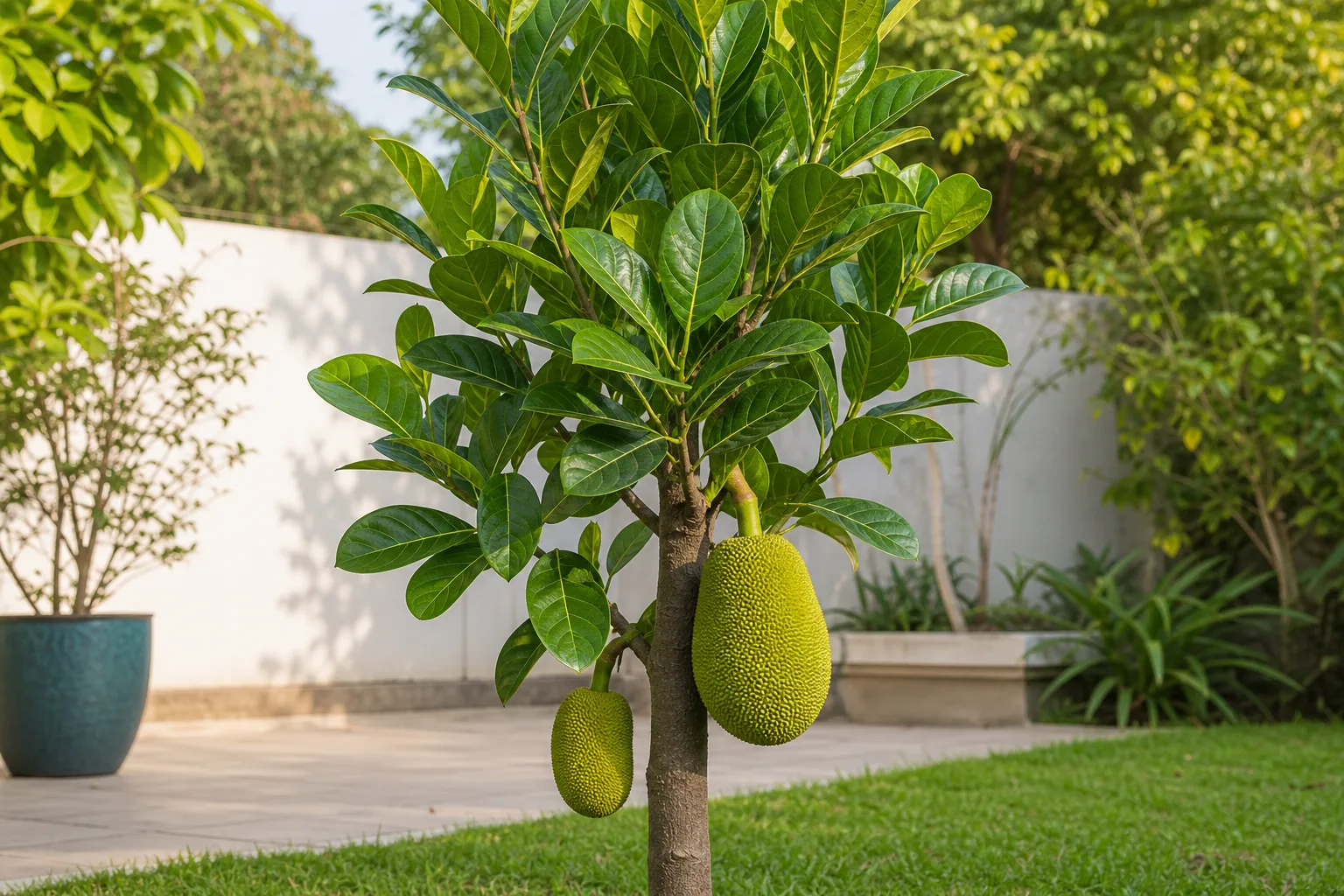
Repot Jackfruit only when the move fixes a real root-zone problem. Artocarpus heterophyllus is a large evergreen tropical fruit tree, not a compact indoor foliage plant, and it is unusually sensitive to root restriction. A tall nursery plant jammed into a shallow pot can look impressive on the day you buy it, then stall for years after planting because the taproot already learned to circle the container wall.
The safest path is simple: keep young trees in deep pots, move them before roots pack the media, preserve the root ball, and never leave the new mix flooded. If the tree is healthy and still has room to grow downward, waiting is often better than another unnecessary disturbance.
Why Jackfruit root restriction matters so much
Jackfruit belongs to the mulberry family (Moraceae) and forms a strong downward root system when given space. UF/IFAS reports that trees are greatly affected by root restriction and develop a deeper, stronger root system in large, deep plastic pots about 45–61 cm (18–24 inches) tall. Pot-bound trees, by contrast, establish poorly and grow weakly after they are planted out.
That is the core difference between Jackfruit and many ornamentals you can upsize casually. A circling taproot is not a minor cosmetic issue. UF/IFAS defines a root-bound nursery tree as one where available container space is filled until the taproot runs along the pot edge in a circular fashion, and notes that such root systems may not grow properly once they reach open ground. Your job during every container move is to prevent that geometry — or at least stop making it worse.
Jackfruit is also intolerant of the opposite extreme. Trees may decline or die after 2–3 days of continuously wet or flooded soil, and root-rot pathogens become more likely when drainage fails. A successful repot therefore has two non-negotiable outcomes: depth for the taproot and air for the roots.
Best time to repot or plant out Jackfruit
Choose the start of warm, active growth with reliable moisture available afterward. UF/IFAS recommends late spring or early summer — early in the rainy season — when irrigation is not guaranteed, while noting that planting can happen any time in warm climates if you can water the new tree regularly. In much of India, that usually means a settled warm window before or at the onset of monsoon rains, not a cold snap, a heatwave with no shade plan, or a week of ponded water around the root zone.
Morning work is easier because the old root ball stays cohesive and you are not fighting peak heat while the mix is still settling. Do not move a tree simply because twelve months have passed on a calendar. The plant, pot depth, drainage, and growth stage should make the decision. For climate and placement context beyond the transplant itself, start with the Jackfruit overview.
Signs your Jackfruit needs a larger pot
Strong evidence includes a taproot pressing or circling the pot wall, roots pouring from drainage holes, a container that dries within a day in ordinary warm weather after a thorough soak, or a top-heavy tree that tips whenever wind catches the canopy. Growth that stalls despite full sun and sensible feeding is another clue — especially if the nursery pot was already undersized relative to a 60–120 cm tall plant.
Weak evidence includes a single yellow leaf, a brief pause after a cool week, or slower growth in shade. Fix light and moisture first using the Jackfruit light guide and Jackfruit watering guide before assuming cramped roots are the only cause. A larger wet pot will not rescue a tree that is simply cold, dark, or chronically waterlogged.
Choose a deep container, not just a wider one
Width helps stability, but depth is the Jackfruit priority. UF/IFAS specifically calls for long, deep nursery pots rather than squat bowls that force the taproot sideways. A young tree destined for a courtyard tub can often go into its planned final deep container early, provided you water only the occupied root zone until roots colonize the new volume.
A permanent small pot is a poor long-term home for this species. Unpruned landscape trees commonly reach about 9–12 m (30–40 ft) in warm subtropical conditions, and tropical trees can grow larger. Container culture works best as a nursery or temporary terrace stage, or for a carefully pruned specimen in a very large, free-draining tub — not as an indefinitely undersized houseplant setup.
Pot depth, drainage and stability
Aim for a rigid pot with multiple free drainage holes at the true lowest point. Prefer depth in the 45–61 cm range for nursery and young container trees whenever practical. Terracotta breathes but becomes extremely heavy when wet; thick plastic is lighter to move but may need a weighted base or sheltered placement against wind.
Skip the old “rocks for drainage” trick under a dense mix. Stones do not fix a water-holding blend; they shrink usable root depth and can create a perched water table. Empty any saucer after watering. Jackfruit tolerates sand, sandy loam, and even high-pH rocky soils when they are well drained, but it does not tolerate a sealed cachepot full of stagnant runoff.
Prepare a free-draining Jackfruit mix
Use fresh, airy media that holds some moisture yet releases surplus water quickly. A practical container blend aligned with this species’ drainage needs is about 50% quality potting mix, 25% coarse perlite or horticultural grit, and 25% fine pine bark or finished compost. Increase the coarse fraction if monsoon rain keeps outdoor pots wet for days.
Do not pack dense garden clay into a tub, and do not bury the tree in a deep compost pocket that stays anaerobic. Landscape trees can succeed across several textures when drainage is excellent; containers fail fastest when the mix collapses into sludge. For mix recipes and pH detail beyond the transplant move, use the Jackfruit soil guide.
Latex and gloves before you handle roots
All leaf parts contain sticky white latex, and cut stems release sap that stains clothing permanently. Wear gloves and long sleeves whenever you risk nicking roots, twigs, or leaves during the move. Keep tools and work surfaces easy to wipe, and wash exposed skin with soap and water afterward.
This is handling caution, not medical advice. If sap contacts eyes or causes significant irritation, seek medical care rather than treating it as ordinary garden dirt. Keep pets and children away from fresh latex and discarded prunings while you work.
How to repot Jackfruit step by step
- Water the tree several hours beforehand so the root ball is evenly moist and holds together, not muddy.
- Set the new deep pot in its final or near-final spot. A large Jackfruit container is awkward to lift after it is watered.
- Add pre-moistened mix so the top of the old root ball will sit level with, or slightly above, the new surface.
- Support the root ball and slide or cut away the old pot. Do not yank the trunk; sacrificing a cheap nursery pot is safer than tearing roots.
- Inspect the visible surface for sour smell, black mushy roots, pests, or a severely circling taproot. Do not dismantle a healthy ball.
- Center the intact root ball. Keep the original soil line level with or slightly above the surrounding mix — the same planting-depth principle UF/IFAS gives for nursery trees going into the ground.
- Fill gaps with mix and firm lightly with fingertips. Do not ram media under the ball or bury the stem.
- Water once, slowly, until runoff appears, then empty any tray. Stake only if wind moves the crown, using a soft natural-fiber tie.
Keep the taproot from circling again
Default to slip-potting, not aggressive root surgery. A circling taproot is evidence the tree stayed too long in a shallow pot. Forcing it straight can crack the root; cutting it removes a major structural organ. If the circle is mild and roots are firm and pale, move the ball intact into deeper media and let new growth continue downward.
Severely pot-bound trees that must go into open ground are a harder case. UF/IFAS warns they establish poorly. Prefer buying or raising the next tree in a deep pot over gambling on radical root pruning of a valuable grafted cultivar. If you must plant a compromised root ball, disturb it as little as possible, improve drainage around the hole, and expect a longer establishment period.
Planting out from a nursery pot
When the destination is open ground rather than another tub, choose full sun and a site that does not pond after heavy rain. UF/IFAS advises planting away from buildings and power lines because unpruned trees become large, and recommends spacing on the order of roughly 6–9 m from structures depending on how hard you plan to prune.
Dig a hole several times wider than the container so loosened soil invites outward root growth. Backfill mainly with native soil; do not create a compost bathtub under the root ball. Set the nursery media surface level with or slightly above grade, water thoroughly, and keep grass away from the trunk while the tree establishes. In sites with a high water table, planting on a raised mound of native soil is safer than dropping Jackfruit into a basin that floods for days.
Aftercare for the first two weeks
After the settling soak, check moisture in the old root ball and the new surrounding mix separately. Those two zones dry at different rates. Water again when the upper few centimetres feel dry and the pot feels lighter, then let all excess drain. Young and newly planted trees need regular moisture in dry weather, but flooding remains dangerous — UF/IFAS Extension summaries note decline after only a few days of wet soil.
Keep the tree in bright sun appropriate to its prior acclimation. If it came from a shaded nursery bench, give a short buffer from the harshest afternoon exposure, then return it to full sun. Do not park a newly moved Jackfruit in a dim room for weeks; weak light plus wet mix is a common post-transplant failure pattern.
Wait for clear new flush before resuming normal feeding. Fertiliser cannot repair torn roots, and a strong dose in disturbed media adds stress. When growth restarts, use the Jackfruit fertilizer guide rather than dumping a heavy band of high-nitrogen feed on day one.
Diagnose trouble after repotting
A short pause in growth or mild lower-leaf dullness can follow a careful move. Confirm whether the root ball is actually dry before adding water. Repeatedly soaking a heavy, cool pot because leaves look limp is how transplant stress turns into oxygen-starved roots.
Rapid collapse, a soft dark stem base, sour mix, or wilting while the media stays wet is more serious. Jackfruit is susceptible to root rot caused by organisms such as Pythium, Phytophthora, Fusarium, and Rhizoctonia, especially when subjected to flooding. Improve drainage immediately, stop timed lawn irrigation that keeps the root zone wet, and consider replacement if decay has already destroyed the structural roots.
When not to repot Jackfruit
Do not move a tree in cold weather near freezing, during extreme heat with no recovery shade, while soil is already flooded, or while a young tree is carrying a heavy fruit load you are not prepared to thin. Leaves may be damaged near 0°C, and colder freezes can kill branches or whole trees, so a winter root disturbance in marginal climates stacks risk on risk.
Also pause if the only symptom is yellow leaves in wet soil. That points to drainage or watering first, not an automatic upsize. An oversized pot full of saturated mix often makes root problems worse. If the tree is healthy in a deep container that still drains, leaving it alone may be the best care decision until roots truly fill the volume.
When to use this page vs other Jackfruit guides
Use this page for pot depth, root-ball transfer, planting depth, warm-season timing, and the first two weeks of recovery. Use Jackfruit soil when you need to redesign the substrate itself, Jackfruit watering for ongoing moisture checks, and Jackfruit propagation when you are starting a replacement seedling or grafted plant instead of forcing another risky move on a ruined root system.
For canopy size after the tree is established, use the Jackfruit pruning guide. Repotting does not substitute for annual height control on a species that wants to become a full landscape tree.
Related Jackfruit guides
- Jackfruit plant overview — mature size, climate fit, latex handling, and whole-plant priorities.
- Jackfruit overview care guide — how sun, heat, and drainage fit together before you transplant.
- Jackfruit soil guide — free-draining mixes and landscape drainage choices.
- Jackfruit watering guide — how to water old and new root zones after a move.
- Jackfruit light guide — returning a transplanted tree to full sun safely.
- Jackfruit fertilizer guide — restarting nutrition after visible recovery.
- Jackfruit propagation guide — raising the next tree when a root-bound specimen cannot be saved cleanly.
- Jackfruit pruning guide — size control after the root zone is settled.
Conclusion
Successful Jackfruit repotting is mostly prevention. Move young Artocarpus heterophyllus into deep, free-draining containers before the taproot circles; keep the root ball intact; match the old soil line; and protect the new planting from both drought and multi-day flooding. Then judge water by the root zone, wait for new growth before feeding, and accept that a healthy tree already in a deep pot may not need another move this year.