Jackfruit Propagation: Seed vs Grafting
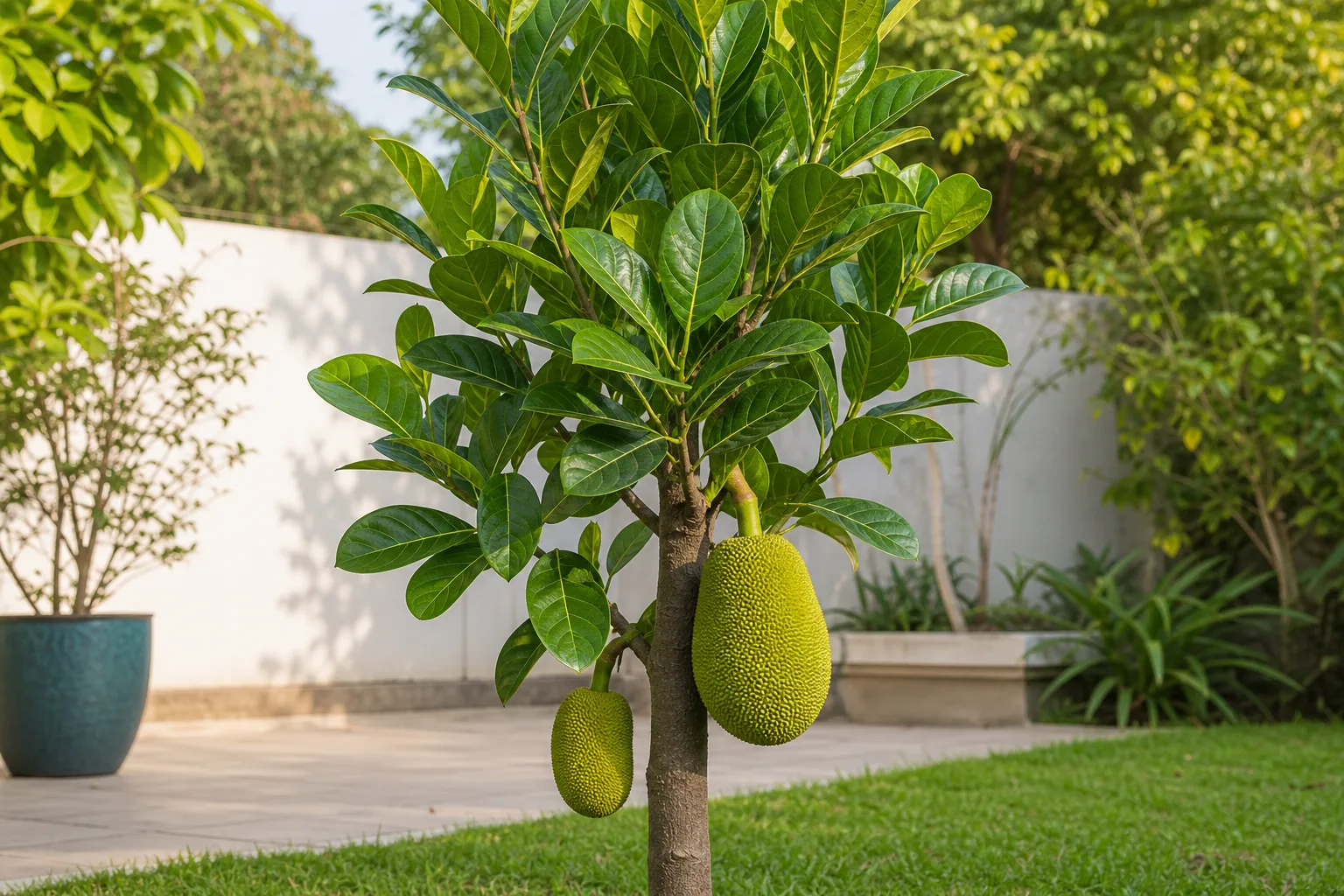
Jackfruit Propagation: Seed vs Grafting
Jackfruit Propagation: Seed vs Grafting
Jackfruit propagation is a choice about fruit identity and timeline, not just whether a seed will sprout. Artocarpus heterophyllus — the large evergreen Moraceae tree behind kathal — grows readily from fresh seed in warm weather, but that seedling is a genetic reshuffle, not a guarantee of the pulp you ate. Named fruit quality, more predictable vigour, and earlier commercial bearing usually come from a grafted plant, not from whatever embryo sat inside last week’s market fruit.
If your goal is a terrace, courtyard, or farm tree with known cultivar performance, buy or make a healthy graft. If your goal is a low-cost experiment, shade tree, or rootstock, seed is fine — as long as you sow it while it is still alive and give the young plant a deep, free-draining home. Use this guide with the Jackfruit care overview so sun, mature size, and latex handling are settled before you invest years in a seedling.
Choose seed or grafting for your goal
UF/IFAS lists seed, grafting, and cuttings as workable routes, then is blunt about preference: grafted trees of known cultivars are preferred when you can get them (UF/IFAS jackfruit guide). Hawaii’s CTAHR profile still notes that seed from selected trees remains a major means of propagation in many producing areas, while grafting and budding are now widely used across India and Southeast Asia (Hawaii CTAHR jackfruit).
Match the method to the outcome you care about before you open a fruit or cut a scion.
When seed-grown jackfruit makes sense
Choose seed when you can collect fresh seed from a healthy, productive tree, sow within days to weeks, and accept that fruit quality may differ from the parent. UF/IFAS notes that seed-grown jackfruit can be relatively precocious compared with many fruit trees and may begin production in the third to fourth year. Purdue’s Morton compilation similarly records ordinary seedlings taking 4–14 years to bear, with some precocious types starting closer to 2½–3½ years (Purdue Morton jackfruit).
Seed is also the practical path for raising rootstocks. Select vigorously growing, healthy seedlings and discard stunted or chlorotic ones — UF/IFAS used seedlings of cultivars such as ‘NS-1’ and ‘Black Gold’ as rootstock sources in Florida work (UF/IFAS jackfruit guide).
When grafted cultivars are worth it
Choose grafting when fruit flavour, texture, season, disease response, or manageable size matter. Jackfruit does not “come true” from seed the way a clone does; pulp colour, fibre, aroma, and tree form can all shift. In Tamil Nadu horticulture guidance, large-scale nursery work leans on softwood (cleft) grafting on young seedling stocks, and grafted orchards are planted as finished plants rather than chance seedlings (TNAU jackfruit).
TNAU’s field guidance also shows why growers pay for grafts: yield commonly starts around the fifth year on grafts versus about the eighth year on seedling trees under their production system (TNAU jackfruit). For a home grower who only needs one good tree, a labelled nursery graft is usually faster and more reliable than mastering veneer work from scratch.
How to grow jackfruit from fresh seed
Treat seed starting as a warm-season nursery project with a short deadline. Jackfruit seed is short-lived. Cool nights, soggy mix, and stale seed are common reasons trays stay empty.
Collect and sow before viability drops
UF/IFAS advises collecting seed from trees with regular high yields and good horticultural characters, then notes that seeds are relatively short lived and may be stored only up to about 30 days. Purdue’s Morton account is equally strict: seed can be kept no longer than a month before planting (Purdue Morton jackfruit). Hawaii CTAHR recommends planting soon after harvest after an overnight soak, because seed loses viability within 1–3 months.
Practical home steps:
- Take seed from fully ripe, healthy fruit of a tree you respect for yield and pulp quality — not from mouldy or long-chilled leftovers when you can avoid them.
- Clean away pulp and rag thoroughly. Sticky latex will coat knives and hands; oil tools and wear gloves before you start (see latex section below).
- Soak overnight in clean water if you want the germination boost Morton and CTAHR describe, then sow promptly.
- Plant in a clean, freely draining nursery mix in a deep pot with open drainage — jackfruit builds a long, delicate taproot early.
- Sow while seed is still plump and fresh. Treat month-old or older seed as a low-odds experiment, not a plan.
Expect germination in about 3–8 weeks under warm conditions. Do not discard a pot after a cool week; give a full warm interval before deciding the seed failed.
Germination care and damping-off prevention
Keep the medium evenly moist, never waterlogged, in bright warmth with airflow. Hawaii CTAHR raises young seedlings under shade at first; harden them into stronger outdoor light as foliage toughens rather than dropping a soft shoot onto a scorching terrace.
Damping-off fungi attack germinating seed and young stems especially when containers stay wet and sanitation is poor (NC State damping-off guidance). Use fresh soilless mix, wash reused pots, avoid thick overcrowding, and never leave trays sitting in runoff. Coordinate early watering with the Jackfruit watering guide and choose an open mix from the Jackfruit soil guide before the taproot fills a shallow bag.
Grafting named jackfruit cultivars
Vegetative propagation is how named jackfruit cultivars are multiplied. The scion supplies the fruiting wood; the seedling rootstock supplies roots. UF/IFAS lists chip budding, side veneer grafting, cleft grafting, and approach grafting, with side veneer used most often in their Florida guidance (UF/IFAS jackfruit guide). Hawaii CTAHR likewise flags modified veneer and cleft grafts among the most common commercial methods (Hawaii CTAHR jackfruit).
Home growers without grafting skill should buy finished nursery grafts rather than risk killing both stock and scion. When you do graft, align cambium carefully, keep the union clean and snug, shade the fresh union from scorching sun, and remove rootstock sprouts that appear below the graft.
Side veneer, cleft, and softwood methods
For Florida-style veneer work, UF/IFAS recommends selecting scions or budsticks from vigorously growing trees, preferably in summer or fall. Cut bud sticks 4–6 inches (10–15 cm) from shoot tips, remove the leaves, and use wood with a swollen terminal bud. Budwood can be prepared ahead by tip removal, then collected when buds swell after a week or two. Graft when rootstocks are about pencil size in diameter, leave the terminal bud tip uncovered on veneer grafts, and hold plants in a mist bed in partial shade or under a plastic bag in shade until the union takes (UF/IFAS jackfruit guide).
In India, TNAU’s nursery standard for large-scale work is softwood cleft grafting in July–August on about 4-month-old seedling rootstocks, with field planting of grafts preferably from June through December at roughly 8 × 8 m spacing (TNAU jackfruit). Hawaii notes that budding, grafting, and inarching are also done onto roughly 12-month-old stocks of jackfruit, champedak (A. integer), or other Artocarpus, though rootstock suitability has not been evaluated across every environment (Hawaii CTAHR jackfruit).
Whatever method you use, plant so the graft union stays above the soil line after planting. Buried unions invite suckering confusion and hide failures until the wrong wood takes over.
Rootstocks, scion wood, and aftercare
Use healthy, free-growing seedling rootstocks. Cull yellow, stunted, or chlorotic plants rather than grafting onto weak stems (UF/IFAS jackfruit guide). After the union calluses, gradually increase light, keep the root zone moist but not flooded, and do not combine hard pruning, heavy fertiliser, and a sudden move into harsh sun in the same week.
Once the young tree occupies a nursery pot, think ahead to landscape or large-tub planting. Jackfruit is strongly affected by root restriction: pot-bound trees with circling taproots establish poorly and grow weakly after planting out. UF/IFAS recommends deep pots about 18–24 inches (45–61 cm) for nursery trees and notes that larger nursery plants often establish better than tiny ones when they are not root-bound (UF/IFAS jackfruit guide). Plan final spacing with the Jackfruit pruning guide in mind — unpruned trees need far more room than annually headed home trees.
Cuttings and air layers as secondary options
Do not treat jackfruit like a softwood houseplant that roots easily from stem pieces. UF/IFAS is clear that cuttings are not a common method and that cutting-grown plants have not been well tested under field conditions. In mist-bed trials, semi-hardwood cuttings with three leaves (leaf blades cut in half across the midrib), dipped in 5,000–10,000 ppm IBA, rooted in about 60–70 days (UF/IFAS jackfruit guide).
Air layering is possible but uncommon in UF/IFAS practice. Morton notes that hormone-aided air layers have been distributed in India as a way to get early bearing of known quality without some of the transplant headaches of inarching (Purdue Morton jackfruit). Hawaii likewise lists stem cuttings and air layers among successful vegetative options for cloning a desirable tree (Hawaii CTAHR jackfruit).
For most home growers, that means cuttings and air layers are optional experiments — not the default path to a fruiting cultivar. Put effort into a sound graft or a purchased named plant when fruit identity matters.
Deep pots, transplant timing, and latex PPE
Jackfruit’s long, delicate taproot is the main transplant trap. Morton advises nursery-germinating seed and moving seedlings when no more than four leaves have appeared, because more advanced seedlings are very difficult to transplant successfully (Purdue Morton jackfruit). Hawaii recommends transplanting before seedlings are one year old to avoid taproot damage (Hawaii CTAHR jackfruit). If you must hold plants longer, use deep containers from the start and follow the Jackfruit repotting guide rather than forcing a circling root mass into a shallow decorative pot.
All plant parts contain sticky white latex. Cut stems and fruit surfaces gush sap that permanently stains clothing. Wear gloves and long sleeves for seed cleaning, grafting, and harvest; wrap cut stems; and coat knives and work surfaces with a little cooking oil before separating pulp from rag (UF/IFAS jackfruit guide). This is handling guidance, not medical advice — rinse skin thoroughly after contact and seek care for significant irritation.
Common propagation failures and first fixes
Empty trays after a month usually mean dead or chilled seed, not a mysterious cultivar. Sow fresher seed, keep nights warm, and stop storing cleaned seed for “later.” Soft, collapsing seedlings in wet mix point to damping-off — refresh sanitation, improve airflow, and ease watering (NC State damping-off guidance).
Grafts that fail to push often had mismatched cambium, dry scion wood, or scorching sun on an uncovered union. Re-graft on actively growing pencil-thick stock with swollen buds, then hold the plant humid and shaded until callus forms (UF/IFAS jackfruit guide). Trees that stall after planting out with circling roots were already compromised in the nursery — next time, up-pot into deep containers earlier and avoid buying tall trees jammed into undersized bags.
Yellow leaves while the mix stays wet, or decline after flooded soil, are drainage and watering problems rather than “failed genetics.” Correct the root zone with the watering and soil guides before stacking fertiliser on a struggling transplant.
When to use this page vs other Jackfruit guides
Use this propagation page when you are starting new plants from seed, grafting cultivars, or deciding whether cuttings or air layers are worth trying. Switch to sibling guides for ongoing culture of an established tree:
- Jackfruit overview — identity, mature size, climate fit, and latex basics before you commit space
- Jackfruit light — full-sun placement for seedlings hardening off and fruiting trees
- Jackfruit watering — moisture rhythm for nursery pots and newly planted trees
- Jackfruit soil — free-draining mixes that protect young roots
- Jackfruit fertilizer — feeding after plants are established, not as a substitute for light and drainage
- Jackfruit repotting — deep pots, root checks, and moving young trees without crushing the taproot
- Jackfruit pruning — size control and canopy management once plants are in the ground
Related Jackfruit guides
Propagation gets you a plant; the rest of the cluster keeps it alive and productive. Start with the Jackfruit care overview for placement and expectations, then use watering and soil while seedlings or grafts are still in deep pots. When the tree approaches landscape size, lean on repotting and pruning so root restriction and unchecked height do not undo careful nursery work. Pair light and fertilizer guidance once active growth resumes outdoors.
Conclusion
Jackfruit multiplies easily from fresh seed and most reliably as a named graft. Sow seed within weeks of cleaning, expect 3–8 weeks to germinate, transplant early into deep free-draining pots, and prefer side veneer, cleft, or softwood grafts when fruit identity matters. Treat cuttings and air layers as specialist extras, protect yourself from latex, and never let a circling taproot become the plant you plant out. Get those decisions right once, and the years ahead are about sun, drainage, and size control — not redoing a failed nursery start.