Yellow Leaves on Jackfruit: Causes, Checks & Fixes
Quick answer
First check the Jackfruit root zone before watering or feeding: in a pot, feel 3–5 cm into the mix and lift the container; in the ground, check recent rain and whether the soil stays wet. Yellow leaves can follow drought, flooding, nutrient-uptake problems, pests, leaf disease, or ordinary aging, so use the pattern and growing history rather than treating color alone.
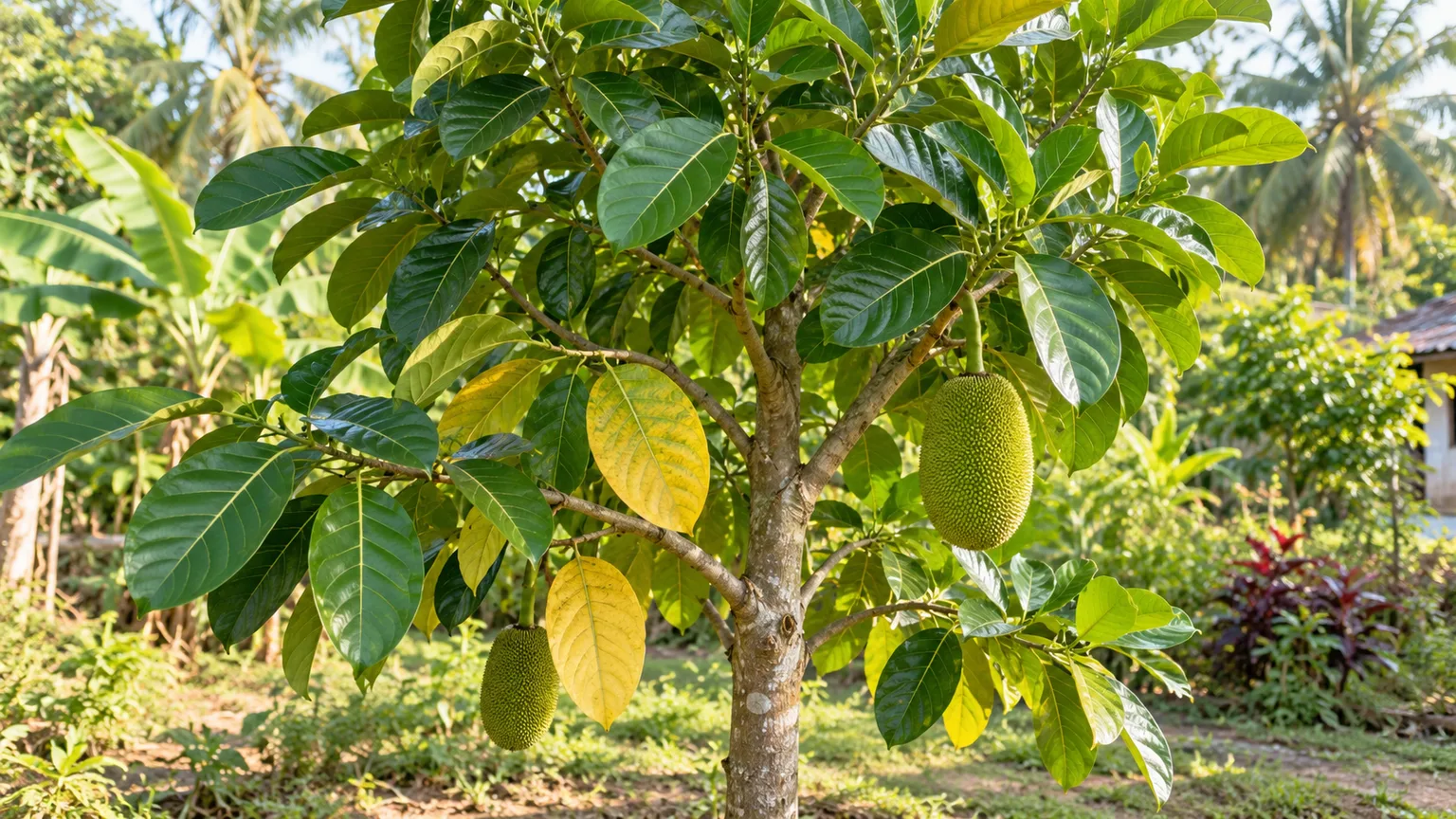
Yellow Leaves on Jackfruit: Causes, Checks & Fixes
This guide covers yellow leaves on Jackfruit. See also the general Yellow Leaves guide, watering, and light pages for this plant.
Yellow Leaves on Jackfruit: Causes, Checks & Fixes
Quick answer: check the root zone before changing care
Start by checking moisture rather than guessing from the leaves. For a potted Jackfruit, feel the mix about 3–5 cm below the surface and compare the container’s weight with how it feels after a normal watering. For a tree in the ground, account for recent rain and check whether water is draining away or sitting around the root zone. Do not add water or fertilizer until you know which condition you have.
Yellow leaves are a symptom, not a diagnosis. A few older leaves fading one at a time can mean something different from a whole flush turning yellow, young leaves paling between green veins, or foliage yellowing while the soil stays wet. Jackfruit is a large evergreen tropical fruit tree; the right response has to protect both its root system and its full-sun canopy. The yellow-leaves hub explains common causes across plants; this guide focuses on how those clues fit Jackfruit.
What yellow leaves look like on Jackfruit
Jackfruit has glossy, leathery leaves, as described in Purdue’s Jackfruit profile, and a yellow leaf may stand out against a canopy that is otherwise dark green. Check whether the color change is limited to an old leaf near the inside of the crown or appears across a group of leaves, including the newest flush. Also note whether yellowing is even across the blade, concentrated between the veins, marked by pale dots, or paired with brown spots, drooping, or leaf drop. Those details narrow the next check.
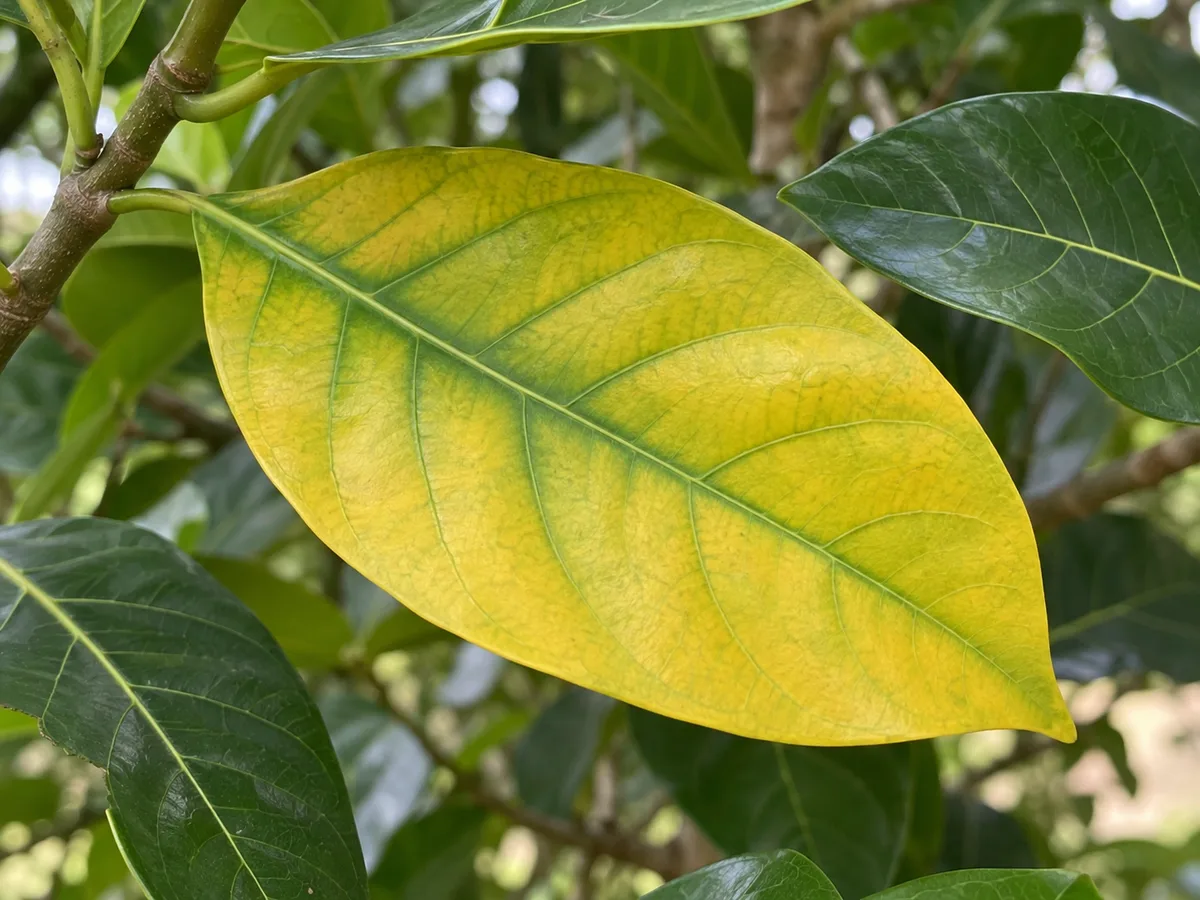
Compare the affected Jackfruit leaf with adjacent green leaves: where the yellowing starts and whether veins stay green can help guide the next check.
Outdoor plants can yellow from several different causes, including water imbalance, low light, nutrient problems, pests, disease, and normal aging; The Spruce’s outdoor-plant guide emphasizes that leaf color alone does not identify which one is responsible. Use the plant’s recent history as part of the diagnosis: new planting, a change in shade, a hot dry spell, repeated rain, fertilizer, or pest exposure can all change what deserves attention first.
A few older yellow leaves may be different from a whole-tree change
Jackfruit is evergreen, but an evergreen tree can still replace older foliage. If one or two mature leaves deep in the canopy turn yellow while nearby leaves remain firm and green, the growing tip is active, and the tree otherwise looks stable, monitor before intervening. Normal aging is more plausible when yellowing is gradual and limited to the oldest leaves; it is less reassuring when several leaves change together, the newest growth pales, or the tree stops growing.
Do not dismiss every lower yellow leaf as natural. A group of older leaves yellowing together can also fit root stress, drying, low light inside a crowded canopy, or nutrient shortage. Mark the branch and compare it again after several days. If the yellow area continues to spread or appears on a new flush, move to the soil and root checks below rather than waiting for the entire crown to react.
Sort the pattern before choosing a cause
Use this table to decide what to inspect next. It is a triage guide, not a diagnosis by itself.
| Pattern on Jackfruit | What it can suggest | Next check |
|---|---|---|
| One older leaf yellowing while the rest of the canopy looks firm and green | Possible normal leaf turnover | Watch whether the next leaves stay healthy |
| Multiple leaves yellowing while potting mix is wet or the site remains ponded | Root stress or flooding | Check drainage, rainfall, and root-zone condition |
| Leaves yellowing during a prolonged dry spell, especially on a young potted tree | Water shortage is possible | Check depth of moisture and container weight |
| New leaves pale between greener veins | A nutrient-uptake issue such as chlorosis is possible | Test soil pH and nutrients before feeding |
| Fine pale speckles, bronze cast, webbing, or visible pests | Pest feeding may be involved | Inspect leaf undersides and stems closely |
| Distinct spots, dark margins, or yellow around lesions | Leaf-spot disease or physical damage may be involved | Photograph the pattern and seek local identification if it spreads |
The main Jackfruit distinction is whether the root zone is too dry or too wet. Both can leave a tree looking stressed, but they call for opposite actions. For details on choosing a watering interval by container, rainfall, and fruit stage, use the Jackfruit watering guide. If the mix drains slowly or stays heavy, compare it with the Jackfruit soil guide before you adjust irrigation.
Wet soil and flooding: a serious Jackfruit possibility
Jackfruit needs regular water when young or newly planted, but the roots cannot sit in flooded ground. UF/IFAS says Jackfruit is not tolerant of continuously wet or flooded soil, may decline or die after two to three days of wet conditions, and is susceptible to several root-rot pathogens when flooding occurs; see the UF/IFAS Jackfruit profile. This makes drainage and recent rainfall especially important when yellow leaves appear after a storm or while the root ball remains wet.
For a container tree, check whether the pot has open drainage holes, the saucer is holding water, or the mix has stayed saturated for days. For a landscape tree, look for standing water, compacted soil, roof runoff, or a low point where rain collects. Do not dig up a mature Jackfruit just to inspect roots. The Jackfruit overwatering guide gives the safer sequence for distinguishing a brief wet spell from persistent root-zone trouble.
First response when the root zone is wet: stop supplemental watering and remove standing water. Keep the tree in its normal bright site while the soil drains; moving it into shade will not fix waterlogging and can slow drying further. If a pot has blocked holes or sits in a full saucer, clear the outlet and elevate it safely so water can escape. Do not repot a large tree or apply fungicide based on yellow leaves alone.
If the soil does not drain, the trunk base is soft, the roots smell sour, or more of the canopy yellows after irrigation stops, get local advice from a fruit-tree specialist or extension office. UF/IFAS recommends well-drained soil for Jackfruit and notes that lawn sprinklers on timers can overwater trees in its Jackfruit guidance. The Jackfruit problems hub can help route other symptoms, but continuing ponding needs a site-level drainage solution.
Dry soil and heat: do not let a container tree stay bone-dry
A Jackfruit tree in full sun can face a rapid change in water demand when the weather turns hot and dry. UF/IFAS describes mature trees as moderately drought tolerant, but recommends watering during prolonged dry periods and says irrigation is critical from bloom through fruit development in its Jackfruit profile. Newly planted and container-grown trees need particular attention because their smaller root volume dries faster than an established tree’s broad root zone.
If the pot is unusually light, the mix is dry several centimeters down, and the yellowing followed missed watering or a hot terrace spell, give the root ball a thorough soak and let excess drain. Do not use a calendar alone: the same Jackfruit pot may dry quickly in hot sun and stay damp through humid or rainy weather. The Jackfruit overview explains why the tree’s outdoor growth habit differs from a compact indoor plant, while the watering guide covers how to adjust for its age and fruiting stage.
A dry root ball is not proof that drought caused every yellow leaf. Check whether new leaves are still firm, whether the entire pot is dry or only the surface, and whether another factor changed at the same time. A quick pour that runs down the sides can leave a compacted or root-bound center dry. If water runs straight through without wetting the mix, inspect the root ball and container structure before increasing the amount on every watering.
General container-plant guidance notes that a heavy pot can indicate retained water and that moisture should be checked rather than inferred from leaf color; Gardening Know How’s yellow-leaf guide gives this as a practical clue for potted plants. Use that only as a supporting check for a young potted Jackfruit. A large container’s weight, mix composition, and tree size can make the signal less obvious, so pair it with a finger check and drainage inspection.
Nutrient pattern: test before adding iron or fertilizer
A Jackfruit with pale new growth and veins that remain greener than the tissue between them may have chlorosis, but that pattern does not tell you the cause by itself. Wisconsin Extension explains that chlorosis can occur when roots cannot absorb micronutrients such as iron or manganese, and recommends testing soil nutrients and pH before treatment. Its chlorosis guidance describes yellow tissue with green veins as a useful pattern to notice, not a substitute for a soil test.
Minnesota Extension’s Hydrangea diagnostic example also shows iron chlorosis as yellow leaf tissue with prominent green veins and notes that it is often most visible on new growth, but that page is about Hydrangea rather than Jackfruit. Treat it as a visual comparison only. UF/IFAS includes iron applications in its Jackfruit nutrient guidance for different soil conditions; use its Jackfruit profile as context, not as a reason to assume that every yellow leaf needs iron. A soil test can help distinguish deficiency from pH-related uptake trouble or a different root problem.
Do not respond to yellow leaves with a heavy fertilizer dose. Too much fertilizer can create its own leaf injury, as noted in The Spruce’s outdoor yellow-leaf guide, and nutrients will not repair roots damaged by flooding or make a dry root ball wet. If there was a recent feed, salt buildup, or a new fertilizer product, record the product and date and compare the affected pattern with a local soil test. Use the Jackfruit fertilizer guide only after you know the tree’s soil and growth stage.
For a landscape tree, test soil from the active root area rather than a handful of potting mix or lawn fertilizer residue. Mature Jackfruit roots can extend beyond the canopy, so the trunk circle alone may not represent the full root zone; UF/IFAS notes this in its Jackfruit profile. If a test shows high pH, low iron, manganese, or another imbalance, ask a local extension service which correction is suitable for Jackfruit and your soil. Avoid acidifying soil or applying chelated products by guesswork.
Pests and leaf disease can also discolor Jackfruit
Inspect both sides of yellow leaves, the midrib, petioles, and nearby stems. Spider mites often cause many tiny pale speckles rather than an even yellow wash; higher populations may produce bronzing or fine webbing. UC IPM describes this stippling-and-webbing pattern in its twospotted spider mite guide. If you find moving mites or fresh stippling, switch to the Jackfruit spider-mites guide for pest-specific checks.
UF/IFAS lists scale insects and mealybugs among Jackfruit pests and notes that fungal leaf spots can occur in its Jackfruit profile. Look for raised or shell-like bumps on stems, cottony clusters, sticky residue, or distinct lesions rather than assuming a nutrient problem. If leaf spots are spreading, photograph several leaves and ask a local extension specialist to identify them; not every spot pattern can be named reliably from a single photo.
Avoid spraying an unidentified product across the whole tree. The label must permit the crop and use in your location, especially when fruit is present. A pest or disease diagnosis should guide the treatment; broad, unnecessary spraying can damage foliage and beneficial organisms without correcting yellowing caused by wet roots, drought, or soil conditions.
Light, shade, transplanting, and recent changes
Jackfruit is a full-sun tropical tree, not a shade-grown houseplant. UF/IFAS recommends full sun for best growth and fruit production and warns that root-restricted trees establish and grow poorly after planting out in its Jackfruit profile. If a Jackfruit has recently moved under a roof edge, neighboring tree, or dense shade cloth, compare the new placement with the old one and check whether growth has slowed or the interior leaves are fading. The Jackfruit light guide explains how to restore a suitable sunny exposure without making a sudden, stressful move.
A nursery tree or recently planted Jackfruit can also react to a major change in light, watering, wind, or root space. If yellowing began soon after planting or repotting, keep the root zone evenly supplied with water while allowing it to drain, and avoid stacking root pruning, fertilizer, hard pruning, and pesticide applications on top of transplant stress. The Jackfruit repotting guide is relevant when a young container tree has genuinely outgrown its pot; it is not a reason to repot a mature tree just because one leaf is yellow.
Think through changes from the last month: extreme heat, heavy rain, shade, root disturbance, fertilizer, pruning, or construction near the roots. Timing does not prove cause, but it helps you choose the next check. A single hot day, a new pot, or a recent application may explain why the symptom appeared; the root and leaf patterns still need to match before you treat.
What to do first for each pattern
Use the root-zone check as the first step, then make one correction that fits what you found:
- If the mix is wet or water is standing: stop supplemental irrigation and clear standing water. Correct the drainage or runoff problem. Use the Jackfruit overwatering route if the tree continues to decline.
- If the potting mix is dry below the surface: water the container thoroughly and let it drain. Recheck the root ball in the following days rather than repeating a fixed daily schedule.
- If young leaves are interveinally yellow but soil moisture is normal: arrange a soil test before applying iron, manganese, or a general fertilizer.
- If the yellowing is speckled, webbed, sticky, or associated with visible insects: identify the pest on the leaf underside or stem before choosing a control.
- If only one older leaf is changing and new growth is healthy: monitor the tree and leave the rest of its care stable.
Do not prune every yellow leaf off immediately. A partly green leaf can still support the tree, and cutting large amounts of foliage from a fruiting Jackfruit can add avoidable stress. Remove a leaf only when it is fully dead, diseased, or likely to harbor a confirmed pest, and avoid damaging the latex-bearing stem when making a cut.
Recovery: follow the next Jackfruit flush
A yellow leaf usually does not return to its original green once the tissue has changed substantially. Some leaves may drop after the cause is corrected. Judge recovery by whether the yellowing stops spreading, the root zone returns to a normal wet–dry rhythm, and the next Jackfruit flush develops without the same pattern. A mature tree may respond more slowly than a small container plant, especially after a long wet period or a heavy fruit load.
Do not promise a fixed number of days for recovery. New growth depends on temperature, rainfall, tree age, root condition, and whether the tree is fruiting. If the tree is stable and only a few old leaves are involved, monitor at the same branch points weekly. If new leaves are yellowing, the canopy is thinning, or the tree is declining after flooding, ask for local diagnosis rather than waiting for a calendar deadline.
Prevent recurring yellow leaves on Jackfruit
Keep Jackfruit in a bright, warm, open site with freely draining soil. Check a young or potted tree more often during hot dry weather, but let the mix drain after irrigation. For a mature landscape tree, account for rainfall and avoid timer sprinklers that keep the root zone wet. The Jackfruit soil guide and watering guide help maintain the balance between dry-spell irrigation and drainage.
Inspect the canopy when new growth appears and after major weather changes. Look for clusters of yellow leaves, early stippling, stem pests, and leaf spots while the affected area is small. Keep fertilizer records, avoid overfeeding, and use soil tests when the pattern points to nutrient uptake. If a new nursery tree is being planted, inspect its root ball and choose a site with space, sun, and drainage.
When a symptom returns, compare it with the Jackfruit problems hub rather than treating every yellow leaf as the same issue. Use the root-rot or overwatering guides when wet soil and decline fit; use the spider-mite guide when stippling or webbing fits. These are confirmed indexable Jackfruit pages and address different clues.
When to get local help
Contact a local extension office or fruit-tree specialist if a large part of the canopy yellows, several branches wilt, the tree is in fruit and you are considering a pesticide, or the soil remains flooded despite stopping irrigation. Share photos of old and new leaves, the leaf underside, the trunk base, and the surrounding soil. Include the tree’s age, whether it is in a pot or the ground, recent rainfall, irrigation, fertilizer, and planting changes.
Do not excavate the root system of a mature Jackfruit based on leaf color alone. A small container tree may allow a careful root inspection if drainage failure is clear, but mature landscape roots spread beyond the canopy and are easily disturbed. If the cause is unclear, a soil test and local field inspection are more useful than a sequence of unverified sprays or fertilizer treatments.
When to use this page vs other Jackfruit guides
Use this page when leaves are yellowing and you need to identify the pattern before changing care. Choose the Jackfruit overwatering guide for persistent wet soil, the root-rot guide for suspected root decay, or the spider-mites guide for stippling or webbing. If the leaves are pale but the root zone is stable, compare fertilizer, soil, and light before assuming a pest.
Start at the Jackfruit overview for the tree’s general needs, then use the watering guide, soil guide, light guide, or fertilizer guide for the care factor that matches your evidence. The Jackfruit problems hub routes other symptoms if this page does not fit.
Related Jackfruit guides
- Jackfruit overview — warm-climate growth, sun, and fruiting context.
- Jackfruit watering — match irrigation to age, rainfall, containers, and fruit stage.
- Jackfruit soil — keep the root zone freely draining.
- Jackfruit light — preserve the full-sun placement this tree needs.
- Jackfruit fertilizer — use after checking the nutrient pattern and soil.
- Jackfruit problems hub — route to the symptom guide that matches your evidence.
Related tool
Use the Yellow Leaves Diagnosis Tool to sort moisture, light, nutrient, and pest clues before changing more than one part of Jackfruit care.
Conclusion
Yellow leaves do not tell you whether Jackfruit needs more water, less water, a soil test, or pest control. Start with the root zone, then compare where the color begins and what else changed. Keep the tree’s sun and drainage needs steady, correct only the cause that the evidence supports, and judge recovery by healthy new growth.