Jackfruit Brown Tips: Causes, Checks & Recovery
Quick answer
Brown tips on Jackfruit are a stress signal, not a diagnosis. For a young container tree, check the upper 3–5 cm of mix and lift the pot before watering: dry, light mix points toward thirst, while wet, heavy mix calls for a drainage check. Correct one likely cause at a time; Jackfruit needs warmth, full sun, and a root zone that drains freely.
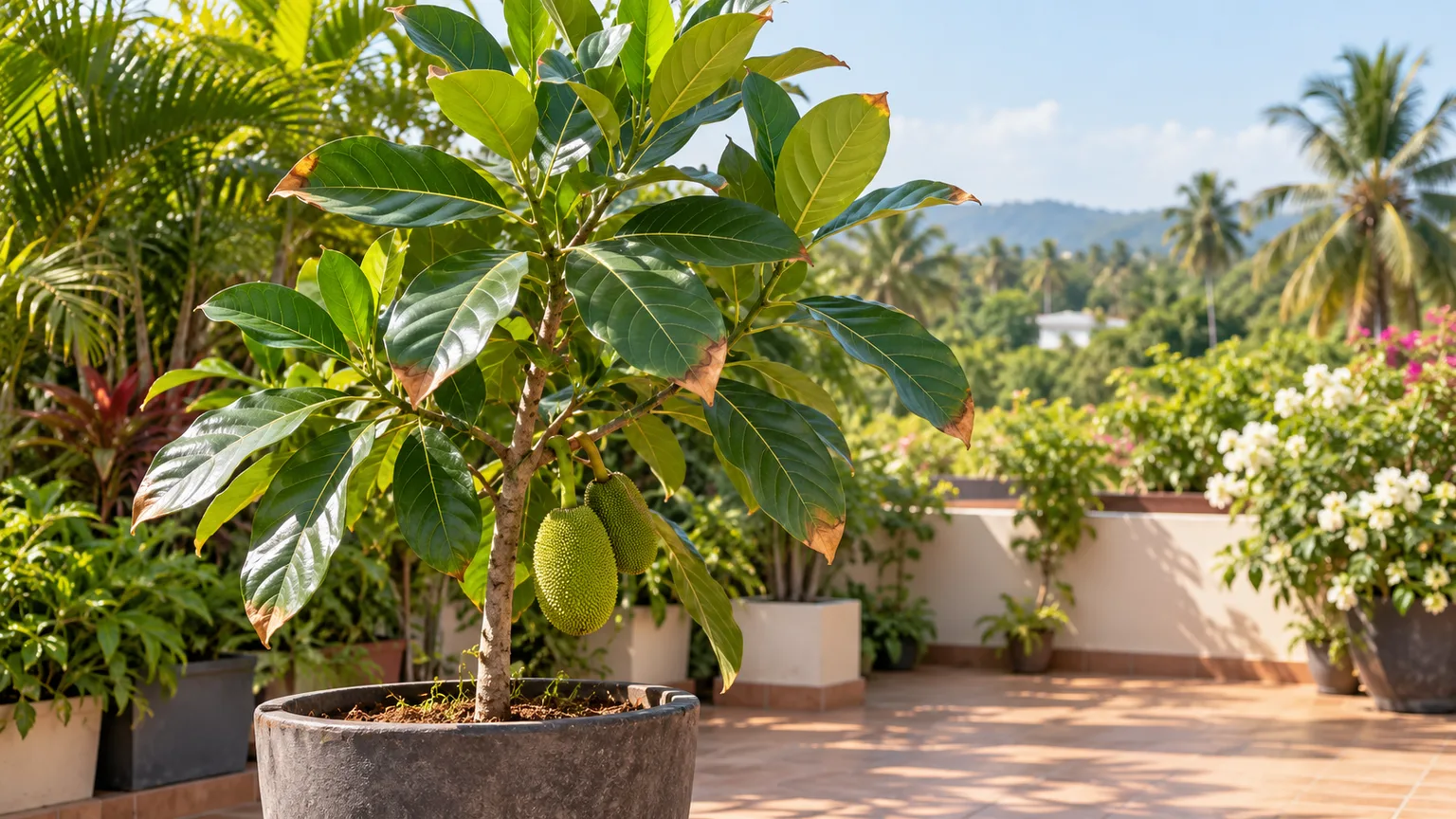
Brown Tips on Jackfruit: Causes, Checks & Fixes
This guide covers brown tips on Jackfruit. See also the general Brown Tips guide, watering, and light pages for this plant.
Brown Tips on Jackfruit: Causes, Checks & Fixes
Quick answer
Brown tips on Jackfruit are a stress signal, not a diagnosis. For a young container tree, check the upper 3–5 cm of mix and lift the pot before watering: dry, light mix points toward thirst, while wet, heavy mix calls for a drainage check. Correct one likely cause at a time. Jackfruit is a large tropical fruit tree that needs warmth, full sun, and a root zone that drains freely; it is not a compact indoor foliage plant. For the wider symptom checklist, see the global brown tips guide, then use the Jackfruit-specific checks below.
If your tree grows in the ground, do not use a small-pot finger test as the whole diagnosis. Check the soil around the active root zone, recent rain, irrigation timers, and whether water stands near the trunk. A potted seedling can dry much faster than an established landscape tree, while a wet container can also hold excess water long after rain has stopped. The first fix depends on which of those patterns you find.
What brown tips mean on Jackfruit
Brown tips are dry, tan-to-brown sections at a leaf point or along its margin. They may stay on one or two older leaves, appear across a new flush, or accompany whole-leaf yellowing, limp growth, or dark spots. The pattern matters more than the color alone: a crisp edge on a light pot is different from brown patches on a plant whose mix is persistently wet, or from localized spotting with insects or lesions.
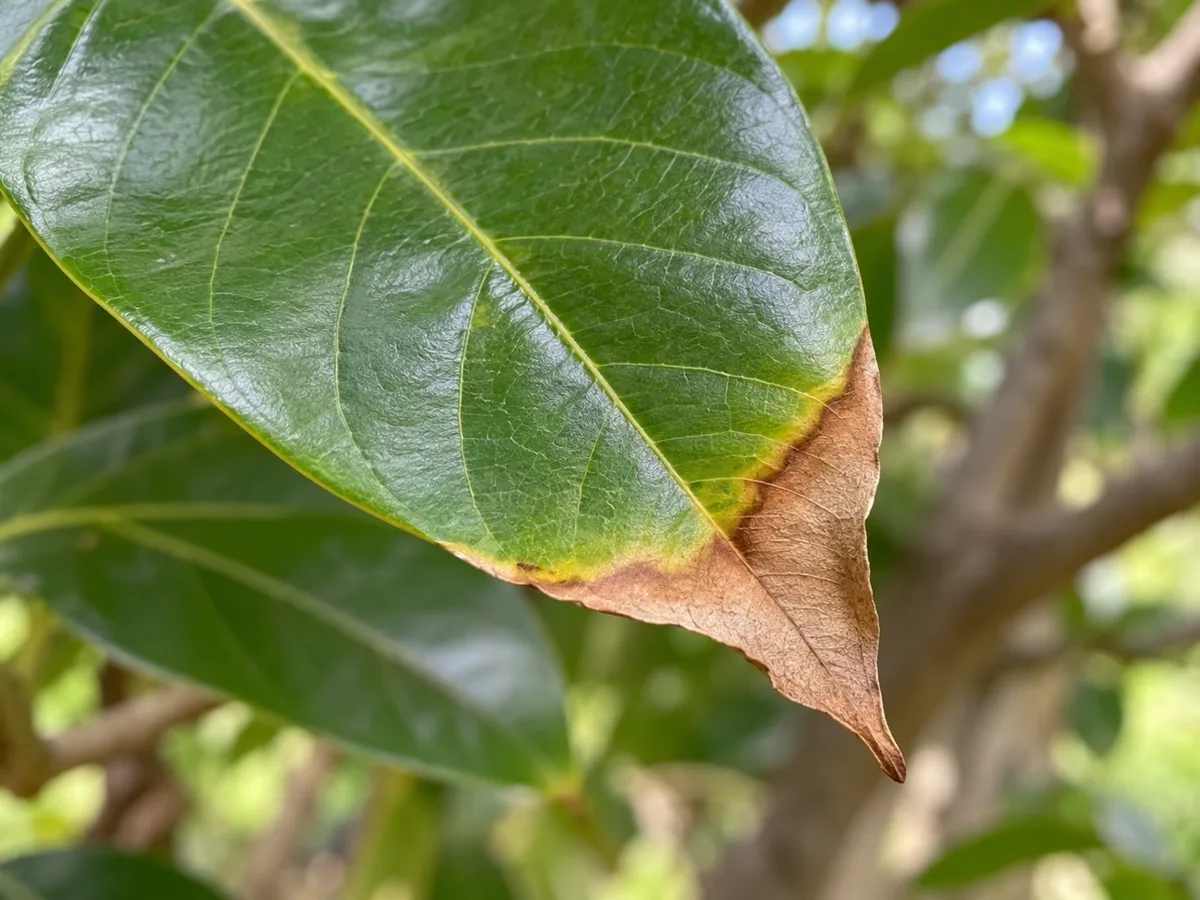
Tip browning is visible here, but the leaf alone cannot distinguish drought, salt injury, cold stress, or a root problem.
Jackfruit often grows as an outdoor tree or a young tree in a large container. UF/IFAS describes it as a tropical species adapted to warm conditions and full sun, with well-drained soil; that context changes how you interpret a brown edge. A full-sun terrace pot may lose moisture quickly, while a shaded wet pot may stay saturated and restrict root function. Neither pattern should be treated by watering, feeding, or pruning on sight alone.
General horticulture sources list inconsistent watering and excess fertilizer among common brown-tip causes, but those are only starting hypotheses for Jackfruit. Better Homes & Gardens groups watering, low humidity, and salt buildup as common causes of brown tips on houseplants (BHG’s brown-tip guide); Gardening Know How also discusses salt, wind, water quality, and dryness (brown-edge causes). These sources describe lookalikes, not a Jackfruit-specific diagnosis. Use the tree’s outdoor or container conditions to decide which one fits.
First checks before changing care
Take a few minutes to record the plant’s setting and the timing of the damage:
- Separate pot from ground. For a container Jackfruit, feel the mix below the surface and compare pot weight with its usual weight after watering. For a landscape tree, check whether the root zone has been dry for an extended period or waterlogged after rain or irrigation.
- Look at the pattern. Brown tips on several leaves after a missed watering, fertilizer application, cold night, or move into sun point toward different causes. Small discrete spots, webbing, insects, or a soft stem base call for a pest or disease check rather than a tip-burn treatment.
- Review recent inputs. Note the last watering, rainfall, fertilizer product and dose, and whether the water is softened or leaves a visible mineral crust. A recent change is more useful evidence than a generic list of possible causes.
- Check the newest growth. If only an old leaf is affected and the new flush is clean, the earlier damage may be limited. If the newest leaves are also browning or several branches decline, inspect water movement and root health before trimming.
Keep that observation simple. Do not add a fertilizer, fungicide, pesticide, extra water, and a new pot all at once. Multiple changes make it impossible to tell whether the first correction helped, and a distressed Jackfruit can be harmed by treatments that do not match the actual problem.
Dry roots or inconsistent watering
A dry root ball is a plausible cause when a container tree has been in strong sun, warm wind, or a small pot, especially if the mix has become very light or pulled away from the pot wall. Brown tips can appear after the roots fail to supply water evenly to a large leaf canopy. Jackfruit grows best in warm, sunny conditions, and young or container-grown trees need regular water during dry periods; UF/IFAS distinguishes this from established trees, which tolerate some drought once established (Jackfruit irrigation guidance).
For a potted tree, use the Jackfruit watering guide’s upper-layer check: water when the top 3–5 cm feels dry and the pot is noticeably lighter. Apply water slowly across the root ball until it drains from the holes, then empty the saucer or cachepot. Do not keep pouring if water streams down the pot wall without wetting the root ball; wet the mix in several passes and pause if the container becomes heavy while leaves remain limp. Wisconsin Extension advises checking moisture and drainage because watering needs vary with pot size and growing conditions.
For an in-ground Jackfruit, compare rainfall and irrigation with the tree’s stage and site. Young plants need dependable moisture during dry spells, and bearing trees need irrigation through bloom and fruit development. Do not respond to browned tips by keeping the whole planting bed constantly wet. Use the Jackfruit watering guide to distinguish an under-watered pot from an over-irrigated landscape tree.
Do not mist a large tree or give frequent shallow sips as a substitute for watering the root zone. Misting does not repair dry roots, and repeated small splashes can leave a container’s surface wet while the center stays dry. Correct the actual soil moisture, then wait for the next new growth to show whether the correction has stopped the damage.
Wet soil, poor drainage, and root stress
Jackfruit can show leaf symptoms even when soil contains plenty of water. Roots need air as well as moisture; prolonged saturation can limit uptake, and root rot becomes more likely where water remains around the root zone. UF/IFAS warns that Jackfruit may decline after two to three days in wet soil, and Purdue’s NewCROP account notes that the tree cannot tolerate “wet feet”. These are reasons to check drainage promptly, not proof that every brown tip is root rot.
Suspect excess moisture when a pot remains heavy and cool, the mix smells sour, lower leaves yellow, stems soften, or browning advances while soil stays damp. Check that drainage holes are open and empty standing water. For a landscape tree, check whether a low spot or irrigation timer repeatedly floods the root zone. UF/IFAS lists root rot among Jackfruit problems associated with flooding; it also lists fungal causes of leaf spotting, so a visual symptom cannot identify a specific pathogen (UF/IFAS disease notes). Wisconsin Extension lists wilt in wet soil and soft, brown, sometimes malodorous roots among general root-rot clues (wet-soil root signs).
If the pot is wet, do not water again simply because the leaves look dry. Allow excess water to drain and correct the container setup. If decline continues or the stem base softens, slide the tree from its pot only far enough to inspect roots: firm roots are different evidence from soft, brown roots. If roots are rotted, remove only clearly deteriorated sections with clean tools and repot surviving tissue into a fresh, freely draining mix. The Jackfruit soil guide covers the deep, open mix this tree needs; use the Jackfruit repotting guide when the existing pot or root ball needs correction.
Do not leave the tree in saturated soil to “flush” fertilizer salts. Flushing is only appropriate when the container drains freely and the root zone is not already waterlogged. In an in-ground planting, adjust the watering and drainage conditions rather than pouring extra water around a tree that is already wet.
Fertilizer salts and water quality
Salt buildup becomes more plausible when brown tips appear after a strong fertilizer application, the potting mix has been fed repeatedly, or a pale crust forms on the mix or container rim. In a container, fertilizer salts accumulate in a much smaller root volume than in orchard soil. UF/IFAS’s Jackfruit guidance ties feeding to tree age and growth stage; it does not recommend guessing at a higher dose to fix leaf color. Better Homes & Gardens and Gardening Know How both list excessive fertilizer or salt buildup as a common general cause of brown tips (BHG brown-tip advice; Gardening Know How).
Pause fertilizer while you investigate. If the mix is dry and freely draining, water it thoroughly and discard the runoff; do not repeat strong doses or add a micronutrient blend without evidence of a deficiency. If the pot is already wet or has poor drainage, do not flush it with more water. Instead, fix drainage first and consider replacing heavily crusted container mix. Use the Jackfruit fertilizer guide for rates and timing rather than scaling landscape instructions into a pot.
Water quality can also matter, but avoid diagnosing Jackfruit from a general houseplant warning alone. Wisconsin Extension notes that chlorine and fluoride in tap water can burn tips on some sensitive houseplants (tap-water guidance); the source does not establish the same sensitivity for Jackfruit. If your tap water is softened or leaves heavy mineral residue, compare with rainwater or another suitable source while you correct the better-supported issue, such as excess fertilizer or a dry root ball. Change one input at a time and watch new leaves.
Cold, wind, and sudden light changes
Jackfruit needs full sun when grown outdoors, so a permanently shaded position is not a cure for brown tips. If browning begins after a move from a sheltered nursery or indoor position into sun, reflected terrace heat, or drying wind, note the exposure change but check moisture and temperature too instead of assuming sun alone is the cause. UF/IFAS recommends full sun for growth, while its St. Lucie guidance notes that temperatures near 32°F (0°C) may damage leaves. If browning followed a cold snap or sharp exposure change, protect the young tree and stabilize its conditions before changing fertilizer or watering.
Brown damage after a near-freezing night is different from tip burn that develops gradually in warm weather. Move a potted tree to shelter during a cold event, but return it to a sunny location as conditions allow. If it is newly purchased, acclimate the foliage over several days instead of moving it from deep shade to intense afternoon exposure in one jump. The Jackfruit light guide explains placement and acclimation for the tree’s full-sun needs.
Wind-driven drying is more plausible when damage concentrates on the exposed side and the pot is dry. Gardening Know How notes that wind can brown leaf tips or margins on outdoor plants (wind exposure). Use that as a general clue, not proof of a Jackfruit disorder. If the tree is outdoors, shelter it from persistent hot, drying wind without blocking the sun it needs to grow.
Recovery: what to trim and what to watch
Brown tissue will not become green again. After the cause is corrected, leave partly green leaves in place; trim a dead tip only if its ragged edge bothers you, and keep the cut within the brown tissue. Do not remove whole leaves from a tree simply because they have brown tips. Better Homes & Gardens recommends cosmetic trimming after the cause is addressed (trim browned tips), while Gardening Know How notes that a chemical treatment will not repair already-browned tissue (brown-tip recovery).
Measure recovery by the next healthy flush, not by the old leaf becoming perfect. Improvement means no new tips are browning, the newest leaves expand normally, and the root zone no longer cycles between bone dry and saturated. In a warm outdoor growing season, new growth may provide the clearest evidence; in cool weather or after root disturbance, a tree may pause. The available sources do not establish a fixed recovery timeline for Jackfruit brown tips.
Escalate beyond a simple tip-burn correction if browning spreads quickly across branches, the stem base is soft, the pot stays wet, roots smell sour, or distinct spots and lesions appear on more than just the leaf ends. UF/IFAS lists several leaf-spot fungi on Jackfruit and recommends contacting a local extension agricultural agent for current control advice. A photograph of the whole tree, the affected leaf, and the pot or planting site will help an agent distinguish exposure injury from a root or leaf disease.
Prevent brown tips on Jackfruit
Match care to the way the tree is grown. Jackfruit is a large tropical fruit tree, not a low-light tabletop plant. Give a young container specimen outdoor sun when temperatures allow, protect it from freezing, and use a deep container with free drainage. If the plant is indoors temporarily, treat it as a seedling in transition rather than assuming its long-term needs are ordinary houseplant needs. The Jackfruit overview explains the tree’s size and the limits of container culture.
For a pot, check moisture before each watering and learn its weight after a full drain. In hot weather or strong wind, inspect more often; during rain or cooler periods, wait until the upper layer dries. For an in-ground tree, avoid planting in a basin that holds water and turn off automatic irrigation during sustained rain. The Jackfruit soil guide helps maintain moisture without leaving roots in stagnant water.
Feed only when the root zone is healthy and new growth is active. Use a complete fertilizer intended for the tree’s setting, follow the label, and keep container doses conservative. Do not apply lawn fertilizer over the root area or copy orchard rates into a pot. If the pot dries unusually fast or remains wet for too long, check root restriction and mix structure before changing the fertilizer schedule.
Use the Jackfruit problems hub to compare other symptoms, and the Jackfruit light guide if the tree is growing in shade. A simple log of watering, rainfall, fertilizer, and overnight temperature can reveal whether brown tips track dryness, saturation, excess salts, or cold exposure. That record makes the next adjustment smaller and more accurate.
Related Jackfruit guides
Use this page when the leaf ends are browning and the cause is still unclear. Start with the Jackfruit overview for the tree’s growing context, and the Jackfruit problems hub when other symptoms appear alongside the tips. Once you have identified a dry or saturated root zone, use the Jackfruit watering guide to set a steadier routine.
Related tool
Use the Plant Watering Calculator for a starting estimate for a container Jackfruit; it cannot diagnose salt buildup, cold injury, or root rot, so confirm its suggestion against the mix and drainage checks above.