Mealybugs on Jackfruit: Signs, Control & Prevention
Quick answer
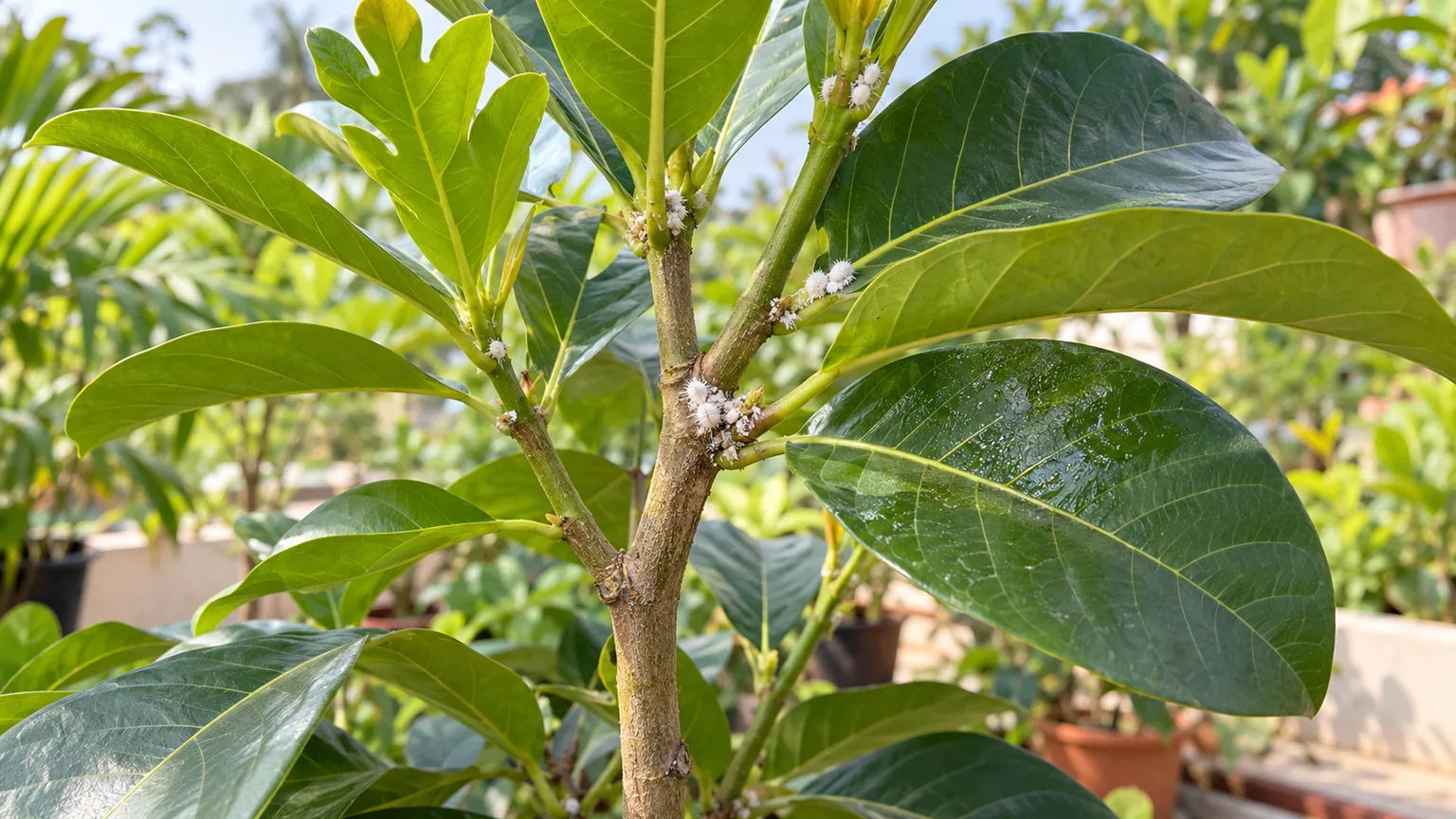
Jackfruit can host mealybugs on stems and fruit, but white sticky material is not automatically a pest: the tree also exudes latex from injured tissue. Look for soft, segmented insects under cottony wax, often in leaf axils, branch forks, or fruit-stem joints. First remove an accessible colony physically; avoid pruning fruiting wood or spraying an entire mature tree without local crop-specific advice.
Mealybugs on Jackfruit: Signs, Control & Prevention
This guide covers mealybugs on Jackfruit. See also the general Mealybugs guide, watering, and light pages for this plant.
Mealybugs on Jackfruit: Signs, Control & Prevention
Quick answer
Mealybugs can settle on Jackfruit stems and fruit, but a white sticky mark alone does not confirm them. Jackfruit (Artocarpus heterophyllus) produces its own white latex when tissue is cut or damaged, while mealybugs are living, soft-bodied insects covered with cottony wax. UF/IFAS lists mealybugs among pests that may attack Jackfruit stems and fruit, so check the tree carefully instead of dismissing every white patch as sap (UF/IFAS Jackfruit guidance).
Start at a small, accessible colony: wipe or rinse the insects from the affected point and collect the debris. Do not strip bark from the trunk, cut fruiting branches, or spray a tall tree broadly. Jackfruit bears flowers and fruit from short shoots on the trunk and large branches, and its latex makes fresh cuts sticky; targeted removal protects both the tree structure and its crop.
What mealybugs look like on Jackfruit
The first visible sign is often a white, fluffy patch tucked into a protected joint rather than a hole in a leaf. Look at the base of new shoots, leaf axils, branch forks, the underside of leaves near their stems, and the short fruit stems growing from older wood. UF/IFAS describes Jackfruit’s short flowering twigs on the trunk and large branches, while mealybugs commonly hide in plant crowns, branch crotches, and between touching fruits (UC IPM’s mealybug guide). That combination makes the branch and fruit attachment points especially useful inspection zones on this tree.
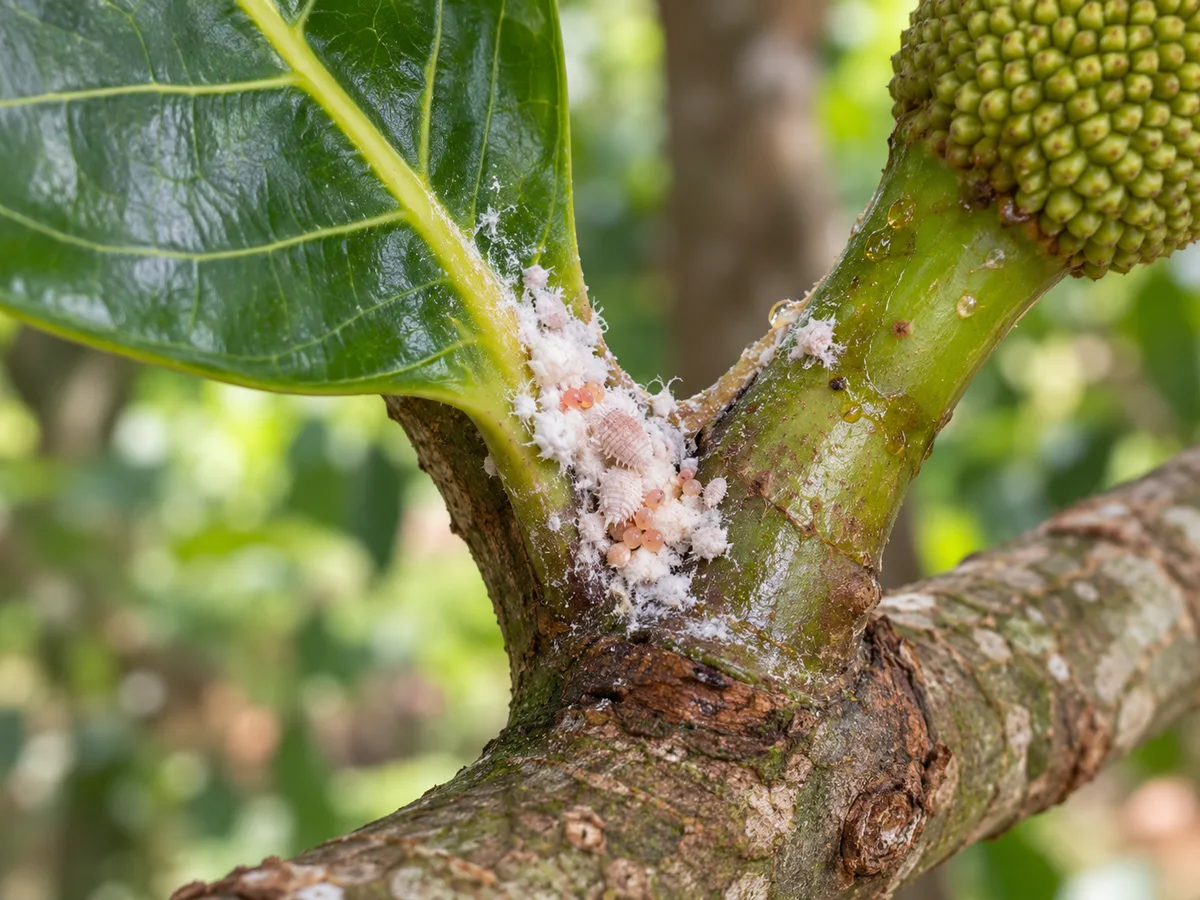
The white wax hides the insects; inspect underneath it before deciding whether the material is latex, scale, or mealybugs.
Under the wax, adult females are oval, segmented, and soft rather than hard-shelled. Some species have short wax filaments around the body; others carry longer tail-like filaments. A cottony egg sac may contain orange or pink eggs, and newly hatched crawlers can be tiny and yellowish before they develop the conspicuous white covering. The NC State Extension description of mealybugs explains that young nymphs are mobile and can be overlooked before colonies become obvious.
Mealybugs suck sap and release honeydew, a sticky, usually clear or shiny residue. Black sooty mold can grow on that sugary coating, and ants may visit it. Leaves may yellow, new growth may stall, or heavily infested tissue may weaken, but these signs are not enough on their own to identify the pest. The Royal Horticultural Society notes that mealybugs cluster in sheltered places and that honeydew can support sooty mold (RHS advice on mealybugs).
Jackfruit latex is the important lookalike
Jackfruit latex often appears after a leaf is torn, a twig is cut, or a fruit stem is injured. UF/IFAS notes that all parts of the leaf contain sticky white latex and that cut fruit stems exude it. Latex tends to bead or string from one wound; mealybug wax forms a persistent, cottony cluster around actual insects or eggs. If you touch the white material gently with a damp cotton swab, look for a segmented body beneath the fibers rather than assuming that tackiness means honeydew.
A sticky patch on a leaf could also be honeydew that has dripped from a colony above it. Follow the residue uphill: inspect the leaf base, branch above it, and the nearest fruit stem for insects or ants. If the sticky mark is only at a recent injury and there are no waxy colonies, crawlers, or ants, do not treat the tree as infested. A plant with healthy new growth and no colonies may simply be healing a wound.
Why Jackfruit can host mealybugs
Jackfruit is a tropical fruit tree, not just an indoor foliage plant. A small seedling may spend time in a container on a terrace, while a mature tree spreads into a broad outdoor canopy. UF/IFAS says mealybugs may attack Jackfruit stems and fruit, but its guide does not name a Jackfruit-specific mealybug species or provide a universal spray schedule. Treat the visible pest as a mealybug until an extension specialist identifies the species; do not guess that it is the citrus mealybug just because Jackfruit is a tropical fruit.
Fruiting stems create sheltered inspection points
Jackfruit fruit develop on short shoots arising from the trunk and larger branches. As fruit, leaves, and small shoots meet, their seams can shelter pests from rain and from a casual look across the canopy. UC IPM lists touching fruits, branch crotches, and stem-and-leaf junctions among common mealybug hiding sites. On Jackfruit, check the short fruit stalk and the bark immediately around it, but do not scrape bark or remove a fruiting spur just to get a closer look.
The Jackfruit overview explains why this tree’s fruiting pattern differs from a typical potted houseplant. If you find a few insects on a small branch that is not carrying flowers or fruit, a gentle physical cleanup may be enough. If a colony sits on the trunk, large limb, or developing fruit, identify how extensive it is before making a cut that could remove productive wood.
Warm growth and nursery introductions matter more than one bad watering
Some mealybug species are favored by warm conditions; Jackfruit’s normal warm-climate setting therefore does not prevent them from establishing. Mealybugs can arrive on nursery stock and hide in crevices or under leaves before a buyer notices them. Wingless females and crawlers move relatively slowly, so the first infested plant or tool can be more important than a sudden change in watering. UC IPM recommends inspecting new plants before introducing them and monitoring nearby plants when a colony is found.
Avoid blaming low humidity, overwatering, or low light without evidence. A Jackfruit may have mealybugs while its soil and light are appropriate, and changing several care conditions will not remove insects hidden on stems or fruit. Keep the tree growing steadily, but do not add a strong nitrogen feed to force new growth during an active infestation. UC IPM notes that unnecessary nitrogen can stimulate tender growth that mealybugs favor; use the Jackfruit fertilizer guide for normal age-based feeding rather than making a corrective fertilizer spike.
Young trees need careful handling
A small potted Jackfruit is easier to inspect and isolate than a mature landscape tree, but it is also more sensitive to rough handling. Seed-grown Jackfruit develops a long, delicate taproot that can be difficult to transplant once the seedling has advanced, as described in Purdue’s Jackfruit reference. Do not unpot the tree because you saw a few mealybugs above the soil. Root mealybugs are a separate possibility, but look for white waxy colonies on the root ball or persistent decline before disturbing Jackfruit roots.
How to confirm the infestation
Use a hand lens and inspect the plant in a consistent order. Start with the newest leaves and their axils, then follow the stem down to branch forks, older bark seams, fruiting shoots, and any developing fruit. Examine the undersides of leaves as well as the upper surface; young crawlers may be easier to see there than the adults. If a white patch is wax rather than latex, you should be able to find an insect body, egg sac, or mobile crawler beneath it.
Check for secondary signs. Sticky honeydew, ants moving between the soil and canopy, and black sooty mold on leaves or fruit stems support an active sap-feeding colony. These clues are strongest when they occur near cottony insects. Sooty mold alone may remain after the pests have gone, and a small amount of latex after pruning does not prove an infestation. Wipe one sticky spot clean and recheck the area above it after a few days to see whether new honeydew appears.
Separate mealybugs from similar pests before choosing a response:
| What you see | More likely cause | What distinguishes it |
|---|---|---|
| White cottony fibers with soft oval insects underneath | Mealybugs | Insects sit in wax in leaf joints, branch forks, or fruit-stem seams |
| Firm tan or brown bumps that do not look cottony | Scale insects | The covering is harder; do not scrape Jackfruit bark to test it |
| White sticky flow from a fresh break or pruning cut | Jackfruit latex | The sap comes from a wound rather than an egg mass or colony |
| Clear sticky residue with ants or black mold nearby | Honeydew from a sap-feeding insect | Trace it back to a live colony on the branch above |
| Tiny white flying insects that rise when foliage moves | Whiteflies | Adults fly from leaves; check leaf undersides for immatures |
| Cottony white clusters on roots with a declining tree | Possible root mealybugs | Confirm on the root ball before repotting or removing soil |
If you cannot identify the insect, photograph the cluster and contact a local agricultural extension or plant clinic. UF/IFAS specifically recommends consulting a local agricultural agent for current Jackfruit insect-control options, and a clear photo of the location, fruit stage, and visible insects will help the specialist decide whether species-level identification is needed.
First fix: remove a small, accessible colony
For a young container tree or reachable branch, gently wipe a confirmed colony from the plant with a damp cotton swab or cloth, then bag the removed insects and wax. This is a focused first action: it removes visible insects and egg material without coating Jackfruit leaves, fruit, or beneficial insects with a broad spray. UC IPM recommends hand-picking, pruning out localized colonies, or using a strong stream of water on sturdy plants; Gardening Know How also describes water pressure as a practical option for exposed crawlers (Gardening Know How’s mealybug guide).
Use a gentle, directed rinse only where the branch can dry freely afterward, and do not blast flowers, tender new leaves, or a ripe fruit cluster. If you have to cut a small, heavily infested twig, make sure it is not part of the trunk, a major limb, or a fruiting shoot. Bag pruned material instead of leaving it under the tree, and wipe tools before using them on another plant. The Jackfruit pruning guide can help you identify which cuts are appropriate for routine canopy management; pest removal is not a reason for a severe structural prune.
For a potted seedling, move it away from other container plants while you inspect and clean it. For a mature in-ground Jackfruit with colonies high in the canopy or on large fruit-bearing limbs, do not climb unsafely, strip the bark, or apply a whole-tree home remedy. Mark the affected area and ask a local extension agent or qualified fruit-tree professional about current crop-specific control options. UF/IFAS’s Jackfruit guidance recommends local advice for insect control rather than a universal product prescription.
Follow-up without harming fruiting wood
Reinspect the same areas every few days at first, then weekly for several weeks. Look for new crawlers, fresh cottony patches, ants, or newly sticky leaves. Mealybugs and egg sacs are protected in crevices, so a single wipe may miss insects that were hidden under bark, between touching leaves, or around fruit stems. The UC IPM guide explains why wax and protected feeding sites make control harder and why monitoring after removal matters (UC IPM’s management notes).
Do not spray Jackfruit with household dish soap, nail-polish remover, or a homemade oil mixture. Product concentration, temperature, sun exposure, tree condition, and fruit stage affect plant injury and crop safety. If physical removal is not enough, use only a product whose current label allows use on Jackfruit or the relevant edible fruit crop, at that site and pest; follow its application and pre-harvest instructions. NC State Extension explains that mealybug wax and hidden colonies reduce contact coverage and that any pesticide use must follow current product directions (NC State Extension’s mealybug notes).
Outdoor Jackfruit may have natural enemies that feed on mealybugs, so avoid broad-spectrum insecticide use that can disrupt them. UC IPM describes parasitoid wasps and predatory insects as part of outdoor biological control. For a large tree with modest colonies, patient monitoring and removal of accessible hotspots may be safer than treating the whole canopy; if damage is increasing, ask an extension agent whether a targeted intervention is appropriate for the fruit stage and local pest species.
Recovery and when to escalate
Do not expect honeydew or sooty mold to vanish as soon as the insects are gone. Wash sticky residue from reachable leaves with clean water after colonies are removed, and do not rub wax or dirt into the leaf surface. Old leaves that yellowed or became distorted may not return to normal; judge progress by the absence of new colonies and by healthy new Jackfruit growth. If ants stop tending a branch and no fresh honeydew appears, the population is likely declining, but keep checking hidden joints.
A small seedling with a few colonies often recovers once insects are removed and the root zone, light, and feeding remain stable. A mature tree can tolerate low pest numbers better than a newly planted sapling, though a heavy colony on a fruit stem may affect fruit quality or make harvesting messy. The Jackfruit watering guide and Jackfruit soil guide help keep ordinary tree stress from being mistaken for pest damage; avoid letting the root zone remain flooded while you handle the canopy problem.
Escalate if colonies keep returning after repeated physical cleanup, many fruit stems are affected, leaves or shoots are dropping across the canopy, or you find possible root mealybugs with a declining tree. Do not dig around the trunk or unpot a young Jackfruit on suspicion alone. Use the Jackfruit repotting guide only when the container or roots genuinely need attention; the taproot makes unnecessary disturbance a poor trade for a few aboveground insects.
Prevent mealybugs on Jackfruit
Inspect nursery Jackfruit before planting or placing it beside other potted trees. Check leaf axils, the underside of leaves, branch forks, the soil line, and any existing fruit or flower stems; a quick look at the canopy surface will miss pests tucked into joints. Keep a new container plant separate for several weeks and inspect it more than once before grouping it with other plants, because a light colony may not be visible on arrival.
Remove dead leaves and pruning debris from around the trunk and container, and clean tools after cutting an infested shoot. Avoid overfeeding with high-nitrogen fertilizer: Jackfruit needs nutrition for steady growth, but excess nitrogen can produce soft flushes that are attractive to sap-feeding pests. Keep the regular schedule in the Jackfruit fertilizer guide instead of adding extra feed as a quick fix.
Prune for light and airflow only as part of normal Jackfruit care, not as a substitute for pest identification. The tree flowers and fruits on trunk and large branches, so hard pruning can remove productive wood. If you are adjusting canopy height or removing a genuinely infested branch, follow the Jackfruit pruning guide and keep cuts selective. A healthy Jackfruit still needs appropriate outdoor light; consult the Jackfruit light guide if new growth is weak, but do not move it into shade solely to discourage mealybugs.
For general mealybug identification and management across plants, see the canonical mealybugs guide. Use this Jackfruit page for the plant-specific parts: distinguishing latex from wax, inspecting fruiting stems, preserving productive limbs, and choosing a careful response for an edible tropical tree.
When to use this page vs. other Jackfruit guides
Use this page when you find cottony insects, honeydew, or sooty mold on Jackfruit leaves, branches, or fruit. If the white mark came from a fresh cut and no insects are present, the Jackfruit overview explains the tree’s latex and fruiting structure. If the main problem is poor growth rather than a visible colony, compare conditions through the Jackfruit problems hub and the relevant watering, soil, or light guides.
Use the Jackfruit repotting guide only when the container or root ball needs work; do not disturb the seedling just to search for aboveground mealybugs. Use the Jackfruit pruning guide when a small infested shoot can be removed safely or when routine tree structure is the main issue. This page stays focused on mealybug detection and control, not on general Jackfruit training or fertilizer schedules.
Related Jackfruit guides
- Jackfruit overview — tree structure, fruiting points, latex, and climate context.
- Jackfruit fertilizer — normal feeding without forcing tender growth.
- Jackfruit pruning — selective cuts that preserve trunk and large-branch fruiting wood.
- Jackfruit light — placement and growth checks when vigor is declining.
- Jackfruit repotting — root care only when a container problem justifies it.
- Jackfruit problems hub — other symptoms that do not match mealybugs.
Related tool
Use the Pest Identifier Tool to compare cottony wax, sticky honeydew, and other visible pest signs before choosing a treatment.
Conclusion
Mealybugs may attack Jackfruit stems and fruit, but a white sticky mark can also be the tree’s latex. Confirm a soft insect under the wax, then remove an accessible colony with a targeted physical cleanup and monitor hidden joints for new crawlers. Keep a small tree’s roots and a mature tree’s fruiting wood intact while you address the pest.
If colonies persist or occur high on a fruit-bearing tree, seek local crop-specific advice before using a pesticide. Regular inspection of nursery stock, branch forks, leaf axils, and fruit stems catches the problem early without turning a few mealybugs into a whole-canopy treatment.