Underwatering Jackfruit: Signs, Causes and What to Do
Quick answer
Jackfruit can tolerate some short dry spells once established, but young trees and fruiting trees need water during prolonged dry weather. Confirm that the root zone is actually dry before acting; first rehydrate the dry root zone slowly and thoroughly, then let excess water drain.
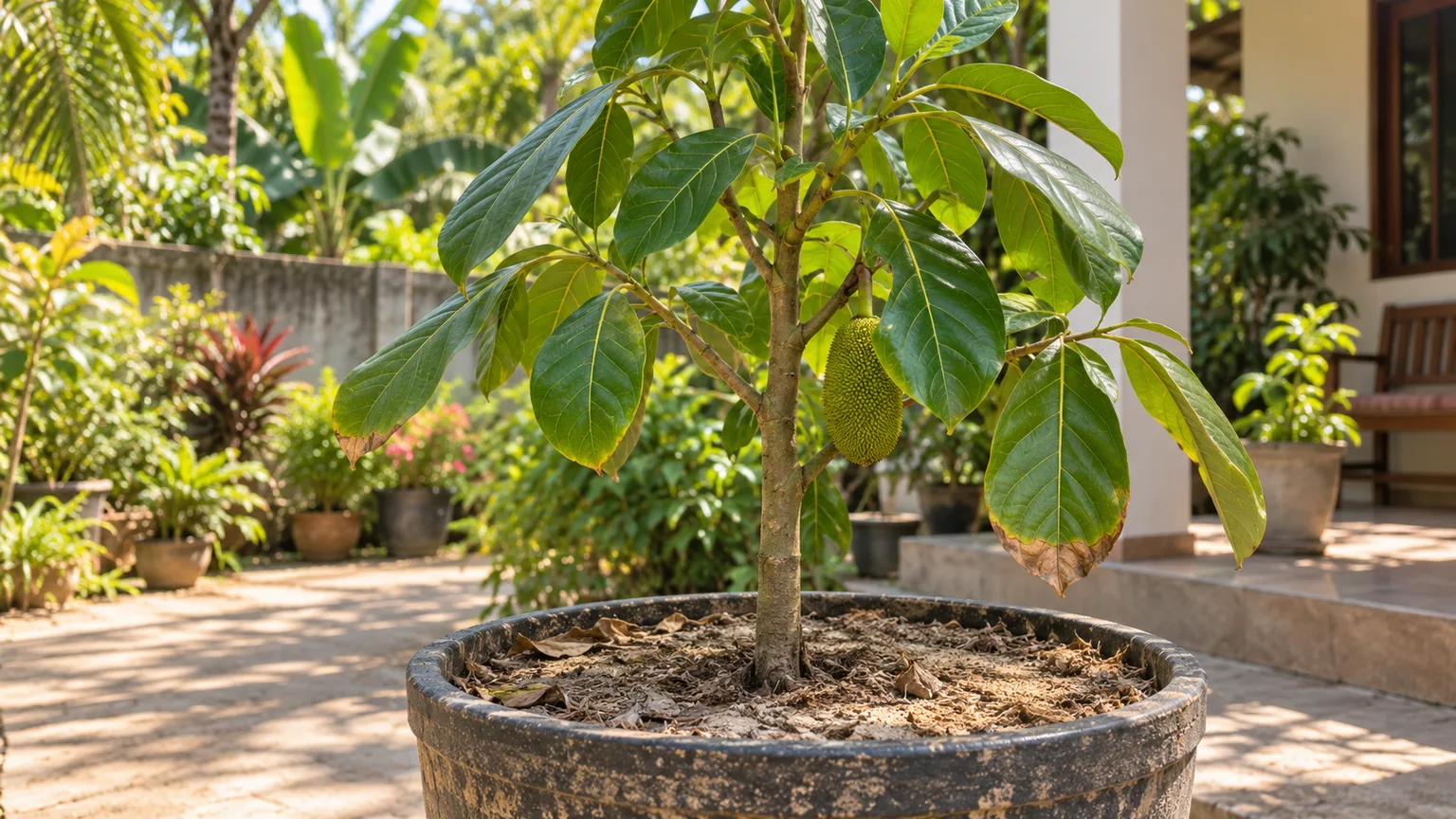
Underwatering Jackfruit: How to Confirm and Recover
This guide covers underwatering on Jackfruit. See also the general Underwatering guide, watering, and light pages for this plant.
Underwatering Jackfruit: How to Confirm and Recover
Quick answer
A dry, lightweight Jackfruit pot or dry soil around an in-ground tree, paired with limp or dull leaves and crisp brown edges, points toward underwatering. First confirm the root zone is dry, then rehydrate it slowly and thoroughly. Do not respond to wilt by pouring water in if the soil is already wet: Jackfruit roots are vulnerable to flooding, and wet-root injury can look like thirst. For the general symptom pattern, see the underwatering guide; the Jackfruit care overview covers the tree’s broader growing needs.
Jackfruit is moderately drought tolerant once established, but that does not mean it should be left dry through active growth or fruiting. UF/IFAS recommends water during prolonged dry periods and says irrigation is critical for mature trees from bloom through fruit development (UF/IFAS Jackfruit guide). A young seedling in a pot has far less soil around its roots than a landscape tree, so it can move from adequate moisture to a dry root ball faster, especially in heat, wind, or full sun.
What underwatering looks like on Jackfruit
Underwatered Jackfruit often looks dull or limp during hot weather, then develops dry brown leaf margins as the shortage continues. A young flush may pause or abort, and a fruiting tree may set fewer fruits or drop young fruit if a dry spell coincides with bloom or fruit fill. Drought stress in fruit trees can reduce growth and yield, and is driven by soil water deficits, high temperatures, and inadequate rainfall (UF/IFAS drought-management note).
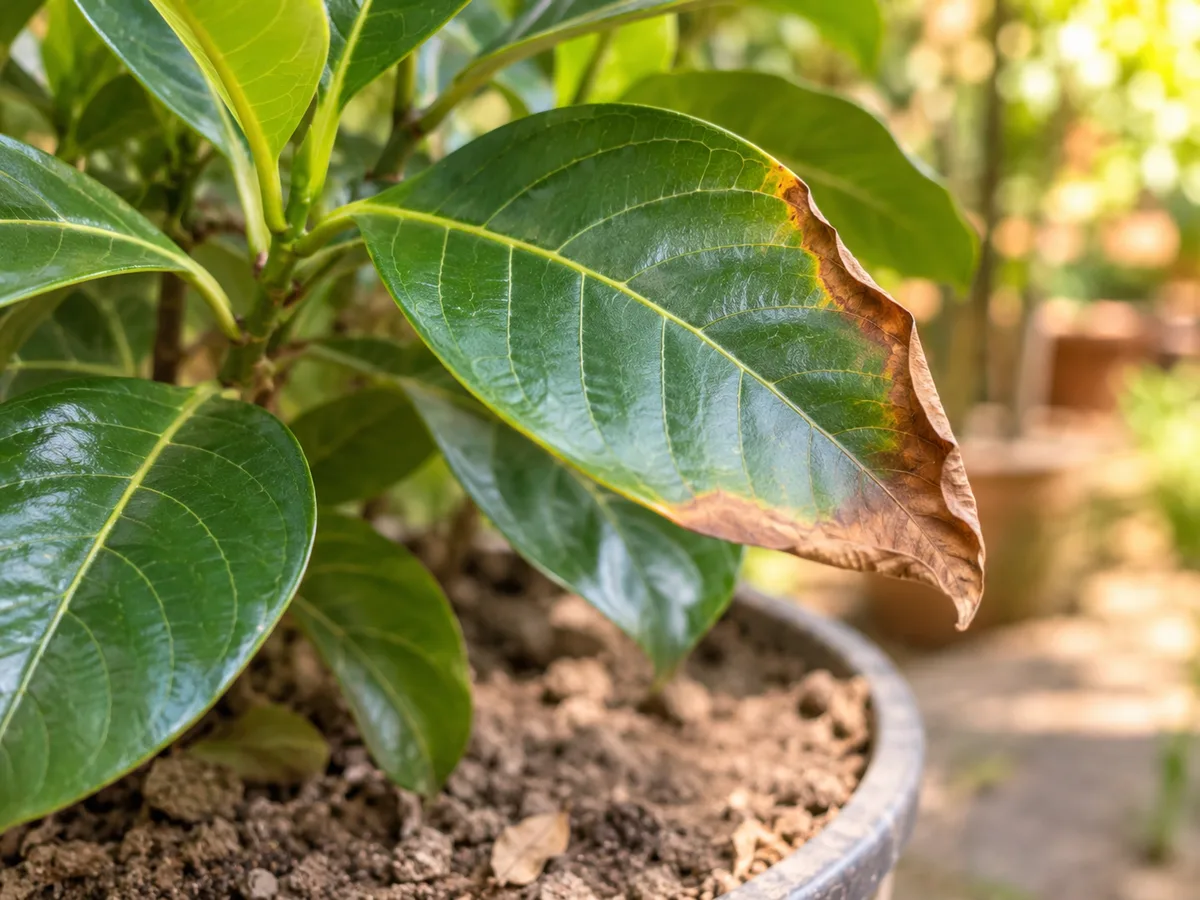
Dry, crisp leaf edges are a warning sign to check moisture at the roots; one damaged leaf alone does not confirm underwatering.
Look at the pattern across the tree, not just one leaf. A dry Jackfruit may have leaves that feel less supple, edges that turn papery, and a potting mix that is dry deeper than the surface. In a container, very dry mix can pull away from the wall of the pot; water may then run down that gap without soaking the root ball (Gardening Know How’s container rehydration guide).
Drought clues are strongest when several line up: the soil is dry below the top layer, the container feels unusually light, the leaves droop or curl during heat, and the damage began after missed watering or a change in sun and wind. Epic Gardening describes wilting, dry or cracked soil, brittle leaves, and soil pulling from pot edges as common underwatering signs (Epic Gardening). On Jackfruit, those clues matter most when the root ball is truly dry; the same droop can come from a flooded or damaged root system.
Why Jackfruit can dry out even though it is a tropical tree
A tropical origin is not a watering schedule. Jackfruit does well in warm, humid climates, but warmth, sun, and wind increase water loss from leaves and soil, while a small container limits how much moisture the roots can reach. The Royal Horticultural Society notes that container plants have a restricted root area and may run short of water in summer (RHS container guidance). A deep pot helps Jackfruit’s downward root growth, but if the nursery pot is small, root-bound, or exposed on a hot terrace, the root ball can still dry between checks.
Young and container-grown Jackfruit
A newly planted tree has not yet explored much soil outside its original root ball. TNAU’s Jackfruit guidance recommends weekly irrigation until establishment, then watering as needed (Tamil Nadu Agricultural University). Treat that as a regional establishment reference, not a universal calendar: soil, rainfall, pot size, and season change how quickly the root zone dries. Use the Jackfruit watering guide to adapt the check to a pot or garden instead of copying a weekly interval blindly.
In pots, inspect more often when the tree is in full sun, in a breezy spot, or growing in a small nursery container. A pot that dries fast after watering can also signal restricted roots or a mix that has shrunk and become difficult to wet evenly. UF/IFAS notes that root-restricted Jackfruit establishes and grows poorly after planting out, and recommends deeper containers for stronger root development (UF/IFAS Jackfruit guide). If a seedling’s pot has become root-bound, follow the Jackfruit repotting guide rather than compensating with repeated small sips.
Landscape trees during a dry spell
An established landscape Jackfruit can draw from a much wider soil volume than a container seedling. UF/IFAS calls mature Jackfruit moderately drought tolerant, but still recommends irrigation during prolonged dry periods; its seasonal guidance raises watering from bloom through harvest when trees are bearing. That is especially relevant in a warm garden where the surface may look damp after a brief shower while soil below the mulch remains dry.
Check soil several inches below the surface near the outer canopy, not only at the trunk. If it is dry through the active root zone, apply water slowly over a broad area so it can soak in instead of running off compacted ground. The UF/IFAS fruit-tree drought article recommends delivering irrigation directly to the root zone and notes that water shortage can impair fruit growth and production (UF/IFAS Extension). Avoid placing a hose against the trunk; a single wet spot near the stem does not rehydrate roots spread through the surrounding soil.
How to confirm underwatering before watering
Jackfruit leaves can droop from both dry soil and waterlogged roots, so read the root zone first. For a potted tree, lift the container if you can do so safely, then feel the mix 3–5 cm down. A light pot and dry mix at that depth support underwatering; a heavy pot or cool, wet mix means wait and investigate instead. For an in-ground tree, move mulch aside and probe below the surface at more than one point around the dripline.
| What you find | More likely explanation | Next step |
|---|---|---|
| Dry mix below the surface, a light pot, dull or limp leaves | Underwatering | Slowly soak the full root ball, then let excess water drain. |
| Soil still wet, pot heavy, leaves yellowing or wilting | Overwatering, poor drainage, or root damage | Do not add water; use the Jackfruit root-rot guide if decline continues with wet soil. |
| Only one older leaf is damaged, while the root zone is moist and new growth is firm | Local leaf damage or normal aging may be more likely | Check for a wound, heat scorch, or pests before changing the watering routine. |
| The pot feels dry on top but wet lower down | Uneven drying or a dense mix, not necessarily thirst | Check deeper before watering and review the Jackfruit soil guide. |
Underwatering should not be diagnosed from yellow leaves alone. A plant may wilt while soil is wet when roots have been injured; Wisconsin Extension lists wilt despite wet soil as a common root-rot clue, and the Missouri Botanical Garden explains that waterlogging can deprive roots of oxygen (Wisconsin Extension; Missouri Botanical Garden). If Jackfruit soil is wet, adding water can deepen the problem: UF/IFAS warns that trees may decline or die after only 2–3 days of flooded soil. Purdue’s horticultural profile likewise notes that Jackfruit cannot tolerate “wet feet” (Purdue New Crops). Use the moisture check to choose between a deep soak and a pause; do not treat every drooping canopy as thirsty.
First fix for a dry Jackfruit: rewet the root zone slowly
Once the soil check confirms dryness, give the root zone one thorough, measured soak. For a container, pour slowly across the whole surface until water begins to flow from the drainage holes, pause briefly, then repeat only if the mix still feels dry below the surface. Let the pot drain fully and empty any catch tray. If water immediately runs down the gap between soil and pot, the mix may have shrunk; rewet in several slow passes rather than pouring a large volume at once.
For an in-ground tree, apply water slowly across the root area and let it soak before adding more. If water is running across the surface, stop and allow it to infiltrate rather than creating a puddle at the trunk. In the dry season, young trees need regular irrigation while establishing, and fruiting trees need a steadier supply from flowering through fruit development. UF/IFAS lists irrigation during those stages as part of Jackfruit care (UF/IFAS Jackfruit guide).
Do not fertilize, repot, hard-prune, and move a thirsty Jackfruit at the same time. Water stress limits the roots’ ability to support growth, so extra feeding is not a substitute for moisture. First see whether the root ball becomes evenly moist and the plant stops worsening; then address any separate soil, pot, or light issue.
Jackfruit during bloom and fruit development
Water timing matters more when a mature Jackfruit is flowering or filling fruit. UF/IFAS says irrigation is critical from bloom through fruit development and advises watering bearing trees regularly until harvest during dry conditions. The same guide warns that drought stress can compromise growth and production, while the St. Lucie fruit-tree drought article explains that inadequate water can reduce fruit size, yield, and quality.
Do not try to recover a fruiting tree with a sudden flood after weeks of drought. Bring moisture back gradually through the soil profile, then maintain a steady root-zone supply while the dry spell lasts. Watch for young fruit aborting or a new flush failing, but do not assume water is the only cause: poor pollination, root restriction, disease, or a damaged site can also limit fruiting. The care overview can help put a weak crop in context with the tree’s other needs.
Container Jackfruit: prevent the root ball from drying unevenly
A container root ball can be dry at the outside and moist in the center, or wet at the bottom while the top is dusty. That is why the surface alone is a poor guide. Test at more than one depth and compare pot weight across watering cycles. When the soil has pulled away from the sides, water may bypass the mix; Gardening Know How recommends gentle rehydration for severely dry pots rather than assuming runoff means the roots are wet (Gardening Know How). For Jackfruit, use slow repeated pours and confirm moisture in the root ball, because an entire tree pot may be too heavy or large for submerging.
Choose a deep container with open drainage, and avoid letting a small nursery pot bake on hot paving. The Jackfruit soil guide explains why free drainage matters even while the tree needs consistent water. If watering runs straight through a pot that dries within hours, inspect the root-bound condition and mix structure; do not keep making tiny surface applications that wet only the rim.
Recovery: old damage stays, new growth tells you more
A mildly wilted Jackfruit may regain firmness after the root zone is rehydrated, but response varies with heat, root condition, and how long the soil stayed dry. There is no reliable Jackfruit-specific recovery clock in the references reviewed here. Do not keep watering every few hours because one leaf remains droopy; first confirm that the root ball is evenly moist and draining, then watch whether the canopy stabilizes.
Crispy brown edges and dead leaves will not turn green again. If only a few leaves were damaged and the main stem remains firm, leave the remaining healthy foliage in place and judge progress by a stable canopy and the next healthy flush. If a young tree has a collapsed stem, extensive leaf drop, or a root ball that will not take up water, recovery may be poor. A mature landscape tree with continuing dieback needs local assessment rather than repeated watering guesses.
Prevent Jackfruit underwatering without creating root rot
For containers, check moisture at root depth more often in hot, windy weather and less often in cool or rainy periods. Water until the root ball is evenly moistened, not by a fixed cupful, then let excess drain. The RHS notes that container plants need closer attention because their root area is restricted; Jackfruit also needs a deep pot so its roots can develop rather than circle a shallow container.
For landscape trees, water newly planted Jackfruit through dry spells and maintain soil moisture during bloom and fruit fill. Use rainfall as part of the schedule, but do not assume a light shower soaked the root zone. A mulch layer can slow evaporation in dry weather; keep it away from the trunk and reduce scheduled irrigation when the rainy season has already wetted the soil. Jackfruit is moderately drought tolerant, but the balance is between a dry root zone and the flooded ground that can injure it within days.
Light and heat influence how quickly a container dries. If a Jackfruit was recently moved from shade to full sun, adjust moisture checks while it acclimates rather than watering on last month’s schedule. The Jackfruit light guide covers the exposure question, while the problems hub can route symptoms that do not match a dry root ball.
When to use this page vs other Jackfruit guides
Use this guide when Jackfruit is wilted or crisp and the soil is dry below the surface. If the mix is wet and the tree still wilts, use the Jackfruit root-rot guide instead of adding more water. Use the watering guide to plan future checks, the soil guide when a pot stays wet or water bypasses the mix, and the light guide if heat or a placement change shifted water demand.
Related Jackfruit guides
- Jackfruit care overview — whole-tree placement, seasonal care, and fruiting context.
- Jackfruit problems hub — use when the root zone does not fit underwatering.
- Jackfruit watering guide — turn this rescue into a routine matched to the season.
- Jackfruit soil guide — adjust drainage and moisture retention in a pot or planting bed.
- Jackfruit light guide — reassess water demand after a placement or exposure change.
- Jackfruit repotting guide — address a container that restricts the taproot or dries too quickly.
Related tool
Use the Plant Watering Calculator to organize a moisture-check routine for Jackfruit; local rain, soil, and pot size still determine when to water.