Jackfruit Root Rot: Signs, Causes and First Steps
Quick answer
On Jackfruit, persistent wet or flooded soil is a serious root-rot risk: UF/IFAS reports that trees can decline or die after 2–3 days of wet soil. First stop adding water to a saturated root zone, then confirm root damage before repotting a small tree or treating a landscape tree.
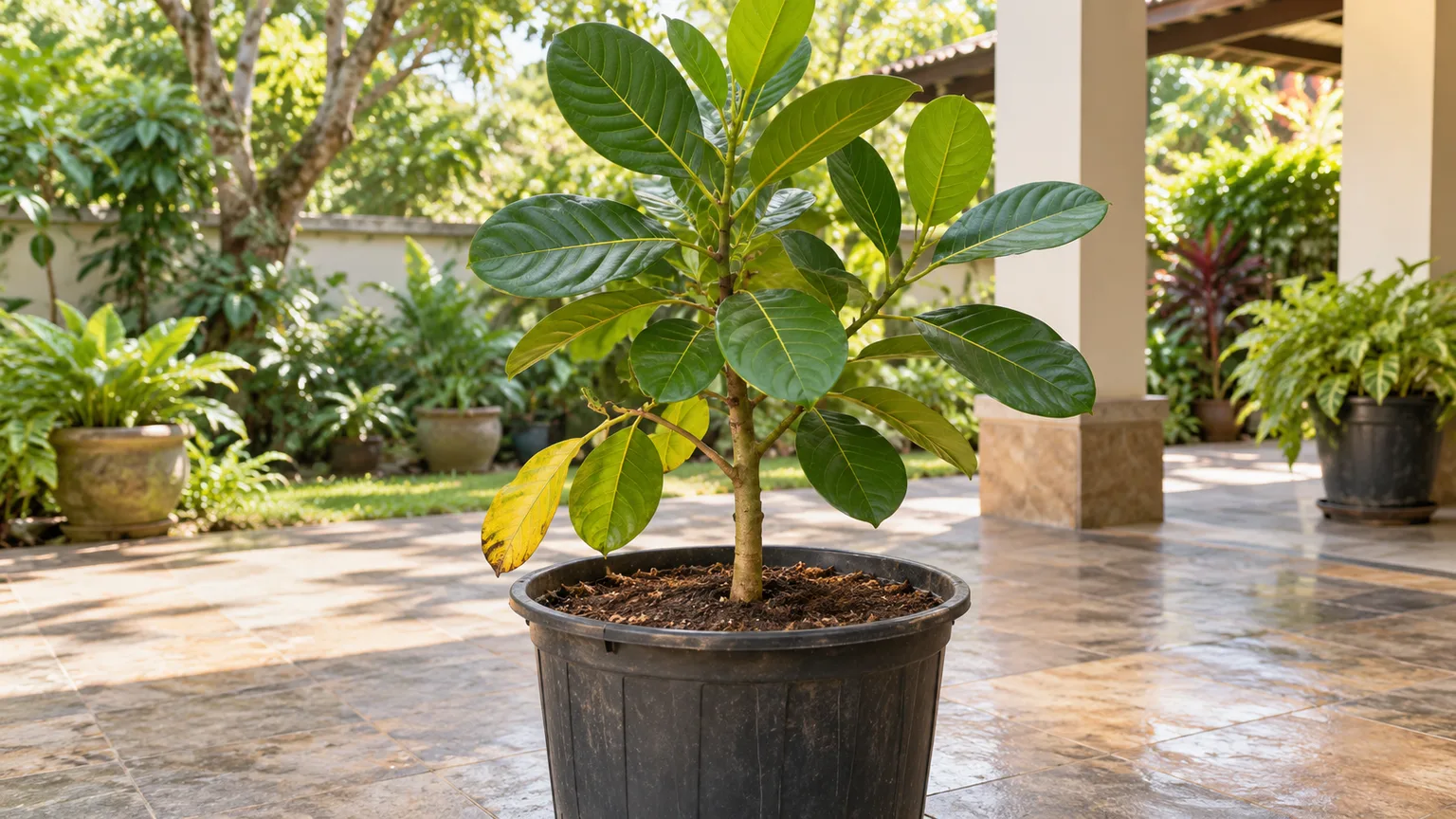
Root Rot on Jackfruit: How to Confirm and Respond
This guide covers root rot on Jackfruit. See also the general Root Rot guide, watering, and light pages for this plant.
Root Rot on Jackfruit: How to Confirm and Respond
Quick answer
If a Jackfruit is wilting while its root zone remains wet, treat that mismatch as a warning, not proof of root rot. First, stop adding water to the saturated soil. Then inspect a small, removable container tree for soft, brown roots before deciding whether it needs repotting; leave a large in-ground tree in place and seek a local diagnosis if decline continues. Jackfruit can decline or die after only 2–3 days of wet soil, so prevention of further flooding matters while you confirm what is happening (UF/IFAS Extension’s Jackfruit guide).
Root rot is a disease involving deterioration of roots by a causal organism, while waterlogging can also kill roots directly by cutting off oxygen; the processes may overlap (Wisconsin Extension). Leaf symptoms cannot tell you which organism, if any, is involved. This guide focuses on the Jackfruit-specific risk: a tropical fruit tree that needs water during dry growth and fruiting periods yet cannot be left in flooded ground. For the broader symptom and disease distinction, see the root rot guide.
What root rot looks like on Jackfruit
A Jackfruit with declining roots may lose vigor before its canopy gives a clear clue. Watch for a new flush that stalls, leaves that yellow and drop out of sequence, gradual branch dieback, or a canopy that wilts even though the soil below the surface is still wet. These signs are not unique to root rot: drought, transplant shock, cold injury, and damaged roots can create similar foliage symptoms.
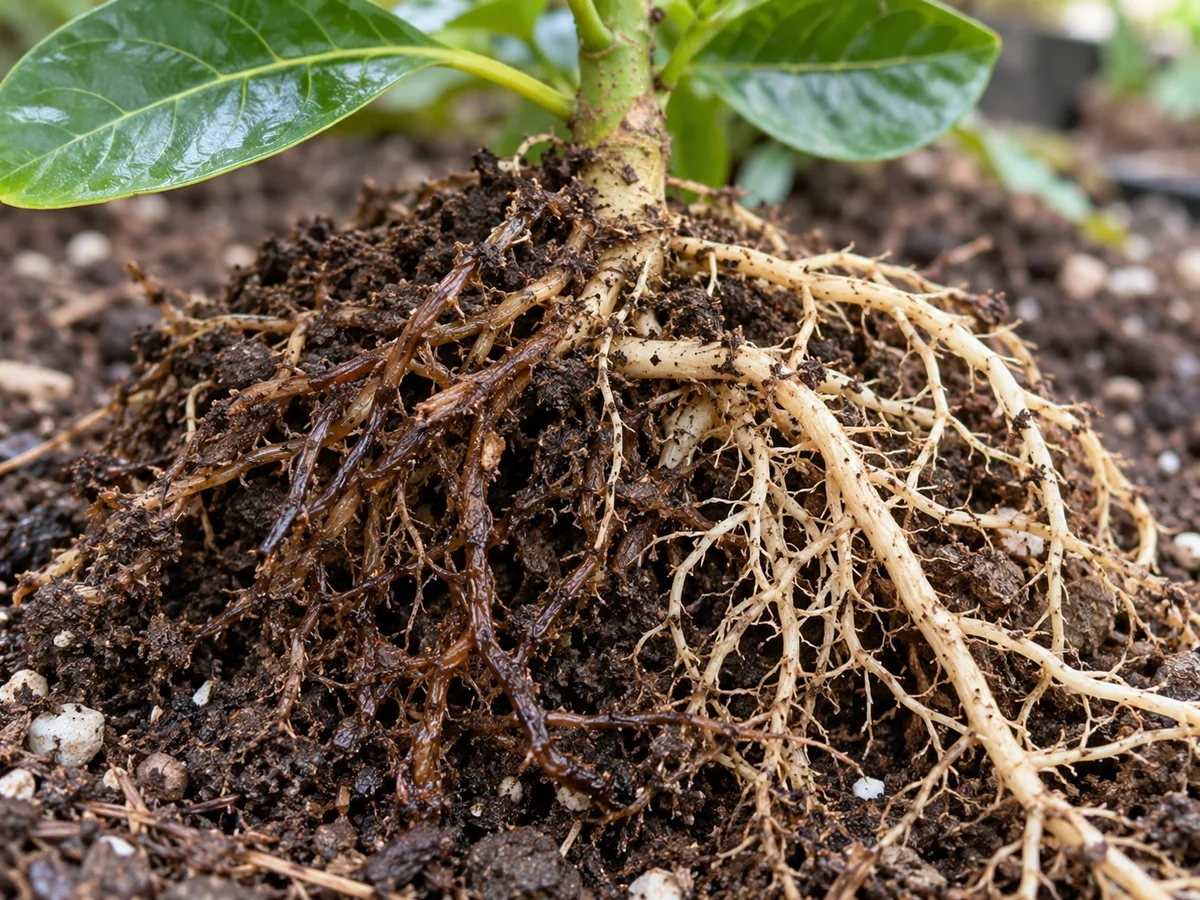
On a small container seedling, soft, deteriorating roots matter more than leaf color alone; an image cannot identify the pathogen.
The most useful home confirmation is the condition of the roots, not the shade of one leaf. Healthy roots should feel firm; decayed roots may be brown or black, soft, and easy to pull apart, sometimes with a sour or rotten odor. Wisconsin Extension describes wilt despite wet soil, stunting, yellow or red foliage, and soft brown roots as common signs of houseplant root rot (Wisconsin Extension’s symptom guide); the same root-zone clues are useful for a Jackfruit seedling, but they are not a laboratory diagnosis. The Spruce’s horticulture reviewers likewise distinguish firm, pale roots from soft, dark or stringy tissue (The Spruce root-rot guide). A leaf-only photo, a moisture meter reading, or a smell from old potting mix cannot establish that a particular pathogen is present.
Why flooded soil is especially risky for Jackfruit
Jackfruit is a tropical tree, not a marsh plant. Its roots need moisture to support active growth, and mature trees need dependable water during flowering and fruit development, but the species does poorly in continuously wet or flooded soil. UF/IFAS identifies Pythium splendens, Phytophthora, Fusarium, and Rhizoctonia among Jackfruit root-rot pathogens, particularly when trees are flooded; it also warns that trees may decline or die after 2–3 days of wet soil (UF/IFAS Extension). Purdue’s Jackfruit reference independently warns against “wet feet” (Purdue New Crops).
A waterlogged root zone creates two connected problems. Water fills spaces that would otherwise contain air, so roots cannot take up oxygen normally and begin to lose function; weakened or dead tissue is then more vulnerable to organisms that cause root rot. The Missouri Botanical Garden describes oxygen deprivation and root death in saturated soil, and notes that waterlogging can leave plants unusually susceptible to Phytophthora (Missouri Botanical Garden). That is why a Jackfruit can look thirsty while standing in wet soil: damaged roots may no longer supply the canopy.
Container Jackfruit: a small root ball can stay wet too long
A container concentrates soil and water around a limited root system. If the pot is shallow, oversized, or filled with dense mix, water may linger even when the top looks dry. Jackfruit also develops a deeper, stronger root system in deep containers; UF/IFAS notes that root-restricted trees establish and grow poorly when planted out (UF/IFAS Extension). A cramped pot is not itself root rot, but a tightly circling root ball can make watering uneven and recovery less forgiving.
Lift the nursery pot out of its decorative cover and check whether the drainage holes are open. Feel the mix below the surface rather than judging by the crust alone; a cool, sticky root ball that remains heavy after several days deserves a pause in watering. If there is a sour smell or the plant is wilting despite wet mix, inspect only if the seedling can slide out without pulling the stem or tearing a large portion of roots. A practical container-diagnosis sequence also treats direct root inspection as more useful than inferring disease from leaves alone (Gardeners’ Path root-rot guide). If it is tightly bound or large, avoid a forceful unpotting just to satisfy curiosity.
Landscape Jackfruit: map the wet area before disturbing roots
For an in-ground Jackfruit, trace recent water rather than digging toward the trunk. Check whether runoff collects at the planting site after rain, irrigation sprays the root zone on a timer, a downspout empties nearby, or a low spot stays glossy and saturated after the surrounding ground has drained. UF/IFAS advises selecting a warm site that does not flood and cautions that lawn sprinkler timers can overwater Jackfruit and contribute to root rot (UF/IFAS Extension).
Mature Jackfruit roots spread beyond the canopy dripline, so removing soil near the trunk will not reveal the full root system and can cause unnecessary disturbance (UF/IFAS Extension). If several branches are declining, the trunk base is soft, or the tree worsens after the surface dries, contact your local agricultural extension office or plant diagnostic clinic. Wisconsin’s Plant Disease Diagnostics Clinic notes that few plant diseases can be accurately identified by appearance alone and offers sample evaluation for root-rot problems (Wisconsin Extension garden root-rots guide).
Confirm the root-zone problem before treating
Work from low-disturbance checks to higher-disturbance checks. This sequence protects Jackfruit’s roots and avoids a rescue attempt that adds stress to an already compromised tree.
- Reconstruct the water history. Note when the last rain or irrigation occurred, whether a sprinkler timer ran, and how long the pot or planting bed stayed wet. UF/IFAS’s short flooding warning makes the duration of saturation more useful than the fact that the soil feels moist once.
- Check drainage and soil depth. For a container, confirm that the liner has unobstructed holes and that runoff is not trapped in a cachepot. For a landscape tree, look for standing water, compacted ground, a leaking line, or a downspout path.
- Compare moisture with the canopy. A dry, light container with limp leaves points toward water shortage; a heavy, persistently wet pot with yellowing or wilt raises concern about oxygen stress or root damage. Neither comparison alone proves infection.
- Inspect accessible roots only when justified. On a small, removable seedling, a careful look at the outside and bottom of the root ball can show whether roots remain firm or have become dark and soft. Wisconsin Extension reports those soft brown roots and foul odor among common root-rot signs (Wisconsin Extension).
- Escalate uncertain or severe cases. If the plant is valuable, the tree is established in the ground, or decline continues after correcting saturation, arrange a diagnostic assessment rather than guessing at a pathogen or fungicide.
Lookalikes that can be mistaken for Jackfruit root rot
| What you notice | What it may indicate | What to check next |
|---|---|---|
| Wilted leaves, pot feels light, mix dry below the surface | Drought stress, not wet-root injury | Water the root ball thoroughly once, then resume moisture checks; Jackfruit needs irrigation in prolonged dry periods. |
| Wilt or yellowing with wet soil, but roots stay firm and pale | Recent transplant stress or temporary oxygen stress; root rot is not confirmed | Stop watering until excess moisture drains and watch whether decline stops. |
| Yellow leaves concentrated on older foliage while roots and new flush remain firm | A separate nutrient or seasonal issue may be more likely | Review the plant’s full care and light history before adding fertilizer; use the Jackfruit care overview for context. |
| Fine brown or black root patches that are soft and deteriorating, with wet mix and canopy decline | Root decay is likely; the cause may be waterlogging, a pathogen, or both | For a small container tree, follow the limited rescue steps below; for a landscape tree, request diagnosis. |
| Damage begins at the trunk base or follows a wound, with branch dieback | Crown or trunk injury may be involved rather than root rot alone | Keep soil and mulch away from the trunk, photograph the pattern, and ask an extension specialist to inspect it. |
Root-rot symptoms overlap with other stresses, and even a visibly damaged root system does not reveal which pathogen is present. The Wisconsin Plant Disease Diagnostics Clinic cautions gardeners against self-diagnosing plant disease by eye and recommends sample diagnosis when the result affects control decisions (Wisconsin Extension).
The first fix: stop adding water to saturated soil
Pause irrigation before changing anything else. For a potted Jackfruit, pour away standing water in the saucer or cover pot and move the container where it can drain freely. For an in-ground tree, switch off scheduled irrigation in the wet area and divert any obvious runoff without trenching through the main root zone. Do not let the tree sit in water while you wait for leaves to recover.
This first step addresses the common exposure that worsens both direct waterlogging injury and several Jackfruit root-rot diseases. It does not cure infected roots, and it does not mean leaving the tree dry indefinitely. Jackfruit still needs water during prolonged dry weather and fruit development; the next watering should depend on whether the root zone has begun to drain, not on a calendar reminder. Review the Jackfruit watering guide after the immediate saturation is under control.
Container seedling rescue: use a light touch
A small seedling with some firm roots may be salvageable if you can inspect it without tearing the whole root system apart. Slide the root ball out gently and remove only loose, saturated mix that falls away easily. If a small section of roots is clearly soft, dark, and separated from healthy tissue, trim only that section with clean shears; preserve firm pale roots and the main taproot. Do not shorten a healthy taproot simply to make it fit a shallow pot.
If most roots are firm, return the seedling to a clean, deep container with open drainage and a free-draining medium. A pot that is only modestly wider than the root ball dries more predictably than a very large volume of wet mix; the depth matters for Jackfruit’s stronger downward root growth. The Jackfruit soil guide explains how to choose a mix and drainage setup. Water enough to settle the medium, let excess run out, and wait for the upper root zone to begin drying before watering again.
Do not drench the roots with household peroxide, cinnamon, bleach, or a general fungicide. These remedies can injure remaining roots and may not target the organism involved. Wisconsin Extension advises reducing soil moisture and avoiding fungicides unless the pathogen is known, because product choice depends on an accurate diagnosis (Wisconsin Extension’s garden guidance). For a nursery seedling with widespread soft roots, a collapsing stem, or no firm root tissue, recovery may be unlikely; avoid repeated repotting that only further disturbs it.
Landscape tree response: correct the site, not the root system
Do not uproot or aggressively prune the roots of an established Jackfruit based on yellow leaves alone. First correct a clear water source: suspend the sprinkler schedule, repair a leak, or redirect downspout water away from the saturated planting area. Let water move away through existing drainage; if the site naturally ponds after rain, a longer-term drainage or planting-height plan may be needed with local horticultural advice.
A diagnosis becomes more important when branch dieback progresses, the tree fails to push a healthy new flush after the wet period ends, or the lower trunk and root collar are soft or discolored. Photograph the whole tree, the affected side of the canopy, trunk base, soil surface, and irrigation pattern. A local extension office can advise whether a root or soil sample is useful and whether any treatment is appropriate. UF/IFAS directs Jackfruit growers to an agricultural agent for current disease control options rather than offering a universal fungicide recommendation (UF/IFAS Extension).
Avoid adding a thick mulch blanket or compost mound to “dry out” the site. Jackfruit benefits from mulch for moisture conservation, but material piled against the trunk or placed over already wet soil can keep the surface damp. Keep the trunk flare visible and use local advice to correct compaction, grading, or drainage without cutting major roots.
Recovery: judge the next Jackfruit flush, not old leaves
Root recovery is difficult to see directly, and damaged roots do not become healthy again. A useful early sign is that the decline stops: fewer leaves yellow or drop, the trunk base remains firm, and the remaining canopy holds its shape after the soil drains. Later, a stable new flush is better evidence that the roots can support growth than a temporary improvement in one drooping leaf.
Do not expect yellow leaves or dead branch tips to turn green again. They may remain discolored or fall even after the cause is corrected. A small container seedling can respond sooner than a mature landscape tree, but no reliable Jackfruit-specific recovery interval is established by the sources reviewed here. If wet conditions are corrected and decline continues, or the root collar softens, seek a diagnostic opinion rather than waiting for a fixed number of weeks.
A tree with most of its roots decayed, a damaged main stem, or widespread crown dieback may not recover. In an established landscape tree, the decision to remove it should follow an on-site assessment, especially where limbs or fruit could pose a hazard. For a potted seedling whose stem has collapsed and whose roots are almost entirely soft, replacement may be more realistic than repeated cutting and repotting.
Prevent the same problem in Jackfruit
Jackfruit care is a balance: prevent prolonged drought without keeping the roots wet for days. In a container, use a deep pot with drainage holes, a medium that drains freely, and a routine based on moisture below the surface and pot weight rather than weekly habit. Do not leave the pot in runoff water. If the root ball stays soggy far longer than the surrounding climate suggests, check for blocked holes, compacted mix, or a container that is too large.
For a landscape tree, choose a spot that does not remain wet after ordinary heavy rain. Avoid automatic lawn sprinklers that repeatedly soak the same area; UF/IFAS specifically notes that timer systems can overwater Jackfruit and contribute to decline. During dry spells, water young trees and maintain moisture for bearing trees from bloom through fruit development, but pause scheduled irrigation when rain already saturates the ground. The Jackfruit light guide can help you interpret growth and water use after a change in placement, while the repotting guide covers deep containers and root restriction.
Do not turn “free-draining” into “bone dry.” Jackfruit is not a drought-proof tree, and a dry root ball can wilt just as a flooded one can. Let rainfall, season, pot depth, and the actual moisture at root level determine the next watering. If surface soil remains wet for days or water pools after normal rain, address the drainage conditions rather than trying to compensate with fertilizer or leaf sprays.
When to use this page vs other Jackfruit guides
Use this page when a wet Jackfruit root zone is paired with root decay or canopy decline and you need to decide whether to inspect, pause watering, or request diagnosis. If the soil is simply staying wet without soft roots or worsening foliage, start with the Jackfruit soil guide to correct drainage and mix. If the main question is when to water again, use the watering guide; if recent shade, heat, or relocation changed growth, consult the light guide. The Jackfruit problems hub and care overview help route other symptoms without treating every yellow leaf as root disease.
Related Jackfruit guides
- Jackfruit care overview — use for placement, seasonal care, and whole-tree context.
- Jackfruit problems hub — use when the symptoms do not fit root damage.
- Jackfruit soil guide — use when the mix or planting site holds water too long.
- Jackfruit watering guide — use to set a moisture-based routine after saturation passes.
- Jackfruit light guide — use when shade or a change in exposure altered water use.
- Jackfruit repotting guide — use when a container seedling is root-restricted or its pot needs changing.
Related tool
Use the Root Rot Risk Checker to organize the root-zone signs and decide what to inspect next; it cannot confirm a pathogen or replace an extension diagnosis.