How to Prune Jackfruit: When, Where & How Much
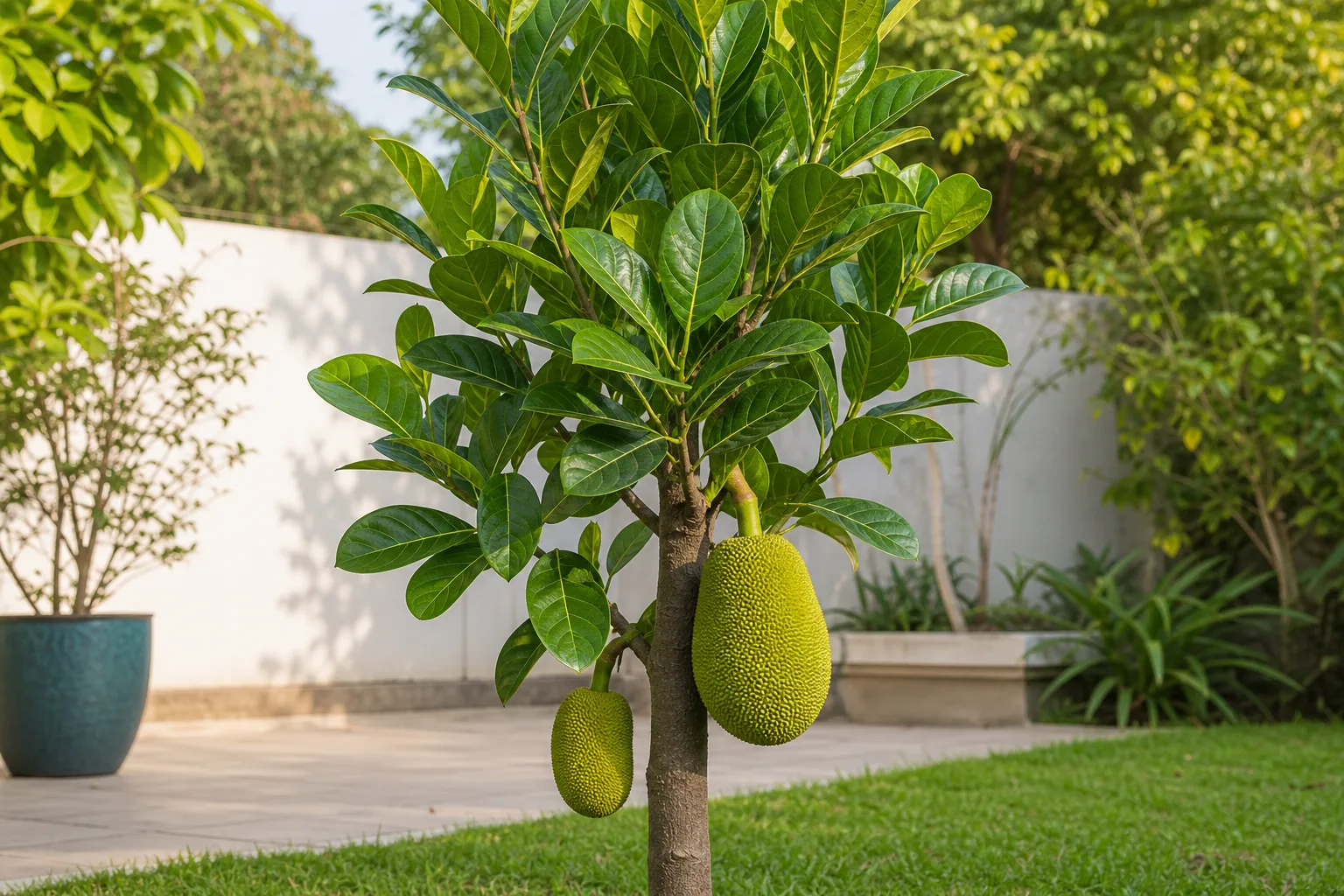
How to Prune Jackfruit: When, Where & How Much
How to Prune Jackfruit: When, Where & How Much
First, remove only dead, broken, or clearly diseased wood with clean, sharp bypass pruners or a pruning saw. Cut each problem branch back to healthy tissue or to the branch collar—do not leave long stubs that invite wood borers. Step back before any height reduction or canopy thinning. For whole-tree context on sun, drainage, and latex handling, see the Jackfruit overview.
Reviewed by LeafyPixels Review Board · Author: sai-ananth
Quick answer
Prune Jackfruit (Artocarpus heterophyllus) selectively after harvest to open the inner canopy, remove spent flowering shoots, and hold a manageable height. UF/IFAS recommends maintaining bearing trees at about 8–14 feet (2.4–4.3 m) with periodic selective pruning, not hedge shearing (UF/IFAS Jackfruit). Young trees need light tip pruning in spring and summer, then a second-season cut that favors the first strong lateral over a runaway central leader. Pruning improves reach, light, and limb safety; it cannot fix chronically flooded roots or deep shade—correct Jackfruit watering and light before expecting a topped tree to stay compact and productive.
What pruning does for Jackfruit
Jackfruit is a large evergreen tropical fruit tree in the fig family. Unpruned landscape trees commonly become very tall; UF/IFAS notes that trees without periodic pruning grow large enough that planting distance should be 25–30 feet from structures, while annually or semi-annually pruned trees can sit closer at about 20–25 feet (UF/IFAS planting and size notes). Flowers and fruit form on short shoots from the trunk and large branches (cauliflory), so the goal is an open, reachable framework—not a dense ornamental hedge.
Pruning on this species usually does four jobs:
- Sanitation — remove dead, broken, or declining wood before pests colonize it.
- Training — tip young shoots and establish a spreading habit instead of one tall leader.
- Canopy management — thin upright vigorous shoots and crowded inner wood after harvest.
- Crop load control — thin excess fruit on young trees so limbs do not decline under heavy syncarps.
Pruning will not reverse root rot from waterlogged soil, force fruit on a deeply shaded tree, or replace cultivar choice. Grafted trees of known cultivars are easier to keep small than vigorous seedlings; some named types are described as easily held near about 8 ft with pruning (UF/IFAS cultivar notes).
What to check before cutting
Walk the tree from the trunk outward before any live cut:
- Stress status — wilted leaves in wet soil, sour smell, or dieback after flooding point to root damage, not a need for hard topping. Stabilize drainage and watering first.
- Crop stage — note flowers, small fruit, or ripe fruit still on the tree. Structural pruning belongs after harvest, not mid-fill on limbs you want to keep.
- Dead vs live wood — scratch lightly if unsure; dry, brittle wood with no green cambium comes off first.
- Rubbing or crossing limbs — mark candidates for thinning cuts at their origin after cleanup.
- Height goal — decide the finished canopy height you can harvest and spray safely (often within the 8–14 ft UF/IFAS maintenance band for home trees).
- Sun and wind — a suddenly opened canopy can scorch previously shaded bark; stage large reductions rather than stripping the crown in one day.
If the tree is still settling after a major Jackfruit repotting or transplant, delay elective structural cuts until new growth firms up.
The first cut to make
Make one sanitation cut first: the clearest dead stub, broken limb, or diseased branch. Use bypass pruners for smaller wood and a sharp pruning saw for thicker branches. Cut just outside the branch collar on whole-branch removals, or back to firm green wood on partial dieback.
Only after that cleanup should you decide among:
- tip-pruning a young tree in active growth;
- removing upright water shoots and thinning the inner canopy after harvest;
- reducing height to a weak lateral on a bearing tree;
- thinning fruit on an overloaded young limb.
Do not combine a hard canopy reduction with major root disturbance, a heavy fertilizer spike, and a sudden move into harsh reflected heat on the same day.
When to prune Jackfruit
Best window for structural work
For bearing trees, UF/IFAS timing is clear: selectively prune after harvest to control height and spread, remove old flowering shoots, thin the inner canopy, and take out selected upright vigorous shoots (UF/IFAS pruning section). In many Indian production areas, main harvest falls roughly March–July depending on region and cultivar (TNAU Jackfruit); treat that as a regional harvest cue, then prune once that crop is off—not by calendar alone if your tree fruits off-season.
Young-tree tip pruning fits spring and summer active growth, once or twice, to force lateral buds (UF/IFAS young-tree guidance). Fertilizer programs for mature trees often run from bloom through right after harvesting and pruning; resume the normal Jackfruit fertilizer schedule rather than dumping a shock dose onto fresh wounds.
Historic horticulture notes also describe cutting fruiting twigs back toward the trunk or branch after harvest to encourage the next flowering cycle (Morton / Purdue NewCROP). Use that as support for cleaning spent flowering wood—not as a license to strip every productive scaffold.
When not to prune
Delay elective structural pruning when:
- roots have been flooded or the tree is declining from wet soil;
- the canopy is drought-wilted and soil is bone-dry;
- a hard freeze or extreme heat wave is imminent;
- the tree was recently transplanted or severely root-pruned;
- most major limbs still carry fruit you intend to finish.
Sanitation of hazardous broken limbs can proceed anytime; that is not the same as height reduction.
Train a young Jackfruit tree
UF/IFAS young-tree protocol is specific:
Year one: do not force hard framework pruning. Unpruned trees usually develop a strong central leader. Instead, use shoot tip pruning once or twice in spring and summer to encourage lateral bud break and a more compact habit (UF/IFAS).
Year two: prune to the first lateral branch to slow upward growth and encourage a spreading canopy (UF/IFAS).
Practical tips for home growers:
- Tip soft terminal growth just above a healthy node or outward bud during active flushes.
- Prefer grafted nursery trees when size and fruit quality matter; seedlings vary and can climb faster.
- Give the young tree full sun and a freely draining Jackfruit soil mix so laterals thicken instead of stretching weakly.
- Protect from frost; cold injury creates dead wood that must be cleaned later.
Do not “bonsai” a first-year tree with repeated heavy cutbacks. Tip lightly, then use the second-season lateral selection to set the framework.
How to prune a mature Jackfruit step by step
Work in this order after harvest:
- Finish sanitation—dead, broken, rubbing, and diseased wood.
- Remove old flowering shoots that finished the crop (UF/IFAS).
- Take out selected upright, vigorously growing shoots that are rebuilding height inside or above the canopy.
- Thin crowded inner branches so light reaches the trunk and large limbs where jackfruit flowers form.
- If height is excessive, cut the central leader back to a weaker lateral branch to slow upward growth and favor lateral canopy development (UF/IFAS).
- Step around the tree and match the other side so the outline stays balanced.
- Stop while a substantial leafy canopy remains—jackfruit recovers by pushing new flushes, not by surviving as a bare skeleton.
Where to cut and how much is safe
- Thinning cut: remove a shoot or limb at its origin or collar to open space without creating a broom of stubs.
- Heading/reduction cut: shorten a leader or tall limb to a substantial outward lateral that can take over as the new end.
- Height target: selective pruning can hold many home trees near 8–14 ft; cultivars differ in how aggressively they need annual work (UF/IFAS).
There is no useful universal “cut one-third of every jackfruit.” A vigorous irrigated landscape tree after harvest can accept more selective removal than a root-bound terrace plant. If the tree has been neglected for years, stage height reduction across successive post-harvest windows rather than removing most of the live canopy at once.
Fruit thinning on young and bearing trees
Heavy fruit loads on young trees have been linked to limb decline or death and stunting. UF/IFAS advises limiting fruit to about one per tree or major limb on young trees; on mature trees, limiting fruit per major limb can improve size and quality of the remaining crop (UF/IFAS fruit thinning). Thin early while fruit are still small, using clippers, and expect latex at each cut stem.
Latex, tools, and wound care
All leaf parts contain sticky white latex, and cut stems gush latex that permanently stains clothing (UF/IFAS; Morton). Before pruning:
- wear gloves and long sleeves;
- coat knife and shear blades lightly with cooking oil for easier cleanup;
- keep paper towels ready to blot cut ends;
- bag trimmings away from pets and play areas.
Use sharp bypass pruners, loppers, and a pruning saw sized to the wood. Dull blades crush living tissue and leave ragged wounds. Wood-boring insects can attack wounded or dead wood along trunks and branches (UF/IFAS pest notes), so prioritize clean cuts, remove dead stubs promptly, and avoid leaving piles of decaying wood against the trunk.
Softwood cuttings can root under mist with hormone treatment in research settings, but cuttings are not a common field propagation method and field performance of cutting-grown trees is limited (UF/IFAS propagation). Prefer the Jackfruit propagation guide and grafted nursery plants when you want true-to-type trees—do not assume every pruning scrap is a reliable starter.
Aftercare and recovery signs
Keep the tree in full sun with the same watering logic you used before pruning: water young and container trees when the upper mix dries, and keep bearing trees supplied from bloom through fruit fill without flooding the root zone (Jackfruit watering). Do not keep soil constantly wet “to help wounds heal.”
Resume fertilizer only as part of the normal bloom-to-post-pruning feeding window for mature trees, not as an emergency dump on the day of hard cuts (UF/IFAS fertilizer timing). Useful recovery signs include:
- firm new laterals below reduction cuts;
- healthier light reaching inner scaffolds;
- stable remaining foliage without progressive dieback from cut faces;
- buds and short flowering twigs forming on trunk and large branches in the next season.
Pause further shaping if dieback races down from cuts, leaves wilt while soil stays wet, or new growth collapses—those point to root, pathogen, or environmental stress.
Mistakes to avoid
- Shearing the crown like a hedge — creates dense outer growth and shades the cauliflorous inner wood that carries flowers.
- Hard topping mid-crop — sacrifices fruit and stresses overloaded limbs.
- Ignoring latex prep — stained clothes and slippery tools slow careful cutting.
- Leaving dead stubs — invites wood borers into wounded tissue.
- Skipping fruit thinning on young trees — heavy syncarps can kill limbs and stunt the tree.
- Stacking transplant shock with major pruning — ask the tree to rebuild canopy and roots together.
- Expecting pruning to fix flood damage — jackfruit declines after only a few days of saturated soil; fix drainage first (UF/IFAS).
- Pruning a shaded, stretchy tree without moving it to sun — upright weak shoots return unless light is adequate.
Related Jackfruit guides
- Jackfruit overview — growth habit, latex, and planting distance.
- Jackfruit light — full-sun placement for sturdy post-prune flushes.
- Jackfruit watering — moisture checks before and after canopy reduction.
- Jackfruit soil — drainage that protects roots while the canopy recovers.
- Jackfruit fertilizer — bloom-to-post-harvest feeding windows.
- Jackfruit repotting — stage root work separately from hard pruning.
- Jackfruit propagation — grafting and other methods beyond pruning scraps.
Conclusion
Jackfruit pruning is post-harvest canopy management on a cauliflorous tropical tree, not indoor tip-pinching. Clean dead wood first, then thin upright shoots and spent flowering wood, hold height near a reachable band with selective cuts to laterals, and thin fruit on young trees so limbs survive. Handle latex deliberately, keep wounds clean, and let sun plus drainage—not extra cuts—drive recovery.