Low Humidity on Lavender: Causes, Checks & Fixes
Quick answer
Low humidity rarely harms English lavender-it prefers dry Mediterranean air around 30–50% RH. Crispy leaf tips in winter heated homes almost always combine dry air with missed watering, not a humidity deficit. First step: check soil 7 cm deep and water deeply if dry, then move the pot away from heat vents and humidifiers.
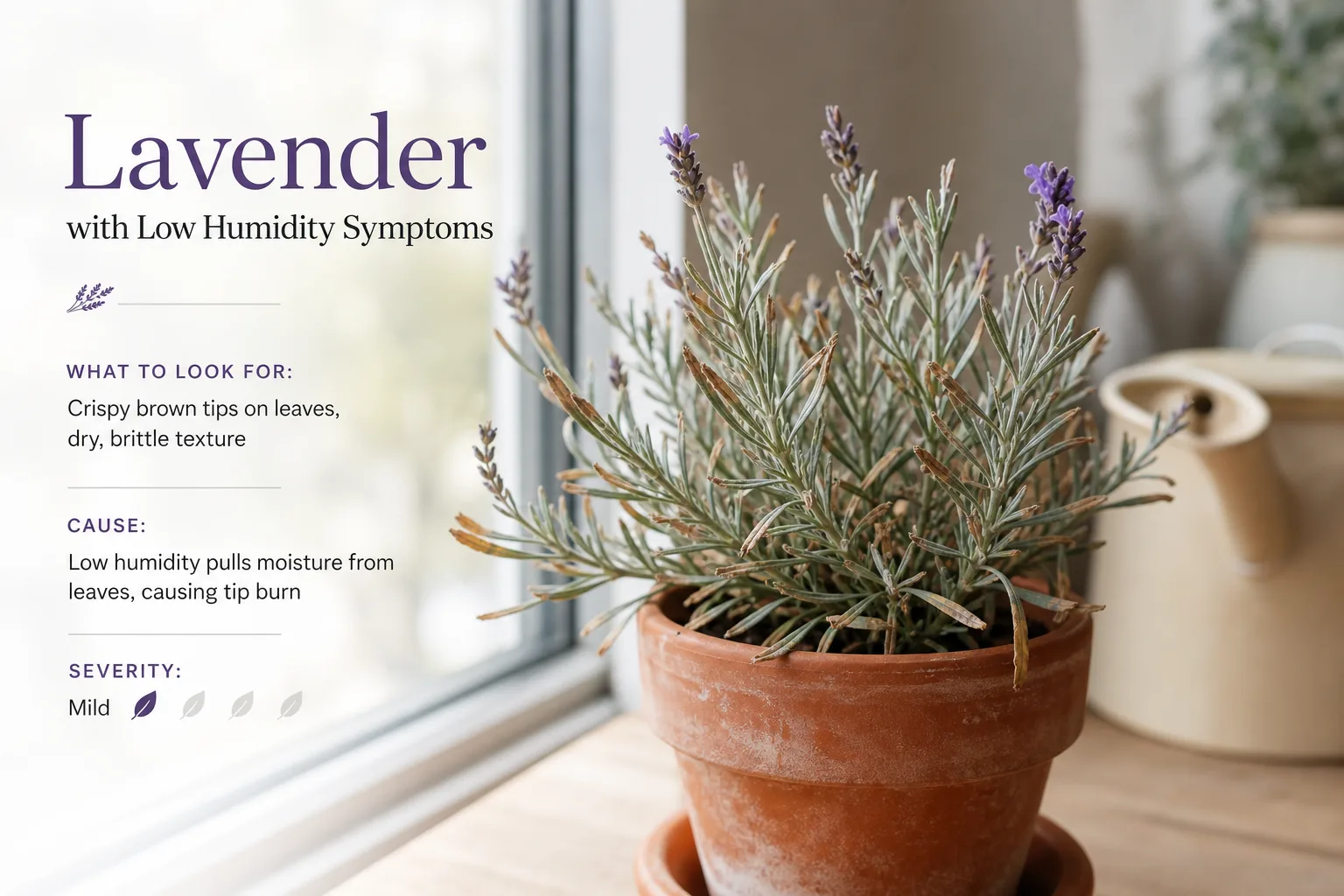
Low Humidity on Lavender: Causes, Checks & Fixes
This guide covers low humidity on Lavender. See also the general Low Humidity guide, watering, and light pages for this plant.
Low Humidity on Lavender: Causes, Checks & Fixes
Quick answer
Low humidity on English lavender (Lavandula angustifolia) is usually not a problem-this Mediterranean dryland herb evolved for dry air and dislikes high summer humidity. Crispy leaf tips on a light dry terracotta pot in a heated winter room almost always mean underwatering on Lavender paired with dry drafts, not a need for humidifiers.
First step: push your finger 7 cm into the mix-if dry, water deeply; if damp, do not add water. Then move the pot away from radiators, forced-air vents, and tropical-plant humidifier zones into the sunniest cool window you have.
This page is the primary humidity-disambiguation hub for lavender. For drought rescue detail, see underwatering. For grey wilt on wet soil, see overwatering and wilting. For stippling on dry windowsills, see spider mites on lavender.
What low humidity looks like on Lavender
Unlike tropical houseplants that wilt and crisp evenly when air is dry, lavender shows a narrower, placement-driven pattern on its narrow lanceolate silvery leaves:
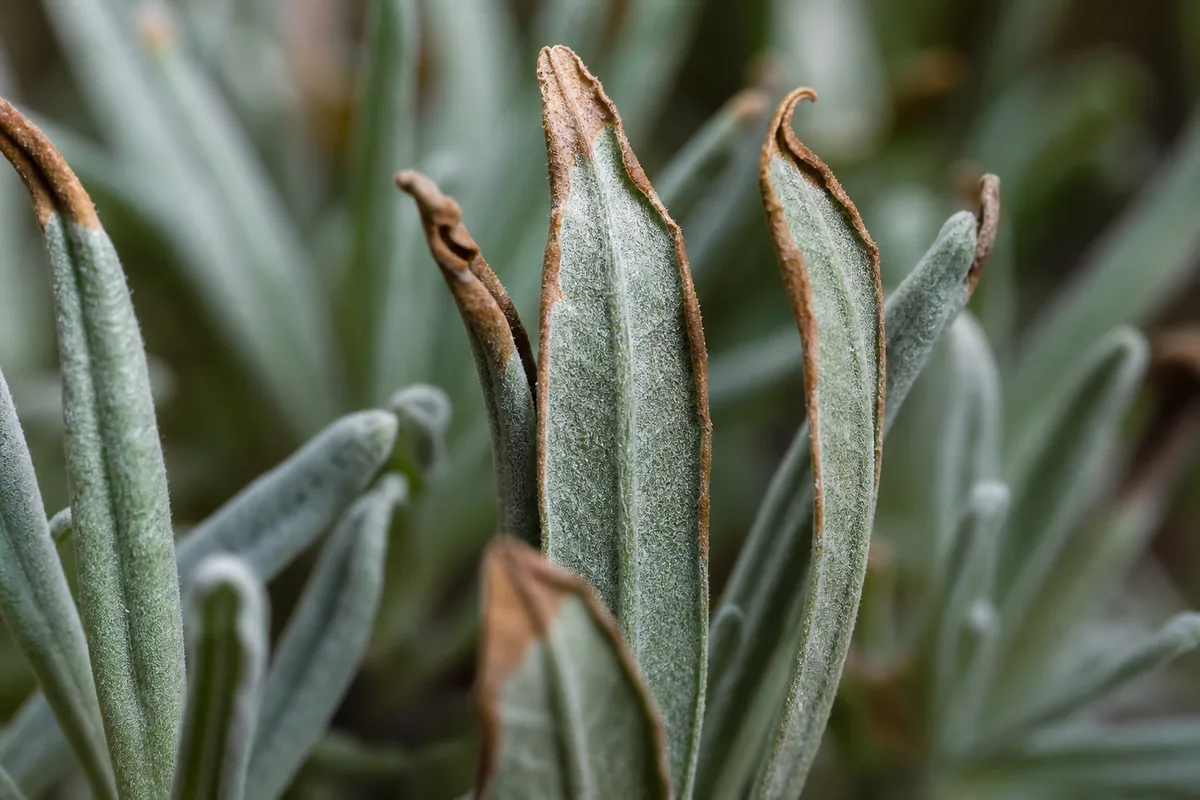
Low Humidity symptoms on Lavender - compare with healthy tissue on the same plant.
- Crispy brown leaf tips and margins on outer foliage after dry indoor heat plus missed watering-often on the side facing a radiator or vent first.
- Inward-curling dull grey-green leaves on a light pot whose soil reads dry at 7 cm depth. This mirrors drought stress, not tropical-style humidity wilt.
- Slow winter growth on a sunny windowsill without root issues-normal dormancy pace, not humidity injury.
- Fine pale stippling on leaf undersides if spider mites thrive in hot, dry conditions on heated glass.
Crispy tips, inward curl, and slow winter growth - vs. high-humidity crown decline
True lavender decline from too much moisture shows grey wilting stems, soft crowns on wet soil, and leaf browning at the base-high humidity problems, opposite of low humidity. Powdery mildew can coat leaves in stuffy humid corners with poor airflow.
Lavender’s stiff woody stems and narrow leaves do not flop dramatically like a peace lily when air is dry. Owners trained on broad-leaf houseplants often misread cosmetic tip crispness as a humidity crisis when the root zone is simply dry-or when hot dry drafts desiccate foliage faster than the pot can supply water.
Spanish lavender (Lavandula stoechas) is slightly less cold-hardy and more sensitive to wet crowns than English types, but both species share the same dry-air preference. Neither wants tropical humidity rituals.
Why growers worry about low humidity on Lavender
Houseplant advice often assumes all plants want 40–60% humidity. Lavender breaks that rule. It is among the least humidity-tolerant ornamentals and prefers low to moderate ambient moisture-roughly 30–50%-with excellent drainage, as noted on the lavender overview.
Mediterranean dryland biology and the humidity myth
Lavender evolved on dry rocky Mediterranean hillsides where summers are hot, winters cool and relatively dry, and soils drain in seconds. High humidity and poor air circulation between plants lead to decline-misting lavender indoors mimics the wet foliage conditions it hates. Root rot commonly attacks plants in poorly drained soils when humidity accompanies wet pots-not when dry winter air surrounds a correctly dry root zone.
Indoor winter: dry air vs. underwatering vs. heat vents
Outdoors, dry air is an ally. Container lavender on a sunny balcony in Pune, Delhi winter sun, or a Mediterranean-climate patio rarely needs humidifiers.
Indoor winter culture changes the stress profile. Forced-air heat drops ambient moisture while small terracotta pots on south-facing glass bake and dry quickly. Growers see brown tips and assume the plant needs misting or a humidifier-on lavender, that mistake raises crown disease risk faster than dry air does.
The actionable indoor pattern is often dry heat placement plus fast pot dry-down, not regional humidity percentage. Foliage beside a heat vent can desiccate on one side even when a hygrometer reads “acceptable” across the room. Crispy tips in dry rooms still trace to root-zone dryness in small pots more than atmospheric RH alone-though spider mites may follow the same dry heat.
Do not respond to crispy tips by watering heavily on wet soil. Lavender suffers when it receives too much water-that pattern kills more container lavender than dry air ever could.
How to confirm the cause
Work through these checks in order before changing care:
- Heat-source map - Stand where the pot sits. Is any foliage within a metre of a vent, radiator, or frequently opened oven door? One-sided browning strongly implicates dry drafts, not generic “low humidity” in the whole room.
- Soil at 7 cm - Push your finger 7 cm into the mix. Dry soil with crispy tips near heat: drought stress, possibly combined with foliage desiccation-but do not soak if you watered recently and stems are firm.
- Humidifier proximity - Is the pot grouped with tropicals under a running humidifier? Move away; lavender wants dry air, not steam.
- Crown moisture - Wet base with browning on damp soil: high humidity or overwatering, not dry air. Firm dry crown with crispy tips only: underwatering or heat placement.
- Sun audit - Count direct sun hours on the sill. Lavender overwintered indoors needs bright light; dim warm rooms weaken plants. See the lavender watering guide for seasonal rhythm.
- Leaf underside exam - Hold stems over white paper and tap. Moving specks confirm spider mites. Stippling without webbing still warrants a weekly rinse in dry heated rooms.
- Compare outdoor pot - If outdoor lavender looks fine in the same dry climate while indoor pots crisp, the issue is indoor heat and air movement, not regional humidity.
Confirmation decision table
| Pattern | Soil at 7 cm | Crown / base | Humidifier nearby? | Likely cause | First action |
|---|---|---|---|---|---|
| Crispy tips, inward curl, light pot | Dry | Firm, dry | No | Underwatering ± dry heat | Deep soak when dry 7 cm; move from vents |
| One-sided brown tips | Dry or slightly dry | Firm | No | Heat-vent desiccation | Relocate to cool bright window away from drafts |
| Grey wilt, base browning | Wet | Soft | Maybe | Overwatering / high humidity | Stop watering; see overwatering |
| Stippling + fine webbing | Variable | Firm | No | Spider mites on dry heat | Weekly rinse; see spider mites |
| White powder on leaves | Variable | Firm | Yes / stuffy room | Powdery mildew from stagnant humidity | Improve airflow; do not add more humidity |
| Slow growth only | Dry-down normal | Firm | No | Normal winter dormancy | No humidity fix needed |
First fix for Lavender
Check soil 7 cm deep-water deeply if dry; if damp, do not add water. Then move the pot away from heating vents, radiators, and humidifier zones into the coolest bright window available.
This single path addresses the most common winter scare: crispy tips from dry heated rooms where the root zone was also allowed to dry too long. Lavender wants dry air, not tropical moisture-so unlike some Mediterranean herbs, do not set up pebble trays or room humidifiers that keep crowns and foliage wet in warm stagnant air.
Do not mist crowns on day one. Wet foliage in a warm closed room raises fungal issues when air circulation is poor.
Step-by-step recovery
After correcting water and placement:
- Stop misting lavender crowns and move away from tropical plant shelves with pebble trays.
- Deep soak if soil was dry 7 cm - Water until excess runs free, then empty the saucer. Resume dry-down rhythm on the watering guide.
- Relocate to the sunniest cool window - Avoid heat spikes above 75°F (24°C) beside glass when possible.
- Rinse leaf undersides weekly with a gentle sink spray if stippling appears-brief moisture for mite control, not daily crown wetting.
- Treat confirmed mites - If stippling persists after two weekly rinses, apply insecticidal soap to leaf undersides following label intervals. Isolate from other houseplants until populations drop.
- Return outdoors after last frost when nights stay consistently above hardiness limits; harden off over a week. Outdoor dry air suits lavender.
Recovery timeline
Crispy leaf tips do not re-green. Expect visible improvement within two to three weeks when browning stops spreading and fresh silvery shoots emerge at stem tips. Mite control may take one to two weeks of rinses or soap repeats.
If stems stay firm, new growth emerges aromatic, and soil dries predictably between waterings, the plant is recovering even if old tip damage looks rough. Decline beyond six weeks with continuing die-back on correctly dry soil suggests root failure, severe mites, or insufficient light-not humidity alone.
Causes to rule out
Underwatering - Dry soil 7 cm deep, inward curl, very light pot. Fix with deep watering, not humidifiers. Full protocol on underwatering.
High humidity damage - Wet crown, base browning, grey wilt on moist soil-opposite problem. See overwatering.
Spider mites - Bronze stippling and webbing after drought in dry heat. Treat the pest directly on spider mites.
Salt burn - Crispy margins after fertilizer on dry soil. Flush and reduce feeding.
Not enough light - Leggy pale stems stretching toward glass. Add light before chasing humidity.
What not to do
Do not install a room humidifier aimed at lavender. Do not mist foliage daily in a warm closed room. Do not use pebble trays under pots-lavender prefers dry crowns over localized tropical humidity. Do not group with ferns and calatheas under humidifiers. Do not interpret every crispy tip as a humidity deficit-check soil at 7 cm first. Do not soak wet soil because tips look brown.
How to prevent confusion next time
Treat lavender as a dryland sun herb. Grow in full sun with extremely well-drained soil. Design placement for airflow and dryness, not tropical humidity. Keep pots in terracotta that dries evenly, away from humidifier zones and heat blasts.
Scout leaf undersides weekly through heating season on indoor plants. Early mite knockdown with water prevents outbreaks that mimic humidity injury.
When spring nights stabilize, move plants back to full outdoor sun. Outdoor dry air is an ally for lavender, not an enemy. Review seasonal watering shifts on the lavender overview and watering guide.
Lavender care cross-check
If humidity is the question, lavender’s answer is usually “too much, not too little.” Pair dry-air culture with this plant’s non-negotiables: six or more hours of direct sun, gritty alkaline mix, and dry-down watering. Container lavender in dry spells needs deep water at the root zone when soil actually dries-not foliar misting or ambient humidifiers.
Indoor overwintering succeeds in a cool, bright room with dry air and sparse water-not a steamy bathroom or crowded tropical shelf. Lavender needs good air circulation and dry foliage to stay healthy.
When to worry
Treat as urgent when fine webbing covers multiple stems, crown bases soften while soil stays wet, powdery white coating spreads in a humid room, or whole branches die back within days. Those patterns point to mites, mildew, or rot-not manageable winter tip crispness.
Low dry air with firm woody stems, correct soil dryness, and slow winter growth is normal for overwintering lavender. Adjust water and placement before assuming the plant is doomed.
Escalate to wilting rescue when grey collapse appears on wet soil-that is never a humidity-deficit fix.
Related lavender problems
- Lavender overview - Sun, soil, humidity tolerance, and seasonal culture hub
- Lavender watering guide - Dry-down rhythm and seasonal adjustments
- Underwatering on lavender - Drought rescue when crispy tips pair with dry soil
- Spider mites on lavender - Stippling and webbing on dry heated windowsills
- Overwatering on lavender - Wet-soil decline, opposite of dry-air stress
- Wilting on lavender - Grey collapse on wet vs. dry soil differentiation
Conclusion
Low humidity outdoors suits lavender; low humidity beside a winter heat vent combined with a dry root zone does not. Check soil at 7 cm, water deeply only when dry, move the pot away from vents and humidifiers, and rinse leaf undersides if mites follow the dry heat. When crispy tips join a soft wet crown, stop chasing humidity fixes and diagnose rot instead. That decision path resolves most winter brown-tip scares without the overwatering and misting that kill more lavender than dry air ever could.
When to use this page vs other Lavender guides
- Lavender watering guide - Use for routine moisture checks before assuming low humidity is the main issue.
- Lavender problems hub - Browse all 51 common issues on this species.
- Brown Tips on Lavender - Different entry point when symptoms overlap with low humidity.
- Leaf Drop on Lavender - Different entry point when symptoms overlap with low humidity.