Leggy Growth on Lucky Bamboo: Causes, Checks & Fixes
Quick answer
Leggy lucky bamboo shows long bare spaces between leaves from etiolation in too little light. First step: move to bright indirect light, then prune the worst lanky cane to a node once exposure improves.
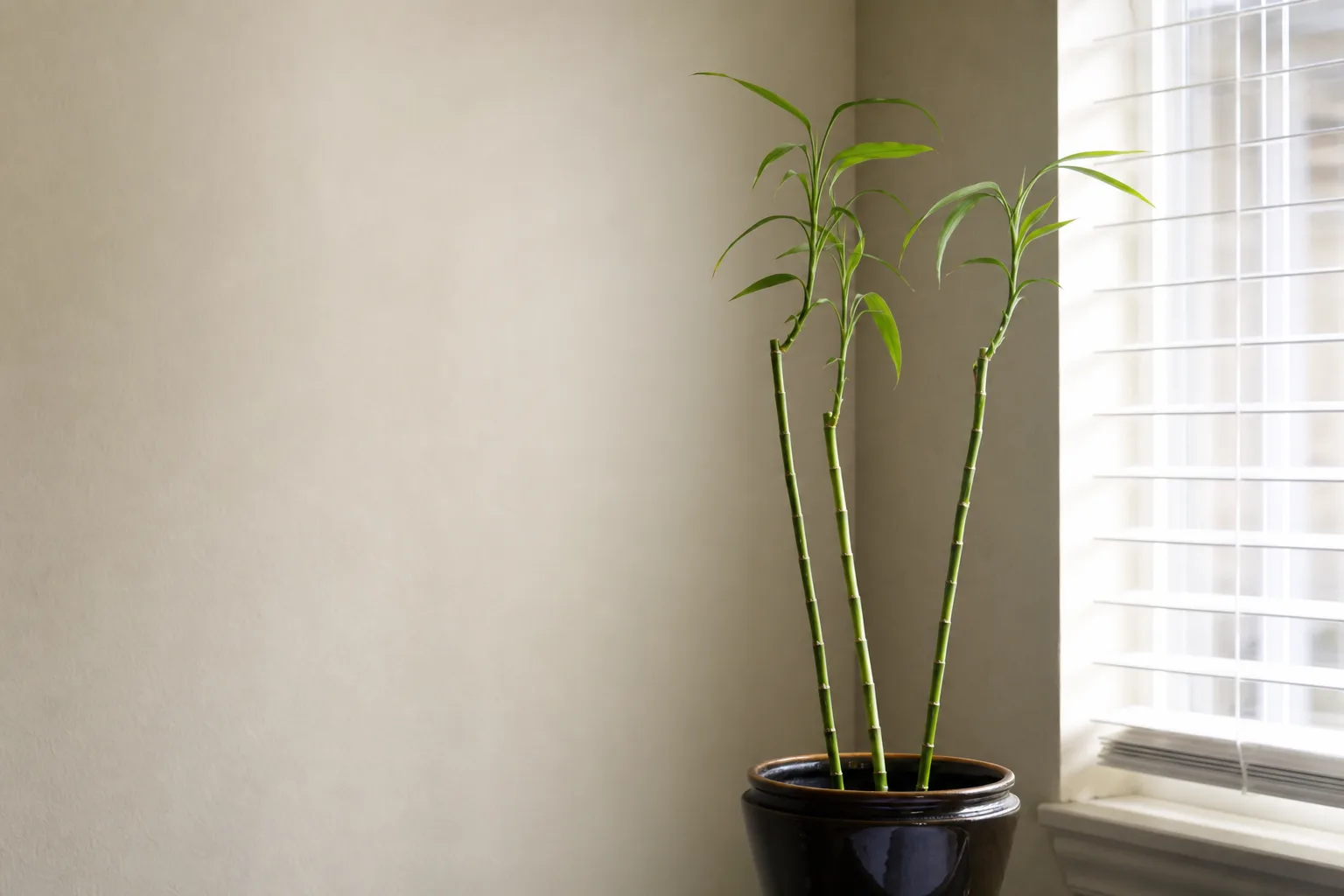
Leggy Growth on Lucky Bamboo: Causes, Checks & Fixes
This guide covers leggy growth on Lucky Bamboo. See also the general Leggy Growth guide, watering, and light pages for this plant.
Leggy Growth on Lucky Bamboo: Causes, Checks & Fixes
Quick answer
Leggy growth on Lucky Bamboo (Dracaena sanderiana) is etiolation - the plant stretches toward light, leaving long bare internodes and small pale new leaves. First fix: move to bright, indirect light. Prune the worst lanky cane to a node only after exposure improves.
This page is for visible stretch and bare cane gaps. Use a sibling guide when the main symptom differs:
| Your main concern | Start here |
|---|---|
| Pale, weak plant in deep shade with slow water use and possible rot | Not enough light |
| Pace is slow but internodes stay compact | Slow growth |
| Whole arrangement tilts toward one window without long bare gaps | Plant leaning |
| Long internodes, lean, and small new leaves | This page |
For baseline placement targets, see the lucky bamboo overview and light guide.
What leggy growth looks on Lucky Bamboo
Healthy form vs etiolation
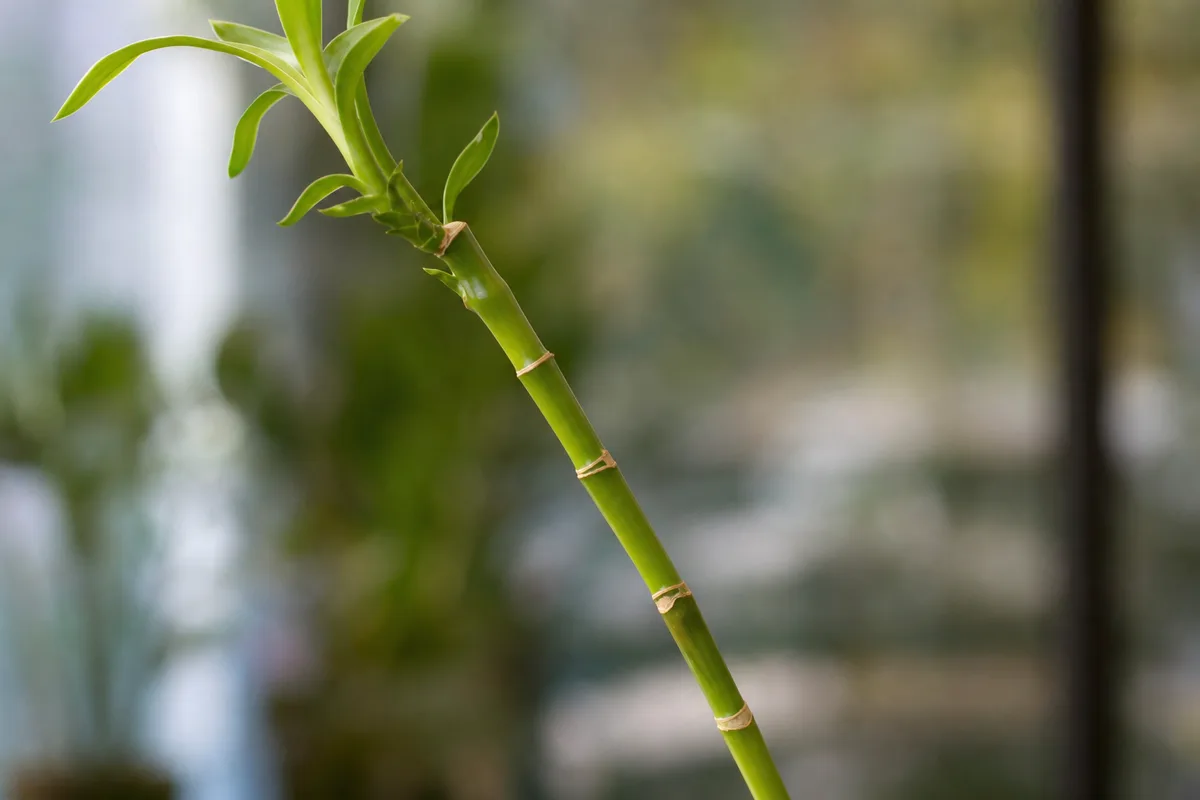
Leggy Growth symptoms on Lucky Bamboo - compare with healthy tissue on the same plant.
Healthy canes carry leaves spaced moderately along upright green stems with compact nodes - the swollen rings where leaves attach. Leggy plants lean toward windows or lamps, develop long empty sections between leaf pairs, and produce smaller, paler new leaves at the tip.
Visual check without photos: Run a finger along the newest growth at the top. On a compact plant, leaf pairs sit every half inch to inch (1–2 cm) along green cane. On an etiolated plant, you can slide two or three finger widths between pairs while the cane stays thin and pale green.
Braided and spiral-trained patterns
Braided arrangements often look uneven when outer canes reach light while inner stems stay thin in the braid’s shadow. Spiral-trained forms lose definition when new growth adds straight sections in dim corners - the trained curve does not continue unless growers re-train shoots under light.
Unlike slow growth from nutrient-poor water alone, leggy stems actively lean and elongate between nodes. Unlike plant leaning from one-sided window exposure on an otherwise compact plant, etiolation shows widening internode gaps on new tissue.
What bare cane cannot do
Old stretched sections do not sprout leaves retroactively. Lucky bamboo adds foliage at nodes and shoot tips, not along bare cane between old nodes. Recovery means new side shoots after pruning or accepting bare gaps until you cut lower.
Why Lucky Bamboo gets leggy (etiolation)
Insufficient light is the primary driver. Bright, indirect light is best for Dracaena sanderiana indoors; deep shade triggers etiolation - the plant invests in height to capture photons, not leaf mass.
Office desks far from windows, interior feng shui corners, and shelves blocked by taller objects commonly cause legginess. Lucky Bamboo marketed as a “low light plant” still needs adequate ambient brightness - NC State lists deep shade among tolerable conditions, which explains survival in dim desks, not compact gift-form shape.
Sudden moves from bright garden-center displays to dim homes produce rapid stretch within two to four weeks. Direct sunlight will damage leaves - the fix is brighter indirect light, not a sunny sill. See sunburn if bleached patches appeared after a bright move.
Over-fertilizing in low light can elongate weak stems without improving color - light must come first. Do not chase stretch with fertilizer; route to fertilizer burn if vase water was fed heavily in a dim corner.
Case note: store display to east window
A five-cane braided vase under bright fluorescent shop lights moves to a dim interior shelf three feet from a north window. Within three weeks outer canes lean 15 degrees toward the glass; internodes on new tips lengthen from roughly 1 cm to 3 cm between leaf pairs. After relocation to an east window with weekly filtered water changes and one outer cane pruned 2 cm above the second node, a side shoot often appears within four to six weeks in warm indoor conditions. Inner braid canes may stay thin until rotated weekly and individually trimmed - full visual balance can take a season.
How to confirm the cause
Work through this six-step checklist:
- Light audit - Can you read comfortably without a lamp at the plant’s location all day? If not, etiolation is likely.
- Lean direction - Stems point toward the brightest source (window, grow lamp, or open doorway).
- Internode length - Compare top new section to older lower growth; widening gaps confirm stretch.
- Leaf size - New leaves smaller and paler than when purchased from a bright display.
- Rule out pests - Mite stippling and mealybugs weaken plants differently than pure stretch; see spider mites or mealybugs.
- Culture type - Leggy growth occurs in vases and soil; not solely a potting issue. Cloudy vase water with firm canes still allows stretch in dim light.
First fix for Lucky Bamboo
Increase bright indirect light before structural pruning.
Relocate to an east window or filtered bright spot - increase exposure gradually over one to two weeks if coming from deep shade. Direct sun causes scorch; filtered brightness is the target per the light guide.
Once light improves, prune one overly long cane just above a healthy node with clean scissors. New shoots often emerge from cuts on dracaenas; see the pruning guide for braided balance and wax-sealing optional cuts.
Rotate braided arrangements weekly so all sides receive light.
Grow-light setup for offices and interior rooms
When no plant-facing window exists, add a full-spectrum LED fixture 12 to 24 inches (30 to 45 cm) above the tallest cane tip. Run it 8 to 10 hours daily on a timer - foliage houseplants generally need 12 to 14 hours of combined natural and supplemental light per day, with a dark rest period overnight. Acclimate over 7 to 14 days if moving from deep shade; sudden intense light scorches leaves. Cover the whole arrangement so outer canes are not left in shadow while inner braid stems stay dim.
Step-by-step recovery
- Move to brighter indirect light over one to two weeks - avoid direct sun shock.
- Identify the leggiest cane; prune back to a healthy node with clean scissors. On multi-cane braids, trim the worst outer stem first - not every cane the same day.
- Place pruned tops in clean water to root as backups; roots form in 2 to 3 weeks under bright indirect conditions.
- Adjust watering - brighter light increases uptake; maintain weekly vase changes per the watering guide.
- Apply dilute fertilizer only after light improves and new side shoots appear - see fertilizer.
- Stake soil-grown canes until roots anchor if top-heavy after pruning.
Recovery timeline
New side shoots may appear within four to eight weeks after pruning in improved light. Bare cane sections below old nodes remain unless you prune further - Lucky Bamboo is slow-growing, so braided displays may need a season of selective trimming for balance.
If stretch continues after 4 to 8 weeks of corrected bright indirect light, weekly filtered water changes, and staggered node pruning on firm canes, contact your local cooperative extension office for hands-on diagnosis.
Causes to rule out
| Symptom cluster | Likely issue | Guide |
|---|---|---|
| Compact nodes, deep green, minimal lean | Normal slow growth | Slow growth |
| Pale leaves, compact spacing, no long gaps | Nutrient or fluoride stress | Brown tips |
| Whole pot tilts, internodes not lengthening | One-sided light only | Plant leaning |
| Soft stems, yellowing, sour water | Root rot | Root rot |
| Long internodes, lean, small new leaves | Etiolation | This page |
Leggy growth vs not enough light
Both guides address low light on Dracaena sanderiana, but search intent differs. This page focuses on stretch morphology - bare internodes, thin reaching canes, and rebalance pruning on braided forms. Not enough light covers broader deficiency: pale stalled growth, dim wet soil rot risk, fluoride context, and pet-toxicity placement. Start here when long bare gaps are the headline symptom; switch to not-enough-light when the plant is generally weak in deep shade with watering complications.
What not to do
Do not move directly into harsh afternoon sun to fix legginess - acclimate slowly. Avoid heavy fertilizer in dim light; soft weak elongation follows. Do not prune every cane at once on a stressed plant; stagger cuts two to three weeks apart. Do not expect bare cane to leaf out without cutting to a node.
How to prevent leggy growth next time
Keep bright, indirect light consistent year-round. Rotate weekly on braids. Trim lanky stems before they dominate spiral or prosperity shapes - pruning before internodes exceed two finger widths on new growth.
When buying, choose plants with tight node spacing - they were grown under better light than deeply stretched stock.
Lucky Bamboo care cross-check
Legginess is a light-at-the-leaf problem first. Fixing water quality alone will not compact internodes if the plant still lives in a dim corner.
Align three systems: brightness at the canopy, weekly filtered water rhythm, and light feeding only after stretch stops. A vase on a bright windowsill with stale tap water may still stretch if the plant sits too far from the glass; a dim cubicle with perfect water changes will still etiolate. Use light for window and grow-light placement, watering for vase depth and soil dry-down, and fertilizer only after new compact shoots appear.
Related Lucky Bamboo guides
- Lucky bamboo overview
- Light
- Pruning
- Watering
- Not enough light
- Slow growth
- Plant leaning
- Root rot
- Sunburn
When to worry
Leggy growth alone is low severity. Combine with yellowing, rot smell, or pests for broader diagnosis - route to yellow leaves or root rot as needed. Lucky bamboo is toxic to cats and dogs if ingested; wear gloves when pruning many canes because sap can irritate skin, and keep trimmings away from pets.
Conclusion
Leggy Lucky Bamboo stretches toward light with long bare internodes - etiolation from insufficient brightness. Move to bright indirect exposure, prune the worst canes to nodes in stages, rotate braids for even light, and expect new side shoots over weeks, not overnight fullness on old bare stems. Use sibling guides when weakness, rot, or lean - not stretch gaps - is your primary concern.