Low Humidity on Lucky Bamboo: Causes, Checks & Fixes
Quick answer
Low humidity browns Lucky Bamboo leaf tips near vents and dry heat; dry rooms also speed vase evaporation, tempting tap-water top-ups that stack fluoride burn. First step: relocate away from HVAC blasts and use filtered water-raising humidity alone won't fix fluoride damage.
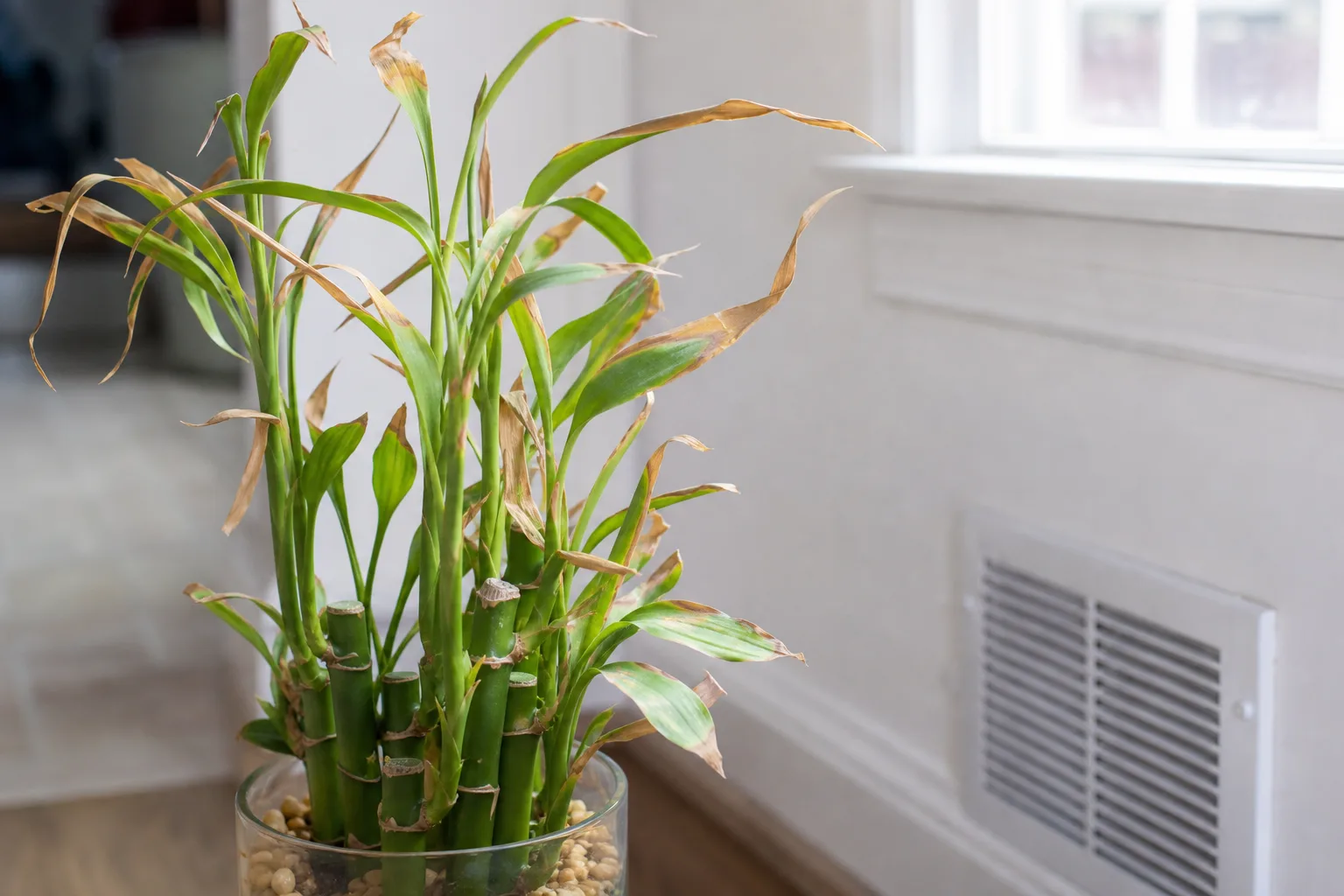
Low Humidity on Lucky Bamboo: Causes, Checks & Fixes
This guide covers low humidity on Lucky Bamboo. See also the general Low Humidity guide, watering, and light pages for this plant.
Low Humidity on Lucky Bamboo: Causes, Checks & Fixes
Quick answer
Low humidity stress on Lucky Bamboo (Dracaena sanderiana) shows as brown leaf tips, sometimes with slight leaf droop on foliage nearest dry air sources. Most homes sit in a comfortable 40–60% relative humidity band without equipment-the overview humidity section explains when average indoor air is usually adequate. First step: move away from radiators and AC vents, then use filtered water or rain water. Humidity fixes alone won’t reverse fluoride burn on this species.
Dry winter rooms also speed vase evaporation, tempting tap-water top-ups that compound fluoride sensitivity alongside humidity stress-pair placement and filtered water before buying a humidifier.
Low humidity can cause browning of the leaf tips on Dracaena sanderiana. Leaf tips turning brown can be a symptom of multiple issues, including low humidity, incorrect lighting, or high levels of water additives such as chlorine. If uniform tip burn on every leaf points to water chemistry, see brown tips after you relocate from dry blasts.
What low humidity looks on Lucky Bamboo
Vent-proximity pattern
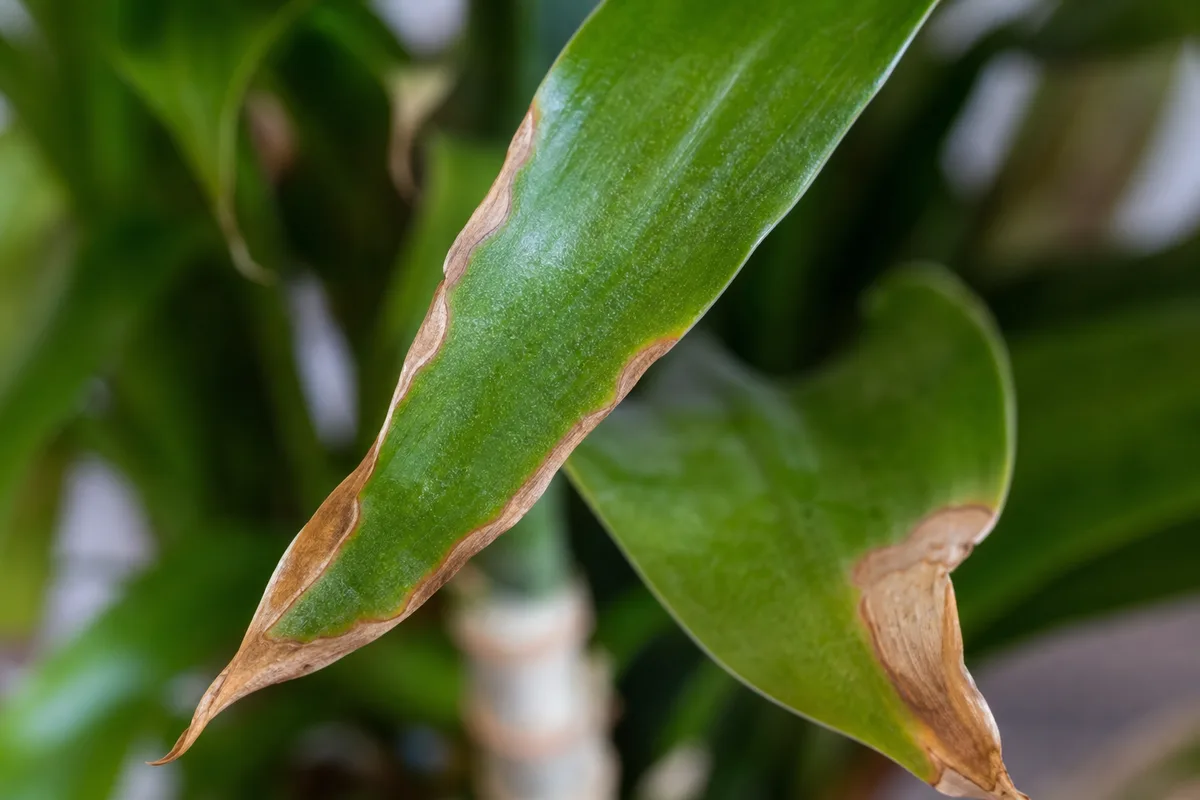
Low Humidity symptoms on Lucky Bamboo - compare with healthy tissue on the same plant.
Leaves develop dry, tan to brown edges starting at tips, often worst on foliage nearest heat sources-radiator shelves, AC returns, space heaters, or drafty winter windows. Canes stay firm and green, unlike root rot with soft stems.
Mild leaf droop may appear in very dry rooms without underwatering-vase water level and soil moisture remain adequate when checked.
Desk and vase culture context
Winter heating drops indoor humidity sharply. Desk Lucky Bamboo beside monitors and space heaters shows damage faster than plants in open living spaces. Water-culture setups add a local humidity lift from vase evaporation, but that microclimate does not protect leaf margins when room air stays bone-dry.
Symptom photo reference
Fluoride tip burn often looks similar to humidity crisping-yellow then brown necrosis spreading inward from margins on strappy Dracaena leaves, as shown in fluoride-sensitive lucky bamboo examples. Humidity damage usually clusters on vent-facing leaves while inner foliage stays greener; fluoride burn hits multiple leaves at different heights with a uniform margin pattern regardless of vent proximity.
Low humidity damage differs from direct sun scorch, which bleaches sun-facing patches, and from spider mite stippling, which shows speckled leaf faces plus fine webbing at cane nodes in dry air.
Why Lucky Bamboo suffers in dry air
Dracaena foliage loses moisture through transpiration. When ambient humidity falls below the comfortable 40–60% band most homes target, margins desiccate faster than roots replace water-especially on narrow strappy leaves.
Forced-air heating, wood stoves, and constant AC reduce humidity. Braided arrangements with dense leaf clusters trap less moisture than broad-leaf tropicals but still show tip burn in microclimates below comfortable ranges.
Dry air often pairs with faster vase evaporation, tempting owners to top up with tap water-compounding fluoride sensitivity alongside humidity stress. Do not increase tap top-offs when evaporation accelerates; follow the weekly full change protocol with filtered water instead.
Home water softener discharge also damages Dracaena roots over time-another reason crisp tips persist after humidity improves if softener-fed tap water keeps entering the vase.
How to confirm the cause
- Placement map - Measure distance to vents and heaters; damage concentrated nearby supports low humidity.
- Optional hygrometer - Hold a meter at leaf height near the worst tips. Readings persistently below ~40% RH in heated rooms support dry-air stress; mid-range readings with vent-facing damage still implicate microclimate drafts.
- Water quality - Tap water only? Fluoride may co-occur; see brown tips for the full water-quality protocol.
- Root check - Firm roots and clear vase water rule out rot.
- Season - Symptoms worsen in heated winter months?
- Pest check - Spider mites also thrive in dry air; look for stippling and webbing.
- Response test - Move plant seven days; if new tips stay green, humidity was a factor.
Documented desk recovery pattern
A common winter pattern: desk Lucky Bamboo beside a space heater, tips crisp on vent-facing leaves only, firm canes, tap water in the vase. Relocate roughly one meter from the heat source, switch to filtered water, and watch for clean new leaf margins within about three weeks-without trimming living green tissue.
Lookalike comparison table
| Symptom pattern | Low humidity | Fluoride tip burn | Underwatering | Spider mites | Direct sun |
|---|---|---|---|---|---|
| Leaf signs | Crisp tips worst near vents | Even margin burn on many leaves | Limp canes, dry pebbles | Stippling + webbing | Bleached patches on window side |
| Cane base | Firm | Firm | Firm going limp | Firm | Firm |
| Vase water | Usually clear | Clear with tap fills | Low level, clear | Clear | Clear |
| First move | Move from vents, filter water | Switch to filtered water | Refill per watering guide | Rinse and treat mites | Move out of direct sun |
| Read next | This guide | Brown tips | Underwatering | Spider mites | Sunburn |
First fix for Lucky Bamboo
Relocate away from dry air blasts and switch to filtered water.
Move the vase or pot at least several feet from active vents. Humidity fixes work best alongside filtered water on Dracaena-raising air moisture while still using fluoridated tap water often leaves tips browning. Use a pebble tray or group plants for modest humidity lift; Lucky Bamboo does not need greenhouse levels, and most homes already sit near the 40–60% comfort band without equipment.
Replace vase water with filtered or distilled water on a weekly schedule per the watering guide. After placement and water quality are corrected, a small room humidifier helps only when hygrometer readings at leaf height stay below comfortable range for weeks-pebble trays and grouping add modest lift but rarely rescue vent-adjacent plants without moving them.
Mild, moderate, and severe branches
Mild - Crisp tips on vent-facing leaves only, firm canes, clear water: relocate and switch water source; re-check new tips in two weeks.
Moderate - Widespread tip burn in a dry heated room with tap water: full filtered-water change, vent relocation, optional humidifier if RH stays low after the move.
Severe - Limp canes with cloudy water or soft stems: pivot to wilting or root rot diagnosis-humidity alone is not the primary problem.
Step-by-step recovery
- Move plant to stable room air away from HVAC lines.
- Switch to filtered water; change vase water fully per the watering guide.
- Trim only fully dead tip tissue if cosmetic.
- Avoid heavy misting that leaves braids wet for hours-surface moisture without humidity rise can invite fungal spots.
- Optional: run a room humidifier away from the vase opening so warm mist does not stagnate vase water.
- Monitor new leaf edges for two to three weeks.
- Treat spider mites if stippling appears-dry air favors both problems.
Recovery timeline
New leaves should show clean margins within two to four weeks after placement and water improvements. Old brown tips remain until trimmed.
Leaf droop from dry air often resolves within days of moving; droop with wet soil or cloudy vase water still indicates rot or overwatering, not humidity.
Vent relocation alone may show cleaner new tips within one week; water-quality correction alone can take two to four weekly changes before fluoride levels in pebbles drop enough to stop margin burn-doing both together is fastest.
Causes to rule out
- Fluoride/chlorine - Tip burn without vent proximity pattern; see brown tips.
- Underwatering - Dry pebbles, limp canes, firm roots going dry; see underwatering.
- Spider mites - Stippling and silk in dry conditions; see spider mites.
- Direct sun - Bleached patches on window side.
- Wilting from root dysfunction - Full vase with limp canes points to damaged roots, not dry air alone.
What not to do
Do not rely on misting alone while keeping tap water and vent placement unchanged. Avoid humidifiers blowing directly onto vase water-stagnant warm water invites bacteria. Do not increase tap top-offs when dry rooms evaporate vase water faster. Do not confuse tip burn with urgent root rot.
How to prevent low humidity damage
Keep Lucky Bamboo in bright, indirect light away from heat blasts. Use filtered water consistently per the watering guide. Group desk plants away from radiator shelves when you cannot hit exact RH targets-moving off the blast matters more than misting.
In winter, check tips weekly when heating runs-early moves prevent widespread margin burn on all canes. Target roughly 40–60% RH when practical; most homes achieve that without dedicated equipment.
Related Lucky Bamboo guides
- Lucky bamboo overview
- Lucky bamboo watering
- Brown tips
- Spider mites
- Wilting
- Underwatering
- Overwatering
- High humidity
When to worry
Low humidity alone is cosmetic over weeks. Worry when dry air coincides with mite webs, cloudy vase water, or rapid cane softness-use the spider mites or root rot guides as needed. Lucky bamboo is toxic to cats and dogs-contact a veterinarian promptly if a pet ingests leaves or drinks vase water.
Conclusion
Low humidity browns Lucky Bamboo tips and can mildly droop leaves near dry heat. Move away from vents, use filtered water with weekly vase changes, and judge recovery by new leaf edges-not old burned tips recovering color. When tip burn is uniform on every leaf, pair humidity fixes with the brown tips water-quality workflow.