Pot Too Small on Marble Queen Pothos: Causes, Checks & Fixes
Quick answer
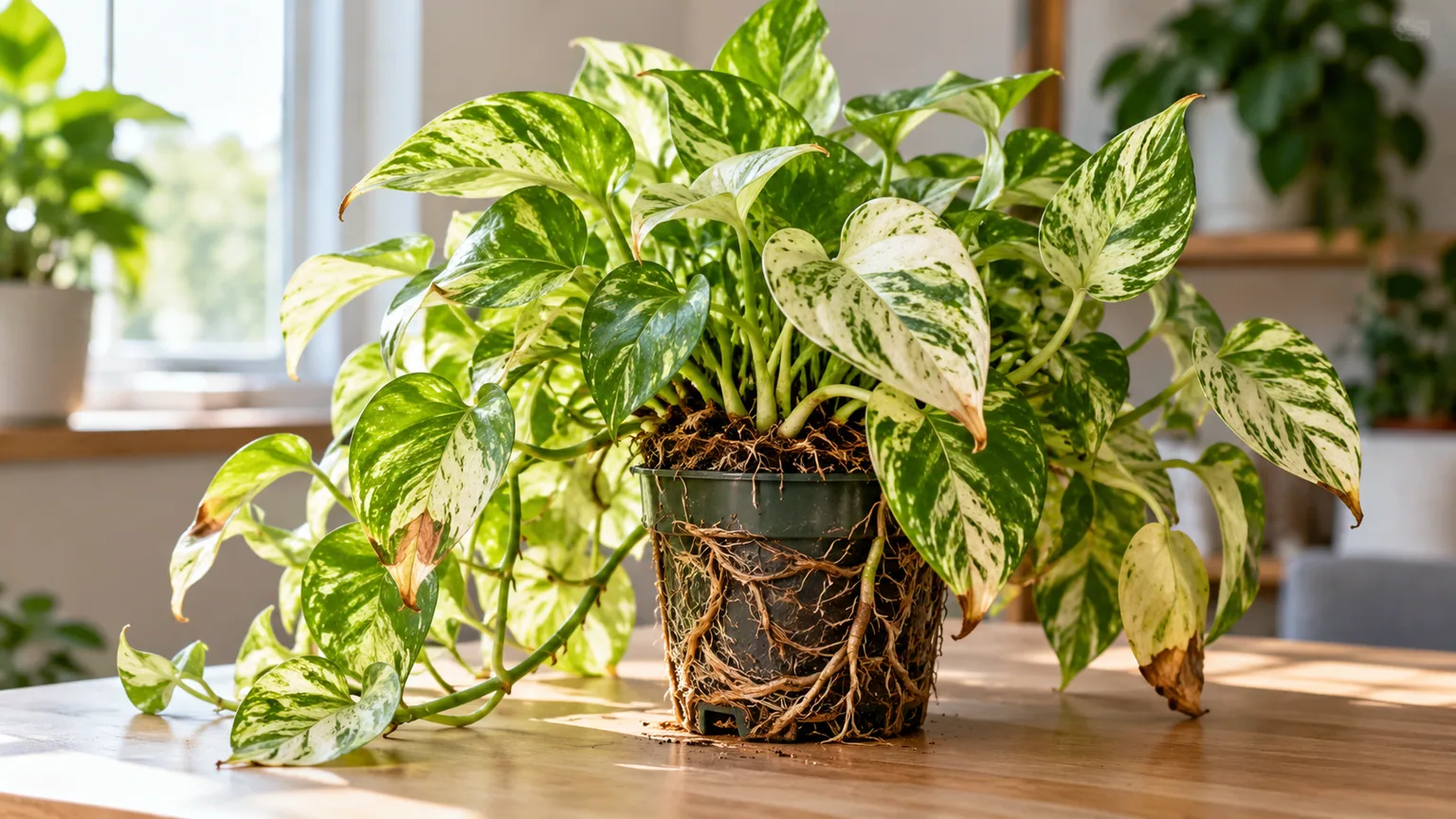
A pot too small on Marble Queen Pothos usually means roots have filled the container: soil dries within a day or two, water runs straight through, and new leaves come in smaller with weaker marbling. First step: slide the root ball out of its pot and check for circling roots or roots pushing through drainage holes, then repot one size up only if crowding is confirmed.
Pot Too Small on Marble Queen Pothos: Causes, Checks & Fixes
This guide covers pot too small on Marble Queen Pothos. See also the general Pot Too Small guide, watering, and light pages for this plant.
Pot Too Small on Marble Queen Pothos: Causes, Checks & Fixes
Quick answer
A pot too small on Marble Queen Pothos means the roots have filled nearly every pocket of mix, so the plant behaves thirsty no matter how faithfully you water. New leaves come in smaller than the older foliage, the white marbling looks thin or washed out, and the pot feels light again a day or two after a thorough soak. First step: slide the root ball out of its pot and check whether roots circle the walls, mat across the bottom, or push through the drainage holes. If crowding is confirmed, move up one pot size with fresh airy mix; if roots still have room, the real problem is watering, light, or mix, not container size.
Marble Queen is a slower grower than all-green pothos because its white sections carry little chlorophyll, so it fills pots more gradually — but it also shows crowding stress sooner in its variegation. For how undersized containers behave on houseplants in general, see our pot too small guide. On Marble Queen, the pattern usually shows up as fast dry-down plus small, weakly marbled new leaves while older foliage still looks acceptable.
What a pot too small looks like on Marble Queen Pothos
Crowding on this cultivar reads first in the watering can, second in the new growth. Watch for this combination rather than any single clue:
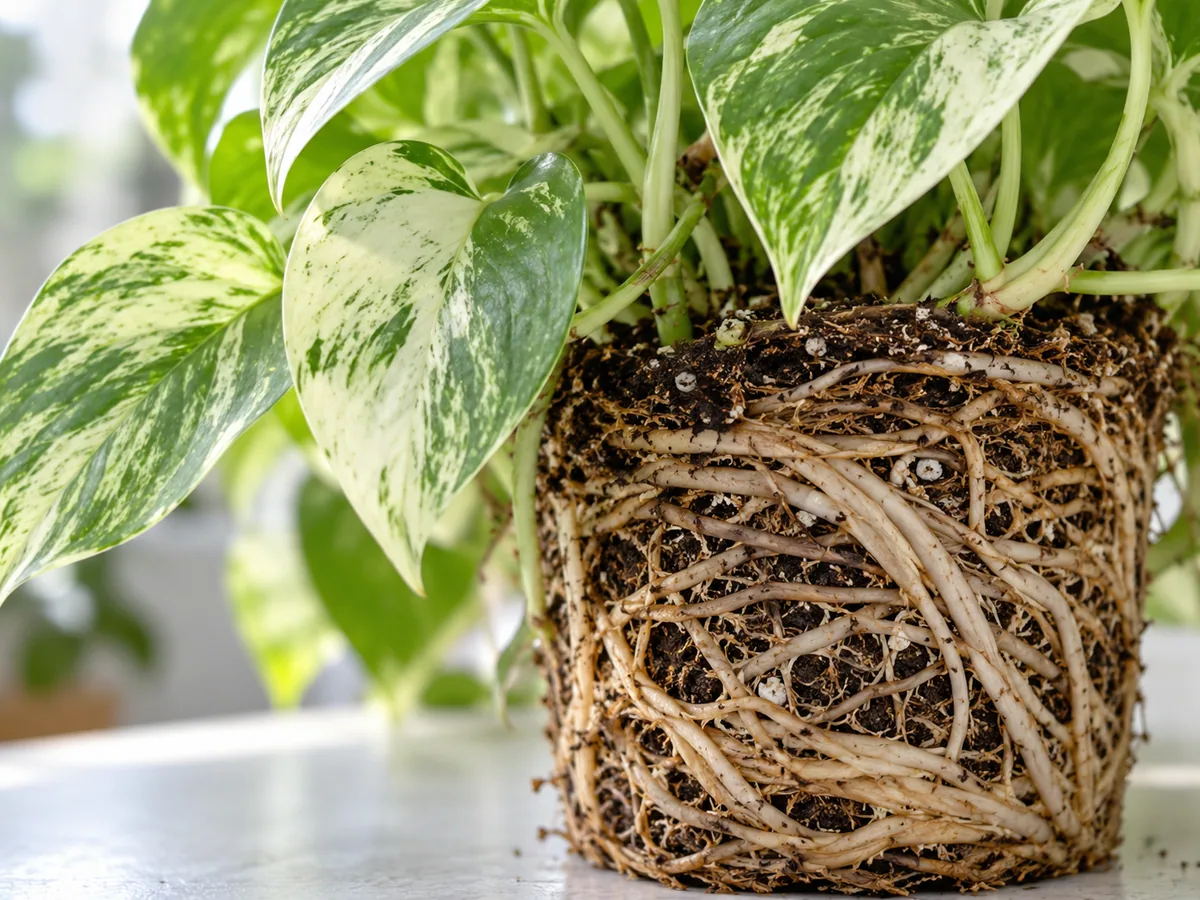
Root-bound Marble Queen Pothos - small new leaves with weak marbling and dense circling roots; compare with older, fully marbled foliage on the same vine.
- Soil dries within a day or two of a thorough watering, far faster than this plant’s normal every 7–14 days rhythm
- Water runs straight through the drainage holes seconds after you pour, leaving the center of the root ball dry — the classic displacement sign, since a solid root mass leaves almost no mix to hold moisture
- Roots circle the walls, mat across the bottom, or push out of the drainage holes when you slide the plant out
- New leaves emerge smaller than mature leaves on the same vine, with thinner white marbling
- Vines stall during spring and summer while older leaves stay green — the active season is when a roomy pot should be pushing growth
- White edges crisp and brown shortly after watering day, because the remaining mix swings between soaked and bone-dry
- Nursery pot bulges, cracks, or lifts off the saucer from internal root pressure
- Aerial roots multiply along lower nodes as the vine searches outside the pot for moisture — pothos naturally climbs by brown aerial roots, so a sudden flush of them on a previously calm plant is worth investigating
- Leaves droop every afternoon yet perk up briefly after watering, then wilt again the next day
Normal, not root-bound: A Marble Queen in a correctly sized pot dries when the top 3–5 cm of mix are dry and holds that moisture for the better part of a week. Slow winter growth with firm stems is seasonal rest for this slow cultivar, not crowding.
Not a small pot: Leaves yellowing while soil stays wet for days, soft stems at the base, or a sour-smelling mix point to overwatering — and root rot and blackening of the leaf margins can occur with overwatering. Sizing up alone will not save rotting tissue; see root rot on Marble Queen Pothos instead.
Why Marble Queen Pothos outgrows its pot
Marbling costs the plant growing energy. The cream-white sections of each leaf contain almost no chlorophyll, so Marble Queen photosynthesizes less per leaf than Golden pothos and builds root mass more slowly. That slower pace fools owners: the plant can sit in the same nursery pot for over a year looking fine, then cross the line from snug to stuffed in a single warm season once roots finally occupy the last air pockets.
Dense trailing vines hide the timeline. A full-looking Marble Queen with long vines and aerial roots at the nodes keeps producing foliage from stored energy while the root zone deteriorates. Pothos prefers bright, indirect light, and in good light this cultivar keeps vining outward even as the pot underneath becomes nearly all roots. By the time new leaves shrink, the container has usually been too small for months.
Small nursery pots dry punitively fast. Most Marble Queens are sold in 4- or 6-inch pots of peat-heavy mix. Once roots displace that small soil volume, each watering flushes straight through and the white leaf margins — the thinnest, most drought-sensitive tissue — crisp first. That is why brown tips on Marble Queen Pothos so often trace back to crowding rather than humidity alone.
Decorative cachepots conceal the evidence. Marble Queen is frequently displayed trailing from a tight nursery pot slipped inside a cover pot with no drainage. You never see the roots escaping the holes, water pools invisibly in the cover, and the plant alternates between drowning and desiccating. Always lift the nursery pot out for inspection.
How to confirm crowding before repotting
Do this check on watering day, when the mix is lightly moist and the root ball slides out intact:
- Weigh and time. Water thoroughly, let it drain, and note how heavy the pot feels. If it is feather-light again within one to two days in normal room temperatures, the soil volume is mostly roots.
- Slide, don’t yank. Squeeze a plastic nursery pot gently and ease the root ball out while supporting the base of the stems. A root-bound plant holds together as a solid plug patterned with circling white roots; a plant with room to spare crumbles loosely with visible dark mix.
- Read the bottom. A dense white mat across the drainage holes, or roots visibly circling inside the walls, confirms the diagnosis. One stray root tip poking out is normal exploration, not proof — compare against a pothos root-bound checklist covering the full sign pattern before deciding.
- Separate variegation loss from crowding. Low light can cause loss of variegation on its own: vines revert toward green even in a roomy pot. If new leaves are both small and weakly marbled plus dry-down is fast, crowding is the driver. If leaves are full-sized but increasingly green, fix the light first.
- Smell and squeeze. Healthy crowded roots are white to tan and firm. Brown mush, a sour smell, or stems that detach with a gentle tug mean rot is layered on top of crowding — trim damage and treat as repotting stress on Marble Queen Pothos would require, not as a simple size-up.
A root-bound plant is one where the roots have become so tightly compacted they can no longer take up adequate water or nutrients — so if the slide-out shows a solid circling plug plus fast dry-down, you have your answer and can repot with confidence.
First fix: repot one size up, not three
Once crowding is confirmed, repot promptly during the growing season — spring through early summer is the ideal window, but a severely root-bound plant declining in midsummer should not wait for spring.
- Pick a pot only slightly wider than the current root mass — roughly one to two inches larger in diameter — with an unobstructed drainage hole. An oversized container holds wet mix around a small root system and trades crowding for rot; see pot too large on Marble Queen Pothos for that mirror problem.
- Mix fresh, airy soil. Standard potting mix with 20–30% perlite matches this plant’s needs; review the proportions in the Marble Queen soil guide. Pothos does best when growers let the well-drained potting medium dry out between waterings, which only works if the fresh mix actually drains.
- Keep the plant at its former soil depth. Set the root ball so the stem base sits exactly where it sat before, then fill around it with a clean pot only slightly wider than the current root mass and fresh mix — deeper burial rots stems while exposed roots desiccate.
- Tease circling roots gently. Loosen the outer coil with your fingers so new tips point outward into fresh mix. Trim only black, mushy roots; leave healthy white circling roots intact and redirect them.
- Water deeply once, then resume normal rhythm. Soak until water exits the drainage holes, empty the saucer or cachepot, and return to watering when the top 3–5 cm dry. Full background on that rhythm is in Marble Queen watering.
Wear gloves during handling: Marble Queen is toxic to dogs and cats through insoluble calcium oxalates that irritate skin and mouths.
Recovery timeline on Marble Queen
This cultivar recovers more slowly than Golden pothos — budget patience in weeks, not days:
- Week 1–2: Leaves stay perky longer after watering; afternoon wilting stops. No new growth yet is normal.
- Week 3–4: Soil holds moisture for several days; vine tips firm up and the newest leaf begins expanding.
- Month 2–3: New leaves emerge closer to mature size with cleaner white marbling, provided light is bright and indirect.
Judge recovery by the newest two or three leaves, not by old foliage: small pale leaves grown during crowding will not resize, and crisped white margins will not turn white again. If no new growth appears through an entire warm season after a correct repot, unpot once more and check for hidden rot or a buried stem base.
Mistakes that stall recovery
- Jumping two or three pot sizes “to save future repots.” The extra wet mix suffocates the very roots you just freed. One size up, then reassess next spring.
- Fertilizing immediately after repotting. Fresh mix already carries nutrients, and this slow cultivar burns easily — feeding every other month at most is plenty for pothos generally, and a freshly repotted Marble Queen needs none for the first month. See the plant’s feeding rhythm before supplementing.
- Repotting, pruning, and relocating on the same day. Each is a separate stress; stack them and you cannot tell which caused a setback. Repot first, wait for one healthy new leaf, then prune leggy vines.
- Watering on the old daily schedule. The whole point of fresh soil volume is longer moisture retention. Keep using the top 3–5 cm dryness test instead of the calendar, or you will rot the new root tips.
- Burying bare vine sections to “fill out” the pot. Leafless Marble Queen stems rot readily underground. Root spare node cuttings in water instead — vines easily root in water — and plant them back once rooted.
When crowding is urgent
A firm but droopy Marble Queen that dries fast is uncomfortable, not dying — repot within the week. Escalate faster when:
- Water pours through without wetting anything. Water that runs straight through without absorbing means the root mass has displaced nearly all soil; repot within days before fine roots desiccate.
- The nursery pot cracks or deforms from root pressure — exposed roots air-dry and die quickly.
- Wilting persists two weeks after a correct repot with firm roots, suggesting hidden rot or a damaged root plate from rough handling.
- Stems soften at the soil line or smell sour — stop treating this as crowding and handle it as rot with an inspection and trim.
How to prevent it next time
- Calendar a spring root check every one to two years, the plant’s natural repotting interval. Slide the nursery pot off each March or April; if circling roots greet you, size up before the growth surge.
- Repot at purchase when the plant is bursting. Store-bought Marble Queens are often already root-bound from the greenhouse. Quarantine first, then repot within two to three weeks if the slide-out confirms crowding.
- Refresh mix even when staying put. If you love the current decorative pot, prune up to a third of the outer roots, replace the old mix with fresh airy soil, and return the plant to the same container each spring.
- Keep light bright and indirect so growth stays compact with strong marbling. Leggy vines in dim corners mask crowding until it is severe — and dim light alone causes underwatering-like wilting and yellow leaves that mimic pot problems.
- Match the pot to the watering habit. Chronic underwaterers do better in plastic that holds moisture a few days longer; heavy-handed waterers need terracotta’s fast drying. Either way, drainage holes are non-negotiable.
Conclusion
Marble Queen Pothos outgrows pots quietly because its marbled foliage keeps looking decorative long after the roots run out of room. The giveaway is always the combination: soil that dries in a day or two, water that bypasses the root ball, and new leaves that shrink and lose marbling while older foliage holds on. Slide the plant out, confirm the circling plug, and move up exactly one size with fresh airy mix at the same soil depth. Most crowded Marble Queens resume pushing well-marbled leaves within two months — and a yearly spring root check means you will catch the next tight pot before the variegation tells on you.
When to use this page vs other Marble Queen Pothos guides
- Marble Queen watering guide — Use for routine moisture timing before assuming the pot is the problem.
- Marble Queen problems hub — Browse all common issues on this cultivar when symptoms overlap.
Related Marble Queen Pothos guides
- Marble Queen Pothos overview
- Marble Queen Pothos watering
- Marble Queen Pothos light
- Marble Queen Pothos soil
- Marble Queen Pothos problems
- Root Rot on Marble Queen Pothos
- Repotting Stress on Marble Queen Pothos
- Underwatering on Marble Queen Pothos
- Yellow Leaves on Marble Queen Pothos
- Brown Tips on Marble Queen Pothos