Drooping Leaves on Papaya: Causes, Checks & Fixes
Quick answer
Drooping leaves on Papaya usually mean soft petioles lost turgor from thirst, heat spike, or roots starved of oxygen in soggy mix. First step: finger-test the top 5 cm of mix and feel whether the trunk is still firm before you water.
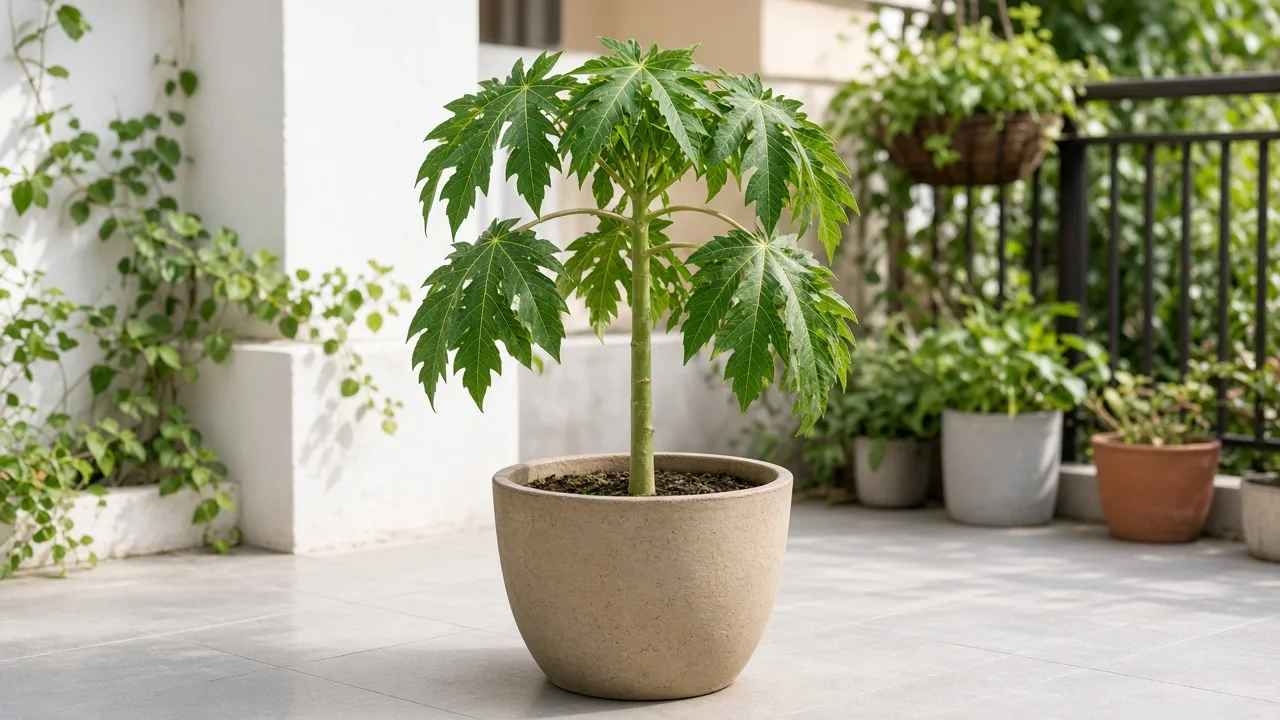
Drooping Leaves on Papaya: Causes, Checks & Fixes
This guide covers drooping leaves on Papaya. See also the general Drooping Leaves guide, watering, and light pages for this plant.
Drooping Leaves on Papaya: Causes, Checks & Fixes
Quick answer
Drooping leaves on Papaya (Carica papaya) are a turgor problem in a plant built like a giant soft herb, not a woody tree. Large lobed blades sit on soft petioles at the top of a succulent, unbranched stem, so when cells lose water pressure the whole crown hangs. That can come from true drought, from heat that outruns root supply for a few hours, or from roots sitting in oxygen-starved wet mix that can no longer take up water.
For the general mechanics of limp foliage across plants, see our drooping leaves hub. On Papaya, the useful tell is the pair of soft tissues you can check without unpotting: petiole flop plus trunk firmness, read against a finger-test of the top 5 cm of mix and whether the sag clears overnight.
First step: finger-test the top 5 cm of mix and press the trunk lightly near the soil line. Do not water from leaf drama alone. Wilted leaves may mean soil is too dry or too wet—rotating roots cannot move water even when the pot feels damp.
What drooping leaves look like on Papaya
A healthy Papaya holds a palm-like crown of deeply lobed leaves on stiff-enough petioles. When turgor drops, petioles bend and the leaf planes fold toward the trunk or hang like wet cloth.
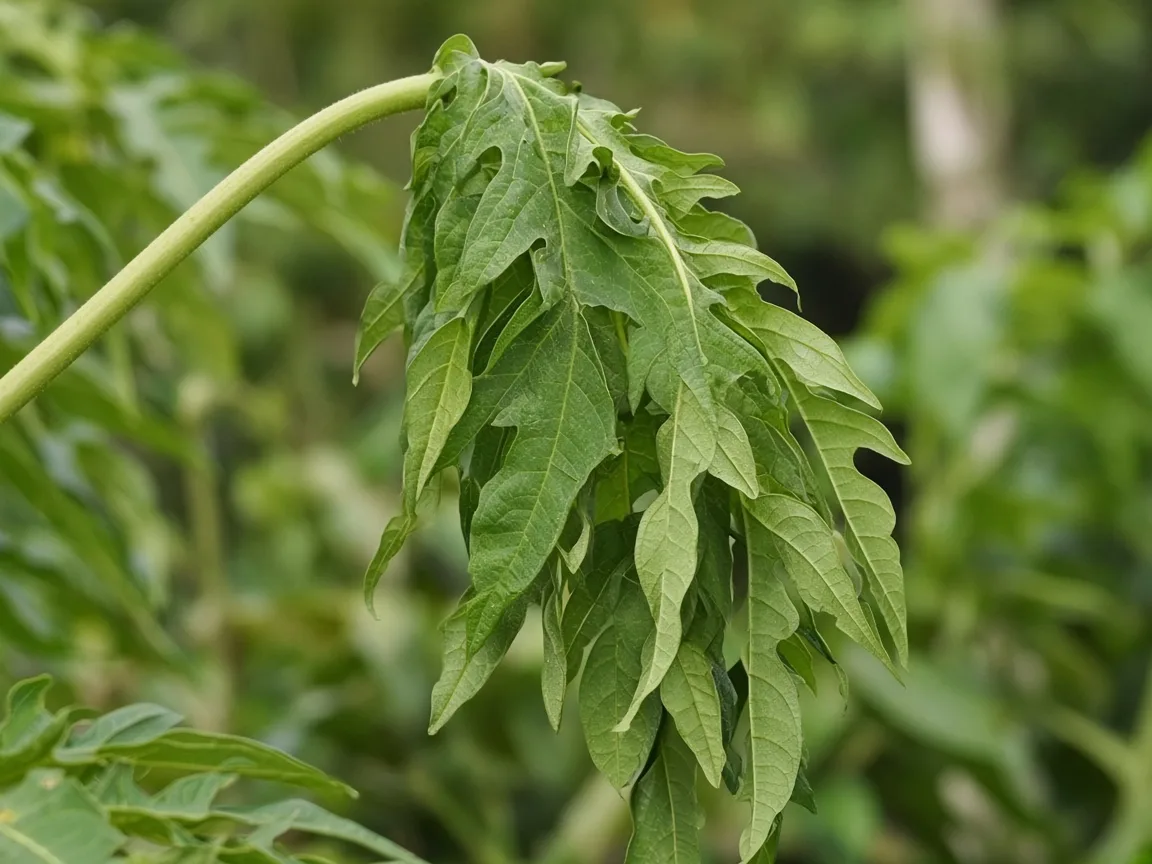
Drooping leaves on Papaya — soft petiole collapse with a still-green lobed blade; compare overnight recovery and trunk firmness before watering.
Typical patterns on this species:
- Whole-crown slump — Most leaves hang at once after missed watering, a heat spike, or chronically wet roots.
- Soft, flexible petioles — Petioles feel rubbery rather than crisp; blades may still be green early on.
- Lower older leaves first — Older crown leaves limp before the newest unfolding leaf when drought builds slowly.
- Midday sag that recovers by evening — Temporary heat wilt; overnight recovery with a firm trunk is reassuring.
- Overnight persistent droop — Still limp at dawn means moisture or root failure, not a brief sun spike.
Not the same as normal posture: A brand-new unfolding leaf can look soft for a day or two as it expands. True droop affects established open leaves that previously held their angle.
Soft petioles vs heat wilt vs root hypoxia
These three Papaya-specific paths look similar from across the patio. Separate them before you treat.
Soft-petiole turgor collapse (true thirst)
Papaya leaves are large and soft, so they evaporate a lot of water in warm weather. UF/IFAS notes that drought-stressed plants may drop flowers, leaves, and young fruit and set smaller, lower-sugar fruit. In containers, the top 5 cm often dries first while the crown still looks dramatic. Finger-test dry and a light pot confirm thirst.
Temporary midday heat wilt
Papaya loves heat and sun, and mild leaf wilt in hot weather can be tolerable when roots are still healthy. Transpiration peaks in bright midday; petioles soften, then firm again after evening cool-down if the mix still holds usable moisture. If the crown is upright again by morning and the trunk is firm, do not treat midday sag as an emergency watering cue.
Root hypoxia in soggy mix
Papaya needs steady moisture in soil that drains immediately. Saturated containers drive out oxygen; damaged roots cannot take up water, so the plant shows drought symptoms while the pot stays heavy and cool. Cool weather makes this worse—overwatering in cool spells is a classic Papaya failure mode—and Phytophthora root and stem rot can turn hypoxia into soft trunk collapse.
When to use this page vs other Papaya guides
Use this page when the crown is limp and you need a same-day dry-vs-wet decision.
- Papaya watering — routine evenly-moist schedule after the emergency is sorted
- Underwatering — chronic dry-down patterns, crispy edges, and missed drinks
- Overwatering — heavy wet pots, yellow lower leaves, and slow dry-down
- Root rot — mushy roots, sour smell, or soft trunk at the soil line
- Wilting — broader collapse language when stems and fruit also flag
- Papaya soil — mix recipes when drainage keeps failing
- Papaya light — full-sun placement that drives realistic water use
- Papaya problems hub — other pests and nutrient issues
How to confirm the cause
Work these checks in order before you tip the watering can.
- Finger-test the top 5 cm — Dry and dusty with a light pot = thirst. Cool, clinging, wet mix at 5 cm with a heavy pot = pause watering.
- Overnight recovery check — Mild midday sag that lifts by morning with a firm trunk is heat wilt. Persistent dawn droop needs moisture correction.
- Trunk firmness — Press gently near the soil line and a few centimetres up. Firm, springy green tissue is good. Soft, water-soaked, or constricted trunk tissue with rapid crown wilt is urgent—treat as possible stem/root rot, not a simple drink.
- Pot weight and drainage — Confirm holes are open and the saucer is empty. Timed lawn sprinklers or cachepots that hold water are a known way Papaya trees decline from chronic overwatering.
- Recent weather and light — Heat wave, move into full sun without acclimation, or a cool cloudy week with unchanged watering each change the dry-down rate.
- Root peek only if wet droop persists — If the crown stays limp after the surface should have dried and the trunk softens, unpot carefully. Papaya resents root disturbance, so only unpot when wet-root failure is likely.
First fix for Papaya
Finger-test the top 5 cm and check trunk firmness—then water or wait based on that reading, not on how sad the crown looks.
- If dry and the trunk is firm: Water deeply until excess drains, then empty the saucer. Shelter from harsh midday sun for 24 hours while turgor returns.
- If wet and the trunk is firm: Do not water. Improve airflow and brightness if the plant is shaded; wait until the top 5 cm is dry before the next drink.
- If the trunk is soft or water-soaked: Stop watering and escalate to root rot triage the same day—moisture correction alone will not firm rotten stem tissue.
Do not fertilize, prune half the crown, or jump to a much larger pot on day one. Those stack stress before you know whether the problem is thirst, heat, or hypoxia.
Step-by-step recovery
Thirst recovery (dry mix, firm trunk)
- Soak thoroughly once; if hydrophobic mix sheds water, bottom-soak 20–30 minutes, then drain fully.
- Keep the plant in warm full sun it already tolerates, but filter extreme afternoon blast for a day while leaves refill.
- Recheck in 12–24 hours—petioles should lift if thirst was the only issue.
- Resume an evenly moist rhythm per the watering guide: water when the top few centimetres dry, more often in heat on sandy mixes.
Heat-wilt management (firm trunk, overnight recovery)
- Confirm the mix is not bone-dry at 5 cm; if it is, treat as thirst.
- If moisture is adequate, leave watering alone and improve wind shelter so soft petioles are not sandblasted.
- Mulch outdoor plants 8–12 inches away from the trunk to buffer surface heat without burying the stem, as UF/IFAS recommends.
Wet-root recovery (heavy wet mix, firm trunk)
- Stop watering until the top 5 cm dries.
- Clear drainage holes; lift the pot out of any water-holding cachepot.
- If droop persists after appropriate dry-down, inspect roots and follow the root rot and overwatering guides—use a freely draining mix from the soil guide.
- Hold fertilizer until new crown leaves open firm.
Soft-trunk emergency
Unpot only if you are prepared to trim soft tissue and discard badly rotten plants. Phytophthora can cause rapid wilt once stem lesions girdle the trunk. Clean tools, dispose of severely infected plants, and restart in fresh, never-flooded media when salvage is unrealistic.
Recovery timeline
Simple thirst: Petioles often firm within 12–48 hours after a proper soak and drainage.
Heat wilt only: Crown angle should look normal again by the next morning.
Wet mix without major rot: Firmness may return over three to seven days as oxygen returns and the surface dry-down resumes.
Root or stem damage: Expect weeks, judged by firm new leaves at the crown and a stable trunk—not by old collapsed blades snapping back perfectly.
Worsening signs: Overnight limp crown after you corrected moisture, spreading yellow lower leaves on wet soil, sour smell, or softening trunk mean the root zone is still failing.
Lookalike symptoms
| What you see | Likely issue | Next page |
|---|---|---|
| Limp green crown, dry light pot | Thirst / underwatering | Water once, then set a dry-down rhythm |
| Limp crown, heavy wet pot | Overwatering / hypoxia | Stop water; check drainage |
| Soft trunk + rapid wilt | Root rot / Phytophthora | Same-day trunk and root triage |
| Yellow mottling, leaf distortion | Virus (e.g. ringspot), not simple droop | Remove infected plants; do not treat as drought |
| Crispy brown tips with mild sag | Edge scorch / uneven moisture | See brown tips after moisture is stable |
| Stretched weak growth in shade | Not enough light | Fix light; shade plants use water slowly and stay wet longer |
Mistakes to avoid
Do not water every time the crown softens at noon—confirm overnight recovery and the 5 cm finger-test first. Do not flood a cool-weather Papaya on a hot-weather schedule; root rot risk rises when growth slows.
Do not bury the stem deeper when you repot, and do not yank a root-bound nursery plant apart—Papaya roots are shallow and easily set back. Skip fertilizer and hard pruning while diagnosing turgor. Avoid leaving the pot in a saucer of water or on a lawn timer that keeps the root zone flooded.
How to prevent it next time
Match watering to how fast your container dries in full sun and heat. Sandy, fast-draining soils may need water every other day or daily in hot dry weather; moisture-holding loams need longer intervals so roots keep oxygen. Aim for the 21–32°C (70–90°F) growth window when possible—root growth slows below about 15.5°C (60°F), so cool pots stay wet longer.
Use a fertile, freely draining mix, open drainage holes, and a sunny, wind-sheltered spot. Recheck the top 5 cm after heat waves, cloudy cool weeks, and any move to a brighter terrace. Keep the Papaya overview care pattern—even moisture, never swamp—and most droop stays brief and reversible.
When to worry
Low urgency: Mild midday sag that lifts overnight, firm trunk, dry-to-moist mix on schedule.
Medium urgency: Dawn droop after a missed drink or a heavy pot that will not dry—correct moisture within a day.
Urgent same day: Soft or water-soaked trunk, sour soil with collapsed crown, or limp leaves that never recover after you fixed dry versus wet. Those patterns outgrow a simple watering tweak.
Conclusion
Papaya advertises water stress loudly because its soft petioles and oversized leaves lose turgor fast. Finger-test the top 5 cm, check trunk firmness, and separate temporary midday heat wilt from persistent overnight droop. Water only when thirst is confirmed; wait and aerate when the mix is wet; escalate the same day if the soft stem collapses. Steady moisture in a fast-draining root zone keeps the crown upright more reliably than any calendar.
Related Papaya guides
- Papaya overview — habit, warmth, and why this plant needs both moisture and oxygen
- Papaya watering — evenly moist dry-down checks after recovery
- Papaya light — full-sun placement that sets realistic water use
- Papaya soil — freely draining mixes that prevent hypoxia
- Papaya problems — full symptom index for this plant
- Overwatering on Papaya — wet-pot patterns behind limp crowns
- Underwatering on Papaya — chronic drought signs
- Root rot on Papaya — soft roots and trunk salvage steps
Related tool
Use the Plant Watering Calculator to estimate a Papaya watering interval from pot size, light, and season—then still confirm with the 5 cm finger-test before every drink.