Distorted Leaves on Peace Lily: Causes, Checks & Fixes
Quick answer
Distorted peace lily leaves—twisted, wrinkled, or uneven unfurling—usually mean sucking pests on new growth, cold damage during unfurl, or physical snag in the crown. First step: inspect the newest center spear and its underside before you change water or fertilizer.
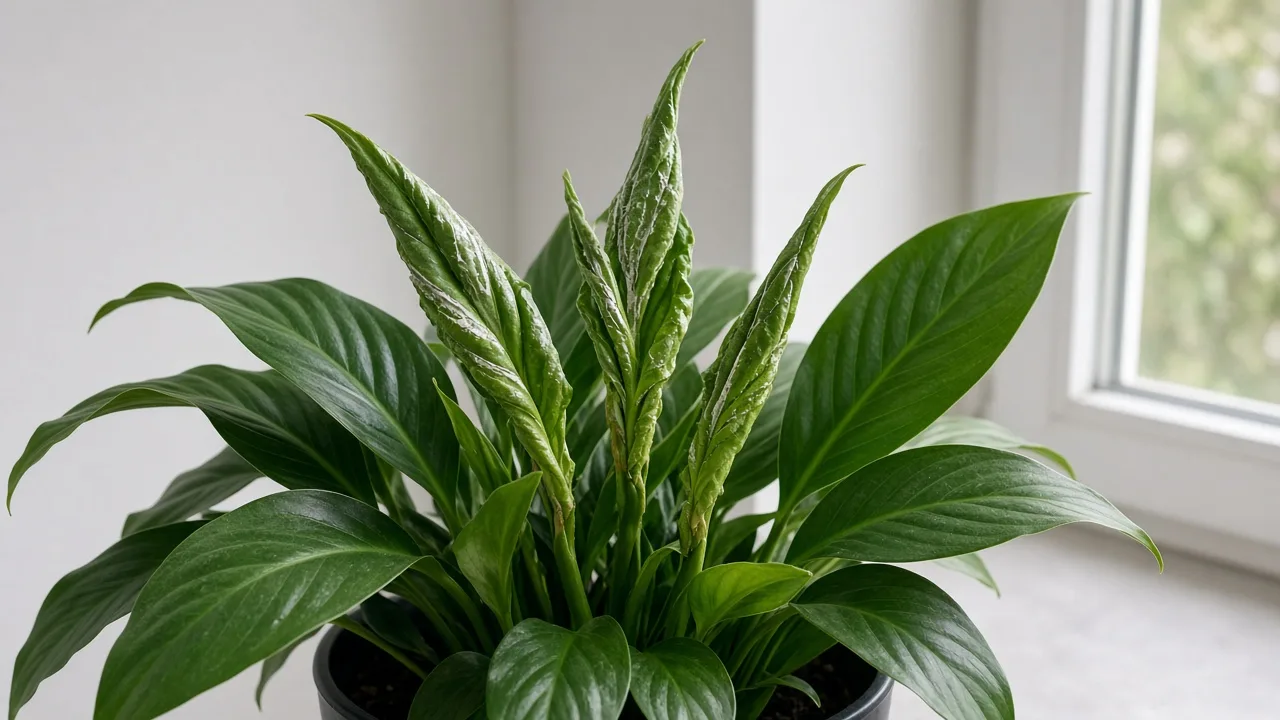
Distorted Leaves on Peace Lily: Causes, Checks & Fixes
This guide covers distorted leaves on Peace Lily. See also the general Distorted Leaves guide, watering, and light pages for this plant.
Distorted Leaves on Peace Lily: Causes, Checks & Fixes
Quick answer
Distorted leaves on peace lily—twisted, wrinkled, cupped unevenly, or stuck partially unfurled—point to damage during new growth formation, not old mature blades. The top causes are sucking pests on emerging spears (thrips, aphids), cold exposure while leaves unfurl, fertilizer burn on stressed roots, and physical crowding in the dense crown.
First step: Gently examine the newest center spear and the leaf just below it—undersides included. Silvery streaks or tiny insects → pests. One crooked leaf after a cold night → environment. Wrinkled spear stuck in the clump → mechanical.
For general distortion mechanics, see our distorted leaves guide. On peace lily, new blades emerge rolled tightly from the clump crown—any pest or cold hit during that 48-hour unfurl window locks distortion into the mature leaf permanently.
Route to curling leaves for margin roll on fully open blades, and holes in leaves for chewing damage.
When to use this page vs other peace lily guides
| Pattern | Start here | Or route to… |
|---|---|---|
| Twist/wrinkle on new unfurling spears | This page | Thrips |
| Even inward curl on open leaves | Curling leaves | Low humidity |
| Chewed holes | Holes in leaves | Caterpillars |
| Pale, small new leaves | Pale leaves | Not enough light |
| Stunted whole plant | Slow growth | Root or light check |
What distorted leaves look like on Peace Lily
Mature peace lily blades are smooth, lance-shaped, and glossy. Distortion appears on new growth:
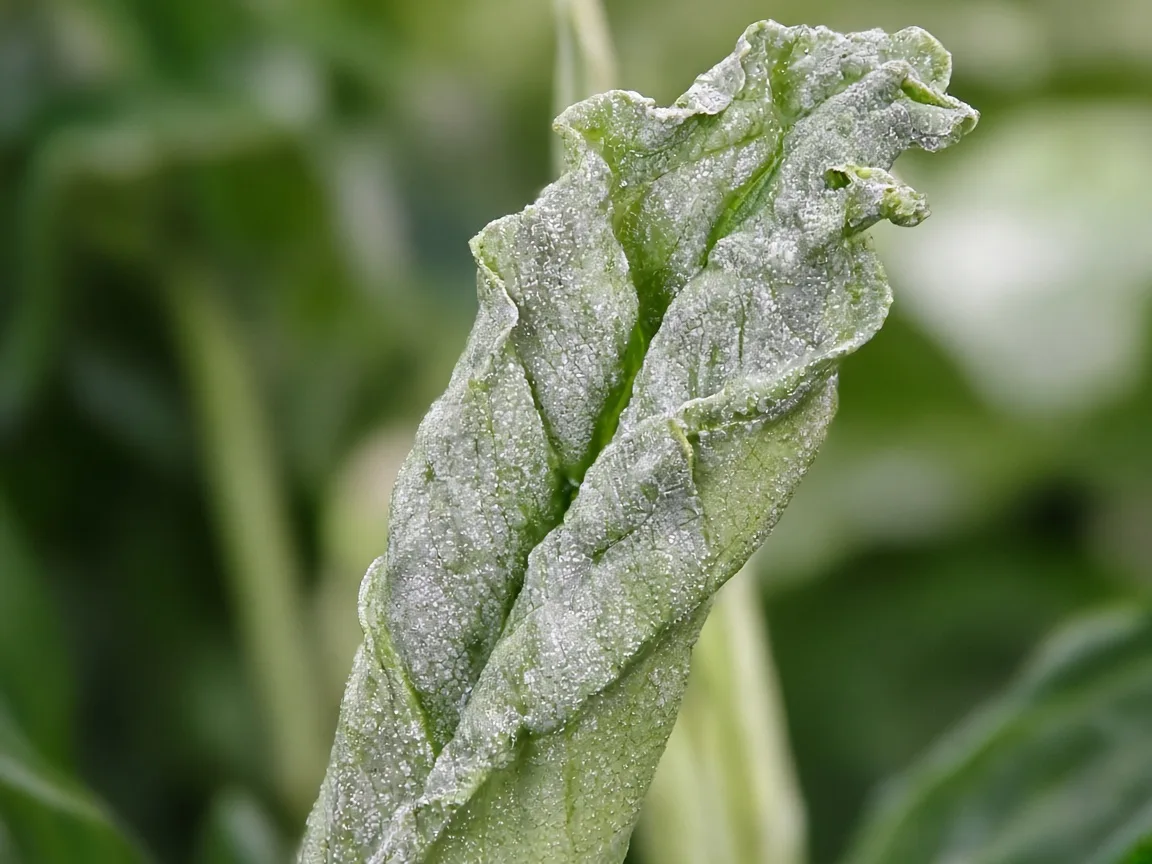
Twisted, wrinkled peace lily spear with silvery scar tissue—damage locked in during the unfurl window on new crown growth.
Thrips damage — Silver-gray scars, brown streaks, and twisted or ruffled unfurling spears. Damage concentrated on youngest tissue. See thrips.
Aphid clustering — Curled, puckered new leaves with sticky honeydew; insects visible on tender shoots. Clemson lists mealybugs and other pests on peace lily—aphids follow similar new-growth pattern.
Cold warp — Asymmetric wrinkles or translucent patches on a spear that unfurled during a cold snap. Missouri Botanical Garden notes cold below 40°F damages peace lily leaves and stems.
Fertilizer distortion — Scorched, narrow, or crinkled new leaves after heavy feed on dry or damaged roots. Over-fertilizing burns peace lily tips and roots; Clemson recommends quarter-strength only.
Mechanical snag — One leaf wrinkled along a crease where it caught on an older petiole during unfurl—no spread to subsequent spears.
The 48-hour unfurl window (peace lily only)
Peace lily does not produce leaves continuously like some vines—it pushes spears from the central crown that take roughly one to three days to unroll into full blades. Pests, cold, or physical obstruction during that window permanently shapes the leaf. Owners who only inspect open foliage miss thrips hiding in the rolled spear—the species-specific place to look is inside the tightest new cylinder before it opens.
Diagnosis traps on peace lily
Curling vs distortion — Curling leaves on fully open blades usually means thirst, mites, or dry air. Distortion means the spear itself unfurled crooked—check the center crown, not only mature foliage.
One crooked leaf after repot — Root disturbance plus crowding can snag a single new spear. If the next two center leaves open flat, no pesticide is needed. Persistent scarring on every new spear points to thrips or repeated cold hits.
Overwatering stunting — Severe root damage produces small, pale, misshapen new leaves—not the silver-streak twist typical of thrips. Pair distortion with wet mix smell before assuming pests.
Why Peace Lily leaves distort
Pests target soft new tissue because cell walls are thin during expansion. Peace lily’s clumping crown concentrates new growth in one tight zone—easy for thrips to colonize.
Cold slows cell expansion unevenly during unfurl, leaving permanent warp.
Salt or fertilizer shock on drought-stressed or waterlogged roots damages emerging cells first.
Crowded pot-bound clumps physically constrain spears—more common on mature, root-tight plants Clemson notes peace lily likes to be somewhat pot-bound but extreme crowding can snag unfurling leaves. RHS advises bright indirect light for strong peace lily growth—weak slow growth in dim rooms makes new spears more vulnerable to pest scarring during unfurl.
Confirm the cause in five checks
- Newest spear: Unroll gently (do not force)—look for insects, silver streaks, or crease lines.
- Underside of tender growth: Sticky residue → aphids; specks moving → thrips.
- Temperature history: Cold window night during unfurl?
- Feed history: Full-strength fertilizer in last two weeks?
- Pattern spread: Every new spear vs one isolated crooked leaf?
- Soil moisture: Wet + distorted + dull → root check before pesticide.
First fix by confirmed cause
| Confirmed cause | First fix | Follow-up |
|---|---|---|
| Thrips | Isolate; rinse center spears | Thrips protocol |
| Aphids | Rinse tender shoots; isolate | Aphids |
| Cold warp | Stable warmth off glass | Wait for next spear before pruning |
| Fertilizer burn | Flush soil with room-temp water; hold feed | Fertilizer when recovered |
| Mechanical | Free snag; space crowding if severe | Repotting if root-bound |
| Root stress | Dry-down; inspect if smell | Overwatering |
One action first: rinse and inspect new spears before broad spraying.
Recovery timeline
| Phase | Timing | Improvement | Worsening |
|---|---|---|---|
| Post-rinse (pests) | Days 3–7 | Next spear cleaner | Each new spear still scarred |
| Post-cold | Weeks 2–4 | Normal unfurl on new spear | Repeated cold nights |
| Cosmetic | Ongoing | Old twisted leaves remain | Crown collapse → roots |
Distorted open leaves do not straighten. Clean unfurling spears are the marker.
What not to do
- Do not pull stuck spears forcefully—tear the crown.
- Do not fertilize distorted, stressed plants to “fix” shape.
- Do not spray oil on sun-stressed or hot-window plants without shade and label check.
- Do not assume distortion is viral—pests and environment are far more common indoors.
How to prevent distorted leaves on Peace Lily
- Inspect center spears weekly during spring growth.
- Keep stable 65–85°F away from winter glass and AC blasts.
- Feed quarter-strength only on healthy plants in growing season.
- Quarantine new plants before placing near peace lily clumps.
- Maintain watering when top few centimetres of mix dry and light so new growth is vigorous but not stressed.
See peace lily overview and problems hub.
Related Peace Lily guides
- Thrips — silver scars on new spears
- Aphids — puckered tender growth
- Curling leaves — open-blade cupping
- Holes in leaves — chewing vs twist
- Pale leaves — small pale new growth
- Peace lily fertilizer — safe feeding rates
Conclusion
Distorted peace lily leaves are a new-growth inspection problem. Check the tightest center spear for thrips, aphids, cold history, and mechanical snags before changing water chemistry. One crooked leaf after a cold night may be followed by a perfect next spear; every new spear scarred means pests or repeated stress. Judge recovery by the next clean unfurl, not old twisted blades.
Related tool
Use the Plant Problem Diagnosis Tool to narrow causes for distorted leaves on this plant before changing multiple variables at once.