Slow Growth on Peace Lily: Causes, Checks & Fixes
Quick answer
Slow growth on Peace Lily is normal in deep shade or cool winter months-but a stall with no new leaves for weeks in warm weather usually means insufficient light, drought stress, or a root-bound pot. First step: move to bright indirect light 30–60 cm back from an east window and confirm the top 3–5 cm of mix dries between thorough waterings.
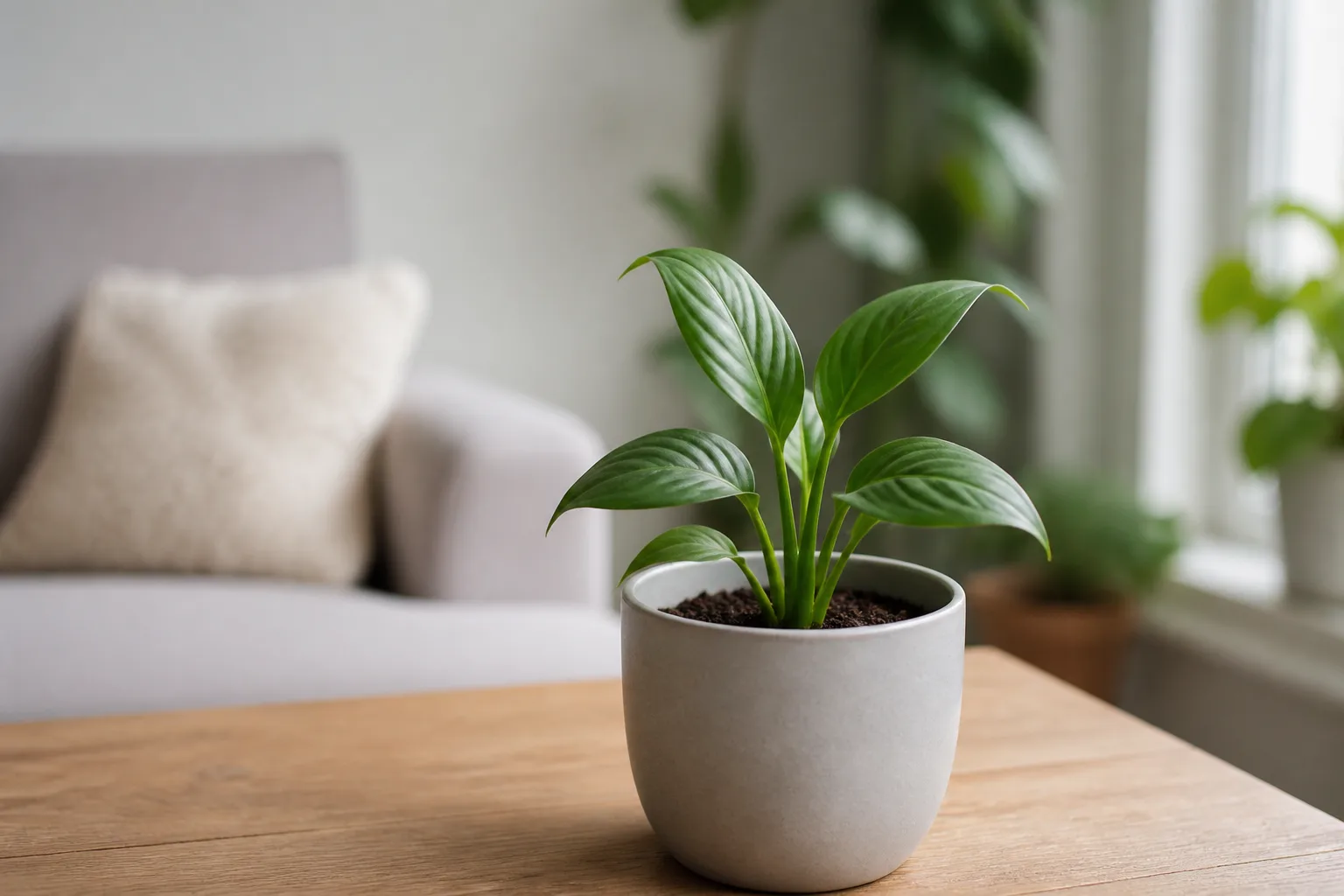
Slow Growth on Peace Lily: Causes, Checks & Fixes
This guide covers slow growth on Peace Lily. See also the general Slow Growth guide, watering, and light pages for this plant.
Slow Growth on Peace Lily: Causes, Checks & Fixes
Quick answer
Slow growth on Peace Lily (Spathiphyllum wallisii and common hybrids) is often normal-not a crisis. In deep shade or cool winter months, these understory tropical aroids conserve energy and may add only a few new leaves per season. A problem stall is different: no new center leaves for six or more weeks while room temperatures stay warm, older foliage yellows, soil stays wet for weeks, or the crown looks smaller than last year.
First step: move the pot to bright indirect light 30–60 cm (12–24 inches) back from an east-facing window, or 1–2 metres from a south- or west-facing window filtered by sheer curtains. Then confirm the top 3–5 cm of mix dries between thorough waterings.
Scope note: This page is your growth-expectations and stall-triage guide-distinguish normal slowness from fixable stalls, confirm the cause with a numbered checklist, and recover without overfertilizing or upsizing the pot. For everyday light ranges and window placement, use the Peace Lily light guide. For pale stretched stems after light is corrected, see leggy growth. For wet soil in a dim corner, start with not enough light and overwatering.
Slow growth vs leggy stretch vs not enough light on Peace Lily
All three problems often share insufficient photons, but owners search them for different reasons. Use this page when you need to know whether slowness is normal, how many new leaves to expect, or light vs. repot vs. root-rot triage-not when you are only auditing window placement.
| Your main question | Start here | Also check |
|---|---|---|
| Is my peace lily growing too slowly, or is this normal? | This page - growth expectations and stall triage | Not enough light if placement is unconfirmed |
| Long petioles, lean toward glass, wide leaf gaps | Leggy growth - etiolation and pruning | This page for normal-vs-problem slowness context |
| Pale leaves, no spathes, wet soil in a dim corner | Not enough light - placement audit | This page once you know the room is dim but growth still stalls after relight |
| Firm green leaves, cool room, short winter days | This page - winter rest section | No urgent fix unless soil stays wet |
| Soft stems, sour smell, yellowing on wet mix | Root rot - same-day unpot | This page for stall context only |
Improving light addresses slow growth and missing spathes together. Judge recovery by new center-leaf emergence, not by old tissue re-greening.
What slow growth looks like on Peace Lily
Normal slowness (shade-tolerant compact growth, winter rest)
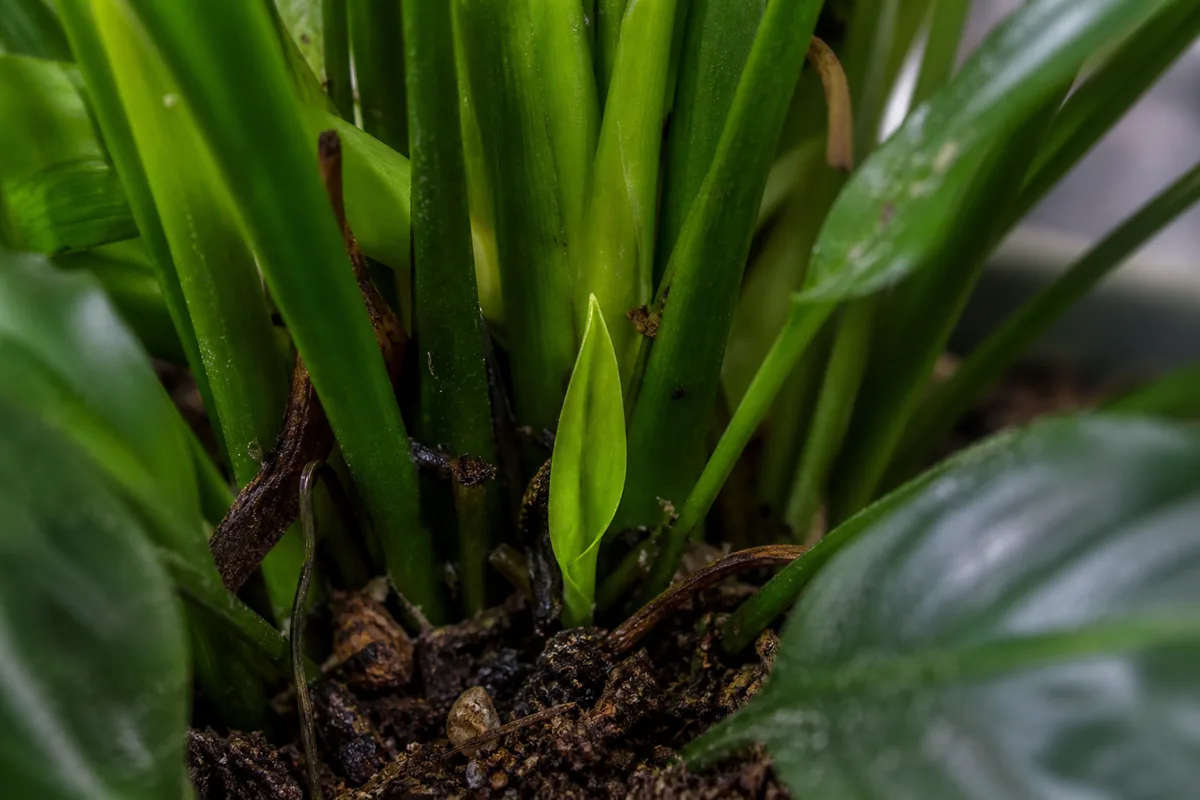
Slow Growth symptoms on Peace Lily - compare with healthy tissue on the same plant.
Normal slow growth on Spathiphyllum looks stable, not declining:
- Compact dark green leaves with short petioles and no lean toward one window
- One to three new leaves per growing season in moderate indirect light-or fewer in deep shade
- No white spathes for months in dim rooms, even when foliage looks lush
- Winter pause when days shorten and room temperatures drop: growth may stop entirely from late fall through early spring without harm
- Post-repot pause of one to two weeks while roots settle-expected, not a failure
Peace lilies survive in deeper shade but rarely flower and grow very slowly. That is shade tolerance working as designed-not a disease. Compact tabletop cultivars like ‘Little Angel’ and ‘Wallisii’ reach 12 to 15 inches tall; do not expect a dwarf to behave like a 3-foot ‘Mauna Loa’.
Photo confirmation cues: A healthy shade-survivor crown shows tight dark-green blades clustered at the soil line, short petioles with no directional lean, and no yellowing lower leaves dropping faster than the crown replaces them. A problem stall adds shrinking crown size, pale or absent new center leaves, or wet soil that never dries between waterings.
Problem slowness (no new leaves for weeks in warm weather)
Problem slowness adds decline signals on top of stalled growth:
- No emerging center leaf for six or more weeks while indoor temperatures stay above 18°C (65°F)
- Smaller, paler new blades compared with older leaves-or no new blades at all
- Yellowing lower leaves dropping faster than the crown replaces them
- Soil wet one to two weeks after watering because transpiration slowed in low light
- Pot feels light days after watering (drought stress) or roots circling through drainage holes (uptake limit)
- Missing spathes for a full year after the plant previously bloomed in the same spot-often a light stall, not age
Judge the plant against its last six months, not against fast tropicals like pothos. On a clumping aroid, no center leaf for six weeks in warm weather is a sharper stall signal than on a vining pothos that may pause between nodes without crown shrinkage.
Leggy stretch vs. true slow growth
| Pattern | Petiole length | New leaf size | Lean | Typical cause |
|---|---|---|---|---|
| True slow growth | Short to moderate | Small but proportional | Little or none | Deep shade survival mode, winter rest, recent repot |
| Leggy stretch | Long and thin | Smaller blades, wide gaps | Strong toward window | Insufficient light while plant searches for photons |
| Root-bound stall | Normal | Normal or smaller | None | Crowded roots limit water and nutrient uptake |
| Overwatering stall | Normal | Stunted or absent | None | Wet roots cannot support new tissue-see root rot |
Both slow growth and leggy stretch often share low light, but leggy plants are actively reaching while slow growers conserve. If petioles lengthened after a move to a darker corner, read leggy growth after you improve placement.
Why Peace Lily gets slow growth
Insufficient light and deep-shade survival mode
Light is the number-one growth limiter indoors. Peace lilies tolerate low light but grow best in bright indirect exposure-and should not sit in direct sun because heat scorches foliage. In dim corners, the plant stays alive by expanding chlorophyll capture area with large dark leaves while metabolism drops. New center leaves arrive rarely; spathe production stops.
The low-light wet-soil loop matters: dim rooms slow transpiration, so mix stays damp longer. Owners who water on a calendar schedule keep roots chronically wet while blaming “slow growth” on fertilizer. Fix light and watering together-not feed alone.
Underwatering and drought stress
Peace lilies wilt dramatically when dry, then recover-but repeated drought cycles stall new leaves. Soil should stay moist but not soggy, allowed to dry slightly between waterings. If the top 3–5 cm turns dust-dry for days and leaves droop between every cycle, roots cannot sustain new tissue. Drought-stressed crowns push no center leaves until water rhythm stabilizes.
Root-bound pots limiting uptake
Peace lilies like to be slightly pot-bound, but when roots grow through drainage holes or circle on the soil surface, water runs straight through and the plant cannot take up enough to fuel new leaves. The RHS notes that compost drying out very quickly after watering may signal rootbound conditions needing spring repotting.
Overwatering and root rot stalling new leaves
Constant soggy soil rots fine roots. The crown may look green while the root system fails-no new leaves emerge because the plant lacks functional uptake. This pattern overlaps dim corners where soil never dries. If mix smells sour or stems soften at the base, treat as overwatering or root rot, not a light fix alone.
Cold drafts and low humidity
Peace lilies prefer warm daytime temperatures between 68 and 85°F with nights about 10°F cooler. Exposure below 60°F can cause cold damage and stall growth. Hot or cold air blowing directly from HVAC vents damages foliage and slows metabolism. Dry winter air browns leaf edges and adds stress that diverts energy from new leaves-see low humidity if margins crisp.
Nutrient deficiency vs. overfertilization
Peace lilies need very little fertilizer-one-quarter of the recommended strength balanced liquid every six to eight weeks in spring and summer. Chronic underfeeding in the same pot for years can limit new leaf size, but overfeeding is more common indoors and causes brown tips, salt crust, and stunted roots. Magnesium deficiency can stunt plants with yellowing between veins, but light and water mistakes mimic nutrient problems. Read the fertilizer guide only after light and watering are stable.
Case note (February 2026 grower log): A peace lily stalled six weeks on a north-facing interior shelf-firm green leaves, no center emergence, soil drying in 10–12 days. After relocation to 45 cm back from an east window with corrected watering when the top 3–5 cm dried, the first new center leaf appeared in 18 days. A white spathe followed 11 weeks later on a mature clump.
How to confirm the cause
Work through this checklist in order. Stop when one cause is clearly confirmed.
- Season and temperature - Is it late fall or winter in a cool room (below 18°C / 65°F)? Winter slowness on firm leaves is often normal. Warm-room stalls need investigation.
- New leaf count - Has any center leaf emerged in the last six weeks? None in warm weather signals a stall, not rest.
- Light audit - At midday, does your hand cast a soft fuzzy shadow at leaf height toward the window? Almost no shadow means deep shade. Use the light guide foot-candle targets: roughly 150–300 foot-candles supports steady foliage per UF/IFAS home guidance; below 100 fc often means survival mode.1
- Soil moisture - Press finger 3–5 cm deep. Dust-dry for days → drought stress. Wet and cold for a week+ → overwatering risk. Slow dry-down in dim light → light and water loop.
- Pot weight - Light pot days after watering → underwatering or root loss. Water runs through instantly → rootbound or hydrophobic mix.
- Root-hole inspection - Peek through drainage holes. White firm tips with room to grow → roots OK. Dense circling mat → repot candidate.
- Spathe history - Bloomed last year in this spot but not this year? Light stall likely before nutrient diagnosis.
- Stem firmness - Soft base with sour smell → root disease; escalate to root rot workflow.
Stall-type decision table
| Stall pattern | Urgency | First action | Escalate if… |
|---|---|---|---|
| Firm leaves, cool room, short days | Wait | No feed; reduce water frequency | Soil stays wet or yellowing spreads |
| Compact crown, dim room, no lean | Relight | Move to bright indirect; fix dry-down | No center leaf in 6+ weeks after relight |
| Long petioles, lean, small new leaves | Relight + prune later | Brighter spot first; see leggy growth | Stretch continues after relight |
| Water runs through, roots in holes | Repot in spring | One size up; free-draining mix | Decline continues after repot |
| Wet soil weeks, yellow lower leaves | Dry + relight | Stop calendar watering; see overwatering | Sour smell or soft stems |
| Sour smell, soft stem base | Unpot same day | Root rot protocol | Spreading mush after trim |
Lookalike comparison
| If you see… | Likely cause | Check next |
|---|---|---|
| Compact plant, few leaves, no lean, dim room | Normal shade slowness or light stall | Light audit; compare to not enough light |
| Long petioles, lean, small new leaves | Leggy stretch from low light | Leggy growth after relight |
| Wet soil weeks, yellow lower leaves | Overwatering in slow-transpiration spot | Overwatering |
| Dry soil, droop between waterings | Underwatering | Water when top 3–5 cm dries |
| Water runs through, roots in holes | Root-bound | Repotting in spring |
| Firm leaves, cool room, short days | Winter rest | Wait for spring; avoid forcing feed |
| Brown tips, white soil crust | Overfertilization | Fertilizer mistakes section |
| Pale streaked leaves, dim room, no new growth | Variegated ‘Domino’ low-chlorophyll stall | Brighter indirect than solid-green siblings need |
First fix for Peace Lily
Move to brighter indirect light before repotting or fertilizing.
Relocate to 30–60 cm back from an east window, or filtered bright exposure 1–2 metres from south or west glass-never direct sunbeams. Acclimate over one to two weeks if jumping from a very dim corner; sudden hot-window moves scorch shade-adapted leaves.
After light improves:
- Correct watering - Water thoroughly when the top 3–5 cm dries, or when leaves first droop if you prefer the wilt signal. Never let the pot sit in saucer water.
- Repot in spring only if roots circle - Choose a container one to two inches larger with free-draining mix; see repotting guide. Wear gloves-peace lilies are toxic to cats and dogs and sap irritates skin.
- Pause fertilizer until a firm new center leaf appears-then quarter-strength feed per fertilizer guide.
Do not upsize the pot to “encourage growth.” Oversized containers stay wet too long and stall roots further-a peace lily in an oversized pot stalls faster than a succulent in the same mistake because the aroid crown needs steady moisture without chronic saturation.
Step-by-step recovery
- Audit light using shadow test or meter; move one step brighter, not into direct sun.
- Establish dry-down rhythm - track how many days until top 3–5 cm dries in the new spot; adjust schedule to location, not calendar.
- Inspect roots through drainage holes; schedule spring repot only if circling is dense.
- Remove spent yellow leaves at the base to reduce pest hiding spots; bag debris away from pets.
- Wait for center leaf - recovery is measured by new emergence from the crown, not old leaf re-greening.
- Add grow light if no suitable window-15–30 cm above foliage, 12–14 hours daily, per light guide.
- First dilute feed only after step 5 succeeds and soil cycles normally for two weeks.
Recovery timeline
| Situation | What to expect |
|---|---|
| Mild light stall, firm roots | First new center leaf in 2–4 weeks after relight and corrected watering |
| Deep-shade survivor | 4–8 weeks for visible new growth; spathes may take 2–3 months |
| Spring repot | 1–2 week pause, then new leaves if roots were healthy |
| Root rot recovery | Weeks to months; may never match previous vigor-see root-rot guide |
| Winter rest | Growth resumes when days lengthen and temperatures rise-no forced feed |
Brown or yellow old tissue does not re-green. Success means the problem stops spreading and new leaves emerge clean.
What not to do
- Do not fertilize a stressed plant to force growth-salt burn follows on peace lilies.
- Do not repot into a much larger pot hoping for a growth spurt; wet mix stalls roots.
- Do not move into direct sun for “more energy”-shade-adapted leaves scorch in hours.
- Do not keep watering on a fixed schedule when light changes; dry-down rate shifts with transpiration.
- Do not compare to fast growers-even healthy peace lilies are moderate-paced clumping aroids.
- Do not ignore wet soil in a dim corner-fix light and drainage together.
How to prevent slow growth on Peace Lily
- Keep bright indirect light year-round; accept slower pace in north rooms or add supplemental lighting.
- Water when top 3–5 cm dries; reduce frequency in winter when growth slows.
- Feed at quarter strength every six to eight weeks in active growth only-see fertilizer guide.
- Repot when roots crowd drainage holes, not on a fixed annual schedule; peace lilies tolerate slight pot-binding.
- Maintain warm stable temperatures away from HVAC drafts; avoid prolonged exposure below 60°F.
- Dust leaves monthly so light reaches chlorophyll efficiently.
Variegated cultivar note: Forms like ‘Domino’ carry less chlorophyll per leaf and often need slightly brighter indirect light than solid-green siblings to sustain new leaves in the same room-without moving into direct sun, which burns pale streaks faster. If a variegated peace lily stalls while a green sibling thrives on the same sill, step the variegated plant one placement brighter per the light guide.
Realistic indoor benchmark: a well-placed peace lily may add several leaves per growing season and one to two spathe cycles-not weekly shoots.2 Compact cultivars stay smaller by biology, not by failure.
When to worry
Escalate if slow growth pairs with soft stems at the soil line, sour-smelling mix, spreading pests, or continued decline after light and water are corrected. Sour smell or mushy stem base requires same-day unpot per the root rot protocol-do not wait for a center leaf that will not arrive on rotting roots.
Stable slow growth on firm green leaves in a dim but healthy office is often an acceptable lifestyle choice if you accept fewer spathes and slower crown expansion. Intervene when decline signals appear, not merely because the plant is not a pothos.
For chronic wet-soil stalls, read overwatering and root rot. For placement audits, use not enough light.
How this page fits the Peace Lily cluster
| Your question | Best page |
|---|---|
| Is slow growth normal, or is my plant stalled? | This page |
| Long petioles after light is fixed; how far to prune | Leggy growth |
| Is my room too dim? Window placement audit | Not enough light |
| Foot-candles, windows, grow lights long term | Light guide |
| Wet soil in a dim corner | Overwatering |
| Sour smell, soft stems | Root rot |
Related Peace Lily guides
- Peace lily overview - species hub
- Light needs - foot-candles, windows, grow lights
- Watering - dry-down rhythm after light changes
- Fertilizer - quarter-strength feeding rules
- Repotting - when circling roots need a new pot
- Not enough light - placement diagnostic
- Leggy growth - stretched petioles after relight
- Overwatering - wet soil in dim corners
- Root rot - soggy-soil stalls
- Underwatering - drought stalls
Your escalation checkpoint
Before you leave this page, decide which path fits:
- Wait - Firm green leaves, cool room, short winter days, soil cycling normally. Resume scouting in spring; do not force feed.
- Relight - No center leaf for six+ weeks in warm weather, or spathe absence after prior blooms in the same spot. Move to bright indirect first; judge success on the next center leaf in 2–4 weeks.
- Unpot same day - Sour smell, soft stem base, or mush when you probe drainage holes. Follow root rot before more light or fertilizer.
If you relit and corrected watering but see no center leaf in eight weeks on firm roots, inspect through drainage holes and consider spring repot-not another fertilizer round.
FAQs
Is it normal for my Peace Lily to grow slowly?
Yes, in dim rooms and winter. Peace lilies in deeper shade survive but rarely flower and grow very slowly-even when otherwise healthy. A problem stall is different: no new center leaves for six or more weeks while room temperatures stay above 18°C (65°F), soil stays wet for weeks, or older foliage yellows and drops. Compare your plant to its last season, not to fast-growing pothos.
How do I tell slow growth from leggy stretch on Peace Lily?
True slow growth means compact crowns with long gaps between new leaves but short petioles-the plant is conserving energy in low light. Leggy stretch adds long thin petioles reaching toward windows, wide spacing between blades, and lean. Both often share insufficient light, but leggy plants are actively searching for photons. If stems are long and leaves small, read the leggy growth guide after you improve placement.
Should I repot or move my Peace Lily to brighter light first?
Move to brighter indirect light first unless roots are circling through drainage holes or the pot dries out within one to two days after every watering. Repotting pauses growth for one to two weeks while roots settle. Light correction costs nothing and addresses the most common stall. Repot in spring only when roots are densely packed, using a pot one size larger-not a big jump.
Will fertilizer make a stalled Peace Lily grow faster?
Not as a first fix. Peace lilies need very little fertilizer, and overfeeding burns leaf tips and roots. Feed only after light and watering are corrected and you see firm new center leaves-at one-quarter label strength every six to eight weeks in spring and summer. Never fertilize a drought-stressed, root-damaged, or recently repotted plant hoping to force growth.
When is slow growth urgent on Peace Lily?
Act within days if stems soften at the soil line, mix smells sour, pests spread across multiple leaves, or the plant keeps declining after you corrected light and watering. Slow growth paired with chronic wet soil in a dim corner often means root stress, not mere patience-see overwatering and root rot guides. Pure winter slowness on firm green leaves in a cool room is usually not urgent.
Related tool
Use the Plant Problem Diagnosis Tool to narrow causes for slow growth on this plant before changing multiple variables at once.
Footnotes
-
Editorial note: Home foot-candle bands (150–300 fc steady foliage; below 100 fc survival mode) synthesize UF/IFAS commercial production thresholds with home bright-indirect guidance from the Peace Lily light guide. They are practical placement targets, not a single extension table for container specimens. ↩
-
Editorial note: Leaf-per-season and spathe-cycle benchmarks are practical indoor ranges synthesized from extension growth guidance and clumping-aroid habit-not a published extension table for every cultivar. ↩