Low Humidity on Pearls and Jade Pothos: Causes, Checks &
Quick answer
Dry winter air and heat vents crisp the small variegated leaves of Pearls and Jade Pothos faster than on larger pothos. First step: move the plant off the vent and check a hygrometer-rule out underwatering before adding humidity.
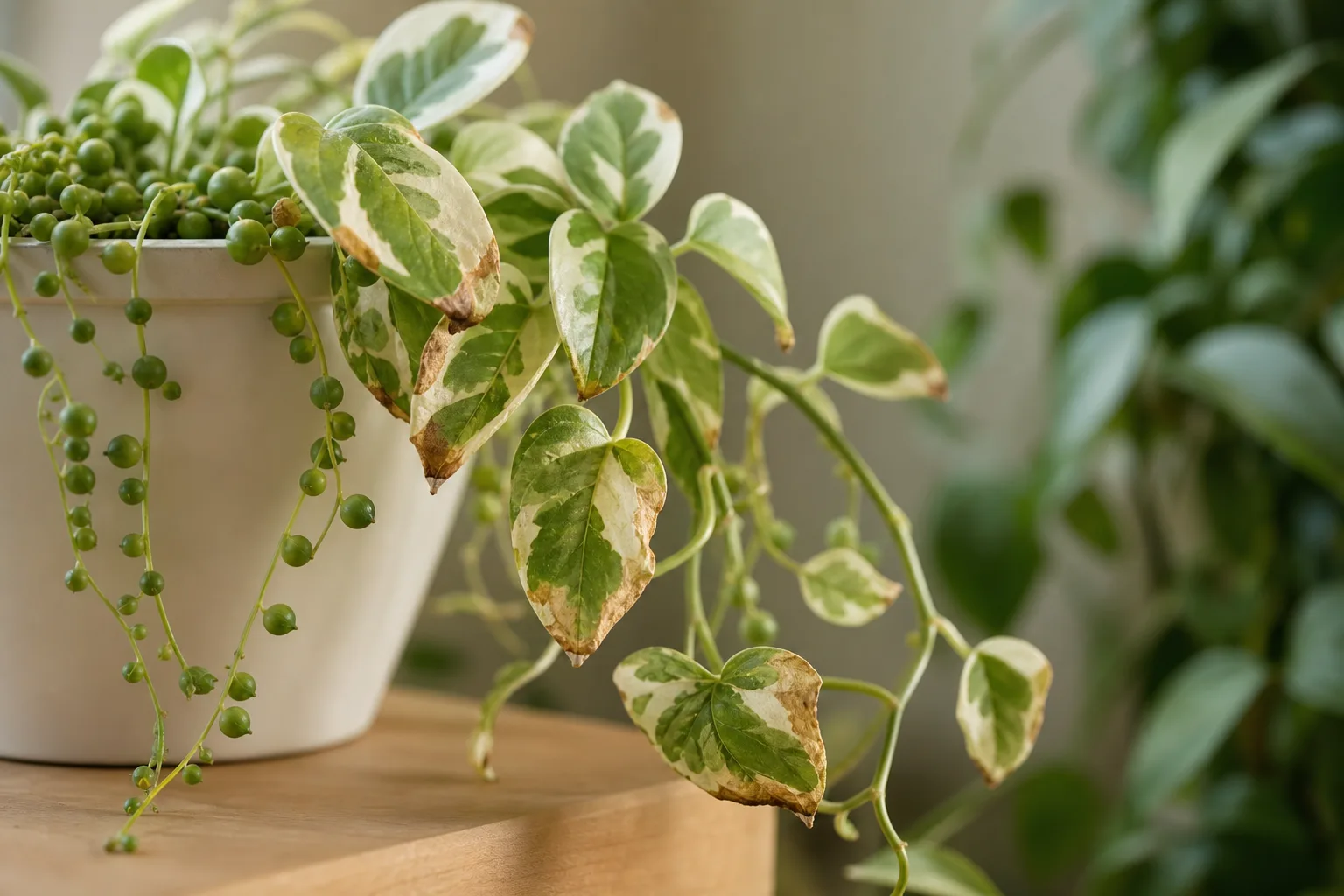
Low Humidity on Pearls and Jade Pothos: Causes, Checks & Fixes
This guide covers low humidity on Pearls and Jade Pothos. See also the general Low Humidity guide, watering, and light pages for this plant.
Low Humidity on Pearls and Jade Pothos: Causes, Checks & Fixes
Quick answer
Low humidity on Pearls and Jade Pothos (Epipremnum aureum ‘Pearls and Jade’) usually shows as crispy brown edges on small variegated leaves-not a disease, but dry air pulling moisture from thin leaf margins faster than the roots replace it. Winter heating, air-conditioning blow, and placement above radiators drop room humidity well below what this tropical cultivar handles comfortably.
First step: move the plant away from heat vents and cold window glass, then read a hygrometer at pot level. Pearls and Jade tolerates average homes, but the white portions of its leaves brown first when air stays chronically dry. Confirm humidity is actually low before misting or buying equipment-and rule out underwatering, because drought crisping looks almost identical on the leaf edges.
What low humidity looks like on Pearls and Jade Pothos
On this cultivar, dry-air damage is subtle at first and cosmetic at worst. Watch for:
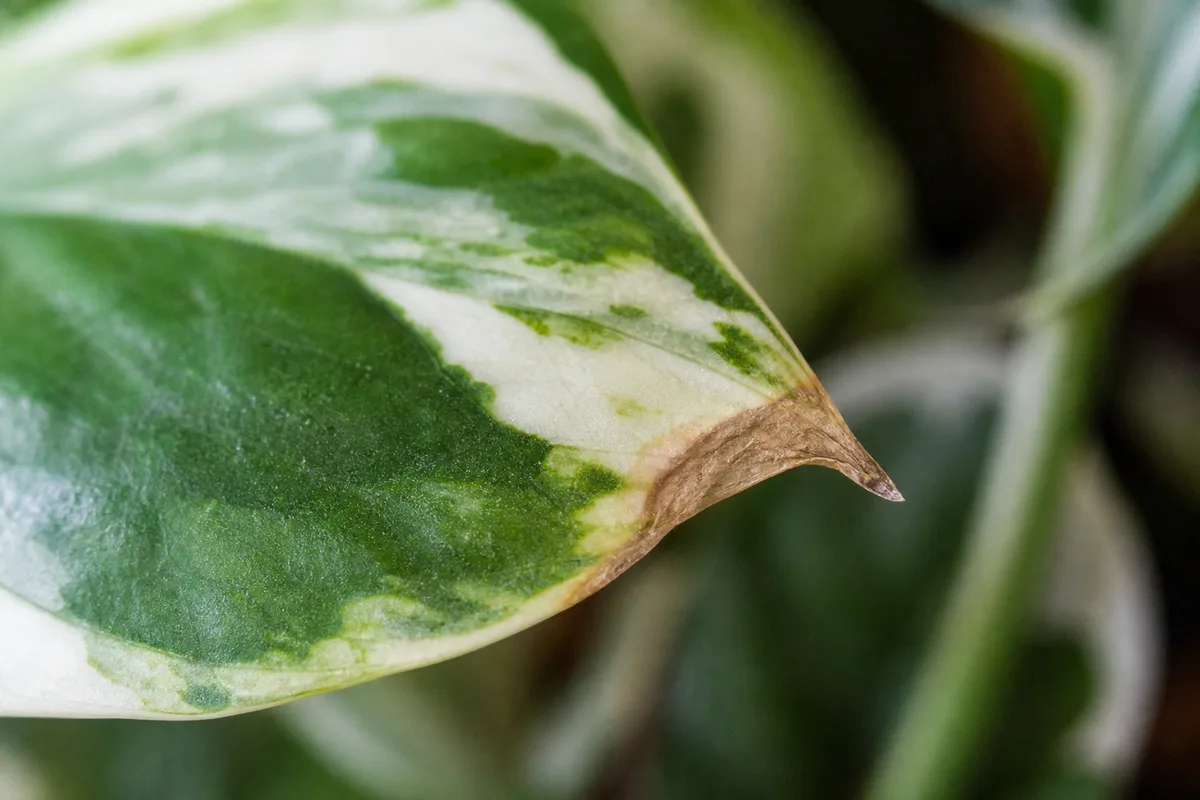
Low Humidity symptoms on Pearls and Jade Pothos - compare with healthy tissue on the same plant.
- Brown or tan crisp edges on teardrop-shaped leaves, often starting at the tip and spreading along the margin
- White variegated patches turning papery brown before the green sections show damage
- Leaf curling inward on newer growth during a dry heat spell
- Slowed new leaf size-the next leaves emerge smaller or with thinner white sections
- Damage clustered on one side of the plant facing a vent, fireplace, or sunny window in winter
Healthy Pearls and Jade leaves feel flexible and slightly waxy. Low-humidity stress makes margins feel dry and brittle while the stem stays firm and the soil follows your normal dry-down rhythm. Unlike overwatering, you will not see yellowing from the base upward, soft stems, or a sour smell from the pot.
Because Pearls and Jade has smaller, thinner leaves than golden or jade pothos, edge burn appears sooner in the same room. The heavy white variegation lacks chlorophyll and has less internal moisture reserve-so dry air hits the pale sections first.
Why Pearls and Jade gets low humidity stress
Pearls and Jade evolved in warm, humid understory conditions. Indoors, it performs best around 40–60% relative humidity and 18–29°C (65–85°F)-but many homes fall to 20–30% in winter once furnaces run, when indoor humidity is often lowest. That gap is enough to crisp leaf edges without killing the plant.
Heat vents and radiators create localized dry zones. A trailing vine hanging above a floor register loses moisture from every leaf in the airflow path. Cold window glass in winter also dries foliage on the side pressed toward the pane.
This cultivar needs bright indirect light to hold its white-and-green pattern. Growers often place it in brighter, warmer spots to protect variegation-exactly where dry air and faster transpiration overlap. More light without matching humidity accelerates edge burn.
Pearls and Jade is a slow grower with a modest root system. It does not drink aggressively enough to offset constant leaf moisture loss in desert-dry air. That is different from a fast-growing golden pothos in the same room, which may show little tip damage until humidity drops further.
Hard tap water compounds the problem. Mineral salts accumulate at leaf tips as water evaporates; in dry air, that salt burn mimics pure humidity stress. If tips brown even after you raise humidity, water quality is likely involved.
How to confirm the cause
Work through these checks before changing your whole care routine:
- Hygrometer at pot level - Place a small meter near the foliage, not across the room. Below 40% with crisp edges supports low humidity. Above 50% with ongoing tip burn points to water quality, light scorch, or fertilizer salts instead.
- Placement audit - Is the pot above a heat vent, beside a space heater, or touching cold glass? Is a trailing section in the direct path of AC blow? Move suspects first and watch for two weeks.
- Soil moisture - Stick your finger 4–5 cm into the mix. Bone-dry soil with limp leaves suggests underwatering, not dry air alone. Wet soil with crispy tips may mean uneven root uptake from rot-inspect roots if stems soften.
- Season timing - Did edges crisp within weeks of turning on central heat? That pattern fits winter humidity drop more than a sudden pest or disease.
- New versus old leaves - Low humidity damages newest variegated growth first. Older lower leaves yellowing while soil stays wet fits overwatering better.
- Pest check - Examine leaf undersides with a phone light. Fine webbing or stippling in hot dry rooms suggests spider mites, which thrive when humidity is low. Treat pests separately from humidity fixes.
- Water source - If you use untreated tap water and see white crust on soil or pot rims, flush the mix and trial filtered water for one month while humidity is stable.
If humidity reads normal, placement is stable, soil moisture is consistent, and pests are absent, reconsider direct sun scorch or fertilizer burn before assuming the air is too dry.
First fix to try
Move Pearls and Jade away from the obvious dry-air source-heat vent, radiator, or AC draft-and read humidity at the new spot.
That single placement change costs nothing and often stops further edge damage within days. Do not compensate for dry leaves by watering more; this slow grower rots easily in wet soil. Do not mist heavily on a schedule that keeps foliage wet overnight-that invites fungal spots without raising ambient humidity meaningfully.
If the hygrometer still reads below 40% after relocation, add a pebble tray or small room humidifier targeting 40–60%. Grouping with other plants helps slightly. Save trimming until you see whether new leaves emerge clean.
Step-by-step recovery
Once you have confirmed dry air and stabilized placement:
- Relocate permanently - Choose bright indirect light away from vents and window glass contact. Pearls and Jade needs strong light for variegation, but not hot direct sun through glass in winter.
- Raise ambient humidity - Run a humidifier toward 40–60%, or group plants to share transpiration. Pebble trays help locally; misting alone lasts minutes and is not a substitute.
- Stabilize watering - Water when the top 3–5 cm is dry, then soak until a little drains out. Empty the saucer. Allow soils to dry between waterings-consistent dry-down prevents both drought crisping and the overwatering this cultivar is prone to.
- Trial filtered water for one month - If tips persist after humidity improves, switch to filtered or distilled water and compare the next two leaves.
- Trim only dead tissue - Snip fully brown crispy tips with clean scissors following the natural leaf shape. Partial green margins can stay; they will not heal but do not spread.
- Hold fertilizer until stable - Skip feed while leaves are stressed. Resume half-strength balanced liquid fertilizer monthly only after new growth looks healthy for two weeks.
- Monitor for spider mites - Dry rooms invite mites on pothos. Rinse leaf undersides if you see stippling; isolate and treat if webbing appears.
Do not repot, prune heavily, or move the plant between rooms every few days during recovery. Pearls and Jade adjusts slowly-stacking stressors makes it hard to tell whether humidity fixes are working.
Recovery timeline
Stabilization: Once humidity reaches 40–60% and the plant sits clear of vents, further crisping usually stops within one to two weeks. Existing brown edges will not turn green again.
New growth: The next one to two leaves tell the story. Clean white-and-green margins on fresh teardrop leaves mean the fix worked. Expect that flush in two to four weeks during spring and summer; slower in winter even with a humidifier.
Full cosmetic recovery: Old damaged leaves remain marked until you trim them or they age off naturally. A trailing plant may look patched for several months until enough new nodes produce clean foliage.
Worsening signs: Continued tip spread with soft stems, yellowing from the soil line, or sour-smelling mix means rot or overwatering-not humidity alone. Escalate to a root inspection.
Lookalike symptoms
- Underwatering - Crisp edges plus limp vines, very light pot, and dry mix throughout. Deep soak once, then resume dry-down schedule; humidity changes alone will not fix drought.
- Brown tips from hard water on Pearls and Jade Pothos - Similar edge burn but hygrometer reads 45%+ and white crust appears on soil. Filtered water trial clarifies within one new leaf.
- Overwatering / root rot on Pearls and Jade Pothos - Yellow leaves, soft stems, wet mix for days. Pearls and Jade yellows easily when overwatered; do not add humidity or water to “help” wilted leaves in wet soil.
- Direct sun scorch - Bleached or brown patches on the sun-facing side, not evenly around margins. Move back from hot glass; humidity will not reverse scorch.
- Spider mites - Stippling, webbing, and dusty leaf undersides in dry heat. Raise humidity and treat the pest.
- Normal aging - One or two older leaves yellowing at the base with firm stems and healthy new growth is not a humidity emergency.
What not to do
Do not water more because leaf edges look dry while the top 3–5 cm of soil is still moist-that is the fastest route to root rot on this slow grower.
Avoid heavy daily misting that keeps leaves wet for hours; it barely raises room humidity and can encourage leaf spots.
Do not place Pearls and Jade in low light to “protect” it from dry air-you will lose variegation and invite leggy growth. Fix humidity while keeping bright indirect light.
Skip fertilizer boosts on stressed plants; salts at leaf tips worsen burn.
Do not assume a humidifier fixes everything without checking vents, watering, and water quality first.
When trimming, keep cuttings and fallen leaves away from pets-Epipremnum contains calcium oxalate crystals toxic to cats and dogs.
How to prevent low humidity damage
- Run a humidifier in heated rooms during winter, or group plants to share moisture
- Keep pots at least 30 cm from heat vents and off radiators
- Maintain bright indirect light without pressing foliage against cold or hot glass
- Water on a dry-down schedule-top 3–5 cm dry, then soak; never keep soil soggy to offset dry air
- Use filtered water if your tap is hard and tips recur despite good humidity
- Check a hygrometer monthly when seasons change; heating and AC alter rooms quickly
- Inspect leaf undersides in dry summer heat for early spider mites
Pearls and Jade is forgiving compared with ferns or calatheas, but its small variegated leaves show dry air sooner. Prevention is mostly stable placement and modest humidity-not tropical greenhouse conditions.
When to worry
Low humidity alone is rarely fatal to Pearls and Jade Pothos. Escalate if:
- Stems soften or base leaves yellow while soil stays wet-suspect rot, not dry air
- Spider mite webbing spreads despite humidity above 50%-treat the infestation
- Entire leaves crisp within days of a heat wave and soil is dry at depth-deep drought may need a careful soak, not just a humidifier
- Variegation reverts to solid green with long bare internodes-that is a light problem, not humidity
Cosmetic tip burn on a firm plant with new clean growth can wait. Structural decline with wet soil cannot.
Conclusion
Low humidity on Pearls and Jade Pothos is an environmental edge-burn problem on thin variegated leaves-not a mystery disease. Confirm it with a hygrometer and placement check, move the plant off vents, target 40–60% humidity, and keep your dry-down Pearls and Jade Pothos watering guide steady. Old crispy tips will not heal, but new teardrop leaves should emerge clean within weeks once the air matches what this compact cultivar expects.
When to use this page vs other Pearls and Jade Pothos guides
- Pearls and Jade Pothos watering guide - Use for routine moisture checks before assuming low humidity is the main issue.
- Pearls and Jade Pothos problems hub - Browse all 4 common issues on this species.
- Brown Tips on Pearls and Jade Pothos - Different entry point when symptoms overlap with low humidity.