Mold on Soil on Pearls and Jade Pothos: Causes, Checks &
Quick answer
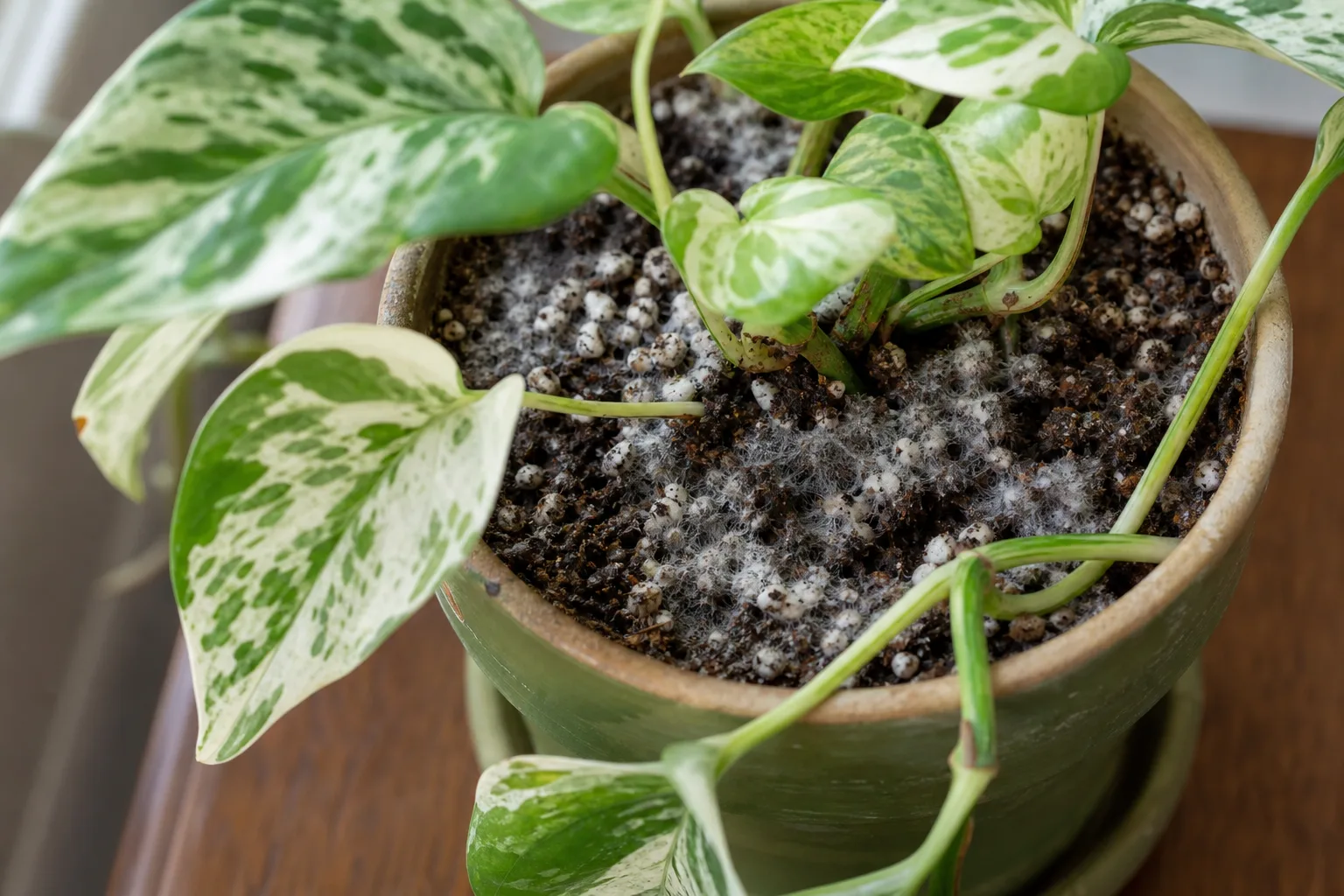
Fluffy white or gray mold on Pearls and Jade Pothos soil is usually harmless surface fungus feeding on organic mix-but it signals the top layer has stayed damp too long. Scrape off the top 2–3 cm, let the surface dry completely, and adjust watering for this slow variegated grower before roots suffer.
Mold on Soil on Pearls and Jade Pothos: Causes, Checks & Fixes
This guide covers mold on soil on Pearls and Jade Pothos. See also the general Mold on Soil guide, watering, and light pages for this plant.
Mold on Soil on Pearls and Jade Pothos: Causes, Checks & Fixes
Quick answer
A white or gray fuzzy layer on Pearls and Jade Pothos potting mix is almost always saprophytic surface fungus-organisms that feed on decaying organic matter in damp soil, not on living pothos tissue. The mold itself is usually cosmetic, but it tells you the top of the mix has stayed wet too long, which is a serious warning on a slow variegated cultivar that already struggles when roots sit in moisture.
First step: scrape off the top 2–3 cm of affected mix and discard it, then stop watering until the surface feels dry to your first knuckle. Do not mist the soil, cover it with decorative moss, or repot on day one unless mold keeps returning on chronically soggy mix. Fix the drying rhythm first-Pearls and Jade uses water slowly, and surface mold often appears before yellow leaves or soft stems show up.
What mold on soil looks like on Pearls and Jade Pothos
On this compact trailing cultivar, mold usually shows up on the soil surface around the base of vines, not on the white-and-green marbled leaves themselves. Healthy Pearls and Jade foliage should stay firm; mold confined to wet topsoil with firm stems is the classic harmless pattern.
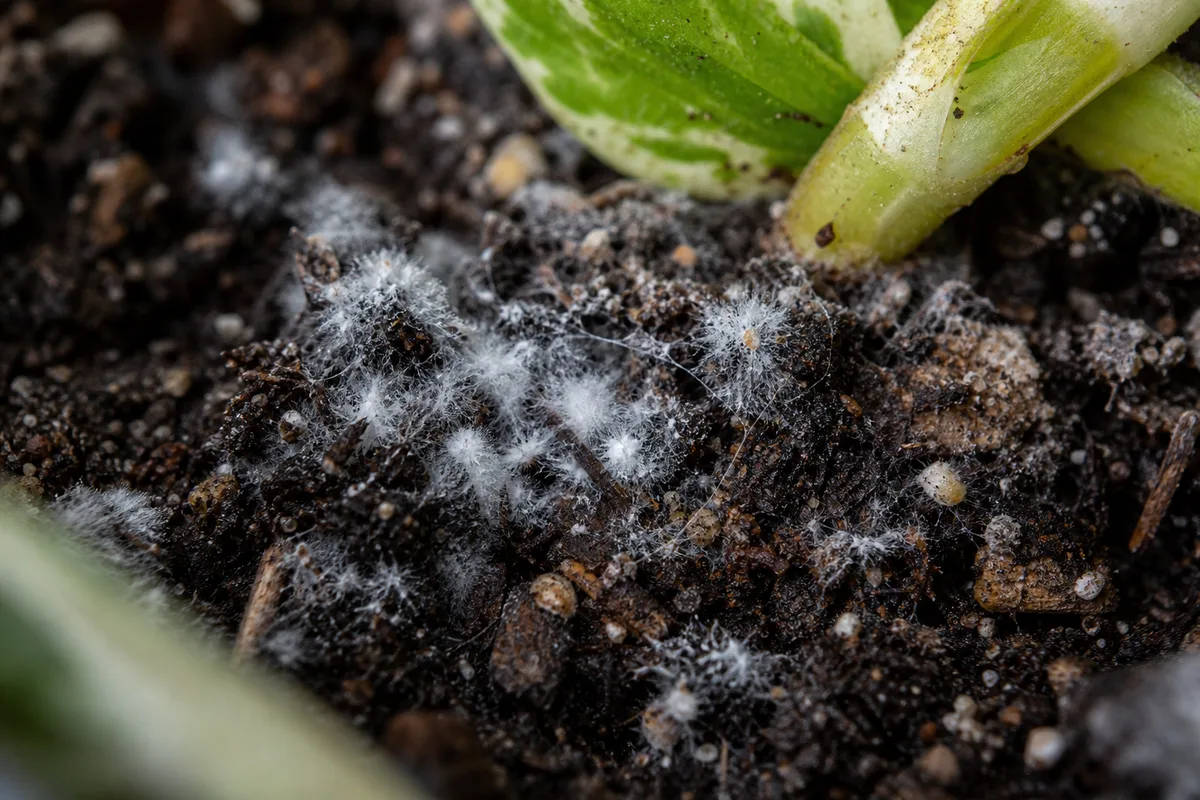
Mold on Soil symptoms on Pearls and Jade Pothos - compare with healthy tissue on the same plant.
Common signs include:
- White, gray, or occasionally tan fuzzy patches spread across the top of the mix, sometimes creeping up the inner pot wall
- Surface that stays visibly damp for several days after you water, even when vines look fine
- Musty smell when you lift the pot or disturb the top layer
- Fallen leaves or peat fines sitting on the surface, giving fungus a food source
- Small dark flies hovering when you water-fungus gnats share the same wet-soil habitat
Pearls and Jade is a slow grower with smaller leaves than golden pothos. Because it drinks less, the top layer can stay moist even when you water on a schedule that works for faster cultivars. Mold on an otherwise healthy-looking plant often means the pot is drying too slowly for this plant in your light-not that a mysterious disease has arrived overnight.
Why Pearls and Jade Pothos gets mold on soil
Surface mold needs three things: organic matter, moisture, and limited airflow. Standard peat-based potting mix provides the food; your watering and placement decide whether the top stays wet enough for fungus to colonize.
Overwatering or watering too soon is the leading trigger. Pearls and Jade should be watered when the top 3–5 cm of mix is dry-allow soils to dry between waterings-roughly every 7–10 days in warm bright months and every 10–14 days in cooler winter rest. Watering while the surface is still damp keeps the top layer continuously moist, which is exactly where saprophytic fungi establish.
Slow water use from variegation and moderate growth compounds the problem. Variegated tissue photosynthesizes less than all-green leaves, so the plant pulls less moisture from the root zone. In moderate or low indirect light, evaporation slows further. A pot that would dry in three days under strong light may stay wet for a week in a dim corner-long enough for mold to appear between waterings.
Dense, peaty mix without enough perlite holds water at the surface. Pearls and Jade does best in standard potting mix amended with 20–25% perlite. Straight bagged mix in an oversized pot creates a large wet zone around a small root ball; the surface mold is the visible tip of a deeper moisture problem.
Low airflow and debris on the soil finish the setup. Crowded plant shelves, pots wrapped in decorative covers, and dead leaves left on the mix all trap humidity at the surface. Cooler room temperatures slow drying without slowing your watering habit.
Mold does not mean your Pearls and Jade is doomed-but it does mean the culture favors fungus over roots. On this cultivar, chronic surface wetness often precedes yellow leaves, fungus gnats, and eventually root rot from constantly wet soil if nothing changes.
How to confirm the cause
Work through these checks before Pearls and Jade Pothos repotting guide or spraying anything:
-
Surface moisture - Push your finger 3–5 cm deep. If the top is wet or cool and clings to your skin, you watered too recently or too often. Dry crumbly top with mold only on the very surface suggests you may be watering deeply while the top never dries-still a mold trigger.
-
Stem firmness at the soil line - Pinch lower stems where they enter the mix. Firm, green tissue with only surface mold points to cosmetic fungus on wet mix. Soft, mushy, or collapsing stems mean root damage may already be underway-mold is secondary.
-
Leaf pattern - Healthy variegation with no new yellowing fits surface mold alone. Yellow leaves on still-wet soil, limp vines despite moist mix, or fading white patches on new growth suggest overwatering stress beyond mold.
-
Pot weight and drainage - Lift the pot after watering. Heavy for days with water sitting in the saucer confirms poor dry-down. Confirm drainage holes are open and the saucer is emptied after each drink.
-
Light level - Pearls and Jade needs Pearls and Jade Pothos light guide for steady growth and predictable drying. Mold that appears in low light but not after moving to a brighter spot confirms slow evaporation as a driver.
-
Mold type and recurrence - White or gray fuzz that scrapes off easily and returns within days on damp soil fits saprophytic mold. Green slick film is algae, not mold-same moisture fix, different organism. Black mold on rotting stems is a separate, more serious problem.
-
Pests and smell - Fungus gnats plus mold mean shared wet conditions. A sour or swampy odor from the drainage hole suggests anaerobic soil and possible root decay-not a case where scraping alone is enough.
If stems are firm, leaves look normal, and only the top inch is fuzzy, you are likely dealing with harmless surface fungus on overwet mix. If multiple rot signs appear together, treat root health first.
The first fix to try
Scrape off the top 2–3 cm of moldy mix and discard it in the trash-not the compost bin.
Use a spoon or fork, avoid inhaling spores, and wipe the inner pot rim if fuzz has spread there. This removes active fungal growth and some spore load in one step. Do not blow on the surface or spray water afterward; you want the top layer to dry, not stay damp.
After scraping, hold all watering until the top 3–5 cm of remaining mix feels dry. On Pearls and Jade, that may take several days to more than a week depending on light and season. Firm stems can tolerate a longer dry surface period better than another soak on wet roots.
That single action-remove mold, then dry the surface-is the correct first response. Repotting, cinnamon dusting, fungicide sprays, and bottom-watering changes come later only if mold returns or soil stays soggy at depth.
Step-by-step recovery
Once you have scraped the surface and paused watering, work through these steps in order based on what you find:
-
Let the top dry completely - Wait until the top 3–5 cm is dry before the next watering; let the surface dry between waterings. Use the finger test, not a calendar. Pearls and Jade wilts when too dry, but a few days of dry surface soil will not harm firm plants-and it breaks the mold cycle.
-
Move to brighter indirect light - Better light speeds evaporation and supports healthier water use. Avoid jumping straight to hot direct sun, which can scorch variegated leaves. A spot that stays bright most of the day without sunbeams on the foliage is ideal.
-
Remove surface debris - Pick off fallen leaves, old vine stubs, and organic clutter sitting on the mix. Decaying material feeds surface fungus and attracts fungus gnats.
-
Refresh the top layer if needed - After the surface dries, you can add a thin layer of dry, perlite-amended potting mix to replace what you removed. Do not pile mix against wet stems; keep the crown airy.
-
Adjust watering technique - Water thoroughly until a little runs from drainage holes, then empty the saucer. Never leave the pot standing in water. If you tend to overwater, wait an extra day after the top feels dry before soaking.
-
Address fungus gnats if present - Yellow sticky traps catch adults; drying the surface targets larvae. Gnats and mold share one root cause-wet organic topsoil-so moisture correction does most of the work.
-
Repot only when mold is chronic - If mold returns within a week of scraping on mix that stays wet at depth, or soil smells sour, unpot into fresh perlite-amended mix in a clean container with drainage. Trim mushy roots, let cuts callus briefly, and repot at the same size or one size up-not into an oversized decorative pot.
Skip fungicides, hydrogen peroxide drenches, and cinnamon as a first response. They may hide the mold temporarily without fixing the wet conditions Pearls and Jade cannot tolerate long term.
Recovery timeline
Surface mold on an otherwise healthy Pearls and Jade Pothos usually clears within one to two weeks once the top layer dries consistently between waterings. You should see:
- No new fuzzy growth after the first scrape-and-dry cycle
- Firm stems and stable variegation on existing leaves
- Normal dry-down - top 3–5 cm dry within 7–10 days in active growth season
- Fewer or no fungus gnats as the surface stays dry
Old mold stains on pot walls or a single recurrence after one heavy watering does not mean failure. Repeated mold within days of scraping means the mix or Pearls and Jade Pothos watering guide still holds too much surface moisture-move to repotting and light adjustment.
If yellow leaves appear or stems soften while you dry the soil, recovery shifts from mold cleanup to root rescue. That timeline stretches to several weeks and depends on how much root tissue remains firm. Surface mold alone does not damage leaves; chronic wet roots do.
Lookalike symptoms
Not every white or green patch on the pot is mold. On Pearls and Jade, common lookalikes include:
- Green algae - Slick green film on constantly wet soil in low light. Same fix: dry the surface and brighten indirect light slightly.
- Perlite or dolomitic lime - White granules scattered through mix can look like mold from above. Scratch the spot; perlite feels gritty and hard, not fuzzy.
- Mineral crust - Hard white buildup from hard tap water on pot rims or soil surface. Flush with plain water periodically; it is not fungal.
- Powdery residue from fertilizer or dust - Flat dry dust, not cottony growth. Wipes off dry; mold does not.
- Fungus gnats mistaken for mold - The flies themselves are not mold, but their presence confirms wet organic soil-the same condition that grows surface fungus.
True saprophytic mold feels soft and fuzzy, spreads in patches on damp organic matter, and returns after scraping if moisture stays high.
Mistakes to avoid
-
Scraping mold repeatedly without drying the soil - You remove the symptom while keeping the cause. Mold will return every few days until the top layer dries between waterings.
-
Watering on a golden-pothos schedule - Pearls and Jade is slower and more sensitive to wet mix. Calendar watering in winter or dim rooms is a common mold trigger.
-
Misting the soil or using moisture-retaining toppers - Decorative moss, rocks glued over drainage holes, and pot wraps trap humidity at the surface where mold starts.
-
Repotting immediately for mild surface mold - Unnecessary repotting stresses roots and rarely fixes overwatering habits. Scrape, dry, and adjust care first unless soil is sour or compacted.
-
Assuming mold is harmless and ignoring gnats or yellow leaves - Surface fungus alone may not kill the plant, but the wet conditions that grow it can. Treat mold as an early moisture warning on this cultivar.
-
Using heavy fungicides as a first fix - Chemical sprays on soil rarely solve cultural overwatering and add stress to an already damp root zone.
How to prevent mold next time
Long-term control on Pearls and Jade comes from faster, predictable dry-down, not weekly scraping.
- Water when the top 3–5 cm is dry, not on a fixed weekday. Check weekly in summer, every 10–14 days in winter, but let the finger test decide.
- Use well-draining mix - standard potting soil with 20–25% perlite in a pot with drainage holes sized to the root ball, not dramatically oversized.
- Keep bright indirect light so the plant uses water and the pot dries evenly.
- Maintain airflow between pots; avoid crowding on humidity trays without ventilation.
- Clean the soil surface when leaves drop-variegated pothos sheds older leaves occasionally, and debris feeds fungus.
- Empty saucers after every watering. Standing water re-wets the bottom and keeps the whole column moist longer.
If mold appeared once after a long rainy spell or a single overwatering, corrected habits are usually enough. If it appears on every new bag of peaty mix in low light, adjust both substrate and placement.
When to worry
Surface mold with firm stems and healthy leaves is low urgency-fix moisture and monitor. Escalate when you see:
- Mold plus soft stem bases or blackening at the soil line
- Sour or rotten smell from drainage holes
- Spreading yellow leaves on mix that stays wet for a week or more
- Mold returning within days after multiple scrape-and-dry attempts
- Heavy fungus gnat infestation with stunted new growth on vines
Those patterns suggest root stress or failing mix, not cosmetic fungus alone. Unpot, inspect roots, trim anything mushy, and repot into fresh draining mix before focusing on the surface again.
Pearls and Jade Pothos is toxic to cats and dogs if chewed. Scraping mold and discarding soil is safe with normal hand washing; keep removed mix and tools away from pets that dig in pots.
Conclusion
Mold on Pearls and Jade Pothos soil looks alarming but is usually harmless surface fungus on too-wet mix-a moisture problem more than a plant disease. Scrape the top layer, let the surface dry completely, and align watering with how slowly this variegated cultivar actually uses water in your home’s light.
Judge success by dry topsoil between drinks, firm stems, and no recurring fuzz-not by how fast you can hide the white patches. When those habits match Pearls and Jade’s needs, surface mold rarely comes back, and you avoid the root rot that wet soil can trigger on this otherwise forgiving plant.
When to use this page vs other Pearls and Jade Pothos guides
- Pearls and Jade Pothos watering guide - Use for routine moisture checks before assuming mold on soil is the main issue.
- Pearls and Jade Pothos problems hub - Browse all 4 common issues on this species.
- Root Rot on Pearls and Jade Pothos - Different entry point when symptoms overlap with mold on soil.