Mealybugs on Pencil Cactus: Causes, Checks & Fixes
Quick answer
Mealybugs on pencil cactus hide as white cottony clumps in branch crotches and stem joints of Euphorbia tirucalli. First step: isolate the plant, put on gloves against the irritant sap, and dab every visible colony with 70% isopropyl alcohol on a cotton swab.
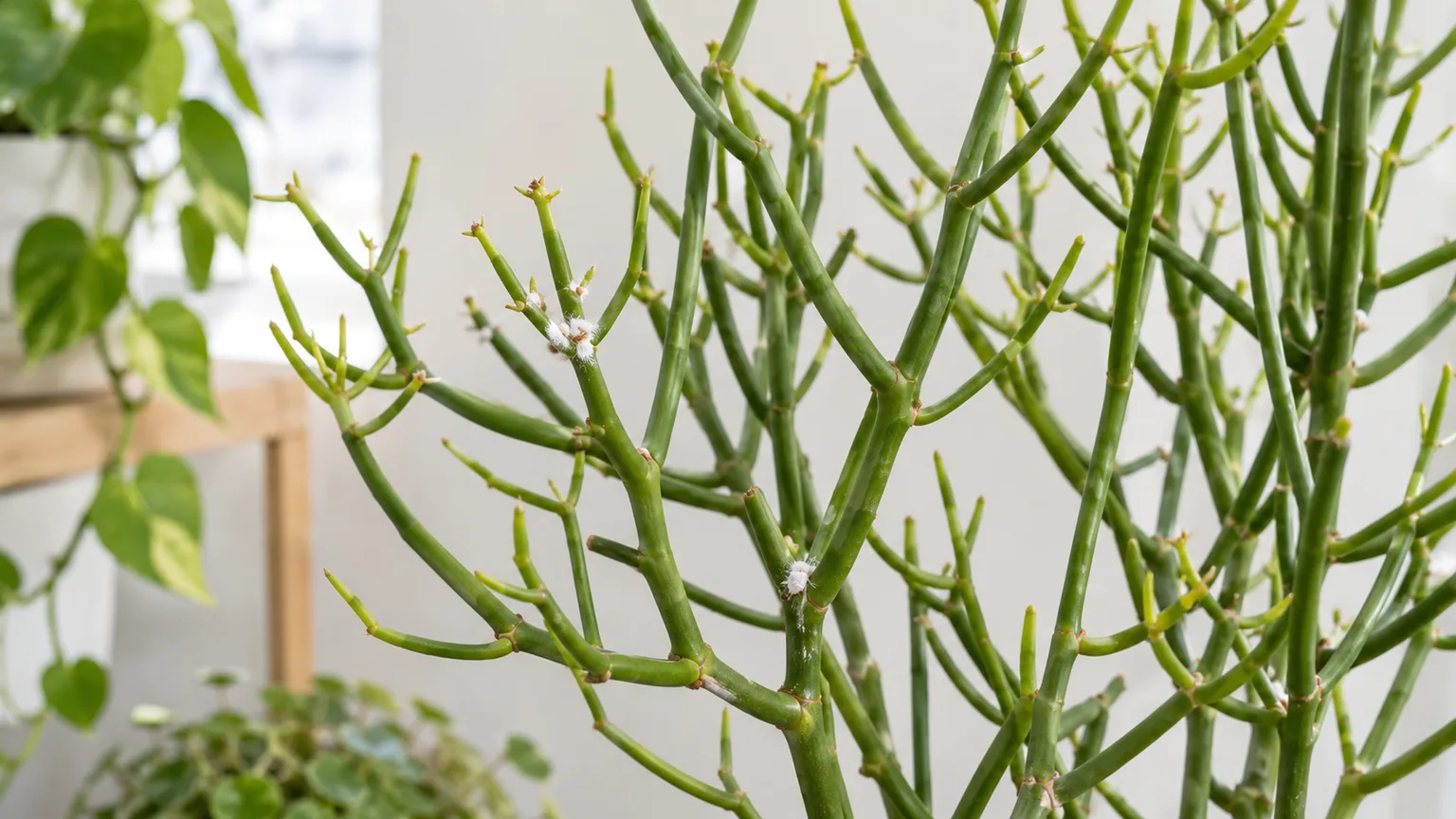
Mealybugs on Pencil Cactus: Causes, Checks & Fixes
This guide covers mealybugs on Pencil Cactus. See also the general Mealybugs guide, watering, and light pages for this plant.
Mealybugs on Pencil Cactus: Causes, Checks & Fixes
Quick answer
Mealybugs on pencil cactus (Euphorbia tirucalli) show up as white, cottony clumps wedged into branch crotches, stem joints, and new tip clusters — almost never sitting in plain view on an open stem. They suck sap and secrete sticky honeydew, which can coat the thin green stems and invite black sooty mold that blocks light from tissue with very little surface area to spare. For how mealybugs feed and spread in general, see our mealybugs pest guide. On pencil cactus, the pattern usually shows up as hidden joint colonies on an otherwise firm, drought-tough thicket.
First step: isolate the plant, put on gloves and eye protection against the milky sap, and dab every visible colony with 70% isopropyl alcohol on a cotton swab. Work joint by joint until the wax dissolves and the insects underneath turn tan. That single targeted pass comes before any spray, repot, or fertilizer decision.
What mealybugs look like on pencil cactus
Pencil cactus has almost no leaf surface — just smooth, pencil-thin green stems that fork repeatedly into a dense thicket, with tiny short-lived leaves at the newest tips. Mealybugs exploit exactly that architecture. They often live in protected areas such as branch crotches and stems near the soil, and a mature pencil cactus offers dozens of those forks per branch.
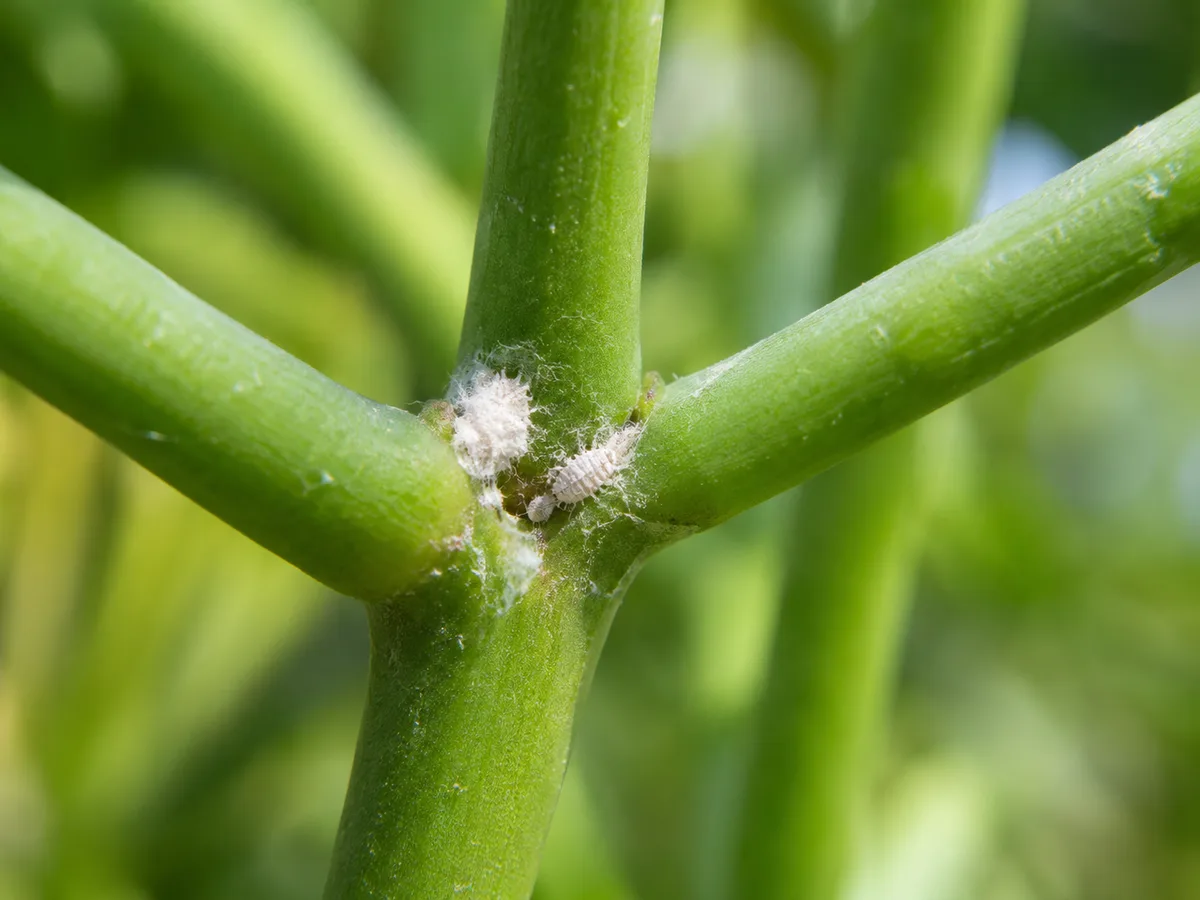
Mealybugs hide as cottony wax in pencil cactus branch crotches and stem joints.
Expect:
- White or grayish cottony masses packed into branch forks, new-tip clusters, and the stem base near the soil line
- Slow-moving oval insects under the wax when you part it with a swab — wingless females with segmented wax-covered bodies
- Sticky honeydew on stems below the colony, sometimes with ants visiting
- Black sooty film growing on honeydew deposits on stems that were previously bright green
- Stunted or yellowing tips on heavily fed branches while older wood looks normal
Because the stems are thin and photosynthetic, even a moderate colony matters more here than on a broad-leafed plant: honeydew plus soot shades the exact tissue the plant uses to feed itself. Newly hatched crawlers lack wax and wander before settling, so a colony that looks confined to one fork may already have scouts on adjacent branches.
Why pencil cactus gets mealybugs
Mealybugs do not arise from dry soil or bright light — they arrive. The usual entry routes for this plant:
- New plants without quarantine. Nursery stock is often crowded bench-to-bench, and a cottony fork on a dense Euphorbia tirucalli (the accepted species name for pencil cactus) is easy to miss at purchase. Inspect plants thoroughly before bringing them indoors — this is the single highest-value habit.
- Contact spread. Crawlers walk across touching branches, shared trays, stakes, and hands. A pencil cactus wintering shoulder-to-shoulder with other succulents indoors is a short commute.
- Soft forced growth. Over-applied nitrogen plus steady irrigation pushes the tender new growth where mealybugs prefer to lay eggs. On pencil cactus that means pale, soft tips from heavy feeding — the opposite of the firm, sun-hardened pencils this plant makes under the lean routine in our pencil cactus fertilizer guide.
- Warm indoor winters without predators. Colonies persist year-round on houseplants, and the dry rest period pencil cactus wants (see our pencil cactus watering guide) does nothing to kill insects hiding in dry forks.
Overwatering does not cause mealybugs, but a constantly wet gritty mix keeps the plant stressed and the grower misting — and misting only wets wax without removing insects. Keep the dry-down rhythm; treat the insects directly.
How to confirm the cause
Work through these checks before treating:
- Location of white material. Mealybugs pack into forks, joints, and tip clusters. Mineral crust from hard water sits flat on open stem faces and never has legs inside.
- Part-and-look test. Tease a cottony mass apart with a toothpick or swab. Slow oval bodies confirm live mealybugs; static dry fluff alone may be old wax from a dead colony.
- Tap test. Hold white paper under a suspect branch and tap sharply. Crawlers fall as tiny slow specks — they do not jump or fly.
- Honeydew check. Sticky residue on stems or the shelf below the colony points to sap feeders, not drought or sun stress.
- Scope count. Note how many forks hold wax and whether neighboring plants — especially succulents and anything added in the last month — show the same pattern.
- Stem-base check. If upper forks look clean but tips stall, inspect where stems meet the mix, since colonies settle on stems near the soil.
Lookalikes to rule out first:
- Mealybug destroyer larvae or woolly aphids — similar white fluff outdoors, but these move fast and do not anchor in succulent forks
- Cottony cushion scale — larger ribbed white egg sacs, usually on outer stems rather than deep forks
- Hard-water mineral crust — flat, hard, evenly spread; crushes to powder, not a smear
- Natural corking — tan woody bark on older lower stems; firm and dry, with no wax and no insects
- Sunburn scarring — bleached or brown patches on sun-facing stems only, with no cotton and no honeydew
First fix for pencil cactus
Isolate the plant, glove up, and dab every visible colony with 70% isopropyl alcohol on a cotton swab.
Move the pot away from all other plants — it is easier to control pests while the population is small and the plant is quarantined. Put on nitrile gloves and glasses: pencil cactus latex is a strong skin and eye irritant, and even small stem snaps release sap, so handle branches by the pot rim and support stems gently rather than bending them. Press an alcohol-dampened swab directly onto each white cluster until the wax melts and the insects beneath discolor. Work fork by fork from the outer tips inward so you do not brush crawlers onto clean wood.
Before the full pass, test on a small part of the plant first and watch for leaf burn — dab one older stem section, wait 24 hours, and check for bleaching before continuing onto prized tips. Never snap off branches to “see better” during this pass; every break opens a sap wound and a new entry point.
Do not water, fertilize, or repot on the same day. One targeted pass, then observation.
Working safely around the sap
This section applies to almost no other houseplant pest guide, which is why it matters here. Pencil cactus sap is the main handling hazard of the whole job — the ASPCA lists pencil cactus as toxic to cats and dogs, and the same latex irritates human skin, eyes, and mucous membranes.
- Gloves and glasses on before touching branches, and keep fingers away from your face until tools are washed.
- Do not snap stems to expose a colony. Dab around the joint instead; if a stem breaks accidentally, blot sap with a disposable cloth and rinse the wound area with plain water.
- Keep pets and children out of the work zone, and place the quarantined plant where they cannot brush against it — broken tips from a bump mean sap on fur or hands.
- Bag swabs and pruned tips immediately. Sap-wet trimmings stay irritating in an open trash bowl within reach of curious paws.
- If sap reaches skin, wash with soap and water; if it reaches eyes, rinse with clean water for 15 minutes and seek medical advice. This is not a step to improvise through.
Step-by-step recovery
After the first alcohol pass, run a weekly cycle until you see no new wax for at least two full weeks:
- Repeat alcohol dabs every 5–7 days. Eggs and crawlers hatch on staggered schedules, so repeat treatments on a weekly cycle for two to three rounds. Hit every fork, tip cluster, and stem base each session.
- Rinse between dabs only if the plant needs water. A strong stream knocks exposed crawlers off, but pencil cactus must still dry fully between waterings per our pencil cactus watering guide — never keep the mix damp to fight insects.
- Wipe honeydew and soot. Clean sticky stems with a damp cloth so light reaches the green surface again. Soot wipes off; it does not need scraping.
- Prune only the worst tips. If one branch tip is matted solid with wax you cannot dab open, snip it with clean sharp scissors (gloves on), let the cut callus dry in air, and bag the piece. Pencil cactus branches freely below a cut, so losing one tip is cheap — stripping half the thicket is not.
- Escalate heavy infestations carefully. For colonies across many forks, follow alcohol dabs with insecticidal soap or horticultural oil applied directly to the immature insects per label directions. Test any product on a small portion first, keep the plant shaded and unstressed at application, and never apply oils to sunburned or heat-stressed stems.
- Check the collection. Inspect every plant that shared the shelf, tray, or quarantine space — dense succulent groupings pass crawlers quietly.
Hold fertilizer until new tips emerge clean for two weeks. Forcing soft growth during active pest pressure feeds the colony’s preferred tissue, as our pencil cactus fertilizer guide warns against in stressed plants.
Recovery timeline
Visible colonies should shrink within one to two weeks of consistent weekly dabs. Plan three weekly passes minimum before calling the plant clear — hidden crawlers in deep forks routinely outlast the first session.
Clean new pencil tips are the success marker. Fed-on stem sections stay scarred, and soot-stained patches may keep a dull cast for months even after wiping. Judge recovery the way you judge this species generally (see our pencil cactus overview): firm new tip growth, no fresh cotton in forks, no returning stickiness.
Worsening signs: wax appearing in new forks within days of each pass, yellowing and dropping tips across several branches, or ants arriving to farm honeydew — all mean the colony is outpacing dabbing and the plant needs the soap-or-oil escalation plus a wider neighbor inspection.
What not to do
- Do not mist the thicket to “wash bugs off.” Misting wets wax without removing insects and keeps forks humid on a plant that wants dry air.
- Do not drench the mix with systemic insecticide as a first move. Pencil cactus in a fast-draining mineral mix dries fast by design; label-rate systemics for succulents are a deliberate escalation, not a day-one reflex.
- Do not repot on day one unless you find wax and insects packed at the stem base in the mix. Root disturbance on a dry-adapted succulent buys nothing when the colony is up in the forks.
- Do not fertilize a stressed, infested plant to “help it fight.” Soft nitrogen-pushed tips are the colony’s favorite food.
- Do not handle branches barehanded or snap stems for access. The sap hazard is real — gloves, glasses, and patience instead.
- Do not compost infested tips where crawlers can walk to clean pots.
Pencil cactus care cross-check
While treating, confirm the basics that keep this species resilient — details in our pencil cactus overview, light guide, and soil guide:
- Brightest window available, with some direct sun once acclimated — compact firm pencils resist pests better than pale stretched growth
- Full dry-down between waterings in a gritty fast-draining mix, never a damp peat core
- Lean feeding only in active growth; no fertilizer during pest treatment
- Stable warm placement away from cold drafts that stall tip growth and slow recovery
Stress does not summon mealybugs from nowhere, but a stretched, overfed, overwatered pencil cactus grows exactly the soft tip tissue colonies expand fastest on.
How to prevent mealybugs next time
- Quarantine new plants two to four weeks in a separate spot before shelving them with the collection.
- Inspect forks and tips weekly with a magnifier — regular monitoring catches small populations before they need escalation.
- Keep incoming tools separate: swabs, scissors, and trays used on a quarantined plant stay with it until clearance.
- Feed lean. Resume the normal schedule in our pencil cactus fertilizer guide only after two clean weeks.
- Space the thicket. Airflow between pots denies crawlers their easiest bridge and lets you actually see the inner forks.
- Repot on schedule, not mid-outbreak. Fresh gritty mix each spring per our pencil cactus repotting guide keeps stem bases sound so inspections stay easy.
When to worry
Escalate fast if wax occupies most branch forks, if multiple neighboring plants show cotton simultaneously, or if tips yellow and shed across several branches while colonies keep expanding — the infestation is outpacing manual control.
Consider discarding and replacing the plant only when the thicket is matted fork-to-fork, three to four weeks of diligent weekly treatment fail, and every new tip arrives already colonized — especially if the plant was recently purchased and returnable. For a single cluster on one fork of an otherwise firm pencil cactus, quarantine plus weekly alcohol is usually enough.
Conclusion
Mealybugs on pencil cactus are a hidden-fork pest on a plant with almost nothing but forks: confirm cottony masses in branch crotches, glove up against the irritant latex, and dab every colony with alcohol on a weekly cycle until new wax stops appearing. Keep the plant dry between waterings, hold fertilizer, and quarantine new arrivals — on Euphorbia tirucalli, the bugs hide exactly where the pencils meet.
When to use this page vs other pencil cactus guides
- Pencil cactus overview — Start here for species basics, placement, and whether this plant fits your home.
- Pencil cactus problems hub — Browse all common issues on this species when the diagnosis is still open.
- Pencil cactus watering guide — Use when stems soften or yellow and the mix moisture history is unclear.
- Pencil cactus light guide — Use when new pencils stretch pale and weak rather than showing insects.