Underwatering on Pencil Cactus: Causes, Checks & Fixes
Quick answer
Underwatering on pencil cactus shows as wrinkled, shriveled, or limp pencil stems, papery leaf drop, and dry crispy stem tips in a light, bone-dry pot. First step: give the pot one deep soak until water drains freely from the bottom, then let the whole pot dry out fully before watering again.
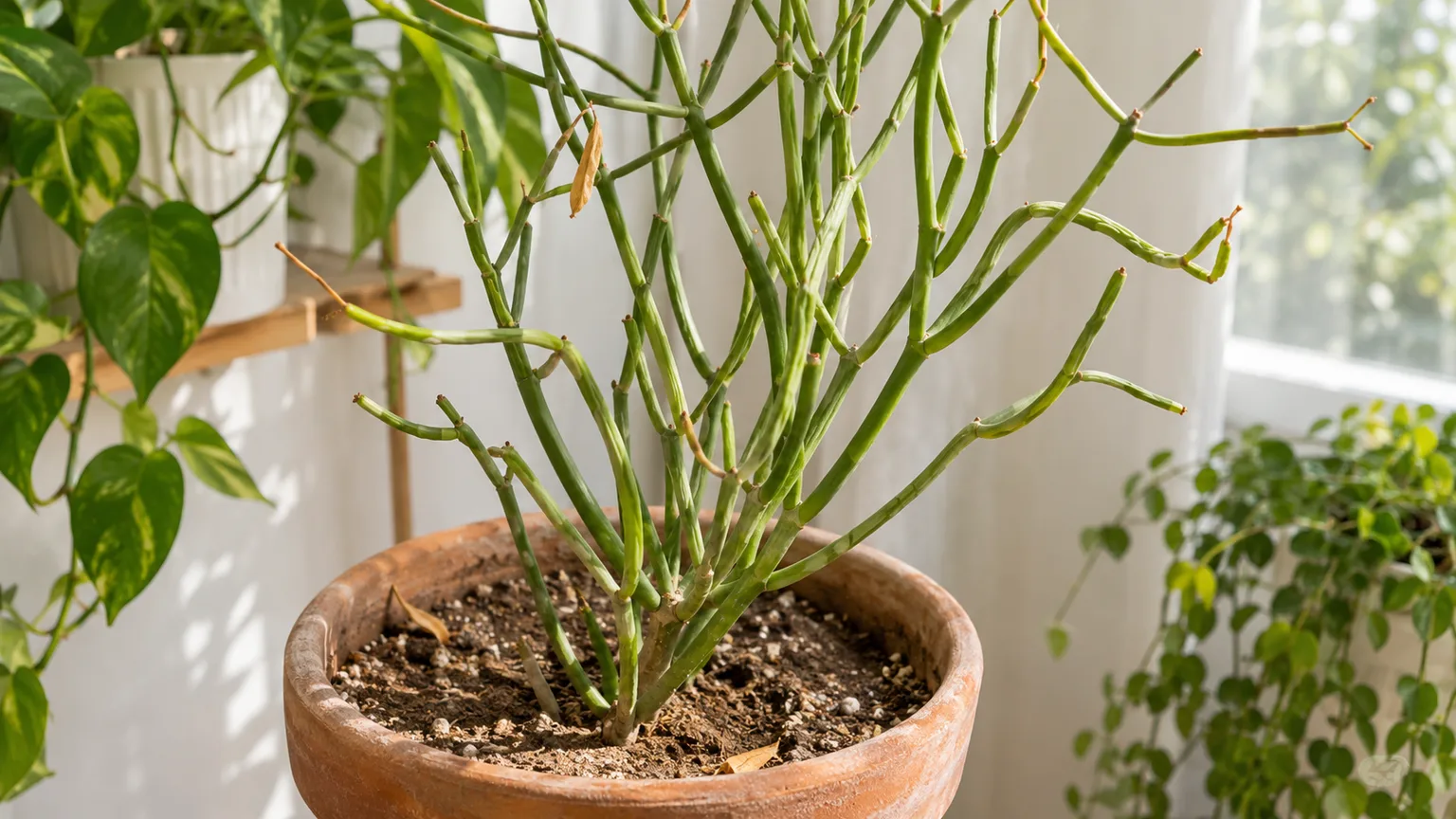
Underwatering on Pencil Cactus: Causes, Checks & Fixes
This guide covers underwatering on Pencil Cactus. See also the general Underwatering guide, watering, and light pages for this plant.
Underwatering on Pencil Cactus: Causes, Checks & Fixes
Quick answer
Underwatering on pencil cactus (Euphorbia tirucalli, pencil cactus overview) shows as wrinkled, shriveled, or limp pencil stems, tiny leaves turning papery and dropping, and dry crispy brown stem tips — all in a pot that feels strikingly light with mix pulling away from the edges. Your first and only opening move: give the pot one deep soak until water drains freely from the bottom, drain it fully, and return to checking dryness before the next drink.
For how drought stress works in houseplants in general, see our underwatering guide. On pencil cactus, the pattern usually shows up as stem wrinkling first — thin green branches lose their rigid plumpness and bend under finger pressure — because this species stores only a modest water reserve in narrow stems rather than in thick leaves or a swollen caudex.
What underwatering looks like on pencil cactus
Pencil cactus has almost no true leaves to crisp, so thirst reads through the branches:
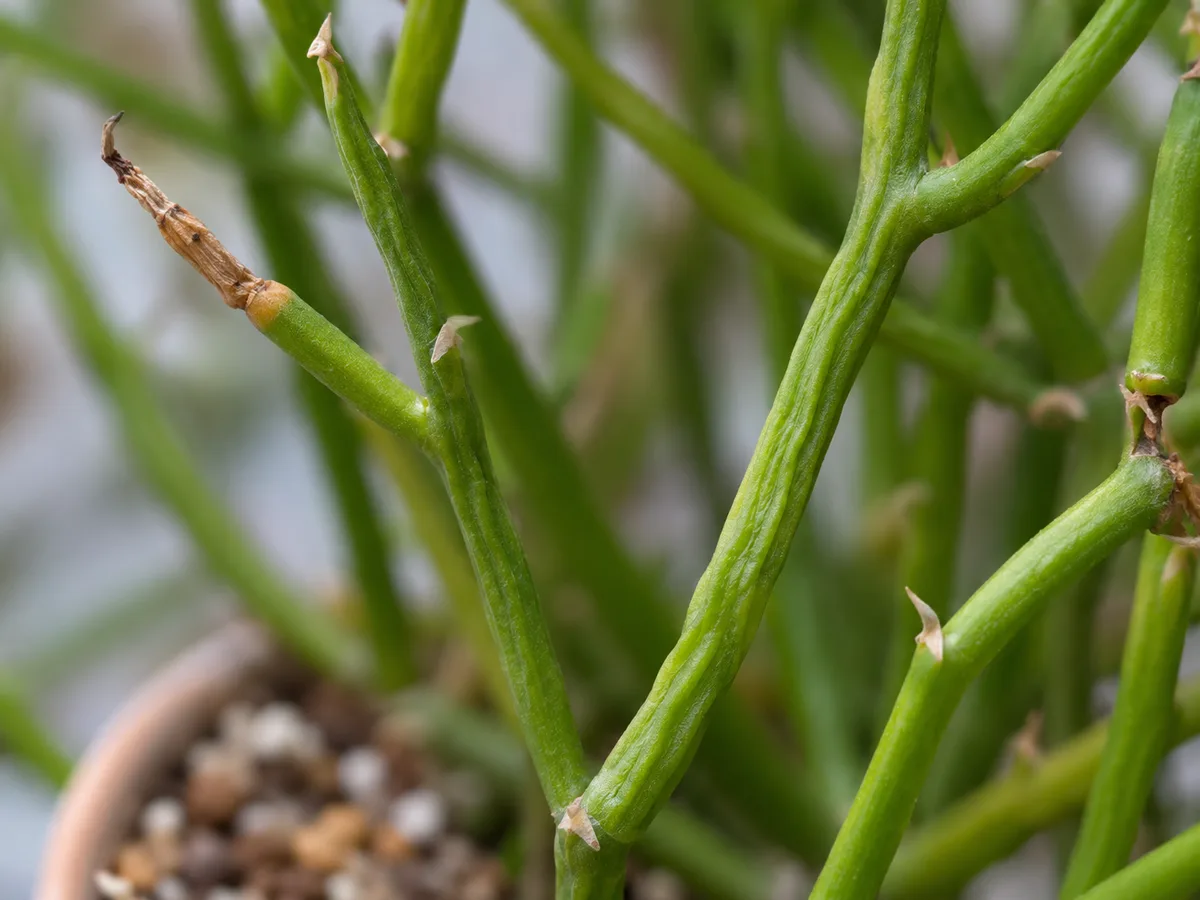
Underwatered pencil cactus develops wrinkled stems and dry, crispy tips while the branches remain green.
- Wrinkled or puckered pencil stems, especially on newer outer branches, with fine lengthwise creases where the surface has deflated.
- Limp, bendable stems that flex instead of snapping back rigid when you press them gently between two fingers.
- Tiny leaves turning yellow, papery, and dropping in larger numbers than the usual light shedding — pencil cactus leaves are only about an inch long and fall early by design, so judge by volume, not by a few fallen leaves.
- Dry, crispy brown stem tips on otherwise firm green branches, distinct from the black mushy bases of rot.
- A pot that feels feather-light, with mix visibly shrunken and gaping from the pot wall and water running straight through on the next pour.
- Stalled tip growth in warm bright weather, when a well-watered plant would be extending new pencils.
One wrinkled lower branch late in a dry cycle is a normal drink signal. Widespread shriveling across many branches plus crispy tips plus a hydrophobic, shrunken root ball is genuine drought stress that needs a proper rehydration, not a splash.
Why pencil cactus gets underwatered
Euphorbia tirucalli is famously drought tolerant, and that reputation causes most cases: growers hear “neglect-proof succulent” and stretch the dry interval far past what thin stems can buffer. Succulents survive dry spells by storing water in fleshy stems — but pencil-thin branches hold far less reserve than a jade leaf or barrel rib, so the buffer runs out sooner than owners expect.
Five familiar setups push a plant over that edge:
Summer heat with a winter schedule. A plant watered monthly through winter keeps getting monthly drinks when July sun and growth double its water use. Water every two to three weeks in spring and summer, dropping to monthly in fall and winter — holding the winter interval through summer is the classic route to shriveling.
Ultra-gritty mix in a small terracotta pot. The fast-draining mineral mix this species needs (see the pencil cactus soil guide) plus a breathable clay pot plus a small root ball can go from soaked to bone-dry in days during hot weather. Good drainage only works when the check interval matches the dry-down speed.
Bright hot position with no adjustment. A pencil cactus moved to a south window or outdoors for summer transpires far more, and its six-hours-plus sun appetite means light drives water demand. The pencil cactus light guide sets the brightness; watering has to follow it.
Hydrophobic peat leftovers. Old peat-heavy mix that dried out completely can repel water, so pours run down the pot sides and out the bottom while the core stays dust-dry. The plant looks watered and keeps shriveling.
Fear of rot after past overwatering. Growers who once rotted a succulent sometimes overcorrect into chronic underwatering. Pencil cactus forgives a missed drink far better than a soaking — but months of fear-driven sips still starve it.
How to confirm the cause
Work this order before pouring. It takes five minutes:
- Skewer test to the bottom. Push a dry wooden skewer down near the pot wall into the drainage zone. Bone-dry and clean confirms the whole root zone is dry, not just the surface.
- Pot weight. Lift the pot. Strikingly light with a shrunken, gaping mix confirms drought; heavy points away from underwatering entirely.
- Stem squeeze. Gently press several lower and mid-level stems. Firm-but-wrinkled with give means thirst. Soft, translucent, or mushy — especially at the soil line — means excess water and possible rot, so follow dry-out logic instead of this page.
- Tip and leaf pattern. Dry papery tips and crisp fallen leaves in a dry pot fit underwatering. Yellow leaves dropping in clusters from wet soil do not.
- Water behavior test. Pour a little water and watch: if it races through the gap between mix and pot wall, the core is hydrophobic and needs slow rehydration, not a bigger flood.
- Root look (only if stems fail to firm up after a soak). Slide the root ball out. Drought-stressed roots are dry, brittle, and sparse but not slimy; brown-black slimy roots with a sour smell mean rot was the real problem all along.
If the skewer reads damp, the pot is heavy, or any stem base feels mushy, stop — that is not thirst, and another drink deepens the damage. Recheck routine moisture habits in the pencil cactus watering guide instead.
The first fix to try
Give the pot one deep soak until water drains freely from the drainage holes. That is the whole first fix — not a bundle. Set the pot in a saucer, water slowly from the top so the mix actually absorbs, let excess drain for fifteen minutes, then empty the saucer. If the mix is hydrophobic, water in three small passes ten minutes apart rather than one flood.
Then do nothing but watch for three to seven days. Do not fertilize, repot, prune, or move the plant the same day — one correction at a time tells you whether the soak alone re-firmed the stems. Most mildly shriveled branches visibly plump within 48 hours; underwatered stems plump back up readily once watered.
Reading pencil stems: your thirst gauge
This is the inspection habit that replaces calendar watering on this species. Because branches are thin, green, and exposed along their whole length, they broadcast water status faster than almost any other succulent:
- Plump, rigid, matte-green pencils mean storage is adequate. Do not water on appearance of dry topsoil alone.
- Slightly soft lower pencils that dent faintly under pressure, with dry soil, mean the tank is running low — water within days.
- Visibly wrinkled or limp pencils that bend without springing back mean the reserve is spent — soak now.
- Dry brown papery tips on otherwise firming branches are spent tissue, not a continuing emergency; they will not re-green, but no further action is needed once stems firm up.
- Translucent or mushy-feeling pencils are never thirst — that is flooding, and watering makes it worse.
Check the same three lower branches every time rather than random tips. Fixed reference branches reveal the trend; fresh tip extension reveals the recovery.
Step-by-step recovery by severity
Mild thirst — wrinkled stems, light pot, mix still absorbs water:
- One deep soak with full drainage as above.
- Return the plant to its usual bright spot; do not relocate it.
- Recheck with the skewer in about a week (sooner in heat); water again only when the bottom reads dry.
- Leave crispy tips alone for now — trim only fully dead ends later, with protection.
Severe drought — widespread shriveling, drooping branches, hydrophobic shrunken root ball:
- Bottom-water: set the pot in a few inches of room-temperature water for 20–30 minutes so the core wicks moisture upward, then top-water once and drain fully.
- If water still races through untouched, repeat the slow passes the next day rather than flooding — peat cores rewet gradually.
- Move the plant out of harsh midday sun for a few days while it rehydrates; resume full brightness once stems firm.
- Only now, if whole branches stay limp and hollow a week after proper soaking, unpot and check roots — dry brittle dead roots get trimmed with a sterile blade, and the plant goes back into fresh gritty mix per the pencil cactus repotting guide.
- Hold all fertilizer until firm new tip growth is obvious.
New firm pencil growth at the branch tips is the signal your rhythm is working. Old crispy tips never re-green — judge by what is new, not by what is scarred.
Sap safety: gloves on before any rescue work
Pencil cactus is a euphorbia, not a true cactus, and its milky latex is a strong irritant to skin, eyes, and mucous membranes. The ASPCA lists pencil cactus as toxic to dogs, cats, and horses through its irritant sap, and NC State advises wearing gloves and keeping the plant out of reach of children and pets. This matters for drought recovery because trimming dead tips and unpotting a root ball both break tissue and release sap.
Wear nitrile gloves and eye protection for any cutting or unpotting, rinse skin immediately with water after contact, keep trimmings away from pets and children, and wash tools afterward. Do not touch your face mid-task. If sap reaches eyes or a pet chews growth, seek medical or veterinary help promptly rather than continuing plant care.
Building the soak-and-dry rhythm that holds
The permanent fix is a rhythm, not a schedule: water thoroughly, then allow the soil to dry out completely between waterings. In practice for this species, that means roughly every two to three weeks in warm bright growing months and roughly monthly or less in cool winter months — but the skewer decides, not the date. NC State Extension directs growers to water about every one to two weeks while always allowing the soil to dry out between waterings, tightening or loosening with season and pot.
Three structural choices make the rhythm forgiving:
- Mix: mineral-dominated and gritty so a full soak drains in seconds and dries within days — full recipes in the pencil cactus soil guide. Never let the plant sit in a saucer of standing water.
- Pot: drainage holes always, sized to the root ball with only 1–2 inches of clearance, since oversized pots swing between soggy and hydrophobic. Terracotta shortens dry-down for heavy-handed waterers; plastic lengthens it for chronic under-waterers.
- Season: stretch checks in cool low-light months — the RHS advises giving indoor succulents a winter rest with minimal water, just enough to prevent shrivelling — and shorten them sharply when heat, sun, and new growth return. Keep winter plants above about 50°F where possible, since cold plus any moisture extreme stresses tissue fastest.
Pair every soak with the brightness this plant demands; dim corners stretch the dry interval so far that owners forget the plant entirely, which is how “drought tolerant” quietly becomes drought damaged.
Lookalike symptoms to rule out
| Pattern | Likely cause | Urgency | First step |
|---|---|---|---|
| Firm but wrinkled thin stems, light dry pot, papery leaf drop | Underwatering | Low | One deep soak, then dry-down rhythm |
| Soft translucent stems, dark base, heavy wet pot, sour smell | Overwatering with rot | High | Stop water; dry out; inspect roots if spreading |
| Dry crispy brown tips on firm stems after a missed cycle | Drought tip burn | Low | Deep soak; trim only fully dead ends later |
| Yellow squishy stems that collapse at a touch in wet mix | Overwatering damage | High | Dry out fully before any further action |
| Sudden leaf shed after a move, stems stay firm and plump | Acclimation or normal turnover | Low | Hold steady; water only when dry at depth |
| Blackened soft tissue after cold nights near drafty glass | Cold damage below about 50°F | High | Warm stable spot; dry rest; trim only dead tissue |
| Stretched pale-green growth reaching toward the window | Low light, not water | Medium | Acclimate toward stronger sun gradually |
Wrinkling plus wet soil deserves special attention: that usually means roots already lost to past overwatering cannot take up water — not that the plant needs more water. Inspect roots before pouring.
What not to do
Do not dribble small sips daily — shallow watering wets only the top while the core stays dry and salts accumulate. Do not flood a hydrophobic pot in one go; water runs around the root ball and the plant keeps shriveling while looking watered. Do not fertilize a drought-stressed pencil cactus to “perk it up” — salts in dry mix burn weakened roots; feed only once growth resumes (see the pencil cactus fertilizer guide). Do not repot, prune hard, and relocate on the same day; one intervention at a time lets you read the response. Do not mist the branches as a substitute for root-zone watering — it does not refill stem storage. And do not handle or cut stems barehanded given the caustic latex.
How to prevent it next time
Align water with how this species actually grows:
- Water: Soak only when a skewer to the bottom reads dry; shorten the interval in hot bright months and stretch it in cool ones. Build the habit around the pencil cactus watering guide rather than a calendar.
- Soil: Keep the mix gritty and mineral-heavy so each soak wets evenly and dries within days — details in the pencil cactus soil guide. Refresh hydrophobic old mix rather than fighting it.
- Light: Give strong sun so the plant actually uses the water it gets; dim corners demand far longer intervals and invite forgotten plants. See the pencil cactus light guide.
- Pot: Drainage holes always; size to the root ball; empty saucers within minutes of every soak.
- Season: Water for growth, not for habit — active warm growth drinks, cool winter rest barely sips.
Check the same lower reference branches weekly in the growing season. Firm stems, clean new tips, and a pot that lightens predictably between waterings mean the system is working.
When to worry
Escalate the same day if whole branches shrivel and droop at once, stems feel hollow or papery along long sections, the root ball has shrunk hard from the pot and repels all water, or firming fails to appear within a week of a proper soak. Those signal severe dehydration or dead roots that soaking alone cannot fix.
A plant is likely beyond saving when all major branches are hollow and brittle, the trunk base crumbles dry with no firm tissue, and no green viable stem remains for cuttings. Pencil cactus roots readily from healthy tip cuttings, so if any firm green branch survives, cut it with protection, let the end callus for several days, and root it in barely moist gritty mix as a backup — healthy cuttings often succeed even when the mother plant does not.
Wrinkling on a few lower stems with an otherwise firm plant can wait for the next scheduled check. No emergency unpotting needed.
When to use this page vs other Pencil Cactus guides
- Pencil cactus watering guide — Use for routine moisture checks, soak-and-dry method, and seasonal intervals before deciding thirst is the main issue.
- Pencil cactus soil guide — Use when water races through the pot, the mix stays hydrophobic, or you need gritty recipes and drainage fixes.
- Pencil cactus light guide — Use when growth stretches or stalls and you suspect light, not water, sets the pace.
- Pencil cactus repotting guide — Use when the plant is root-bound, the mix has collapsed, or recovery requires a clean container.
- General underwatering science — Use a general houseplant underwatering reference for drought physiology that applies across species; this page covers only the pencil cactus expression.