Overwatering on Peperomia Hope: Causes, Checks & Fixes
Quick answer
Overwatering on Peperomia Hope shows as a heavy wet pot, yellow dull leaves at the crown, and limp stems where vines meet the soil-often while trailing tips still look green. Stop watering, check crown firmness, improve light and airflow, and resume only after the top half of the mix dries per the Peperomia Hope watering guide.
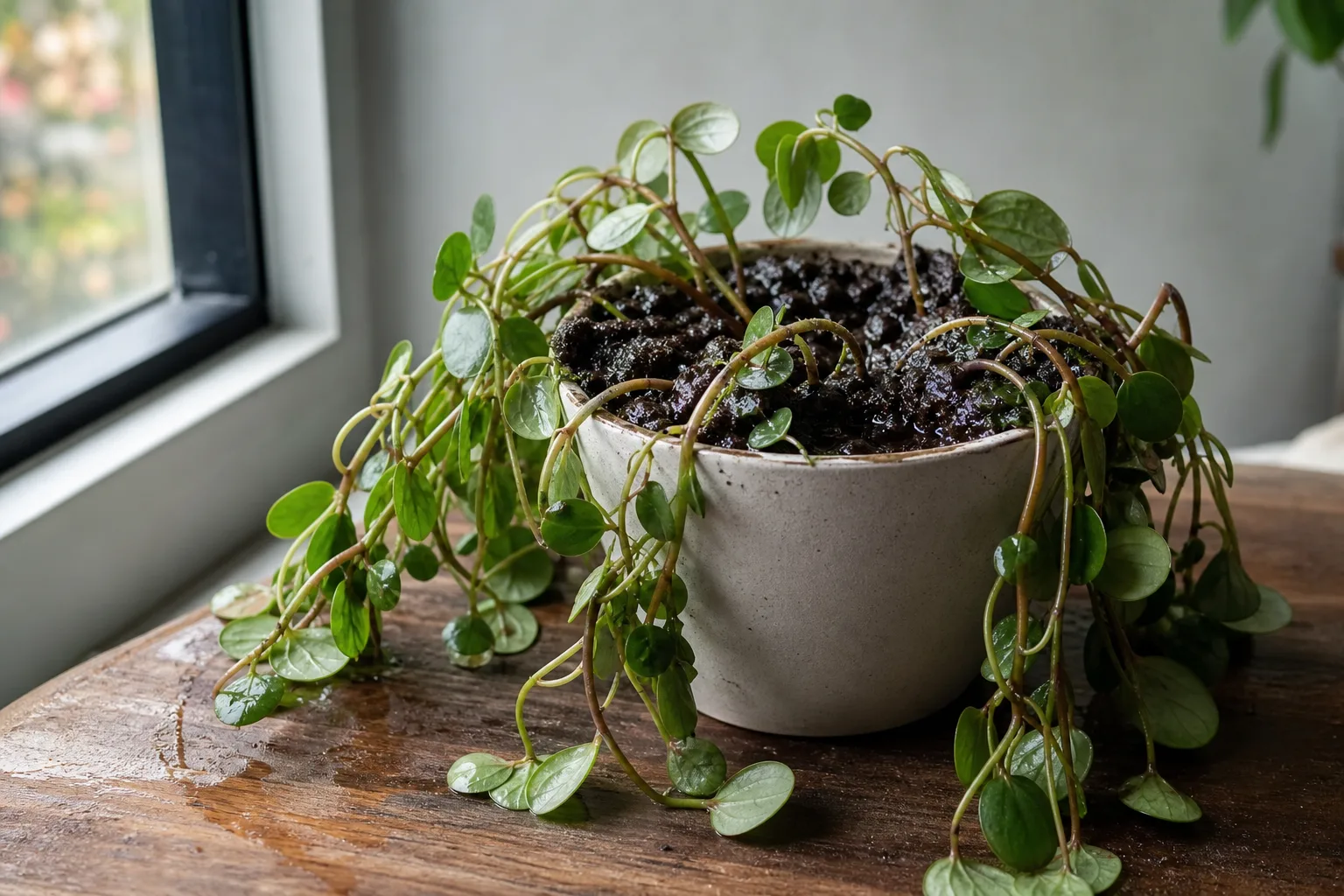
Overwatering on Peperomia Hope: Causes, Checks & Fixes
This guide covers overwatering on Peperomia Hope. See also the general Overwatering guide, watering, and light pages for this plant.
Overwatering on Peperomia Hope: Causes, Checks & Fixes
Quick answer
Overwatering on Peperomia Hope (Peperomia tetraphylla ‘Hope’) is the fastest way to stress this trailing hybrid. Round, semi-succulent leaves on cascading stems store moisture, but the plant’s small root system rots easily in persistently damp compost. Chronic wetness shows up at the crown first-yellow dull leaves, limp stems at the soil line, a pot that stays heavy for days-while outer trailing tips may still look green.
First step: stop watering and lift the pot. A heavy, cool container with soft stem bases at the crown confirms excess moisture, not a request for more water. Move the plant to Peperomia Hope light guide with airflow, let the top half of the mix dry before the next soak (see the Peperomia Hope watering guide for the full dry-down protocol), and inspect roots if tissue at the crown feels mushy. If the pot is light and mix is dry throughout, you are likely dealing with underwatering or wilting from another cause instead.
What overwatering looks like on Peperomia Hope
Peperomia Hope hides early root stress behind plump-looking leaves. By the time the whole trailing display looks sick, damage often started days earlier where stems meet wet mix at the crown.
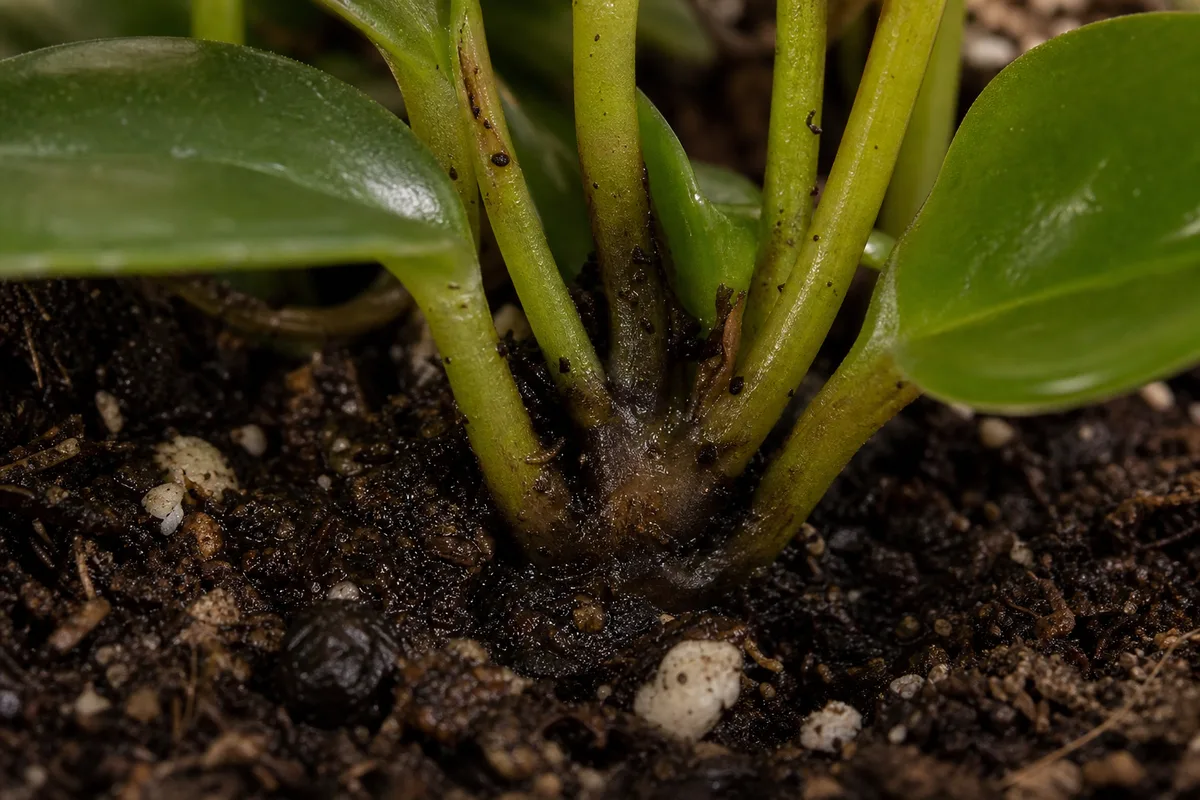
Overwatering symptoms on Peperomia Hope - compare with healthy tissue on the same plant.
Yellow crown leaves and limp stems at the soil line
Watch the base of the plant, not just the hanging tips:
- Dull, yellowing round leaves on lower whorls near the soil while newer tips stay greener
- Limp stems at the crown where trailing vines meet the mix-rubbery or collapsing, not springy
- Pot stays heavy for a week or more after a single watering; wet mix weighs far more than dry mix
- Soil dark and cool 5–7 cm deep even when the surface looks pale
- Fungus gnats hovering over constantly damp top layer-often in pots with chronically moist soil
Unlike heat scorch, overwatering yellows from the crown outward on wet soil, not from sun-facing leaf patches on appropriately dry mix.
Trailing tips still green while the crown fails
Hope’s trailing habit misleads owners. Outer vines can look acceptable while stem bases at the pot rim soften and roots suffocate below. Semi-succulent leaves hold turgor from stored water even after feeder roots die-so the plant can look “fine” on the ends while the crown is failing.
That pattern is why crown firmness matters more than tip color. Pinch where stems enter the soil. Firm green tissue fits mild overwatering you can correct with a dry-down pause. Soft, dark, or dented bases mean escalate toward root rot rescue before the whole vine collapses.
The wilt-on-wet-soil trap
The cruelest overwatering symptom is limp leaves on heavy, wet soil. Damaged roots cannot take up water even though the mix is saturated-so the plant droops like it is thirsty. Gardeners often first notice root rot when a plant is wilted although soil is wet; adding more water makes the problem worse.
If you see wilt plus a heavy pot, do not soak. Stop watering, improve drainage and airflow, and check crown firmness. Only a light pot with dry mix throughout warrants a deep drink-and that is underwatering, not this page’s problem.
Why Peperomia Hope gets overwatered
Peperomia Hope overview is not a thirsty fern, but many caregivers water it like one.
Treating peperomias like thirsty ferns
Hope needs well-draining potting mix and watering that allows soil to almost dry on top before the next drink. Owners see limp trailing stems and pour again-especially when tips hang lower than usual-without checking whether the root zone is already saturated.
Oversized hanging baskets and dense peaty mix
Long vines suggest a large root system, but Hope’s roots stay compact and shallow. An oversized hanging basket or deep decorative cache holds wet soil the roots never reach. The outer ring stays damp for weeks while you think you watered “lightly.” Clemson Extension recommends perlite-amended mix and pots only slightly larger than the root ball-not a dramatic jump because trailing stems got longer.
Calendar watering and winter slowdown mismatch
Summer autopilot-water every Sunday-continues into winter when growth slows and transpiration drops. Reduce watering in winter when the top half of the mix takes two to four weeks to dry in cool, dim rooms. A rhythm that worked in July keeps November mix stale and oxygen-poor.
Low light slowing transpiration
Hope in a dim corner uses less water while the same pour schedule continues. Low light plus frequent shallow splashes keeps the surface wet without drying the root zone evenly-a slow path to crown rot. Bright indirect light helps the plant use moisture between drinks and makes pot-weight checks more predictable.
How to confirm the cause
Work through these checks in order before you change anything else:
- Pot weight - Lift the container. Heavy and cool after days without watering strongly suggests excess moisture or an oversized pot holding water. Light and airy points away from overwatering.
- Moisture at depth - Insert a finger or bamboo skewer to mid-pot. Wet upper half with limp leaves confirms overwatering or root failure, not thirst. Dry throughout fits drought-see underwatering.
- Crown firmness - Gently press where trailing stems meet the soil. Soft, translucent, or collapsing tissue means stop all water and prepare to inspect roots.
- Leaf pattern - Yellow dull lower leaves on wet soil fit overwatering. Wrinkled, thin leaves on a light dry pot do not.
- Smell and drainage - Sour or swampy odor, full saucers, or water trapped in a basket liner support rot on wet roots.
- Recent watering history - Did you water on schedule without a dry-down check? Did winter arrive without cutting frequency?
If three or more wet-side clues align-heavy pot, damp mid-depth mix, soft crown on yellow lower leaves-overwatering is the working diagnosis. Mild cases have firm crown tissue; advanced cases need the root rot trim-and-repot workflow.
Lookalikes: underwatering vs. root rot vs. low light
| Signal | Overwatering (early) | Underwatering | Advanced root rot |
|---|---|---|---|
| Pot weight | Heavy, stays wet | Very light | Heavy, sour smell |
| Leaf texture | Dull yellow at crown; may still look plump | Wrinkled, thin on firm stems | Soft yellow; collapse at crown |
| Stem bases | Firm (mild) or soft (advanced) | Firm | Mushy, dark |
| Soil moisture | Wet 5–7 cm deep | Dry throughout | Wet; may smell sour |
| First fix | Stop water; dry top half | One deep soak | Unpot, trim, repot |
Low light alone rarely causes sudden crown collapse on wet soil-but it extends drying time and makes calendar watering more dangerous. Fix placement alongside moisture correction.
First fix for Peperomia Hope
Stop watering immediately. That single action prevents the most common escalation: soaking a wilted plant whose roots are already drowning.
For mild overwatering-heavy pot, yellow lower leaves, but firm crown tissue:
- Move to bright indirect light with airflow (not harsh sun on a stressed plant).
- Empty every saucer and cachepot so no standing water remains.
- Wait until the top half of the mix dries and the pot feels noticeably lighter before one thorough watering with full drainage-same protocol as the watering guide.
- Resume the top-half dry rule; typical active-season intervals run 10 to 14 days after dry-down passes, and two to four weeks in winter when growth slows.
For moderate to severe overwatering-soft stem bases, sour smell, or sections collapsing at the crown:
- Stop watering and gently unpot over a tray or newspaper.
- Rinse away wet soil and inspect roots. Healthy peperomia roots are pale and firm; brown mushy roots indicate rot.
- Trim mushy roots and any soft stem tissue back to firm green.
- Air-dry the root ball in bright indirect light for 24–48 hours.
- Repot into fresh fast-draining mix with perlite in the smallest pot that fits trimmed roots-not a larger basket because vines are long.
- Wait at least a week before the first cautious watering after the top half dries.
Do not fertilize, mist as a substitute for drainage, or repot into a bigger container to “help drying”-those stack stress on waterlogged roots.
Recovery timeline
Days 1–3: With firm crowns, stopping water and improving light should halt new yellowing. The pot gradually feels lighter as the upper mix dries. Do not rush a soak.
One to two weeks: Lower yellow leaves may drop-that is normal shedding, not failure. New round leaves at stem tips should look firm, not translucent. If the pot is still heavy and stems soften further, unpot before waiting longer.
Two to four weeks: A stable top-half dry rhythm in bright indirect light rebuilds trailing growth. Old damaged leaves do not fully green up; judge success by new whorls and firm stems, not perfect lower foliage.
Worsening signs: Continued limpness on wet heavy soil, spreading softness at the crown, or trailing sections collapsing from the soil line outward means root rot is advancing-propagate firm upper stem sections as backup while tissue is still healthy.
What not to do
Do not water because trailing tips look limp when the pot is heavy and mix is damp-that deepens the wilt-on-wet-soil trap.
Do not wait for the entire pot to go bone-dry as penance after overwatering. The goal is top-half dry, not desiccated root balls that are hard to re-wet evenly.
Do not repot into a larger hanging basket to improve drying-extra wet soil volume around a small root ball causes the next overwatering cycle.
Do not fertilize stressed waterlogged roots to “wake the plant up.” Rehydrate only after the dry-down check passes and new growth looks normal for two weeks.
Do not confuse wrinkled leaves on a light dry pot with overwatering-that pattern fits underwatering; adding more dry time makes it worse.
Do not bottom-water into a full saucer you never empty-crown rot loves stagnant water under trailing foliage at the pot rim.
How to prevent overwatering next time
Build a pot-weight habit before every pour: lift the inner nursery pot, probe the top half of the mix, and only soak when that zone is dry and the container feels lighter. The Peperomia Hope watering guide covers finger, chopstick, and weight checks in detail.
Match pot size to roots, not trailing vine length. Use airy mix with perlite, ensure drainage holes stay open, and let compost partially dry between waterings-never leave saucers full.
Track seasonal shifts: cut frequency in winter when the top half dries slowly; check more often in bright warm rooms without watering sooner than the dry-down rule allows.
If fungus gnats appear, treat chronic wetness at the source-dry-down correction and mix review-rather than only chasing adults.
When to worry
Escalate from pause-and-dry to full root inspection when:
- Stem bases feel soft or dent easily where vines meet the soil
- Soil smells sour or the mix has stayed wet for more than ten days after one moderate drink
- Trailing sections collapse at the crown within days while tips still looked green
- No stabilization after two weeks of corrected watering and firm crown tissue you expected to recover
If more than half the trailing stems fail at the crown, follow the root rot rescue guide and consider stem propagation from firm upper sections before tissue rots through.
Conclusion
Overwatering on Peperomia Hope is a moisture-and-oxygen problem at the crown, not a mystery disease. A heavy wet pot, yellow dull leaves at the soil line, and the wilt-on-wet-soil trap tell you to stop watering first, check crown firmness, and resume only after the top half of the mix dries-the same rhythm that keeps healthy Hope plants firm between drinks. Mild cases recover with a dry-down pause and better light; soft crowns need root inspection before the next pour. Pair this triage page with the watering guide for ongoing rhythm and with wilting when you need the full wet-vs-dry decision fork.
When to use this page vs other Peperomia Hope guides
- Peperomia Hope watering guide - Use for routine moisture checks before assuming overwatering is the main issue.
- Peperomia Hope problems hub - Browse all 7 common issues on this species.
- Root Rot on Peperomia Hope - Different entry point when symptoms overlap with overwatering.
- Yellow Leaves on Peperomia Hope - Different entry point when symptoms overlap with overwatering.