Fungus Gnats on Philodendron Imperial Green: Causes, Checks
Quick answer
Fungus gnats on Philodendron Imperial Green mean the soil surface has stayed wet too long-often from calendar watering, low light, or an oversized pot. First step: let the top 3–5 cm (1–2 inches) dry completely, deploy yellow sticky traps, and fix the watering rhythm before reaching for pesticides.
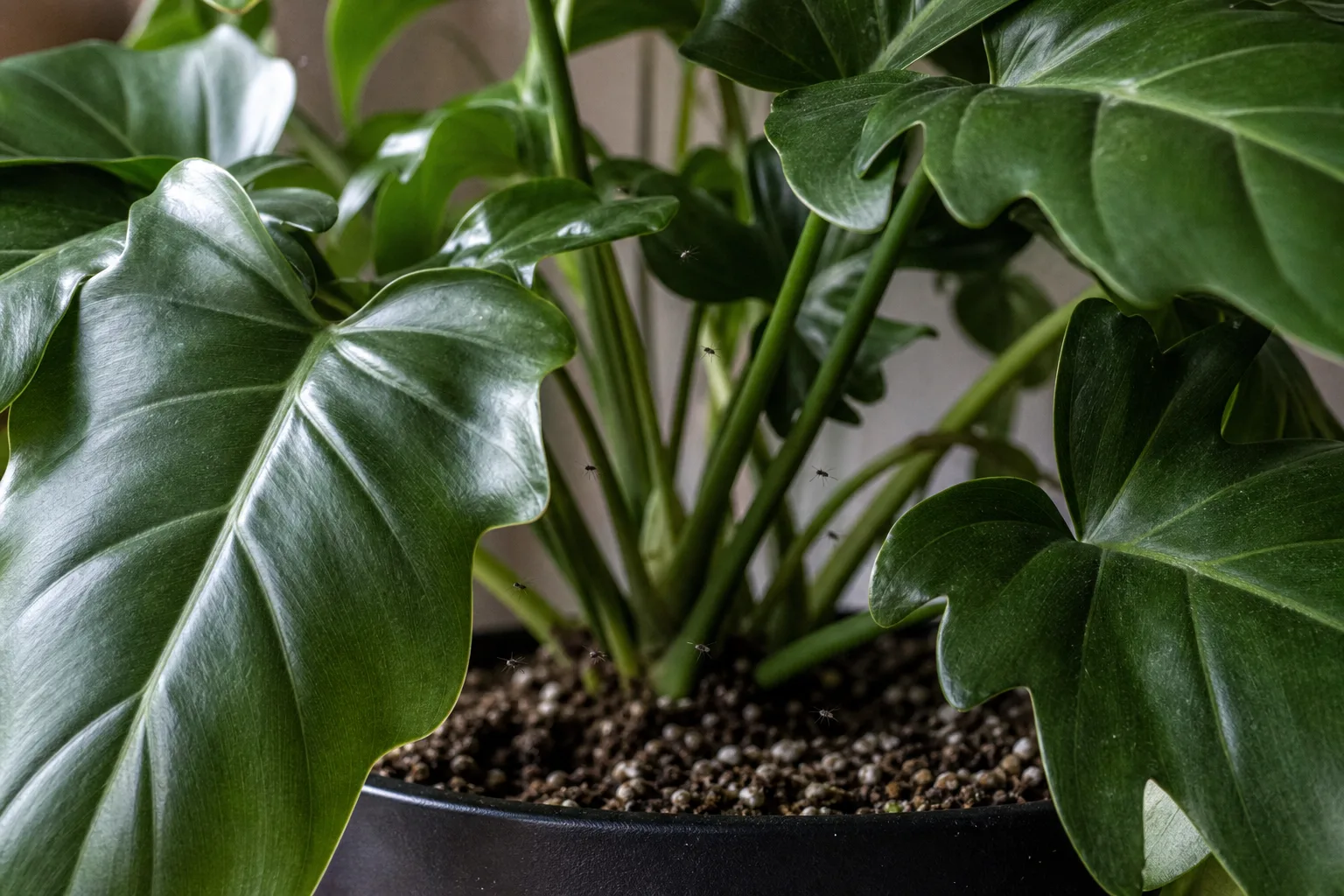
Fungus Gnats on Philodendron Imperial Green: Causes, Checks & Fixes
This guide covers fungus gnats on Philodendron Imperial Green. See also the general Fungus Gnats guide, watering, and light pages for this plant.
Fungus Gnats on Philodendron Imperial Green: Causes, Checks & Fixes
Quick answer
Fungus gnats on Philodendron Imperial Green mean the soil surface has stayed wet too long-often from calendar watering, low light, or an oversized pot. First step: let the top 3–5 cm (1–2 inches) dry completely, deploy yellow sticky traps, and fix the watering rhythm before reaching for pesticides.
Philodendron erubescens ‘Imperial Green’ is a self-heading philodendron with a compact upright crown and large glossy paddle-shaped leaves. You should water when the top 3–5 cm dries, but chronic surface wetness still invites gnats when light is low, the pot is too large, or water hits the mix before the previous drink has dried through. Penn State Extension notes that fungus gnat larvae usually live in the top 2 to 3 inches of soil and thrive in moist potting mix-on Imperial Green, those flies are almost always a moisture warning, not a random pest invasion.
Why Philodendron Imperial Green gets fungus gnats
Fungus gnats breed in consistently damp organic soil. Penn State Extension describes them as mosquito-like flies about 1/8 inch long that emerge from soil when disturbed, especially during watering. The adults are a nuisance; the larvae feed on fungi, decaying organic matter, and can damage plant roots in the upper root zone.
Calendar watering is the most common trigger on Imperial Green. Clemson Extension notes that the main cause of death of potted plants is over-watering-roots surrounded by water cannot take up oxygen. Watering every week without confirming the top 3–5 cm has dried keeps the surface hospitable to egg-laying females even when deeper soil has started to dry. See overwatering on Imperial Green if yellow lower leaves and heavy pots appear alongside the flies.
Self-heading growth makes surface wetness easier to miss. Imperial Green’s dense rosette shades the pot rim, so the top layer can stay cool and damp while you believe you are following a “dry 3–5 cm” rule checked only at the crown’s edge. In low light, the plant uses less water and glossy new leaves may look dull-but the surface still never fully dries between drinks. The Imperial Green light guide covers how dim placement both dulls gloss and prolongs surface dampness-a dual diagnostic signal on this cultivar.
Dense peat-heavy mix in an oversized container compounds the pattern. Clemson Cooperative Extension research notes that fungus gnat larvae are most active in the top two inches of media and that high organic matter with excess moisture facilitates population growth. Imperial Green in a large ceramic pot on a north-facing shelf may host larvae for weeks after one heavy watering, especially in winter when growth slows.
Decorative cachepots, saucers that hold standing water, fallen leaf debris on wet soil, and mold on the soil surface all signal the same chronic dampness that breeds gnats. RHS guidance for philodendrons is explicit: take care not to overwater or to leave plants standing in water. Fungus gnats often appear alongside that chronic dampness before obvious root rot symptoms show on the crown.
Typical failure scenario: A floor Imperial Green in a dim office, oversized decorative ceramic, calendar weekly watering, and peat-heavy store mix. After twelve days of holding the top 3–5 cm dry and swapping sticky traps twice, fly counts on the trap dropped from dozens to a few-recovery tracked with firm glossy new leaves from the crown, not by old yellow lower foliage greening up.
What fungus gnats look like on Philodendron Imperial Green
Early signs are easy to dismiss because the upright rosette still looks structurally strong. Watch for these patterns together:
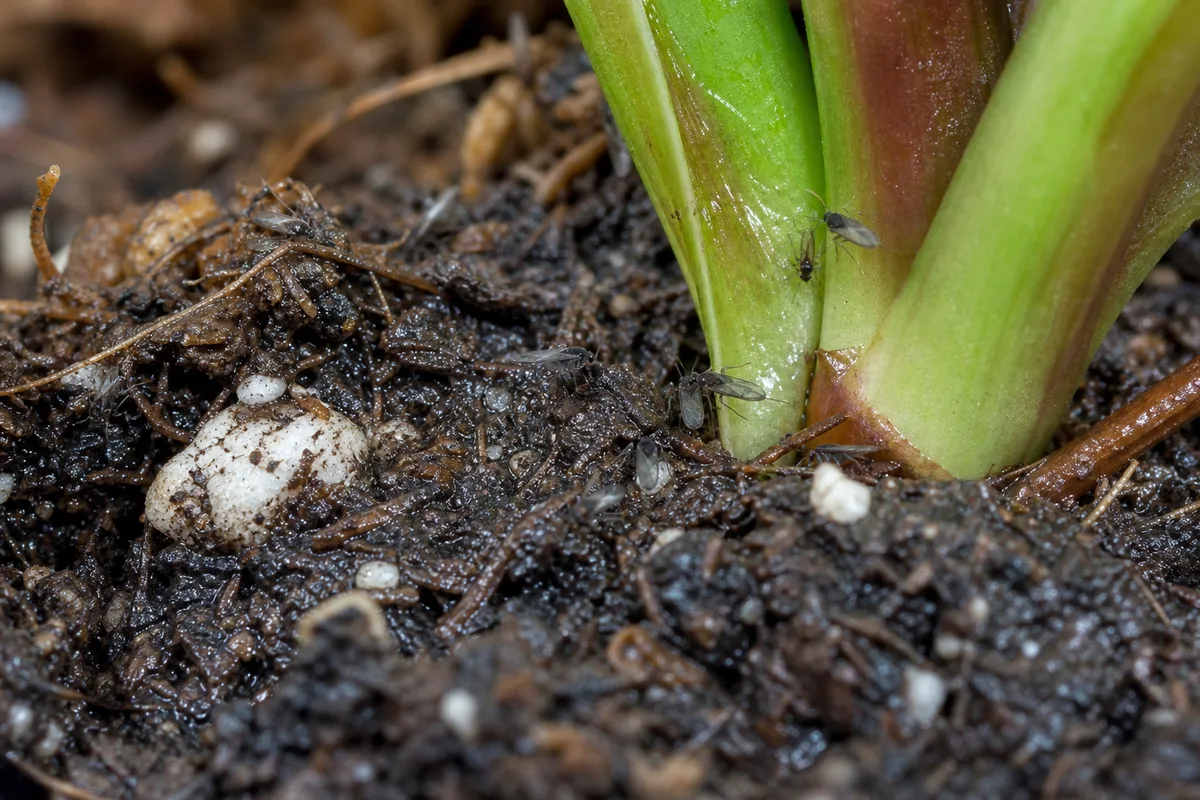
Fungus Gnats symptoms on Philodendron Imperial Green - compare with healthy tissue on the same plant.
- Tiny gray or black flies hovering near the pot, especially when you water or brush the soil surface
- More gnats rising from the pot than flying around the room-they are weak fliers tied to moist soil
- Soil that stays visibly damp on the surface for more than a few days after watering
- Glossy, translucent larvae visible when you scrape the top centimeter of mix
- Yellow sticky traps catching multiple adults within 24–48 hours
- Lower leaves yellowing or new glossy growth stalling-possible larval root feeding when populations are heavy
- A pot that feels heavy days after you last watered, often with fungus gnats as the first visible clue
- White or green fuzz on the soil surface-often co-occurring mold from the same wet habit
On Imperial Green, do not mistake normal old-leaf yellowing on one or two lowest paddles for gnat damage. Chronic wetness shows up with flies at watering time, a never-dry surface, and soft petiole bases-not with firm petioles and gradual color change on healthy lower foliage.
How to confirm the cause
Do not treat every small fly in the house as a houseplant problem. Use this inspection order:
- Disturb the soil surface - Water lightly or scrape the top layer. If gnats rise in a cloud from this pot specifically, the breeding site is confirmed.
- Check surface moisture - Push your finger or a chopstick across the top 3–5 cm. If it stays cool and clinging for days, larvae have the habitat Penn State describes in the top 2 to 3 inches.
- Pot weight and drainage - A heavy pot days after watering, or water pooling in the saucer, supports a moisture-driven infestation.
- Yellow sticky trap test - Place a yellow sticky card just above the soil for 48 hours. Multiple fungus gnats on the trap confirm active adults laying eggs in this container.
- Root-zone cross-check - Press green petiole bases where they meet the crown. Firm tissue with dry surface soil means gnats are early. Soft petioles plus sour smell means wet-soil stress may already exceed gnat annoyance-open the root rot guide if roots are mushy on inspection.
If several clues align, inspect roots only when petioles soften or yellowing spreads. Healthy roots feel firm and pale. Gnats alone rarely require unpotting; gnats plus mushy roots means switching to an overwatering or root-rot rescue path.
Lookalike symptoms to rule out
| Symptom source | How it differs from fungus gnats on Imperial Green |
|---|---|
| Fruit flies | Hover around kitchens and trash, not consistently from one plant pot when watered |
| Shore flies | Sturdier fliers often linked to algae on constantly wet greenhouse surfaces |
| Whiteflies | Fly up from leaf undersides when disturbed; soil stays normally dry between drinks |
| Spider mites | Stippling and webbing on glossy leaf undersides; neutral-smelling, drying soil |
| Mold on soil | Surface fuzz without flies-same wet cause; see mold on soil |
| Normal old-leaf yellowing | One or two lowest paddles while crown pushes glossy new growth and surface dries between drinks |
First fix for Philodendron Imperial Green
Let the soil surface dry and trap adults-the same week you confirm gnats. Penn State Extension recommends allowing the soil to dry between waterings, especially the top one to two inches, and using yellow sticky card traps to capture adults, particularly females, before the next generation of larvae hatches.
On Imperial Green, interpret that as:
- Pause watering until the top 3–5 cm (1–2 inches) feels dry and the pot weight drops noticeably-often one to two weeks if the surface has been chronically damp.
- Deploy one yellow sticky trap per pot, positioned just above the soil line where adults emerge under the compact crown.
- Move the plant to medium to bright indirect light with good airflow so the mix dries evenly once you resume watering-see the light guide for acclimation if it has been in a dim corner.
- Empty any saucer or cachepot so standing water cannot wick back into the surface layer.
- Scrape and discard fallen leaf debris and the top centimeter of wet, organic-crusted soil only if the crown tissue is still firm; replace with dry perlite-amended mix at the surface.
Make one correction at a time. Do not spray pesticides, repot, fertilize, and relocate to harsh sun on the same day.
Step-by-step recovery
After the initial dry-back and trap setup:
- Replace sticky traps when they fill with insects or lose tack-Clemson Extension notes that yellow sticky cards capture adults emerging from pupae in the media surface.
- When the top 3–5 cm is dry, water thoroughly until water runs from the drainage hole, then empty the saucer immediately-follow the watering guide dry-top-then-drench rhythm.
- Resume the dryness check: water only when the top 3–5 cm feels dry, roughly every 7–10 days in summer and 10–14 days in winter in typical homes.
- Watch adult counts on traps decline over one to two weeks; full control may take three to four weeks because overlapping generations can coexist in one pot.
- If adults persist after three weeks of proper dry-down, apply a Bacillus thuringiensis israelensis (Bti) soil drench labeled for fungus gnat larvae-University of Maryland Extension notes that Bti is the active ingredient in soil drench products labeled for indoor plants to control larvae in the soil. Penn State lists insecticides as a last resort after drying and sticky traps. Repeat per label, typically every five to seven days for several applications.
- Top-dress with coarse sand only on firm crowns when the surface stays attractive to egg-laying despite dry cycles; repot into fresh perlite-amended mix per the repotting guide if soil is degraded, sour-smelling, or gnats persist after four weeks of cultural control.
If petiole bases soften, soil smells sour, or yellowing climbs the stem despite dry-back efforts, unpot and inspect roots before larvae and rot compound on this single-crown plant.
Severity tiers
| Tier | What you see on Imperial Green | First actions |
|---|---|---|
| Mild | Occasional flies at watering; firm crown; surface dries within a few days after correction | Dry top 3–5 cm; one sticky trap; adjust light per light guide |
| Moderate | Daily flies; yellow lower paddles; pot heavy 7+ days; mold on soil surface | Full dry-back cycle; trap replacement weekly; review watering and pot size |
| Crown at risk | Soft petiole bases; sour smell; new glossy leaves stall; gnats after four weeks of corrected watering | Unpot and inspect roots; treat root rot overlap; Bti drench if larvae persist on firm roots |
Recovery timeline
Mild infestations on otherwise healthy Imperial Green often show fewer flies within one to two weeks once the surface stays dry and traps catch adults. Moderate cases with some yellow lower leaves may need three to four weeks before gnat generations cycle out. Cases where gnats mask advancing root stress need crown and root inspection-not just more traps.
Old yellow leaves will not green up again. Use declining fly counts, firm green petioles, lighter pot weight, and new glossy crown leaves as recovery markers.
What not to do
- Do not keep the soil surface moist to “help” limp petioles while larvae are active.
- Do not rely on neem, soap, or oil sprays alone-Penn State notes these do not provide sufficient long-term control of fungus gnat adults.
- Do not mist heavily around the crown when the surface is already damp.
- Do not repot into a much larger container; extra wet soil volume slows drying and invites more larvae.
- Do not increase watering to “flush” gnats-that worsens breeding.
- Do not scrape soil surface aggressively if crown tissue is already soft.
- Do not assume gnats are harmless background noise-on Imperial Green they usually flag the same chronic wetness that leads to root decline.
- Do not handle cut tissue without gloves; philodendrons contain calcium oxalate crystals that irritate skin. Contact your veterinarian or ASPCA Animal Poison Control if a pet chews foliage during treatment.
How to prevent fungus gnats next time
Match watering to how fast your pot dries, not a fixed schedule. For most indoor Imperial Green plants, check the top 3–5 cm before every drink. Use a pot only slightly larger than the root mass, medium to bright indirect light so the root zone breathes between waterings, and mix with 20–25% perlite for drainage.
Keep yellow sticky traps in place year-round as inexpensive monitors-Penn State Extension uses them to monitor for presence across many indoor plants. Pour away excess runoff, reduce frequency in winter or dim rooms, and quarantine new plants for two weeks before placing them near your Imperial Green. Clemson recommends keeping philodendron soil evenly moist, but not soggy-on this self-heading cultivar, that means a dry surface check, not constant dampness at the top of the pot.
Keep philodendron away from pets-toxic if chewed.
Imperial Green care cross-check during treatment
While fighting gnats, keep these norms in view:
| Care factor | Imperial Green target | Gnat-friendly mistake |
|---|---|---|
| Watering trigger | Top 3–5 cm dry before next drink | Calendar weekly watering in a dim office |
| Light | Medium to bright indirect at crown | North corner where gloss dulls and soil never dries |
| Pot size | Slightly larger than root ball | Oversized ceramic for “floor presence” |
| Mix | Perlite-amended, fast-draining | Peat-heavy store mix that stays soggy at edges |
| Surface hygiene | Remove fallen leaf debris promptly | Wet cataphylls and moss topdress feeding larvae |
Full rhythm: watering guide, light guide, soil guide.
When to worry
Treat fungus gnats as low urgency when flies appear alone on an otherwise firm plant with drying soil between corrected waterings. Escalate immediately if:
- Gnats persist after three to four weeks of dry surface management and sticky traps
- Lower leaves yellow in clusters while petioles feel soft at the base
- Soil smells sour even though you have lengthened the dry-down interval
- The pot stays heavy for more than ten days after you stopped surface watering
- New glossy leaves stall or collapse while the surface remains damp
- Mold on soil returns within days despite dry cycles-often a root-zone warning
If only the surface was wet and roots stayed firm after dry-back, odds are good. If the crown pulls apart with no resistance, focus on saving any firm divisions rather than fighting flies on a failing rosette.
FAQs
How can I confirm fungus gnats on Philodendron Imperial Green?
Confirm fungus gnats when tiny gray or black flies rise from the pot when you water or disturb the soil, especially with a damp surface layer. Glossy larvae in the top 2–3 inches of mix and sticky traps catching adults within a day strengthen the diagnosis. Dry soil with no flying insects points elsewhere.
What should I check first for fungus gnats on Philodendron Imperial Green?
Check how long the top 3–5 cm stays wet, pot weight, drainage holes, and light level before treating flies. On this self-heading philodendron, chronic surface dampness usually traces to watering before the root zone dries or to an oversized container in a dim corner.
Will Philodendron Imperial Green recover from fungus gnats?
The plant usually recovers once larvae are starved by a dry surface and adults are trapped. Judge recovery by fewer flies, firm green petioles, and new glossy leaves emerging cleanly from the crown-not by old foliage changing. Heavy larval feeding can weaken roots if wet soil continues.
When are fungus gnats urgent on Philodendron Imperial Green?
Treat as urgent when gnats come with yellow lower leaves, limp petioles, sour soil smell, or a pot that stays heavy for days. Those signs mean chronic wetness may already be stressing roots on this single-crown plant-not just breeding flies.
How do I prevent fungus gnats on Philodendron Imperial Green next time?
Water only when the top 3–5 cm of perlite-amended mix is dry, place the plant in medium to bright indirect light so the pot dries predictably, empty saucers after every drink, and keep yellow sticky traps as early monitors. Never let the surface stay damp between scheduled waterings.
Why does my Imperial Green have gnats in a dim office with an oversized pot while my pothos nearby stays clean?
Imperial Green’s compact bushy crown shades the pot rim, so the top layer stays damp longer than you notice when you check only at the leaf edge. An oversized ceramic holds extra wet peat at the surface-prime egg-laying habitat-while a smaller pothos in brighter light dries faster between drinks. Fix the Imperial Green pot’s dry-down rhythm, not the neighbor plant.
Related Imperial Green guides
- Philodendron Imperial Green overview
- Philodendron Imperial Green watering
- Philodendron Imperial Green light
- Mold on soil on Imperial Green
- Root rot on Imperial Green
- Overwatering on Imperial Green
- Philodendron Imperial Green repotting
Conclusion
Judge success on Imperial Green by firm glossy new leaves emerging from the crown and no flies rising when you water-not by pesticides alone or old yellow paddles greening up again. Fungus gnats are a surface-moisture problem; dry the top 3–5 cm, trap adults, treat persistent larvae with Bti only after cultural fixes, and align watering with how your pot actually dries in its real light.
Related tool
Use the Plant Problem Diagnosis Tool to narrow causes for fungus gnats on this plant before changing multiple variables at once.