Overwatering on Philodendron Imperial Green: Causes, Checks
Quick answer
Overwatering on Philodendron Imperial Green happens when soil stays wet too long-often from calendar watering in low light or poor drainage. Stop watering, let the top 3–5 cm dry fully, and inspect roots if lower leaves yellow while the pot stays heavy.
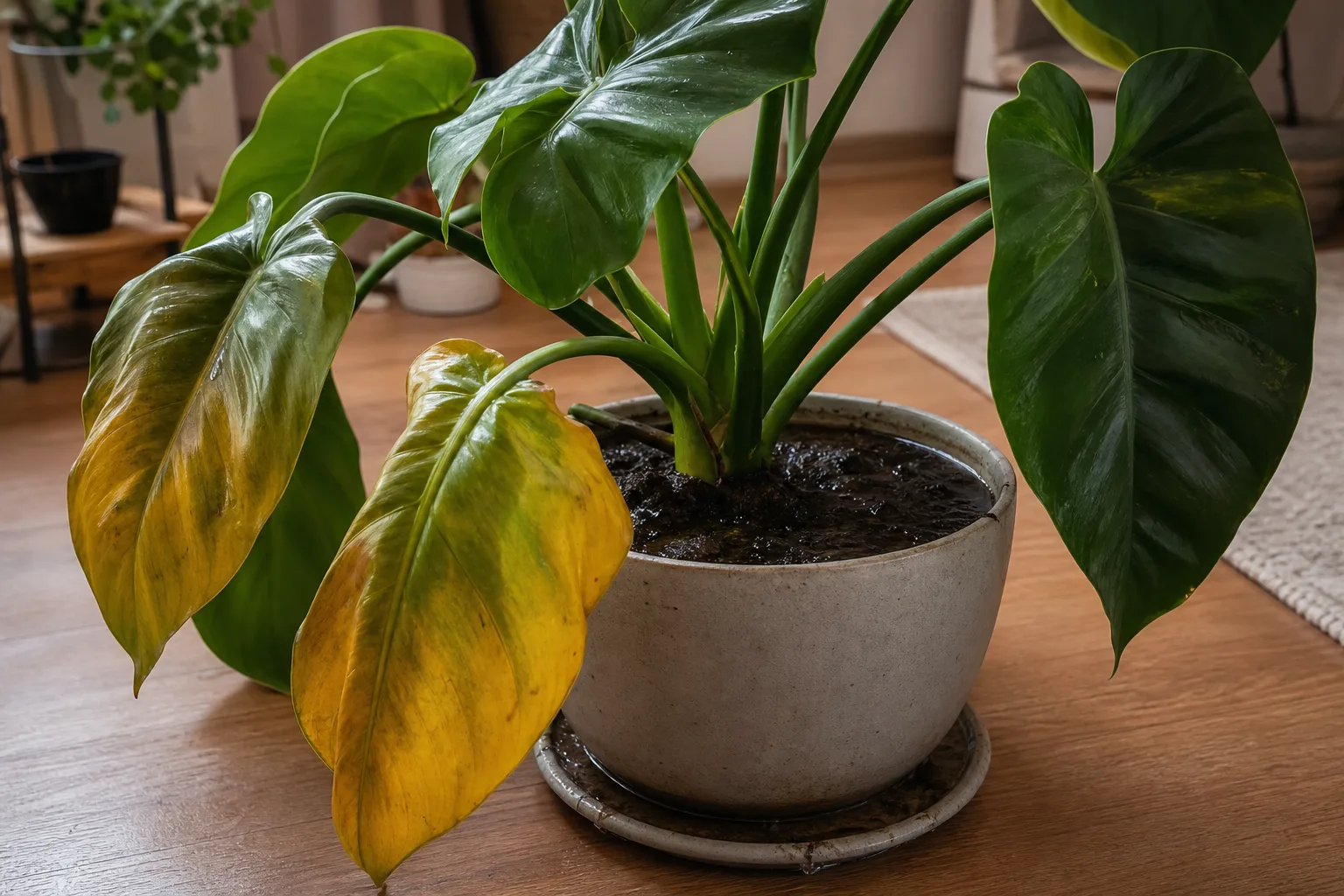
Overwatering on Philodendron Imperial Green: Causes, Checks & Fixes
This guide covers overwatering on Philodendron Imperial Green. See also the general Overwatering guide, watering, and light pages for this plant.
Overwatering on Philodendron Imperial Green: Causes, Checks & Fixes
Quick answer
Use this page for early wet-soil triage on Philodendron erubescens ‘Imperial Green’-before you have confirmed mushy roots or sour decay. If roots are already brown and soft, open the root rot guide instead.
When soil stays wet too long, oxygen leaves the root zone and this self-heading hybrid shows distress at the crown first: lower leaves yellow, the pot stays heavy, and petioles may droop even though the mix is damp. First step: stop watering and let the top 3–5 cm dry completely-often one to two weeks in a badly saturated pot. Empty saucers, pull nursery pots out of cachepots before assessing weight, and move slightly toward brighter indirect light if the plant has been in a dim corner.
| What you notice | Severity | First move |
|---|---|---|
| Damp top 3–5 cm, one yellow lowest leaf, firm crown | Mild | Pause water; dry top 3–5 cm; resume at dry depth |
| Heavy pot 5+ days after watering, 2+ yellow lowers, small new leaves | Moderate | Dry-back plus root spot-check; fix drainage and light |
| Sour smell, spongy petiole bases, wilt on wet soil | Severe | Root rot rescue same day |
Symptom photo pending: finger probe at crown base of self-heading philodendron with heavy wet pot beside a light dry pot.
Why Philodendron Imperial Green gets overwatered
Calendar watering and lobby irrigation traps
The most common mistake is watering on a schedule without checking soil dryness. Imperial Green in a hotel lobby or office often receives weekly irrigation whether the top 3–5 cm is dry or not. A plant in a sealed decorative cachepot compounds the trap-water pools in the outer vessel where you cannot see it, and the nursery pot keeps wicking moisture from below.
Low light and oversized pots
Low light slows transpiration. A north-facing corner specimen may need water every 10–14 days, but caregivers often keep a summer rhythm year-round-one reason chronically wet soil shows up on office philodendrons. An oversized decorative pot holds far more wet mix than the root ball can use, especially in winter when growth slows. See our not enough light and watering guides for placement and dry-depth probes that match dim offices.
Self-heading slow water use in dim offices
Unlike vining heartleaf philodendrons with exposed nodes along a trailing stem, Imperial Green is a compact self-heading hybrid with large paddle leaves arranged in an upright rosette. That crown architecture holds moisture at the stem base longer than trailing types-the lowest petioles sit close to the soil surface and shade the mix, slowing surface evaporation. In dim rooms the plant uses water slowly while the pot still feels heavy, which pushes growers toward another drink when the real problem is saturation.
What overwatering looks like on Philodendron Imperial Green
Crown-base petiole softening
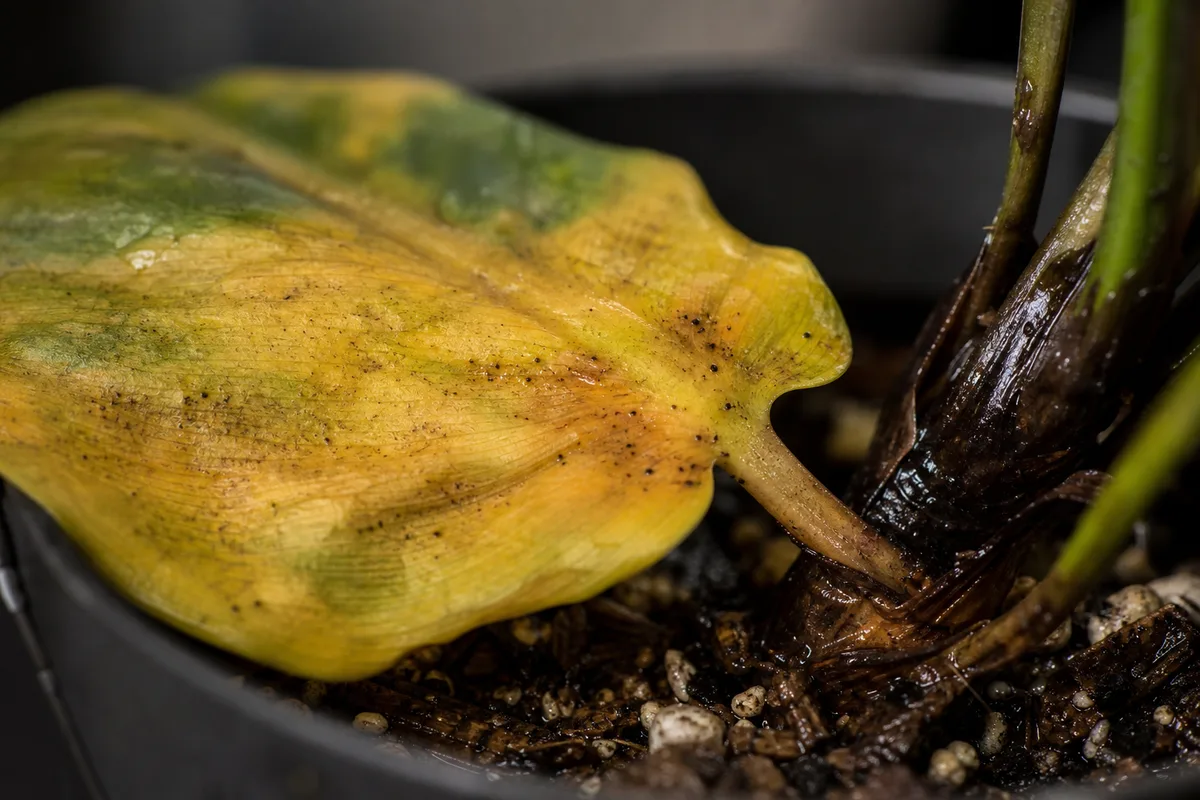
Overwatering symptoms on Philodendron Imperial Green - compare with healthy tissue on the same plant.
On Imperial Green, overwatering often appears at the crown before widespread yellowing. Press petiole bases where they meet the central stem-firm tissue should resist; a spongy feel means the crown zone is taking on excess moisture. This pattern is easy to miss because the glossy upper leaves still look green for a few more days.
Yellow lower leaves and wilt-on-wet-soil
Combined signals to watch for:
- Surface soil stays damp more than three to four days after watering
- Pot feels heavy; saucer holds water or cachepot reservoir stays full
- Lower leaves yellow from the bottom up; petioles droop
- New glossy leaves emerge small, thin, or stall before unfurling
- Sour smell from drainage holes in advanced cases
- Wilting despite moist soil-the confusing signal that sends many owners back to the watering can
- Fungus gnats or white mold on the soil surface (chronic wetness indicators-see fungus gnats and mold on soil)
Symptom photo pending: yellow lower paddle leaf with firm upper growth and damp soil surface on Imperial Green.
How to confirm the cause
Run this checklist in order:
- Finger or probe test - Top 3–5 cm should dry between waterings. If always wet, you are overwatering.
- Pot weight - Lift right after a thorough drink to learn the heavy feel; compare days later. Still heavy five to seven days after the last pour confirms saturation.
- Drainage audit - Holes clear? Saucer emptied within thirty minutes? Mix perlite-amended? Nursery pot removed from cachepot when weighing?
- Light level - Dim placement slows drying; check window distance per the light guide.
- Root spot-check - If moderate or severe signs align, slide the plant out and look for firm pale roots versus mushy brown tissue.
Lookalike table - overwatering vs. other causes
| Symptom pattern | Pot weight | Top 3–5 cm | Crown / petioles | Smell | Likely cause |
|---|---|---|---|---|---|
| Yellow lowers, wilt on wet soil | Heavy | Damp days after watering | Softening at crown base | Sour in advanced cases | Overwatering (this page) |
| Crispy tips, limp leaves | Light | Dry throughout | Firm crown | None | Underwatering |
| Mushy roots, black crown tissue | Heavy | Wet throughout | Collapsing petioles | Sour | Root rot |
| One yellow lowest leaf only | Normal | Dry at 3–5 cm | Firm everywhere | None | Normal aging or see yellow leaves |
| Yellow plus limp on wet soil, roots still firm | Heavy | Damp | Firm but droopy | None | Wilting branch before another pour |
First fix for Philodendron Imperial Green
One clear first action: stop watering until the top 3–5 cm is dry throughout. Empty saucers and cachepot reservoirs. Do not pour because leaves look limp while soil is wet-that deepens the problem.
Mild dry-back recovery
For damp soil, firm crown, no sour smell, and at most one yellow lower leaf:
- Improve airflow around the pot; avoid enclosing the nursery pot in a full cachepot while recovering.
- Scrape surface mold if present and let the top inch dry (see mold on soil if fuzz persists).
- Move one step toward brighter filtered light if the plant has been in a very dim corner.
- Resume watering only when the top 3–5 cm is dry-then soak until runoff and drain fully per the watering guide.
Moderate dry-back plus inspection
For a heavy pot, two or more yellow lower leaves, or stalled new growth-but firm crown and no odor:
- Complete the mild steps above.
- After seven to ten days of dry-back, slide the plant out and inspect roots. Firm pale roots support continued dry-back; any mushy tissue means escalate.
- If mix is dense peat with poor structure, plan a repot into airy blend after the dry spell-see soil and repotting guides.
Advanced - escalate to root rot rescue
For sour smell, spongy petiole bases, or wilt on saturated soil with mushy roots on spot-check:
- Do not wait out another dry-back cycle.
- Follow the root rot guide the same day: unpot, rinse roots, trim soft tissue, repot into fresh airy mix in an appropriately sized pot, wait one week before the first post-rescue drink.
Recovery timeline
Week 1–2 (mild): Top 3–5 cm dries; pot weight drops; yellowing stops spreading. Crown petioles feel firmer when pressed.
Week 2–4 (moderate): First new glossy paddle leaf may emerge firm and full-sized. Old yellow leaves stay yellow-they will not re-green.
Week 4–8 (after root trim): Root-pruned plants need longer before confident new growth. Judge success by firm roots on check, stable crown, and clean new leaves-not by old foliage recovering cosmetically.
If symptoms worsen during dry-back-more yellow leaves, sour smell, crown softening-stop waiting and switch to root rot rescue.
What not to do
- Do not water because leaves look limp while soil is wet.
- Do not repot into a larger pot to “dry things out”-more wet soil volume worsens saturation.
- Do not fertilize stressed roots.
- Do not assume a moss pole will help-Imperial Green is self-heading and does not climb.
- Do not keep the nursery pot sitting in a full cachepot while recovering.
How to prevent overwatering next time
Water when the top 3–5 cm is dry-roughly every 7–10 days in active summer growth and 10–14 days in cooler winter light, adjusted for your home. Use drainage holes, perlite-amended mix, and medium to bright indirect light so the mix dries predictably. Reduce frequency after moving to a cooler room or a dimmer winter corner.
Treat the first yellow lower leaf on a heavy wet pot as a moisture alarm, not a nutrient problem. The same dry-depth rhythm that prevents overwatering also keeps root rot and fungus gnats off this floor specimen long term.
When to worry
Escalate immediately when petioles collapse at the crown, black tissue spreads, or soil smells sour. Those signs mean root decay overlap-open the root rot guide rather than extending dry-back alone.
Keep plants away from pets when handling stressed tissue or repotting. Philodendron contains calcium oxalate crystals that irritate mouths if chewed. Contact your veterinarian promptly if a pet ingests any part of the plant.
Related Philodendron Imperial Green guides
- Imperial Green overview - self-heading habit, size, and care hub
- Watering - dry-depth probes, cachepot traps, seasonal rhythm
- Root rot - unpot, trim, and salvage when sour smell appears
- Underwatering - light pot and dry mix lookalike
- Yellow leaves - when yellowing is aging vs. moisture stress
- Soil - airy aroid mix with perlite that dries without starving roots
- Repotting - post-trim protocol and pot sizing
- Wilting - wet-soil vs. dry-soil collapse fork
- Mold on soil - surface fuzz sharing chronic wetness
- Not enough light - dim placement slowing dry-down
Conclusion
Overwatering on Imperial Green is a drainage and timing problem at the self-heading crown-not generosity with the watering can. Confirm with wet heavy soil and yellow lower leaves; pause water until the top 3–5 cm dries; inspect roots or open the root rot guide if the crown softens or soil smells sour. Use the related guides above for watering rhythm, repotting after rescue, and lookalike symptoms so you do not have to guess the next step.