Wilting on Philodendron Imperial Green: Causes, Checks &
Quick answer
Wilting on Philodendron Imperial Green means roots cannot keep large paddle leaves firm-usually from dry soil or damaged roots in wet soil. First step: probe the top 3–5 cm and lift the pot before you water or withhold water.
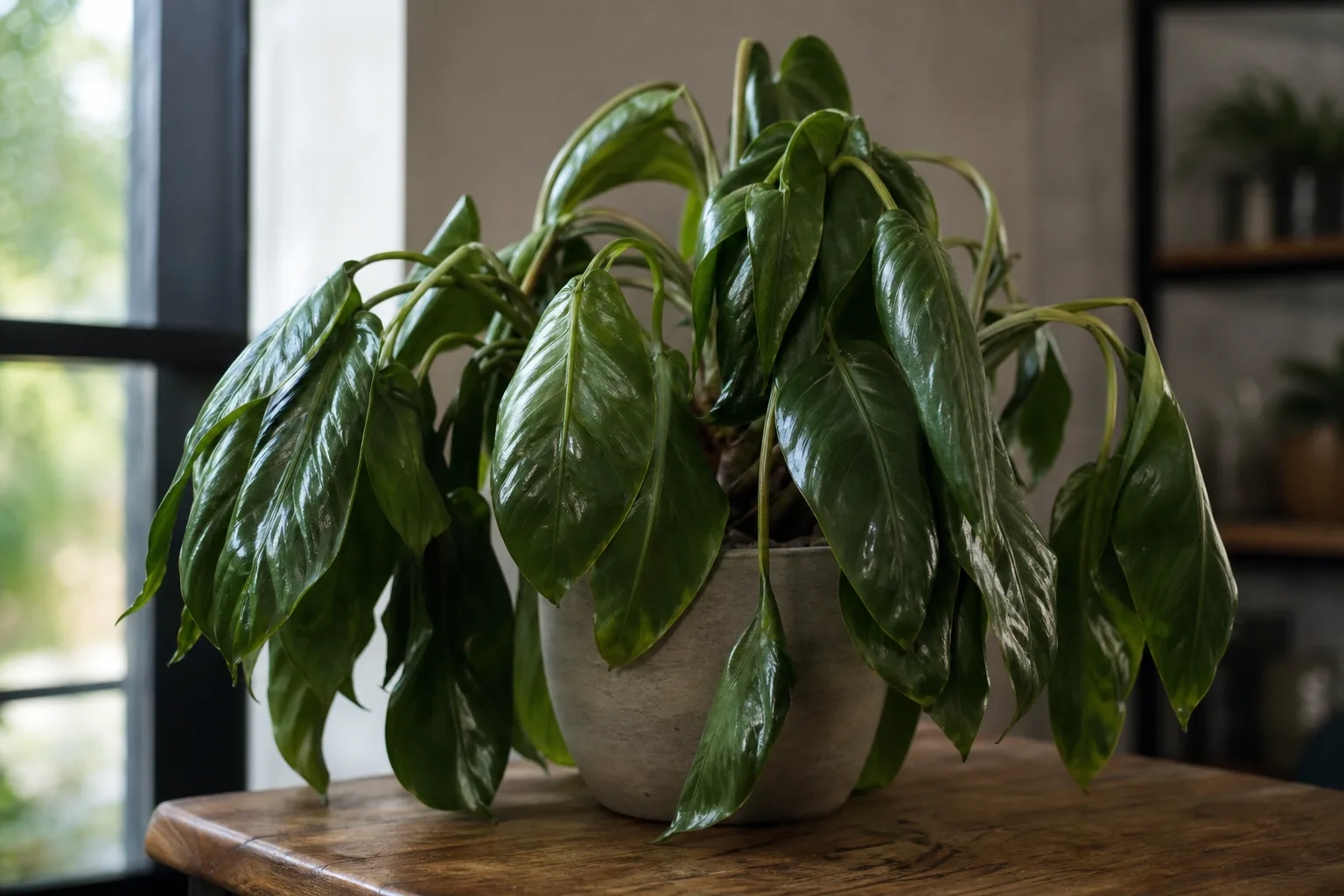
Wilting on Philodendron Imperial Green: Causes, Checks & Fixes
This guide covers wilting on Philodendron Imperial Green. See also the general Wilting guide, watering, and light pages for this plant.
Wilting on Philodendron Imperial Green: Causes, Checks & Fixes
Quick answer
Wilting on Philodendron Imperial Green means the glossy paddle leaves lost turgor because roots cannot deliver water fast enough. That failure usually comes from dry soil or damaged roots sitting in wet soil-two opposite problems that look similar from across the room.
First step: probe the top 3–5 cm and lift the pot. A light dry pot needs a thorough soak. A heavy wet pot with limp leaves needs dry-back and possible root inspection-not another drink. Watering a wilted plant that already has saturated mix is one of the fastest ways to push this self-heading hybrid toward crown rot.
This page is the acute wilt hub for Imperial Green-rapid whole-rosette collapse, heat wilt after a sun move, and the wet-soil paradox where leaves look thirsty while mix stays soggy. For gradual posture slump, low-light lean, or chronic droop without sudden collapse, start at drooping leaves on Imperial Green. For ongoing wet-soil decline, see overwatering and root rot.
Wilting vs drooping leaves on Philodendron Imperial Green
Owners often land on the wrong guide because both involve limp-looking foliage. Wilting here means failed water uptake-the whole self-heading rosette collapses quickly, often within hours to a day, and leaves feel limp rather than merely angled down. Drooping leaves describe a slower posture change: petioles hang or the crown leans toward light while tissue often stays firmer at the base.
| What you see | Pot signal | Petiole bases | Soil at 3–5 cm | Likely cause | First action | Read next |
|---|---|---|---|---|---|---|
| Whole rosette collapses; soil dry | Light | Firm | Dry throughout | Drought wilt | Thorough soak; empty saucer | Underwatering |
| Limp paddles on wet heavy pot | Heavy | Softening | Wet, cool | Root-damage wilt | Stop watering; improve airflow and light | Root rot or overwatering |
| Midday slump near hot window | Moderate | Firm | Appropriately moist | Heat wilt | Move out of direct hot sun | This page |
| Mild limp 3–7 days after repot | Moderate | Firm | Evenly moist | Repot shock | Hold steady; avoid stacking fixes | Repotting guide |
| Gradual hang toward window | Moderate | Firm, elongated | Unremarkable | Low-light lean | Brighten placement | Drooping leaves |
| Collapse after travel or missed week | Light | Firm | Dust-dry | Drought wilt | Bottom or top soak until runoff | Watering guide |
Moss pole is wrong for this plant: Imperial Green is a self-heading cultivar derived from Philodendron erubescens-it holds large glossy leaves on short internodes without climbing. Wilting here is almost always moisture, heat, or root-zone stress-not lack of support.
What wilting looks like on Philodendron Imperial Green
Wilting on this cultivar is a crown-wide turgor failure across the self-heading rosette-not one random sad paddle. Because all petioles emerge from a single short central stem, the entire glossy tier often collapses together when water delivery fails. That whole-rosette pattern distinguishes Imperial Green from vining philodendrons where one stem may wilt in isolation.
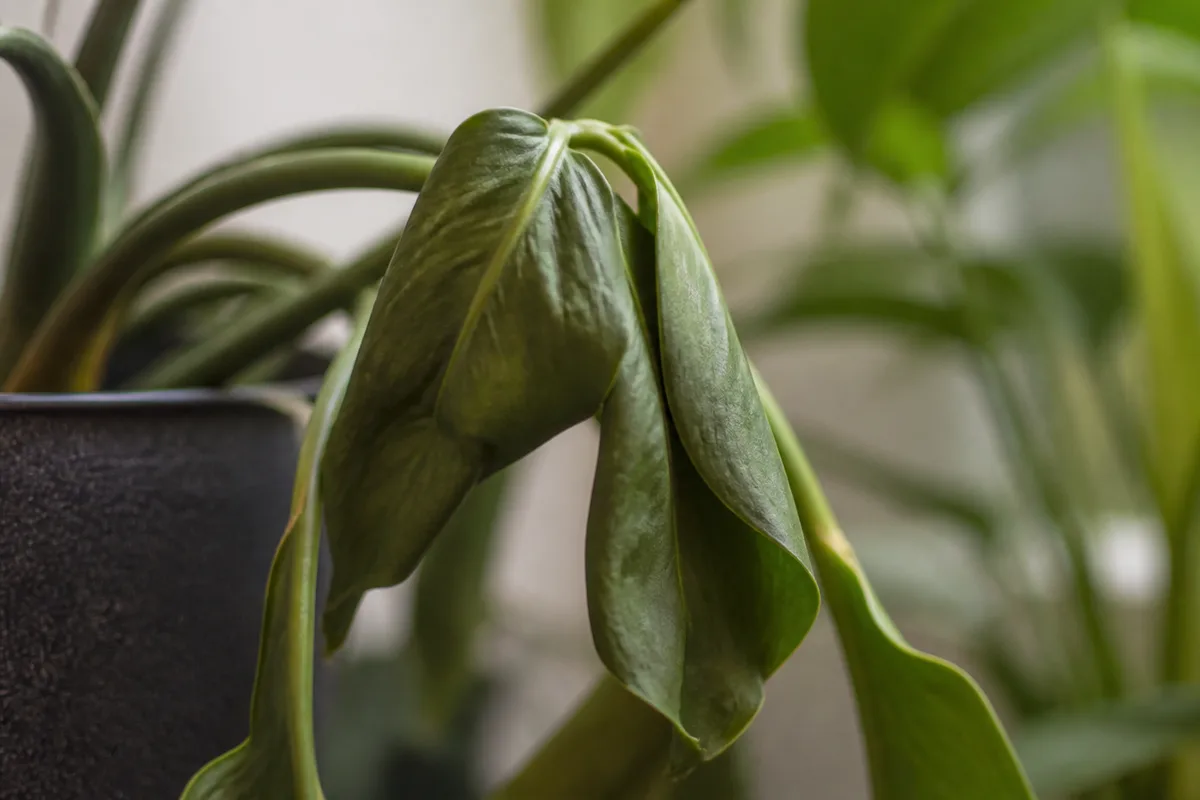
Wilting symptoms on Philodendron Imperial Green - compare with healthy tissue on the same plant.
Drought wilt
- Leaves and petioles go limp; soil is dry top to bottom; pot feels noticeably light
- Leaf edges may crisp slightly before lower leaves yellow
- Perks within 24–48 hours after a thorough soak if roots are still healthy
Root-damage wilt (wet-soil paradox)
- Leaves look thirsty while soil stays wet and heavy even days after the last watering
- Lower paddles may yellow; sour smell from drainage holes in advanced cases
- Watering again makes collapse worse-decayed roots cannot absorb water despite saturated mix
Heat wilt
- Occurs midday beside sun-baked glass or after a sudden move into hot direct sun
- Soil moisture is often appropriate; collapse eases in evening shade if roots are sound
- Leaf edges may scorch or crisp while petiole bases stay firm
Transplant wilt
- Mild limpness 3–7 days after repotting with firm petiole bases and evenly moist, not soggy, mix
- Usually temporary if roots were healthy and the new container has drainage
Photo callout: Compare a light terracotta pot with inward-hanging glossy paddles and dusty dry surface mix against a heavy glazed cachepot with limp lower leaves, yellowing tiers, and clinging wet mix at 3–5 cm. Pot weight and moisture depth matter more than the word “wilting” alone.
Why Philodendron Imperial Green wilts
Underwatering and drought
Large paddle leaves transpire steadily. When the root ball dries, petioles lose turgor and the upright bush looks suddenly collapsed-Illinois Extension lists wilting as a primary underwatering symptom. Perlite-amended mix in bright light can flip from ideal to drought within days. Fear of overwatering after a past rot scare is a frequent reason growers wait too long-see underwatering on Imperial Green when dry/light pots repeat.
Overwatering and root damage
Overwatering is the most dangerous indoor trigger because it produces the paradoxical pattern Penn State Extension describes: wilting despite wet soil. Fine roots decay in oxygen-poor mix; the plant cannot pull water even though the pot feels heavy. On Imperial Green, the compact crown sits close to the pot surface-an oversized ceramic in a dim office corner may stay damp for two weeks after one watering.
NC State Extension notes that Philodendron erubescens-the species behind Imperial Green-prefers moist, well-drained soil rich in organic matter and partial shade indoors, but that overwatering can cause root rot. The cultivar’s large leaf surface and self-heading rosette make chronic wetness at the crown especially risky before lower paddles yellow.
Heat and direct sun
Glossy leaves in hot afternoon sun lose water faster than roots replace it, especially right after a move from a dim shelf. NC State recommends protecting philodendrons from direct sunlight and keeping temperatures between roughly 65 and 85 °F. Imperial Green beside a heating vent, on a sun-baked windowsill, or in the path of AC blast can wilt as roots absorb water more slowly while large leaves lose moisture faster.
Root-bound and hydrophobic dry mix
Root-bound plants may wilt shortly after watering because water channels through without saturating the dense root mass-surface feels briefly moist while the core stays dry. Hydrophobic peat can produce false drought wilt: water runs around a still-dry root ball. Both patterns show a light-to-moderate pot with limp leaves right after a superficial drink.
Repot shock
Recent repotting-especially into a much larger pot-may cause mild wilt for several days with firm petiole bases and evenly moist, not soggy, mix. Heavy leaf load on a young plant with undersized roots sometimes stresses turgor until roots catch up.
How to confirm the cause
Do not treat from one limp petiole. Use this inspection order:
- Moisture and weight - Dry/light or wet/heavy? Lift the pot before you touch leaves.
- Depth check at 3–5 cm - Probe with a finger or chopstick. Damp deep mix with limp leaves points away from simple thirst.
- Petiole firmness - Press bases at the crown. Firm with dry soil means soak; soft with wet soil means stop watering.
- Timeline - Sudden after travel, heat wave, repot, or heavy watering?
- New growth - Stalled, small, or firm and glossy emerging from the crown?
- Smell and drainage - Sour odor from drainage holes strongly suggests decaying roots.
- Light and placement - Midday collapse beside hot glass with otherwise appropriate moisture suggests heat wilt.
Do not water or withhold water until steps 1–2 are answered. Do not repot while diagnosing wilt unless roots are clearly mushy or the mix smells rotten.
Lookalike symptoms to rule out
Drooping leaves overlap when slump is gradual-see drooping leaves when the rosette leans toward a window with elongated petioles and unremarkable soil moisture. Yellow leaves often follow chronic wet-soil wilt-cross-check if lower paddles yellow while the pot stays heavy.
Pest damage rarely wilts the entire rosette suddenly without visible stippling or webbing. Normal evening leaf posture on some plants is not true wilt-Imperial Green should hold paddle leaves outward when healthy. Do not install a moss pole-support hardware will not fix water or heat stress and can crowd the crown.
First fix for Philodendron Imperial Green
Make one correction based on what the pot tells you-do not stack repot, prune, feed, and move on the same day.
Dry soil and light pot: Soak thoroughly until water runs from drainage holes, then empty the saucer. Expect perk within 24–48 hours. If leaves stay limp on now-moist soil, probe deeper-hydrophobic dry peat may need a slow top-to-bottom soak per the watering guide.
Wet soil with wilt: Stop watering immediately. Move to medium-bright indirect light with airflow so the top 3–5 cm can dry. If petiole bases feel soft or the mix smells sour, unpot the same day, rinse roots, trim mushy tissue, and repot into fresh airy mix per the root rot guide.
Heat wilt: Move 1–2 m away from sun-baked glass, vents, and radiators. Water only if the top 3–5 cm is dry-extra water on already-wet mix risks overwatering on top of environmental shock.
Root-bound slump after watering: If water runs straight through and the pot is still light hours later, consider repotting into a container only one size larger with fresh perlite-amended mix-see the repotting guide.
Do not fertilize wilted plants. Do not move from deep shade to harsh direct sun in one step.
Step-by-step recovery
Use this sequence when wilt persists after the first correction:
- Day 0: Complete the moisture-and-weight check. Make exactly one fix-soak, dry-back, or shade move.
- Days 1–2: Re-check pot weight and petiole firmness. Drought wilt should show firming petioles; wet-soil wilt should not worsen after you stopped watering.
- Days 3–5: If wet soil and soft crown persist, unpot and inspect roots. Trim black mushy tissue with clean shears; repot into airy mix with drainage holes.
- Week 2: Resume watering only when the top 3–5 cm dries-match the rhythm in the watering guide, not a calendar date.
- Weeks 3–8: Judge recovery by firm glossy new leaves emerging from the crown, not by old paddles snapping upright again.
Worked recovery example
A grower reported an Imperial Green in an oversized glazed lobby pot: heavy wet soil, whole rosette limp by Monday morning, no sour smell yet. They stopped watering, moved the plant to a brighter indirect shelf with airflow, and waited five days for the top 3–5 cm to dry. Petiole bases firmed; one thorough soak followed the watering guide dry-top rhythm. New glossy leaves emerged cleanly within three weeks-old lower paddles stayed slightly angled but did not yellow further.
Recovery timeline
Timelines vary with severity, pot size, and season-use them as ranges, not guarantees.
| Cause | Typical visible improvement | What to watch |
|---|---|---|
| Single drought event | 24–48 hours after thorough soak | Firm new glossy leaves from crown |
| Mild overwatering wilt | 1–2 weeks once mix dries | Neutral-smelling pot; no new yellow paddles |
| Root damage with trim | 4–8 weeks | Clean new leaves; firm petiole bases |
| Heat wilt | Same day to several days after shade | No scorch spread; firm emerging growth |
| Repot shock | Several days to 2 weeks | Firm crown; no sour soil smell |
Old limp or scorched paddles rarely return to perfect upright form. Judge recovery by firm new leaves emerging from the crown, not by forcing damaged petioles to stand up again.
What not to do
- Do not automatically water every wilted philodendron-check soil first.
- Do not place a recovering plant in direct sun to “dry it out.”
- Do not fertilize wilted plants.
- Do not ignore wilt that worsens after you watered wet soil.
- Do not prune half the crown while diagnosing-stress compounds on a single-crown plant.
- Do not install a moss pole expecting wilt to resolve.
How to prevent wilting next time
Match watering to how fast your pot dries, not a fixed calendar. For most indoor Imperial Green plants, water when the top 3–5 cm feels dry-roughly every 7–10 days in bright active growth and 10–14 days in cooler or dimmer months. Use a pot only slightly larger than the root mass, perlite-amended mix, and drainage holes.
Keep medium to bright indirect light so the mix breathes between drinks. Empty saucers after every watering. Overwatering prevention starts with checking soil moisture, not reacting to leaf posture alone. Full rhythm and cachepot traps: watering guide, soil guide, and overview.
When to worry
Escalate immediately if wilt pairs with crown softening, spreading yellow leaves, or sour soil despite surface dryness. Those patterns can signal advancing crown rot on this self-heading hybrid-shift to the root rot guide rather than repeated top watering.
Pet safety: Philodendron contains calcium oxalate crystals toxic to cats and dogs. Keep Imperial Green out of reach when troubleshooting near windowsills. If a pet chews foliage, contact your veterinarian and ASPCA Animal Poison Control (888-426-4435 in the US). Wear gloves when handling cut root tissue.
Related Imperial Green guides
- Philodendron Imperial Green overview
- Drooping leaves on Imperial Green
- Philodendron Imperial Green watering
- Overwatering on Imperial Green
- Underwatering on Imperial Green
- Root rot on Imperial Green
- Not enough light on Imperial Green
- Philodendron Imperial Green light
Conclusion
Wilting on Philodendron Imperial Green is a moisture diagnostic, not a single fix. Dry soil means soak; wet soil means stop and inspect roots. Confirm with pot weight and moisture depth before you act, and judge recovery by firm new leaves emerging from the crown-not by assuming every wilt needs water. When slump is gradual rather than sudden, use the drooping leaves guide for posture-first troubleshooting.