Spider Mites on Philodendron Imperial Red: Causes, Checks &
Quick answer
Spider mites on Philodendron Imperial Red show as fine stippling and dull patches on large leathery leaves-often bronze or silvery on burgundy-red new growth-with webbing at the crown in dry winter air. First step: isolate the plant, rinse all leaf undersides thoroughly, and raise humidity at crown height while treating with insecticidal soap or horticultural oil on label repeat intervals.
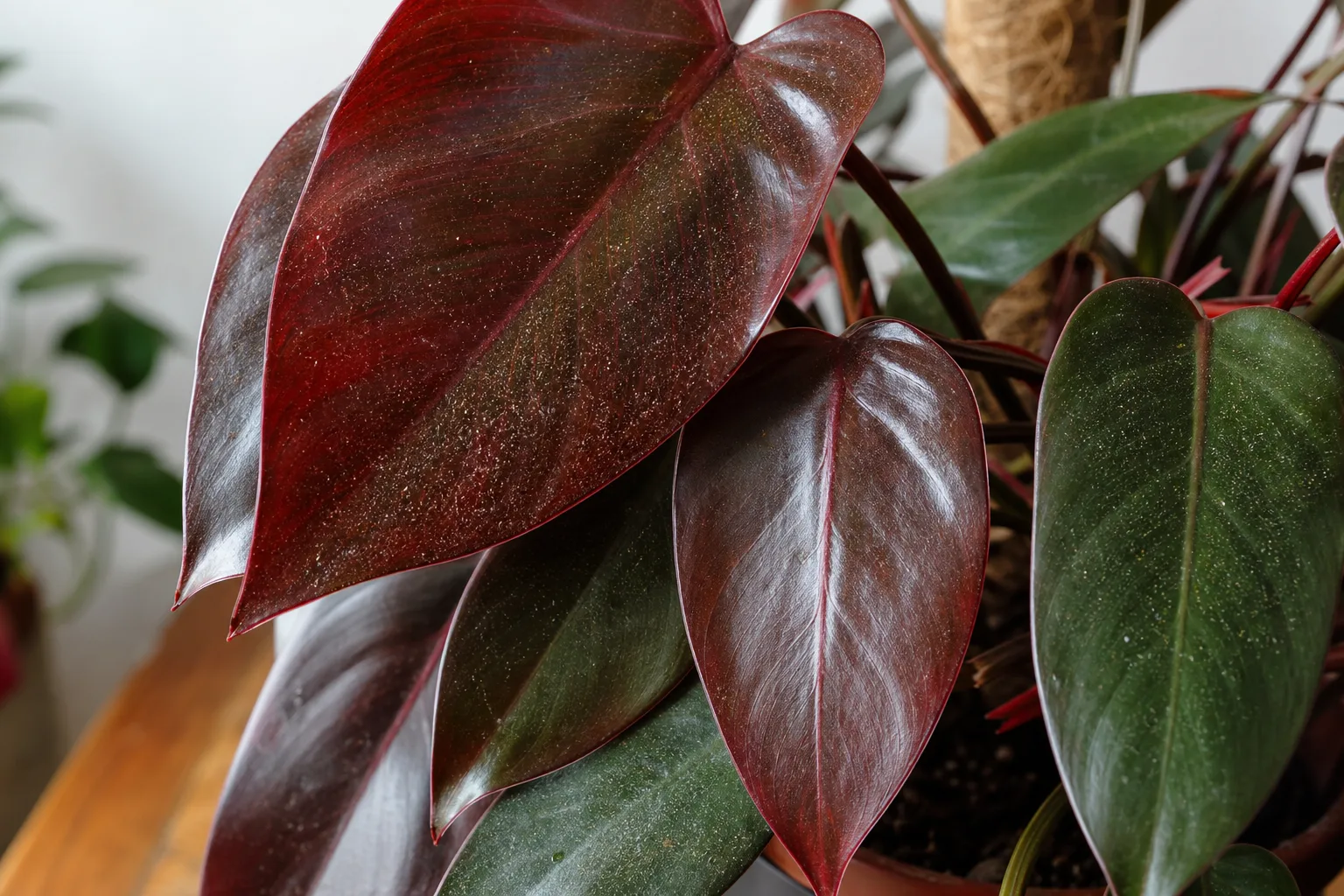
Spider Mites on Philodendron Imperial Red: Causes, Checks & Fixes
This guide covers spider mites on Philodendron Imperial Red. See also the general Spider Mites guide, watering, and light pages for this plant.
Spider Mites on Philodendron Imperial Red: Causes, Checks & Fixes
Quick answer
The most confusing sign on Philodendron Imperial Red is not webbing-it is bronze or silvery stippling on burgundy-red new leaves that looks like normal color fading until you flip the blade and find silk or moving specks underneath. That pattern is specific to this self-heading cultivar: large leathery leaves, one central crown, and dry winter air trapped between overlapping petioles.
Spider mites on Imperial Red show as fine stippling and dull patches on those large blades, often with webbing at the crown beside heating vents. First step: isolate the plant, rinse all leaf undersides thoroughly, and raise humidity at crown height while treating with insecticidal soap or horticultural oil on the repeat interval printed on the product label.
Philodendron erubescens ‘Imperial Red’ is a self-heading philodendron with thick, glossy leaves that unfurl burgundy-red and mature darker. Those blades give mites plenty of feeding surface, and the compact crown traps dry air between petioles-exactly where spider mites thrive in hot, dry conditions. For the full species picture and baseline humidity targets, see the Imperial Red overview and low-humidity guide. For genus-wide mite biology and escalation, see spider mites on philodendron.
Why Philodendron Imperial Red gets spider mites
Low humidity is the primary trigger indoors. Spider mites are tiny arachnids that thrive in hot, dry conditions-common when central heating runs in winter and relative humidity drops near radiators, heat vents, and sunny south windows. Imperial Red sits in those same warm, dry microclimates, especially when grouped with other plants under grow lights without added moisture.
Clemson Extension lists spider mites among pests that can infest philodendrons even though the species tolerates typical home humidity. Philodendron erubescens prefers high humidity and moist, well-drained soil in its native range; when air stays dry for weeks, the plant tolerates it-but mites reproduce faster than the rosette can outgrow the damage.
Self-heading crown vs. vining philodendrons. On trailing cultivars like Micans or Brasil, mites often spread along runners and node joints down a long vine-you may spot stippling on several leaves before webbing reaches the growing tip. On Imperial Red, every leaf emerges from one central crown, so mites concentrate in the sheltered petiole sheaths at the top. A moderate infestation can stall all new burgundy growth within weeks because there is no backup growing point along a runner. That single-crown architecture is why crown inspection matters more here than on vining cousins.
Stressed plants invite heavier infestations. Overwatered Imperial Red with soft petioles, or one kept in dim light with stalled red new growth, is already under pressure. Mites are not caused by bad watering alone, but a weakened self-heading crown has only one growing point; sap loss at the top hits new burgundy leaves first. If petioles are limp with wet soil, rule out overwatering before you blame mites alone.
New purchases and neighbors spread mites quickly. NC State recommends that you monitor for spider mites, mealybugs, aphids, and scale insects on philodendron erubescens cultivars. Mites walk across touching leaves and drift on silk threads, so a compact Imperial Red beside an infested pothos or fiddle-leaf fig can pick them up within days.
What spider mites look like on Philodendron Imperial Red
Early damage is easy to miss on dark foliage. Watch for these patterns together:
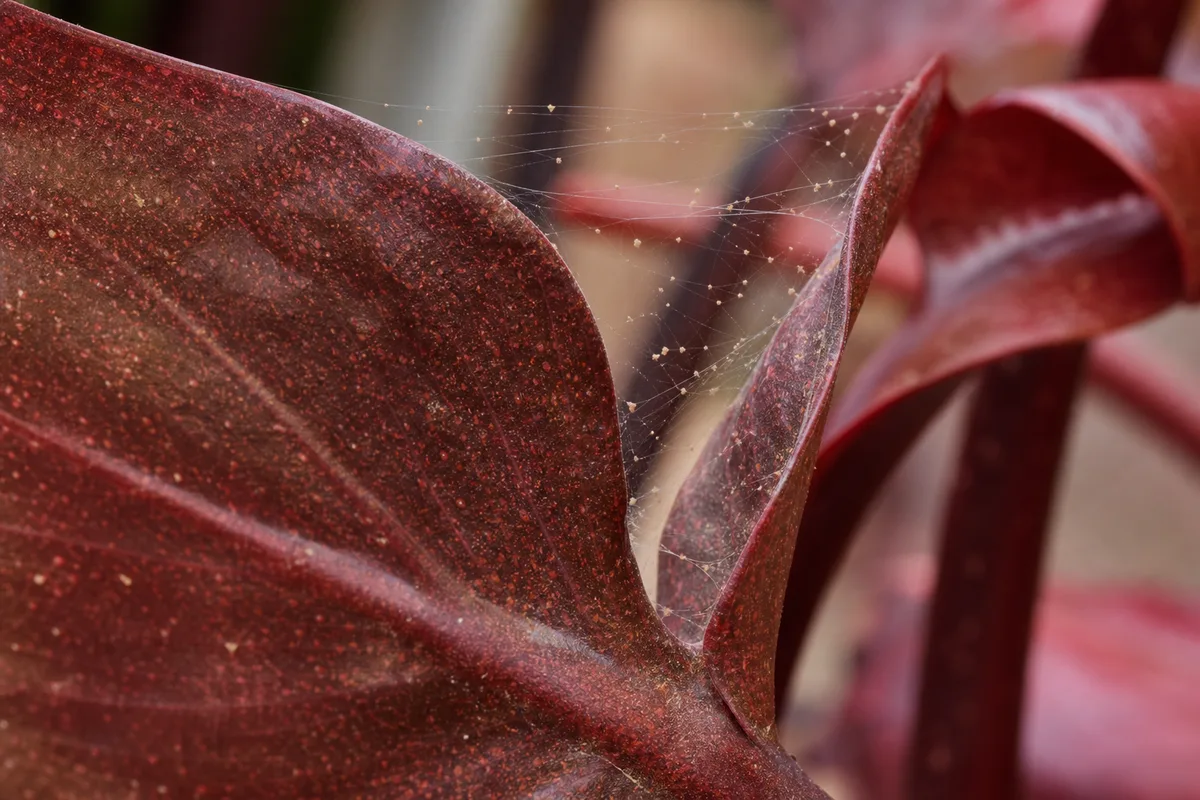
Spider Mites symptoms on Philodendron Imperial Red - compare with healthy tissue on the same plant.
- Fine pale speckling or stippling on the upper leaf surface-often silvery or bronze on burgundy-red leaves rather than obvious yellow dots
- A dull, faded look on otherwise glossy blades, especially along the midrib where mites cluster first
- Silky webbing at petiole sheaths and where burgundy petioles meet the central crown
- New red-bronze leaves emerging smaller, thinner, or already mottled before they harden off
- Lower mature green leaves bronzing at the edges while the pot weight and roots still feel normal
On Imperial Red, do not mistake the normal burgundy-to-green color cycle for mite damage. Healthy maturing leaves darken evenly with firm petioles and no webbing. Mite stippling looks like someone pricked the surface with a pin-random pale dots that do not follow leaf age.
Lookalike symptoms to rule out
| What you see | Soil / petioles | Webbing / tap test | Likely cause | Read next |
|---|---|---|---|---|
| Bronze stippling plus silk at crown | Firm petioles; either moisture | Moving specks; fine webbing | Spider mites | This page |
| Crisp margins, no stippling dots | Firm; moist or dry | No movement; no silk | Low humidity | Humidity guide |
| Silvery scarring, black varnish droplets | Firm | No dense webbing | Thrips | Inspect neighbors |
| White wax clusters in leaf axils | Firm | Cottony tufts, not silk sheets | Mealybugs | Mealybug guide |
| Limp petioles, yellow lower leaves | Wet, heavy pot | No webbing | Overwatering | Watering guide |
| Even burgundy-to-green fade, no dots | Firm | Clean tap test | Normal maturation | Overview |
The Imperial Red pairing that matters most: stippling dots plus webbing or live mites on the tap test confirm spider mites. Crisp margins on firm leaves with moist soil and no stippling dots point to dry air alone-fix humidity per the low-humidity page, then re-check undersides in a week.
How to confirm the cause
Do not treat from a single dull leaf. Use this inspection order:
- Leaf undersides at the crown - Tilt the newest red-bronze leaves upward and check where petioles join the rosette. Mites and webbing start in sheltered joints.
- White-paper tap test - Hold white paper under a leaf and tap the blade firmly. Specks that move confirm mites; static dust does not crawl.
- Magnifier check - Use a phone macro lens or 10× hand lens on the underside. Two-spotted spider mites are tiny eight-legged arachnids, often with two dark spots on a pale body.
- Webbing scan - Look for fine silk between petioles and along the central stem, not just on leaf faces.
- Hygrometer at crown height - Place the sensor beside the pot at leaf level for 24 hours. Readings below 35% beside a heat vent support treating dry air alongside mites-not instead of mite treatment when webbing is present.
- Neighbor plants - Inspect plants within arm’s reach. Mites spread before symptoms show on every host.
RHS guidance describes red spider mite damage as fine pale mottling on the upper leaf surface with webbing on heavily infested plants-matching what you see on large Imperial Red blades once you know to check the gloss, not only the color.
Representative recovery pattern
The following is an editorial composite based on recurring winter reports on self-heading P. erubescens rosettes beside heat sources-not a single documented grow log, but a realistic timeline for Imperial Red:
A 25 cm Imperial Red on a south-window shelf above a radiator showed dull bronze stippling on burgundy new leaves in late January. A room hygrometer read 48% at desk height but 31% at crown level beside the vent. A white-paper tap test confirmed slow-moving specks at petiole sheaths. After isolation, lukewarm sink rinses every five days, insecticidal soap on weeks two and three (label interval), and a small humidifier holding 52% RH at crown height, clean burgundy leaves emerged by week five. Old stippled blades stayed marked; success was judged on crown growth only.
First fix for Philodendron Imperial Red
Isolate the plant from your collection the same day you confirm mites. Delay lets silk-borne mites reach other philodendrons and syngoniums nearby.
Once isolated:
- Rinse the entire rosette in lukewarm water, directing the stream at every leaf underside and the crown. Penn State Extension recommends rinsing upper and lower leaf surfaces with warm water and applying controls to undersides where pests feed.
- Protect newly unfurling burgundy leaves - use gentle shower pressure on soft, still-rolling foliage; cup each new leaf with your hand and rinse from the base outward rather than blasting the delicate tip. Fully hardened leaves can take firmer rinsing.
- Wrap the pot in a plastic bag so soil stays in place during shower or sink rinsing.
- After rinsing, apply insecticidal soap or horticultural oil labeled for houseplants, covering undersides and petiole sheaths thoroughly. Clemson HGIC notes that insecticidal soaps are contact products effective against spider mites when they touch the pest directly.
- Repeat rinsing and treatment on the interval printed on your product label-Mississippi State Extension recommends treating spider mites with soap, horticultural oil, or neem oil two to three times at five-day intervals, with thorough underside coverage; Colorado State Extension notes repeat applications every four to seven days may be needed because contact products have no residual activity.
- Run a humidifier or place the plant on a pebble tray (pot above the water line) to raise local humidity during treatment. RHS advises that increasing humidity helps move conditions away from those that favour red spider mites, though humidity alone will not cure an active infestation.
Make one correction at a time. Do not fertilize, repot, and spray pesticide on the same day.
Choosing soap, horticultural oil, or miticide
All three are contact treatments-they must wet the mite directly and are repeated because eggs hatch between sprays.
| Product type | Best for Imperial Red when… | Cautions on this cultivar |
|---|---|---|
| Insecticidal soap | Light to moderate crown infestations; you can rinse thoroughly first | Test one leaf if unsure; avoid spraying in hot direct sun on rinsed foliage |
| Horticultural oil | Moderate webbing when soap alone fails after two cycles | Check label for repeat-interval limits; avoid oil on soft burgundy leaves still unfurling or in bright afternoon sun |
| Neem oil (labeled for mites) | Owners who already use neem on houseplants; moderate infestations | Same oil-burn rules as horticultural oil; morning application after leaves dry from rinse |
| Labeled miticide | Heavy infestation after three weeks of diligent soap/oil cycles | Follow label exactly; many general insecticides do not control mites and can worsen outbreaks |
Escalation path: rinse → insecticidal soap or oil on label interval for two to three weeks → labeled miticide only if tap tests still show live mites and fresh webbing on crown leaves. Systemic imidacloprid treatments do not control spider mites per Mississippi State Extension-do not substitute them for repeat contact sprays.
Pet safety during repeated treatment: Philodendrons contain calcium oxalate crystals that irritate skin, and the ASPCA lists philodendron as toxic to cats and dogs. Wear gloves when rinsing damaged tissue, keep the quarantined pot out of pet reach, and wipe floors after sink rinses so pets do not walk through runoff. Soap and oil residues are not pet food-block access until foliage dries after each application.
Step-by-step recovery
After the initial rinse and spray:
- Keep Imperial Red in medium to bright indirect light with good airflow-not direct sun, which stresses rinsed leaves and increases oil burn risk on burgundy new growth.
- Re-treat every five to seven days per product label; eggs hatch on a faster schedule in warm rooms, so skipping a week often restarts the cycle.
- Wipe or rinse webbing before each spray so contact products reach the mites.
- Watch for new red-bronze leaves opening clean and firm over the next four to six weeks.
- Trim only leaves that are more than half bronzed if they block inspection; leave partially damaged foliage until new growth is established.
If webbing returns within three days of treatment, increase rinse pressure on hardened leaves, check hidden crown crevices, and confirm you are hitting undersides-not only the glossy upper surface of leathery blades. Match rinse frequency to soil moisture per the watering guide so repeated showers do not keep the mix soggy.
Recovery timeline
Light stippling on a few leaves often stabilizes within two to three weekly cycles once humidity rises and rinsing is consistent. Moderate crown infestations may need six to eight weeks before you trust new growth. Severe cases with webbing across the growing point and repeated leaf drop may not fully recover cosmetically; honest progress means no fresh stippling on new leaves and no new silk after three treatment rounds.
Old stippled or bronzed leaves will not regain their original burgundy gloss. Use clean new crown leaves and absence of webbing as your markers-not cosmetic repair of damaged blades.
What not to do
- Do not only wipe the tops of glossy leaves-mites feed underneath leathery Imperial Red blades.
- Do not rely on misting alone; brief mist evaporates quickly and does not sustain the humidity shift mites dislike.
- Do not fertilize a mite-stressed rosette; tender new tissue attracts more feeding.
- Do not place rinsed plants in direct sun immediately; wet leaves scorch easily, and oil on soft burgundy unfurling leaves burns faster.
- Do not skip isolating new plants; quarantine breaks the most common introduction path.
- Do not use general insecticides labeled only for aphids or whiteflies-mites need soap, oil, neem, or a labeled miticide.
- Do not handle damaged tissue without gloves; philodendrons contain calcium oxalate crystals that irritate skin, and sap loss from mite wounds increases exposure.
How to prevent spider mites next time
Match humidity to how Philodendron Imperial Red overview grows best, not only to what it survives. For most indoor Imperial Red plants, aim for 40–60% relative humidity at crown height in winter-especially near heat sources. A wall hygrometer across the room can read 45% while the crown beside a register sits under 30%; place the sensor where the leaves actually grow.
Use a room humidifier, group humidity-loving plants, or pebble trays with the pot above the water line. Inspect the crown and leaf undersides weekly from October through March when heating dries indoor air. Quarantine new purchases for two weeks before placing them beside your rosette. Keep Imperial Red in bright indirect light per the light guide so it grows steadily without the extra stress of dim, stagnant corners where mites also go unnoticed.
Avoid over-fertilizing; lush soft growth is easier for mites to pierce. When you bring plants indoors for winter, rinse and inspect them before they touch your Imperial Red.
When to worry
Treat spider mites as medium-to-high severity on Imperial Red because the single crown concentrates damage. Escalate immediately if:
- Webbing covers the central growing point where new burgundy leaves emerge
- New leaves open already stippled for two cycles in a row despite treatment
- Lower leaves drop rapidly while stippling climbs toward the crown
- Mites reappear on neighboring plants after you treated only one pot
- The rosette stalls with no new growth for more than four weeks in warm conditions
If treatment fails after three diligent weekly cycles, consider discarding a heavily webbed plant to protect the rest of your collection-Penn State Extension advises discarding severely affected plants when infestations are beyond practical control indoors.
Related Imperial Red care and problems
Use these guides while you treat or after recovery:
- Imperial Red overview - self-heading growth, burgundy color cycle, toxicity
- Watering - avoid soggy mix during repeat rinses
- Low humidity - dry-air lookalike without stippling or webbing
- Overwatering - limp petioles and yellow lower leaves, not mites
- Mealybugs - co-occurring crown pest in dry winter air
- Leggy growth - dim-light stress that weakens the crown
- Genus spider mites - philodendron-wide biology and escalation
Success markers: clean new burgundy crown leaves, clear tap tests for two consecutive weeks, and RH above 40% at petiole height-not perfect gloss on old stippled blades.
When to use this page vs other Philodendron Imperial Red guides
- Philodendron Imperial Red watering guide - Use for routine moisture checks before assuming spider mites is the main issue.
- Philodendron Imperial Red problems hub - Browse all 10 common issues on this species.
- Leaf Drop on Philodendron Imperial Red - Different entry point when symptoms overlap with spider mites.
- Slow Growth on Philodendron Imperial Red - Different entry point when symptoms overlap with spider mites.