Mold on Soil on Philodendron Lemon Lime: Causes, Checks &
Quick answer
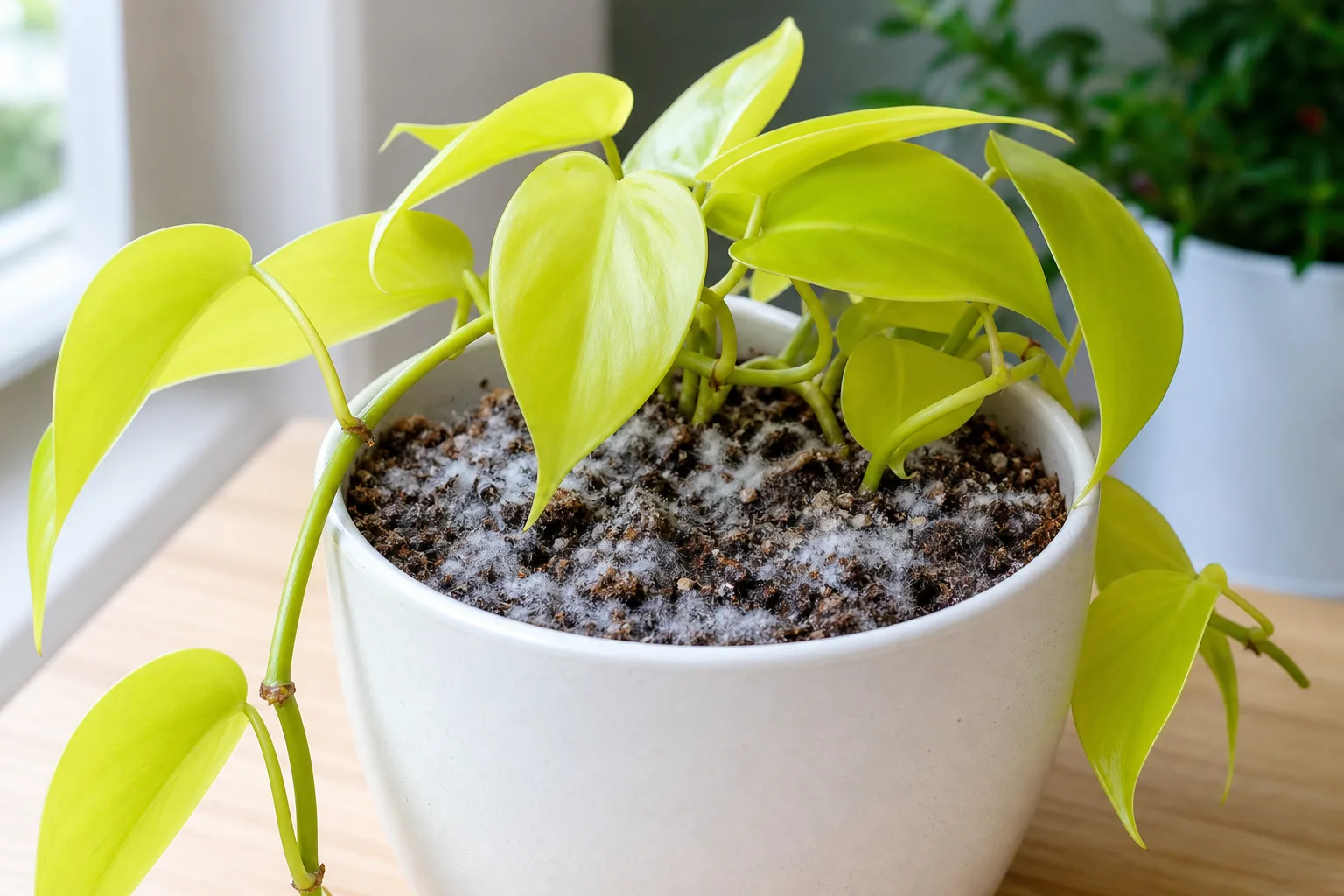
Fluffy white or gray mold on Philodendron Lemon Lime potting mix means the surface stayed damp too long-usually from overwatering, dense peat, or poor airflow under a hanging basket. Scrape the top layer, let the upper 3–5 cm dry completely, and adjust watering before wet conditions stress roots.
Mold on Soil on Philodendron Lemon Lime: Causes, Checks & Fixes
This guide covers mold on soil on Philodendron Lemon Lime. See also the general Mold on Soil guide, watering, and light pages for this plant.
Mold on Soil on Philodendron Lemon Lime: Causes, Checks & Fixes
Quick answer
White or gray fuzz on Philodendron Lemon Lime (Philodendron hederaceum ‘Lemon Lime’) potting mix is usually saprophytic fungus feeding on organic matter in a surface layer that has stayed wet too long. The mold itself is often cosmetic, but the moisture behind it is not-this rapidly growing trailing vine needs well-drained potting mix and time to dry between drinks. Chronic surface wetness can precede root rot and fungus gnats on the same pot.
First step: scrape off the visible mold and stop watering until the top 3–5 cm of mix feels dry. Do not repot, fertilize, or spray fungicide on day one. On Lemon Lime, firm chartreuse vines and bright new leaves at growing tips mean you likely caught a surface issue-not root failure.
What mold on soil looks like on Philodendron Lemon Lime
Surface mold on this cultivar usually shows up before the vine looks sick:
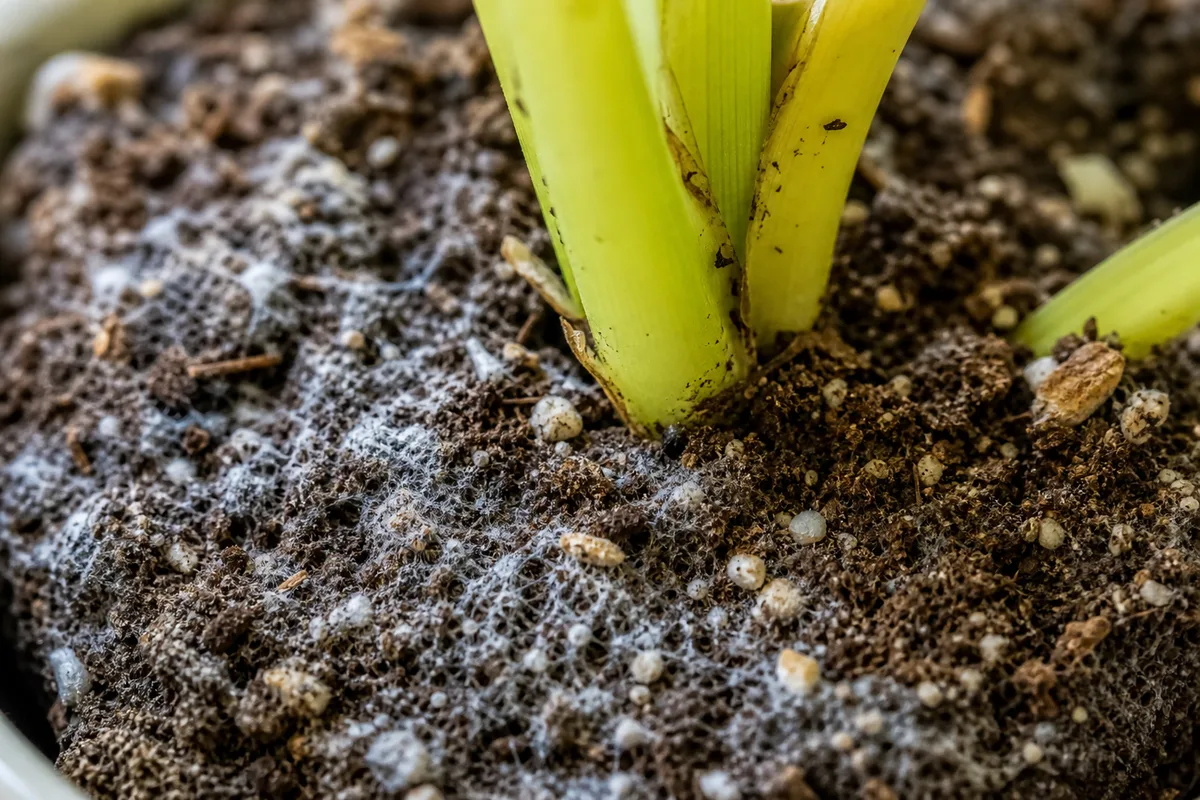
Mold on Soil symptoms on Philodendron Lemon Lime - compare with healthy tissue on the same plant.
- White, gray, or occasionally yellow-tan fuzzy patches on the top of the mix
- Soil surface that stays dark and damp for several days after watering
- A faint musty smell when you lift trailing stems to inspect a hanging basket
- Fallen chartreuse heart-shaped leaves decomposing on the surface
- Small dark fungus gnats flying up when you water-often in the same pots
Healthy Lemon Lime vines above the problem often look fine at first: chartreuse leaves stay glossy and firm, nodes keep producing new growth, and stems feel solid at the soil line. That vigor check matters-Lemon Lime holds its signature color when roots are still working. Dull, olive-green reversion on lower leaves while the surface stays wet is an early moisture-stress signal that goes beyond cosmetic mold.
Advanced warning signs mean the moisture issue has moved past surface fuzz:
- Lower leaves yellow or lose chartreuse brightness while the pot stays heavy and wet
- Vines droop despite damp soil
- Stems soften or darken at the base
- Mold returns within two to three days every time you scrape it
Why Philodendron Lemon Lime gets mold on soil
Lemon Lime is a forgiving heartleaf philodendron, not a succulent-but it still punishes roots that sit in stale, oxygen-poor mix. Mold appears when the top layer of organic-rich potting soil never dries between waterings.
Trailing heartleaf habit and hanging-basket airflow trap
Lemon Lime is almost always grown as a trailing vine in hangers or on high shelves. Cascading foliage shades the pot lip and blocks airflow from below-the least ventilated spot on the plant. Water dripping from the basket rim can keep the upper mix saturated longer than a shelf pot in the same room. Trailing stems also drop chartreuse leaves onto the surface, giving saprophytic fungi fresh organic food.
Peaty mix, decorative moss toppers, and dim placement
Standard bagged potting soil holds moisture at the surface longer than heartleaf roots prefer. Without 20–25% perlite or similar amendments, organic particles break down and become fungal food while water lingers. Decorative moss, rocks, or cache pots without drainage trap humidity at the soil line.
Low light slows evaporation. Lemon Lime tolerates medium indirect light, but a dim corner extends dry-down time. Trailing chartreuse stems can look healthy while the soil surface under the canopy stays damp and mold-friendly-chartreuse color fades toward plain green before roots fail, which makes mold easy to dismiss as cosmetic.
Seasonal watering trap
Many owners water every week year-round because the plant grows fast in summer. In dim winter light or after moving a hanger into a cooler corner, the same volume keeps the surface wet for days. Missouri Botanical Garden recommends reducing watering from fall to late winter for heartleaf philodendron-matching seasonal dry-down prevents chronic surface wetness. Your hub rhythm-allow the top 3–5 cm to dry per the watering guide-matters more than the calendar.
The fungus breaking down surface debris is typically a decomposer, not a pathogen attacking living philodendron tissue. Iowa State Extension notes that fungi feeding on dead organic matter in potting soil do not harm living plants-but they reveal an environment that can eventually stress roots.
How to confirm the cause
Work through these checks in order:
- Surface moisture - After your last watering, how many days until the top 2–3 cm feels dry to the touch? More than four or five in normal indoor conditions suggests overwatering or poor drainage.
- Deep moisture - Push your finger 3–5 cm down. Surface mold with dry depth may be a shallow issue; mold with wet soil throughout is more serious.
- Stem firmness - Pinch the base of the vine at the soil line. Firm green tissue with fuzzy soil only points to surface mold. Soft, collapsing tissue means investigate roots.
- Chartreuse vigor - Are fresh yellow-green leaves still opening at vine tips? Stalled new growth plus mold and wet soil raises root-stress concern. Dull olive reversion on older leaves while tips stay bright often means fix moisture before repotting.
- Drainage check - Do water and air flow freely from drainage holes? Is the saucer empty within an hour of watering? Hanging baskets with permanent drip trays need emptying after every soak.
- Companion pests - Fungus gnats around the pot confirm a shared wet-soil habitat. University of Minnesota Extension links over-watering and poor drainage to fungus gnat problems on indoor plants.
- Smell - Musty surface odor fits saprophytic mold. Sharp sour smell suggests anaerobic, overly wet mix and possible root decline.
If vines are firm, new chartreuse leaves keep emerging, and only the top centimeter looks fuzzy after one slow dry-down cycle, you are likely dealing with harmless surface mold tied to recent overwatering-not an emergency repot.
Mold vs. root rot vs. overwatering
| Signal | Surface mold (likely) | Overwatering / root stress |
|---|---|---|
| Soil surface | White or gray fuzz on top | Wet throughout; may or may not show fuzz |
| Leaf color | Chartreuse stays bright on firm vines | Dull green-yellow; limp despite wet soil |
| Stem base | Firm | Soft, dark, or collapsing |
| Smell | Musty surface | Sour throughout the pot |
| New growth | Continues at vine tips | Stalls or produces small pale leaves |
Cosmetic mold on firm chartreuse vines usually means fix the wet surface. Limp vines on soggy mix with sour smell means read the overwatering and root rot guides before the next watering.
First fix for Philodendron Lemon Lime
Scrape off the top 2–3 cm of moldy mix and pause watering until the upper 3–5 cm is dry.
Use a spoon or small trowel, discard the removed soil in the trash-not the compost pile if gnats are present-and leave the surface open to air. Move the pot to brighter indirect light with space around it so the top layer can dry faster. For hanging baskets, temporarily lower the pot or shift it so the soil surface gets indirect light instead of constant shade from trailing foliage.
Do not mist the soil or leaves while you are correcting this. Do not reach for cinnamon, hydrogen peroxide, or fungicide sprays as a substitute for drying the soil-extension guidance for saprophytic fungi in pots emphasizes environmental correction over chemical treatment.
After the dry-down, water once thoroughly until excess drains out, then empty the saucer or drip tray immediately.
Step-by-step recovery
After the first scrape and dry-down:
- Refresh the surface if needed - Once the remaining mix is dry to the correct depth, add a thin layer of dry, perlite-amended potting mix to replace what you removed. Avoid burying the stem deeper than it sat before.
- Match watering to dry-down - Water only when the top 3–5 cm is dry. In summer that may be every 7–10 days; in slower winter growth, 10–14 days or longer is normal for Lemon Lime in current light.
- Improve light and airflow - Shift hangers so the soil surface gets indirect light. A small fan on low in the room helps surface evaporation without blasting the plant. Leave space below hanging baskets so air can move under the pot.
- Remove debris - Pick off fallen chartreuse leaves and old organic top-dressing weekly before they decompose into fungal food.
- Address fungus gnats together - If gnats appear, use yellow sticky traps for adults while you dry the surface. Moist organic mix supports both mold and gnat larvae; see the fungus gnats guide for co-treatment.
- Repot only if mold keeps returning - If fuzzy growth comes back within days after two corrected dry-down cycles, the whole mix may be too dense or the pot oversized. Repot into fresh standard mix with 20–25% perlite in a container sized to the root ball.
Skip fertilizer until new chartreuse growth looks stable for two weeks. Feeding a plant in wet, stressed soil pushes soft tissue without solving the root environment.
Recovery timeline
Surface mold often stops reappearing within one to two weeks once the top layer dries reliably between waterings. Fungus gnat flights usually taper over the same window as the surface dries-UMN Extension recommends letting the top 1–2 inches of soil dry completely before watering again to interrupt gnat breeding.
Judge success by firm vines, clean new chartreuse leaves at growing tips, and a soil surface that lightens in color between drinks-not by whether every old spore visible yesterday is gone today.
If yellow leaves, chartreuse dulling, or stem softening continue after three weeks of corrected watering, unpot and inspect roots for rot before assuming the mold chapter is closed.
Lookalike symptoms to rule out
Green algae on soil and pot rims needs constant surface moisture plus low light-similar fix, but algae smears green when rubbed; mold stays fibrous and white or gray.
Mineral or fertilizer crust looks like hard white or tan crystals, not cottony fuzz. It follows heavy feeding or hard tap water, not necessarily overwatering.
Mushroom fruiting bodies-small yellow or tan caps-are still saprophytic decomposers on organic mix. Iowa State Extension reports they do not need removal for the plant’s sake, though some species are poisonous if eaten by pets or children. Remove caps if animals can reach the pot.
Powdery mildew on leaves appears on foliage, not soil. Lemon Lime leaves would show white powder patches on chartreuse blades, not just the mix surface.
Root rot shares wet-soil cause but shows mushy roots, sour smell, and collapsing stems-not just surface fuzz on otherwise firm vines.
Mistakes to avoid
Do not keep watering on a summer schedule through low-light winter months while mold recurs.
Do not cover pots with decorative rocks or moss that trap humidity at the surface.
Do not assume mold is harmless and ignore fungus gnats-the same wet mix can damage philodendron roots over time. NC State notes root rot can occur in overly wet soil on heartleaf philodendron.
Do not repot into a much larger container hoping to dilute the problem. Extra wet mix around a small root ball makes surface mold and root stress more likely.
Do not spray fungicide as a first response. Fungicide treatments are generally not effective against saprophytic fungi in pots.
Do not confuse harmless surface mold with a need to throw out bagged potting mix. Spores are everywhere indoors; fixing moisture and airflow solves recurrence more reliably than swapping soil alone.
How to prevent mold on soil next time
Water on dry-down, not autopilot. Lift the pot-light weight plus dry depth means it is time to soak per the watering guide.
Keep the soil surface clean. Remove fallen Lemon Lime leaves before they decompose into fungal food.
Use airy mix and right-sized pots. Perlite-amended soil dries faster at the surface than dense peat alone.
Give hanging baskets breathing room below the pot. Avoid cramming multiple hangers so tightly that air cannot move across the soil line.
If mold appeared after bringing a new Lemon Lime home, quarantine and learn the pot’s dry-down speed before resuming heavy watering. Heartleaf philodendron is toxic to cats and dogs-wash hands after handling moldy soil and keep pots out of pet reach.
Mold vs. overwatering - which page do you need?
Use this page when white or gray fuzz sits on the soil surface while chartreuse vines stay firm and the problem looks cosmetic. The fix is scrape, dry the top layer, and correct airflow.
Switch to the overwatering guide when soil stays wet throughout, leaves dull and limp despite saturation, or you water on a calendar without checking dry-down. Mold may be absent even when roots are stressed.
Escalate to root rot when stems soften, soil smells sour, or inspection reveals mushy roots-surface scraping alone will not save the plant.
If fungus gnats swarm the pot alongside mold, treat both through surface dry-down and see the fungus gnats page for adult and larval control.
When to worry
Treat as urgent when mold returns within days despite scraping, gnats persist for weeks, stems soften at the base, chartreuse leaves dull and yellow on soil that never dries, or the mix smells sour throughout. Unpot and check roots-philodendrons in waterlogged mix can decline quickly once rot starts.
Cosmetic mold on firm vines with healthy new chartreuse growth and a drying surface after one corrected cycle is not urgent. Fix the moisture habit and monitor.
Related Philodendron Lemon Lime guides
- Overview - species identity, chartreuse color expectations, and baseline care
- Watering - dry-down checks and seasonal rhythm
- Soil - perlite-amended mix for faster surface drying
- Light - placement that keeps pots drying predictably
- Problem pages: overwatering, fungus gnats, root rot, yellow leaves, drooping leaves
Related tool
Use the Plant Problem Diagnosis Tool to narrow causes for mold on soil on this plant before changing multiple variables at once.