Underwatering on Philodendron Pink Princess: Causes, Checks
Quick answer
Underwatered Pink Princess shows a light pot, dry mix 3–5 cm down, limp marbled leaves, and crispy pink sectors that often perk within hours after one deep soak. First step: lift the pot and probe soil depth before you water-wet heavy soil with limp leaves means overwatering, not thirst.
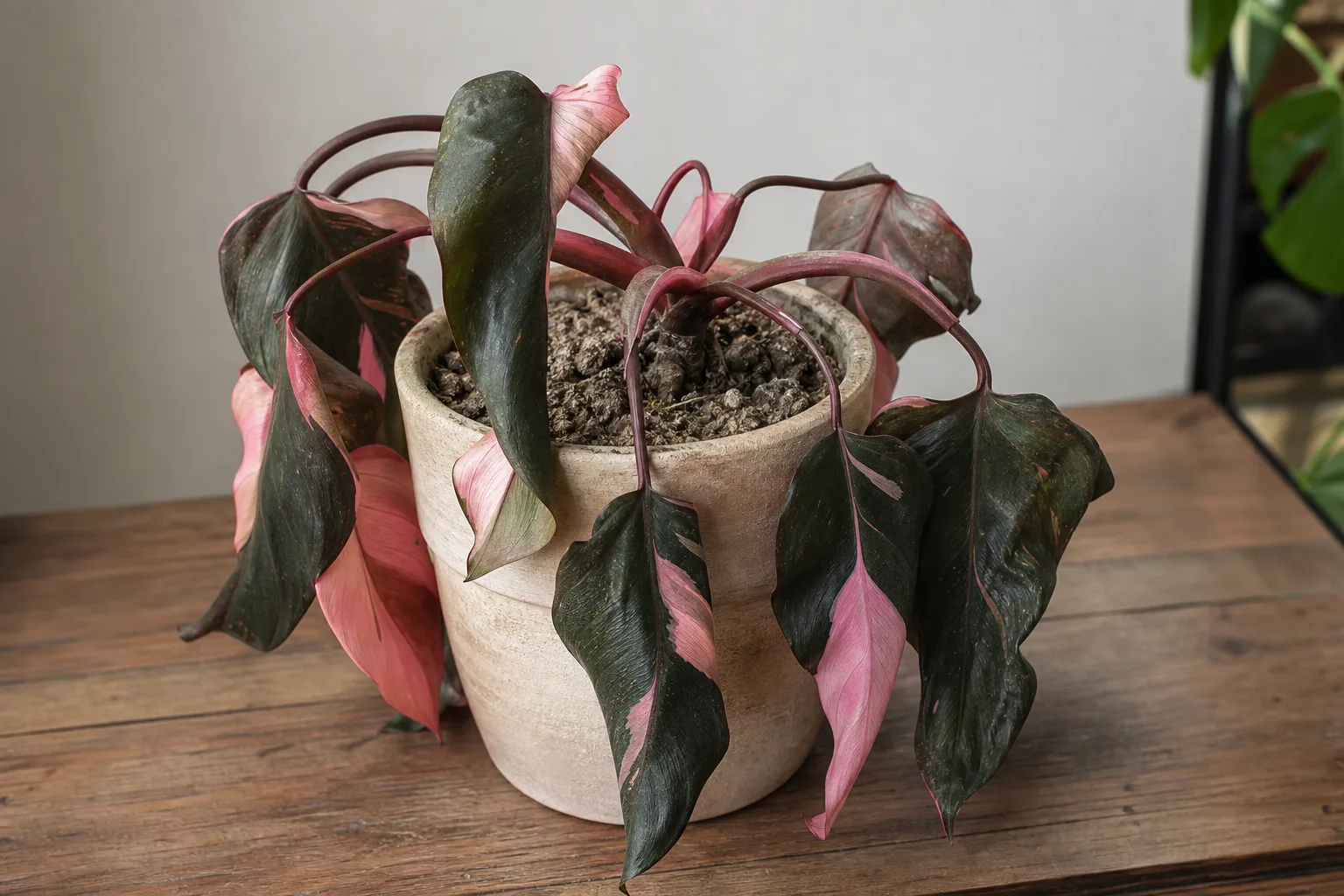
Underwatering on Philodendron Pink Princess: Causes, Checks & Fixes
This guide covers underwatering on Philodendron Pink Princess. See also the general Underwatering guide, watering, and light pages for this plant.
Underwatering on Philodendron Pink Princess: Causes, Checks & Fixes
Quick answer
Underwatering on Philodendron Pink Princess (Philodendron erubescens ‘Pink Princess’) shows up as limp marbled leaves, a feather-light pot, dry mix 3–5 cm down, and crispy brown edges on pink or white sectors-not the yellow, mushy pattern that usually signals overwatering on this cultivar.
First step: lift the pot and probe the top 3–5 cm of mix before you pour anything. Dry, warm soil with firm petiole bases means one thorough soak until water runs from drainage holes. Heavy, damp soil with limp leaves means stop watering and read our wilting guide or overwatering guide-soaking wet roots makes rot worse.
| Sign | Dry underwatering | Wet overwatering (lookalike) |
|---|---|---|
| Pot weight | Light | Heavy days after watering |
| Soil 3–5 cm down | Dry, warm, crumbly | Cold-damp or soggy |
| Petiole bases | Firm and green | Softening or blackening |
| Leaf pattern | Crispy pink margins; lower leaves may curl | Yellow lower leaves first |
| Smell | Normal | Sour or swampy |
| After one deep soak | Perks within hours | Stays limp on wet mix |
Healthy roots on a drought-stressed Pink Princess often rebound within hours after proper rehydration-that perk test is one of the clearest confirmations you were dealing with thirst, not root failure.
When to use this page vs. the watering and wilting guides
Use this underwatering page when you suspect chronic dry cycles: repeated missed drinks, fear-of-overwatering drought after a rot scare, hydrophobic mix that will not rewet, or crispy pink margins on a light dry pot. The focus is drought diagnosis, rehydration, and prevention of the next dry spell.
Use our watering guide for routine moisture rhythm-finger tests, pot-weight tracking, seasonal intervals, and the wet-soil wilt paradox in everyday care.
Use our wilting guide when the whole plant collapses suddenly and you need the emergency dry-vs-wet fork before adding water. Wilting covers acute collapse; this page covers the drought pattern underneath repeated underwatering.
What underwatering looks like on Pink Princess
Healthy Pink Princess holds heart-shaped marbled leaves at a slight angle from firm petioles along a climbing stem. Underwatering is a slower drought stress than acute wilt-though the two overlap when you finally miss one drink too many.
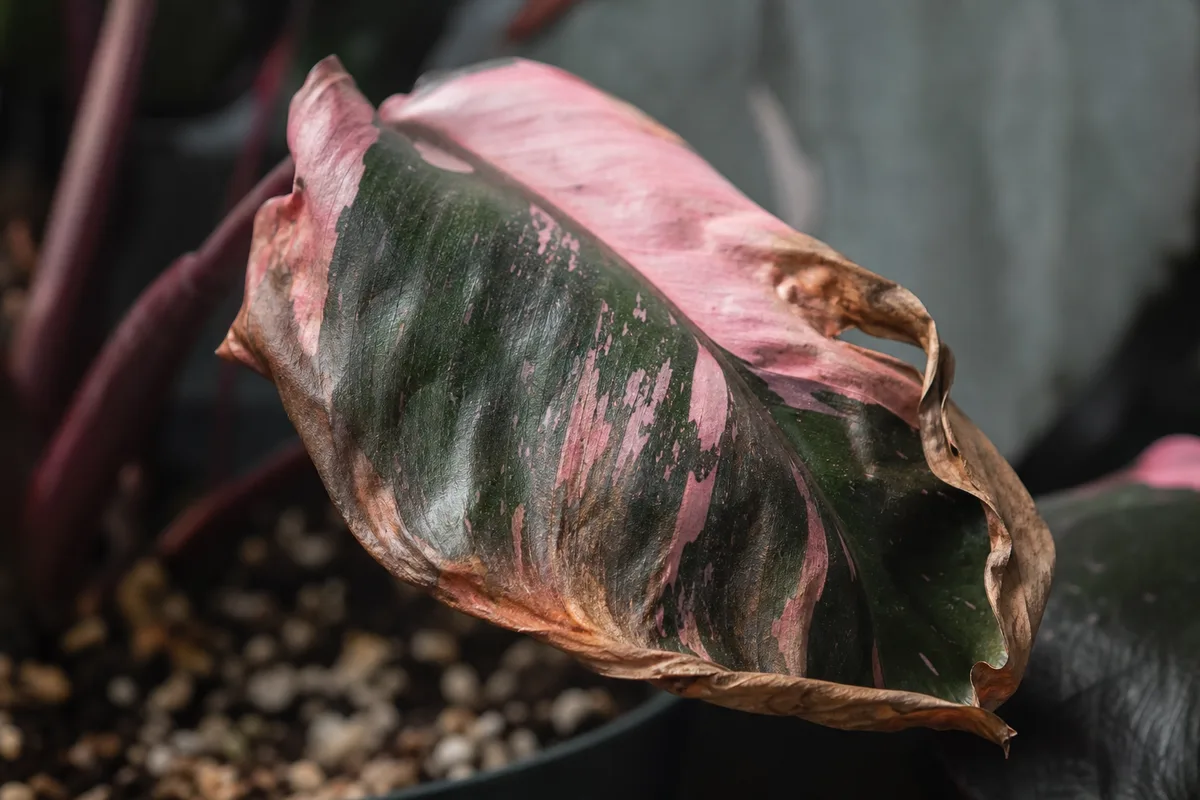
Underwatering symptoms on Philodendron Pink Princess - compare with healthy tissue on the same plant.
Typical drought signs on this cultivar:
- Limp, thin marbled leaves that hang straight down instead of holding their usual slight arch
- Crispy brown tips or margins, especially on pink and white sectors that have less drought reserve than green tissue
- Dry potting mix that is light in color, dusty on top, or pulled slightly away from the pot wall after prolonged drought
- A pot that feels noticeably light when lifted-a clear contrast to the heavy feel after a thorough soak
- Inward leaf curl on the oldest foliage before full collapse
- Stalled new growth or smaller emerging leaves when drought has persisted through active growth season
Pink Princess–specific visual clues:
High-pink leaves on the same vine often show stress before all-green growth. Pale pink sectors contain less chlorophyll and photosynthesize less efficiently than green tissue, so they lose stiffness and crisp at the edges first. That pattern is drought-not a separate “pink disease”-but it tricks collectors into thinking only the variegated leaves are affected while the root zone is dry throughout.
Unlike overwatering on Pink Princess, underwatering rarely starts with yellow lower leaves on wet soil. The signature clue is limp foliage on dry mix that perks after one proper drink.
Fully yellow, brown, or papery leaves will not re-green. Judge recovery by petiole firmness, predictable dry-down between waterings, and one new marbled leaf-not by old crispy pink tips standing back up.
Why Pink Princess dries out
Pink Princess is a climbing Philodendron erubescens cultivar that prefers moist, well-drained soil rich in organic matter-not bone-dry desert conditions for weeks. Several Pink Princess–specific factors push pots dry faster than a calendar schedule suggests:
Bright display lighting. Collectors often place Pink Princess in east or south windows or under grow lights for stronger pink variegation. More light means faster transpiration and quicker dry-down-sometimes every 6–8 days in summer versus 14+ days for the same plant in a dim corner.
Thin variegated leaf blades. Marbled Pink Princess leaves are thinner than self-heading philodendrons like Birkin. Wilting and drooping signal a plant getting too dry faster in bright rooms, and high-pink sectors show it first.
Chunky aroid mix. Correct well-draining mix with perlite and bark dries through the top layer quickly. That is healthy for root oxygen-but owners who only glance at the surface miss dry root balls underneath, especially after the mix turns hydrophobic.
Small or root-bound pots. Pink Princess roots aggressively in nursery pots. When roots circle the bottom and displace soil, water runs through in seconds without soaking the mass. You water, see instant drainage, assume the plant is wet, and leaves wilt anyway-a chronic underwatering mimic.
Fear of overwatering after a rot scare. Premium Pink Princess plants are expensive, and overwatering is a primary cause of root rot on P. erubescens. After yellow leaves and a root-trim crisis, some growers swing to letting the plant bake dry for weeks. The next limp episode looks like simple thirst-but fine roots may already be damaged from the earlier wet phase, slowing recovery.
Travel, seasonal neglect, and winter dry heating. Forgotten watering during a trip, or reduced attention when growth slows, lets the top dry while owners assume winter means “water less” without checking. Philodendrons prefer evenly moist but not wet soil-evenly moist does not mean permanently dry.
How to confirm underwatering
Work through these checks in order before you soak:
- Soil moisture at depth - Push your finger 3–5 cm into the mix. Dry, warm, crumbly soil at depth supports drought. Cold-damp or clinging soil at depth points to overwatering instead.
- Pot weight - Lift the pot. Light and dry confirms thirst. Heavy days after watering means slow dry-down-do not add more water because leaves look limp.
- Petiole firmness - Press bases where leaves meet the stem. Firm green tissue supports a soak. Soft, mushy, or blackening tissue means inspect roots-see our root rot guide.
- Perk-after-water test - If steps 1–3 point to drought, water thoroughly once. Leaves that regain stiffness within hours confirm underwatering. Limp leaves on now-moist mix after 24 hours mean root failure, not slow thirst-damaged roots cannot absorb water even when soil is wet.
- Variegation pattern - Pink sectors crispy on multiple leaves still points to moisture stress when the pot is light; confirm weight and depth before assuming only variegated tissue is affected.
- Hydrophobic mix check - If water pools on top and runs down the sides instantly, the dry crust may be repelling moisture. Bottom-water or poke channels before judging recovery.
- Recent history - Heat wave, new bright window, post-repot root shrinkage, or intentional watering cutback after rot all narrow the cause without guessing.
The combination of dry mix + light pot + firm petioles + perk after soak confirms underwatering. The combination of wet mix + limp leaves + yellowing confirms you should not add water.
First fix for Pink Princess
Water thoroughly once until excess drains from the bottom, then empty the saucer within 30 minutes.
That single deep drink is the correct first response when the pot is light, soil is dry 3–5 cm down, and petiole bases are firm. Wait until the top of the compost dries out before the next watering-not on a fixed calendar, but when the dry-down check passes again.
Do not mist, fertilize, or repot on day one unless petiole bases are already soft or the mix smells sour.
Step-by-step recovery
Standard drought path: dry mix, firm petioles
- Water slowly from the top until water runs from drainage holes, or bottom-soak for 20–30 minutes if mix repelled the first pour.
- Drain completely-never leave Pink Princess sitting in saucer water.
- Place in bright filtered light per our light guide so the plant uses water steadily without scorching pink sectors.
- Recheck moisture at 3–5 cm depth before the next drink-do not water on a fixed schedule.
- Remove leaves that stay fully papery and collapsed after 48 hours; they will not recover.
Hydrophobic or root-bound drought
- If water channels through dry bark without wetting the center, bottom-water 20–30 minutes, then drain.
- Poke a few holes through the dry top crust with a chopstick so the next soak penetrates.
- If the pot drains in seconds every time and roots are circling, plan a repot into fresh aroid mix sized to the root ball-chronic instant drainage mimics underwatering even when you water often.
Failed recovery: limp leaves persist on moist mix
- Stop watering.
- Unpot within 24–48 hours and inspect roots. Firm pale roots mean wait and retest moisture rhythm. Brown mushy roots mean trim and repot-follow our root rot guide.
- If wilt appeared on wet soil from the start, you were never dealing with simple underwatering-read wilting for the wet-wilt path.
Wear gloves when handling cut tissue-philodendron sap can irritate skin. Keep stressed plants away from pets; philodendron is toxic to cats and dogs if chewed during inspection. Contact your veterinarian if a pet ingests foliage.
Recovery timeline
Mild drought: Limp leaves often firm up within hours to one day after a proper soak on healthy roots. Some marbled blades lift the same afternoon in a bright room.
Moderate drought: Heavily limp plants with curled edges may need one to two days before most leaves regain stiffness. Crisp pink tips and fully desiccated sectors will not re-pink-expect permanent edge damage while new growth carries on.
Severe or repeated drought: Fine root dieback from prolonged bone-dry conditions slows recovery to one to three weeks before a new marbled leaf appears. If no new growth and petioles stay soft after corrected watering, roots may still be compromised from earlier overwatering damage.
Wrong diagnosis: If you soaked wet roots thinking it was thirst, decline can accelerate within days-switch to the overwatering path immediately.
Lookalike symptoms
Wet-soil wilt (root failure) - Leaves limp despite damp mix, often with yellow lower leaves and sour smell. Pink sectors flop here too-pot weight decides the fork, not variegation color. See wilting.
Heat-stress limp - Afternoon droop on firm petioles with otherwise normal moisture in a hot window. Resolves overnight without extra soaking if placement is adjusted.
Mechanical droop - Long unsupported runners hanging downward with normal pot weight and moisture. See our drooping-leaves guide before emergency repotting.
Natural senescence - One old bottom leaf yellowing while newer growth stays firm and soil dries normally is not a drought crisis.
What not to do
- Water wilted leaves without checking soil - Wilting is not always a need for water; wet-soil wilt worsens with more water
- Assume pink flop means only thirst - Variegated sectors collapse first in both dry and wet failure; confirm pot weight
- Sprinkle daily instead of soaking - Shallow splashes never reach deeper roots on a climbing philodendron
- Move to direct sun to compensate for missed water-scorches pink variegation; direct sunlight should be avoided on stressed Pink Princess
- Trim crispy pink tissue immediately - Rehydrate first; remove only fully dead leaves after 48 hours
- Fertilize drought-stressed plants hoping to push new pink leaves
- Repot into a much larger pot after one dry spell-excess wet mix stalls recovery if roots were already stressed
How to prevent underwatering next time
Water on dry-down, not calendar autopilot. Use the finger test at 3–5 cm depth or compare pot weight weekly until you learn how the container feels after a proper soak versus ready for water.
In bright indirect light during active growth, many Pink Princess plants need water roughly every 7–10 days in summer and every 10–14 days in winter-starting estimates only, adjusted to your pot, mix, and room. A plant in a warm east window dries faster than the same specimen in a cool dim room.
Use pots with drainage holes and empty saucers within 30 minutes. If Pink Princess sits in a decorative cover pot, lift the inner pot to water and drain before returning it.
After a root-rot scare, resist both extremes: neither keep soil constantly moist nor let the plant bake dry for weeks out of fear. Match the wet-dry cycle in our watering guide.
Repot root-bound plants before chronic instant-drainage drought becomes the norm. Scout weekly: firm petioles, predictable dry-down, and one new marbled leaf mean the water pathway is healthy.
When to worry
Treat drought as same-day urgent when:
- Soil has pulled away from the pot wall and mix has been bone dry for two weeks or more in bright summer light
- The entire vine is collapsed with papery leaves and no perk after a thorough bottom-soak
- Crisp damage is spreading to green tissue across multiple nodes while the pot stays light
- No new growth appears within three weeks after corrected watering and firm petioles
Escalate to the root rot guide if:
- You watered thinking it was thirst but mix was already wet and petiole bases are softening
- Limp leaves persist 48–72 hours after a proper soak on now-moist mix
- Soil smells sour or roots are brown and mushy on inspection
Conclusion
Underwatering on Pink Princess is usually fixable with one deep drink and a better dry-check habit-not by keeping soil constantly moist or by swinging to chronic drought after a rot scare. Lift the pot, read moisture at depth, feel petiole bases, and use the perk-after-water test before you assume thirst. Crispy pink tips are permanent; firm petioles and new marbled growth are the signs your Pink Princess water pathway is healthy again. If leaves stay limp on wet soil, stop watering and read our overwatering guide before soaking again.
Related Pink Princess guides
- Pink Princess overview - full care hub
- Watering - dry-down rhythm, pot-weight checks, and seasonal intervals
- Wilting - acute collapse and dry-vs-wet emergency fork
- Overwatering - chronic wet-soil patterns before root failure
- Root rot - unpot, trim, and repot when bases go soft
- Yellow leaves - lower-leaf yellowing on wet soil
- Light - bright placement without scorching pink sectors
Related tool
Use the Plant Watering Calculator to narrow causes for underwatering on this plant before changing multiple variables at once.