Philodendron Pink Princess Problems: Causes & Quick Fixes
Quick answer
Philodendron Pink Princess is prone to 21 common issues - each link below is a plant-specific fix guide.
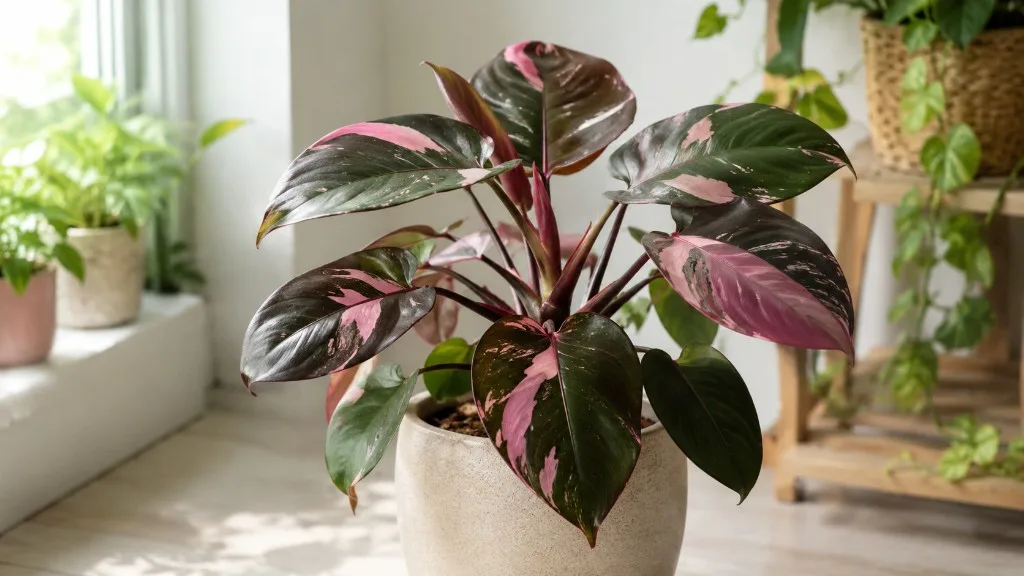
Philodendron Pink Princess problems
Use the guides below to diagnose and fix common issues on Philodendron Pink Princess. Each problem page explains why it happens on this species and what to do first.
Or use our problem diagnosis tool to narrow down symptoms.
Common problems on Philodendron Pink Princess
Brown Tips
MediumLikely cause: Low humidity
Quick fix: Increase humidity to 55%+
Full fix guide →Likely cause: Philodendron is a large genus of flowering plants in the family Araceae. As of September 2025, the Plants of the World Online accepted 625 species; [2] other sources accept different numbers. [3][4] …
Quick fix: Confirm diagnosis on your Philodendron Pink Princess, then address the most likely care or pest factor described in current extension guidance.
Full fix guide →Leaf Spot Disease
MediumLikely cause: Feb 21, 2024 · Philodendron Types with Pictures and Care Guide The green heartleaf Philodendron is a vining type of plant with dark-green leaves in a heart’s shape. This type of Philodendron can be …
Quick fix: Confirm diagnosis on your Philodendron Pink Princess, then address the most likely care or pest factor described in current extension guidance.
Full fix guide →Leaf Miners
MediumLikely cause: Feb 21, 2024 · Philodendron Types with Pictures and Care Guide The green heartleaf Philodendron is a vining type of plant with dark …
Quick fix: Confirm diagnosis on your Philodendron Pink Princess, then address the most likely care or pest factor described in current extension guidance.
Full fix guide →Leggy Growth
MediumLikely cause: Insufficient light causing reversion
Quick fix: Move to brighter indirect light
Full fix guide →Plant Leaning
MediumLikely cause: Philodendron is a large genus of flowering plants in the family Araceae. As of September 2025, the Plants of the World Online accepted 625 species; [2] other sources accept different numbers. [3][4] …
Quick fix: Confirm diagnosis on your Philodendron Pink Princess, then address the most likely care or pest factor described in current extension guidance.
Full fix guide →Root Rot
MediumLikely cause: Wet soil
Quick fix: Repot in fresh draining mix
Full fix guide →Thin Stems
MediumLikely cause: Feb 6, 2025 · If you are thinking of adding a philodendron to your indoor or outdoor garden, choosing the right variety can be a …
Quick fix: Follow extension or botanical guidance for Philodendron Pink Princess thin stems; adjust care before applying broad treatments.
Full fix guide →Yellow Leaves
MediumLikely cause: Overwatering
Quick fix: Allow top 3–5 cm to dry fully
Full fix guide →Aphids
MediumLikely cause: Aphids on Pink Princess cluster on soft new variegated leaves and stem nodes along climbing vines, leaving sticky honeydew that dulls pink sectors. First step: isolate the plant, rinse colonies off in
Quick fix: See plant-specific guide for step-by-step fixes.
Full fix guide →Drooping Leaves
MediumLikely cause: Drooping Pink Princess leaves usually mean roots are not supplying enough water-either the mix is dry, roots are failing in wet soil, or a long unsupported runner is hanging from gravity. Lift the pot
Quick fix: See plant-specific guide for step-by-step fixes.
Full fix guide →Fungus Gnats
MediumLikely cause: Fungus gnats on Philodendron Pink Princess almost always mean the soil surface stays too wet-often from overwatering, peat-heavy mix, decorative moss toppers, or low light slowing dry-down on a traili
Quick fix: See plant-specific guide for step-by-step fixes.
Full fix guide →Low Humidity
MediumLikely cause: Low humidity on Pink Princess browns leaf tips and pink patches first, especially in heated winter rooms. First step: measure humidity near the foliage with a hygrometer and run a humidifier toward 55
Quick fix: See plant-specific guide for step-by-step fixes.
Full fix guide →Mealybugs
MediumLikely cause: Mealybugs on Pink Princess hide as white cottony clusters in leaf axils, dried petiole sheaths, and along climbing vine nodes-not on flat pink variegation. First step: isolate the plant, dab visible b
Quick fix: See plant-specific guide for step-by-step fixes.
Full fix guide →Mold on Soil
MediumLikely cause: Fluffy white or gray mold on Pink Princess soil is usually harmless saprophytic fungus on wet organic mix-not root rot by itself. First step: scrape the visible mold, then pause watering until the top
Quick fix: See plant-specific guide for step-by-step fixes.
Full fix guide →Not Enough Light
MediumLikely cause: Philodendron Pink Princess needs bright indirect light to hold pink variegation and compact vining growth. In dim rooms it fades, stretches, and uses water poorly. First step: move it where leaves rec
Quick fix: See plant-specific guide for step-by-step fixes.
Full fix guide →Overwatering
MediumLikely cause: Overwatering on Pink Princess shows as yellow lower leaves, sour soil, and limp marbled foliage on a heavy wet pot-especially in dim display corners. Stop watering until the top 3–5 cm is dry, improve
Quick fix: See plant-specific guide for step-by-step fixes.
Full fix guide →Slow Growth
MediumLikely cause: Slow growth on Pink Princess usually means insufficient light for variegated tissue, wet roots, or winter rest-not a missing fertilizer dose. Confirm the season first, then move the plant to brighter
Quick fix: See plant-specific guide for step-by-step fixes.
Full fix guide →Spider Mites
MediumLikely cause: Spider mites on Pink Princess show as fine yellow stippling on green leaf tissue and silk webbing at vine nodes-especially near grow lights or heating vents in dry winter air. First step: isolate the
Quick fix: See plant-specific guide for step-by-step fixes.
Full fix guide →Underwatering
MediumLikely cause: Underwatered Pink Princess shows a light pot, dry mix 3–5 cm down, limp marbled leaves, and crispy pink sectors that often perk within hours after one deep soak. First step: lift the pot and probe soi
Quick fix: See plant-specific guide for step-by-step fixes.
Full fix guide →Wilting
MediumLikely cause: Wilting on Pink Princess means turgor collapse-usually dry roots or failing roots in wet mix. Lift the pot and probe the top 3–5 cm before you water. Light and dry gets a soak; heavy and wet with soft
Quick fix: See plant-specific guide for step-by-step fixes.
Full fix guide →