Slow Growth on Philodendron Pink Princess: Causes, Checks &
Quick answer
Slow growth on Pink Princess usually means insufficient light for variegated tissue, wet roots, or winter rest-not a missing fertilizer dose. Confirm the season first, then move the plant to brighter filtered light and verify the top 3–5 cm of mix dries before the next watering.
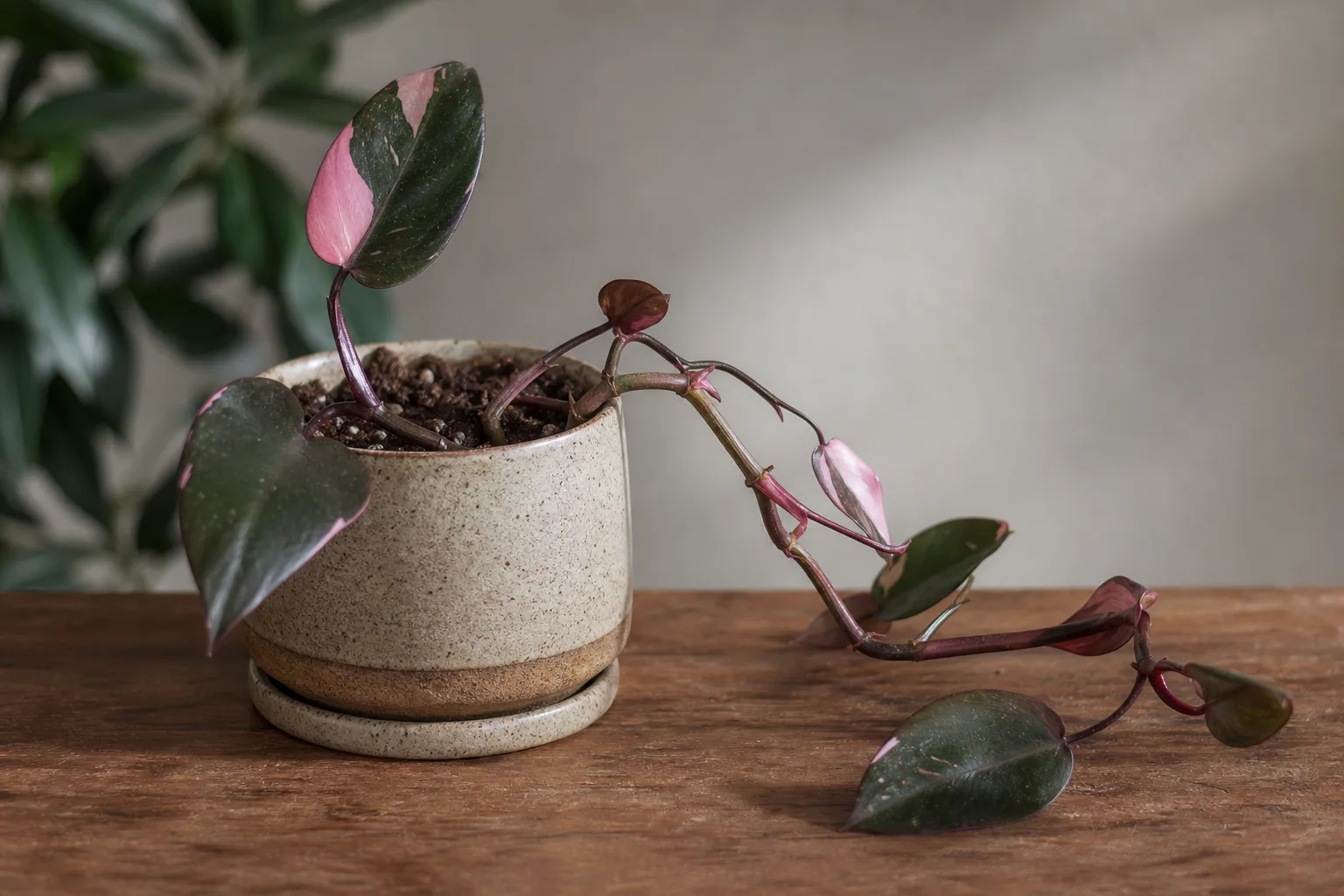
Slow Growth on Philodendron Pink Princess: Causes, Checks & Fixes
This guide covers slow growth on Philodendron Pink Princess. See also the general Slow Growth guide, watering, and light pages for this plant.
Slow Growth on Philodendron Pink Princess: Causes, Checks & Fixes
Quick answer
Philodendron erubescens ‘Pink Princess’ is a climbing Colombian aroid with dark purplish-green leaves splashed in pink. In good indoor culture it grows at a moderate-not racing-pace when bright filtered light reaches the leaves. That rhythm is cultivar-normal; it is not a fast vining philodendron like Brasil or Micans. In warm bright months, many growers judge healthy Pink Princess momentum by whether a new leaf with visible pink unfurls within roughly four to eight weeks-no cultivar-specific extension leaf-frequency data exists, so compare against your plant’s own baseline and the season.
Concern starts when no meaningful new leaves appear through warm months, or when every fresh leaf arrives smaller, slower to unfurl, and greener with fading pink. That pattern usually traces to insufficient light for variegated tissue, roots sitting in wet mix, root crowding, cool room temperatures, recent repot shock, or hidden pests-not a missing moss pole or heavy fertilizer on day one.
First step: confirm whether the plant should be growing right now. If it is winter or the room stays cool and dim, pause is expected. If it is active season with no new leaves for eight or more weeks, move the plant to brighter filtered light where foliage receives several hours of indirect illumination daily, and verify the top 3–5 cm (1–2 inches) of mix dries before the next drink. See our light guide for window placement and grow-lamp options.
Use this page vs similar Pink Princess issues
Use this page when the main symptom is little or no new foliage for weeks during warm months-not just stretched internodes.
If stems are elongating with long gaps between nodes but some leaves still appear, start with leggy growth. If the room is dim and leaves are fading green without a full stall, also review not enough light. If wet soil, yellowing, and soft petioles stack with the pause, treat root rot or overwatering before assuming simple sluggishness.
What slow growth looks like on Pink Princess
Healthy Pink Princess holds firm purplish-green leaves with pink splashes or half-moon sectors, reddish-purple petioles, and a climbing stem that may already be on a moss pole. Slow-but-healthy plants still produce occasional new leaves in warm months; older leaves stay firm and variegated.
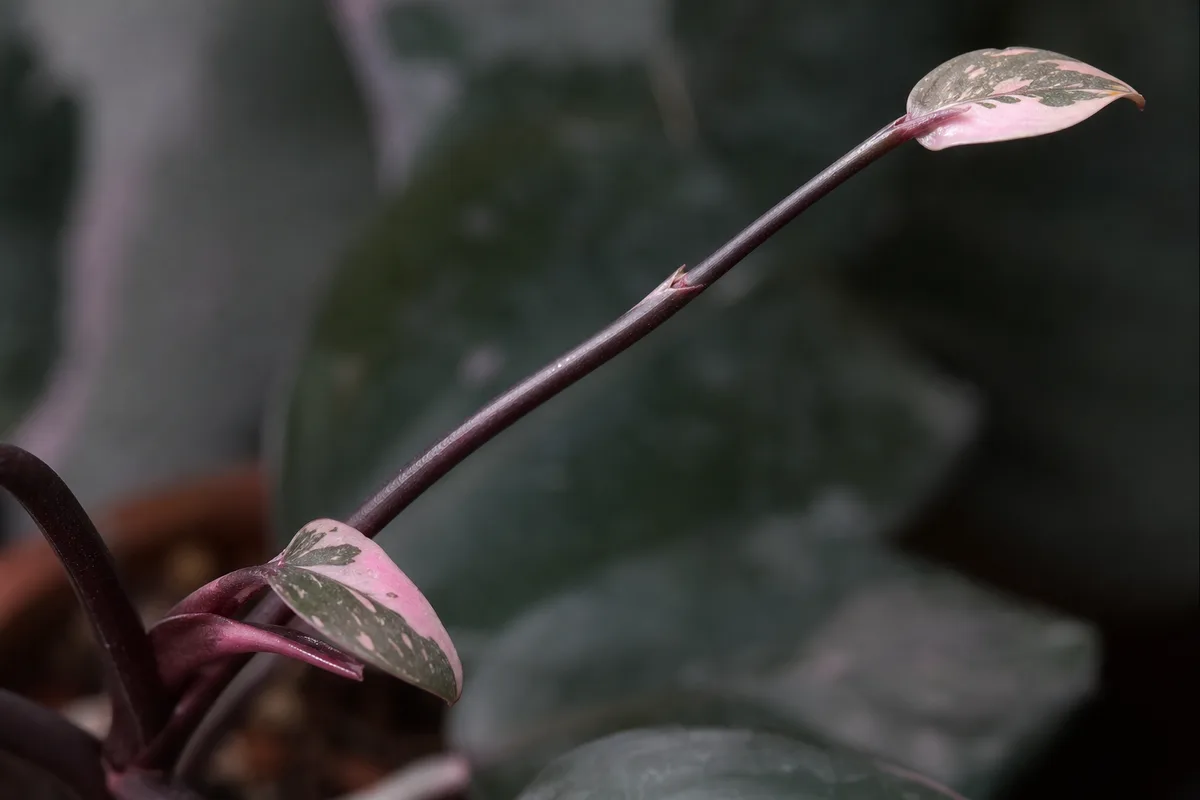
Slow Growth symptoms on Philodendron Pink Princess - compare with healthy tissue on the same plant.
Problematic slow growth looks different:
- No new leaves for months during spring or summer despite otherwise stable care
- Smaller new foliage - Latest leaves are narrower or shorter than your baseline leaves near the base
- Green-dominant or all-green new leaves - Pink fades, thins, or disappears on fresh growth (a reversion/light co-signal)
- Long gaps between nodes - Internodes stretch even before full legginess; the vine looks sparse
- Static pot weight - Mix stays damp 10–14 days because low light or root stress reduces water use
- Roots visible at drainage holes or circling tightly when you slip the plant from its pot
- New leaves stuck in sheath - A leaf bud swells but does not unfurl for weeks while the rest of the plant looks frozen
Judge slow growth on Pink Princess by new leaf frequency and pink variegation quality, not by comparing to solid-green philodendrons. A moss pole keeps new leaves nearer the light source on climbing stems-climbing philodendrons benefit from support-but support alone will not jump-start a stalled vine in a dim corner.
| What you see | Likely meaning | Next check |
|---|---|---|
| Firm leaves, dry cycles, no leaves in winter | Seasonal rest | Recheck in spring |
| All-green new leaves, long internodes | Low light / reversion | Light guide |
| Wet mix 10+ days, heavy pot, no new growth | Root stress or rot | Root rot vs overwatering |
| Crisp edges, light pot, limp older leaves | Underwatering stress | Underwatering guide |
| Two to four weeks pause after spring repot | Transplant shock | Wait if stem stays firm and mix is not soggy |
Why Pink Princess gets slow growth
Natural moderate pace (not always a problem)
Pink Princess is bred for showy variegated foliage on a climbing frame, not speed. Pink and white sectors carry less chlorophyll than solid green tissue, so photosynthesis per leaf is lower-variegated cultivars often need brighter light than solid-green relatives just to maintain color, let alone grow quickly. Expect a steady rhythm, not weekly leaves on every windowsill.
Winter rest is also normal indoors. Shorter days and cooler rooms slow metabolism on tropical aroids. Pink Princess may produce little or no new foliage from late fall through early spring without being sick.
Insufficient light and variegation reversion
When photons are scarce, Pink Princess prioritizes survival over new tissue. Growth stalls or produces only small green leaves with weak pink. Low light also slows transpiration, so the pot stays wet longer-setting up secondary root stress if watering continues on a bright-room schedule.
All-green new leaves on an otherwise pink plant are a strong signal that light-not fertilizer-is the bottleneck. Reversion can stabilize on one shoot even after you improve conditions; pruning back to a variegated node may be needed once culture is corrected.
Wet roots and poor oxygen
Overwatered or poorly drained mix keeps roots anaerobic. Even before full rot, stressed roots take up water and nutrients poorly, which shows as stalled growth and pale small leaves-not always obvious yellowing at first. Overwatering can cause root rot on philodendrons; chronic wet mix limits growth silently while older leaves still look acceptable.
Root crowding and tired mix
Pink Princess vines above ground but roots still need space. A bound root ball with broken-down peat limits uptake even when you water correctly. Growth pauses until roots can expand into fresh airy mix-usually in spring. An oversized pot with extra wet soil around a small root ball can stall roots the same way; see repotting guidance before jumping two sizes up.
Temperature, humidity, and winter rest
Pink Princess prefers temperatures between 65 and 85 °F (18–29 °C) with warm, humid air similar to its native rainforest understory. Consistent chill below about 18 °C (65 °F), hot dry AC drafts, or very low humidity slow cell division without killing the plant outright.
Recent repotting and pest co-signals
Repotting, relocation, pest treatment, and heavy pruning all divert energy. Pink Princess may pause new leaves for two to four weeks after any of these-especially if light or watering also changed at the same time.
Low-level spider mites or mealybugs sap vigor before obvious damage stacks up. Slow growth with stippling, stickiness, or sour-smelling mix needs inspection-not more fertilizer.
Slow vs. dormant vs. rot-stall decision table
Use this table after you note the calendar month and room temperature. It separates normal pause from problems that need action.
| Pattern | Season / room | Soil & roots | New leaf color | Action |
|---|---|---|---|---|
| Healthy moderate pace | Warm months; room 18–29 °C (65–85 °F) | Top 3–5 cm dries in 5–10 days; roots firm white | Pink splashes on newest leaf within ~4–8 weeks (grower heuristic) | Maintain culture; no rescue needed |
| Winter dormancy | Late fall–early spring; cooler dim room | Dry-down slows; no sour smell | No new leaves for months; older leaves firm | Wait for spring light; do not force feed |
| Light stall | Warm months | Mix may stay wet longer than expected | All-green or tiny new leaves; long internodes | Bright filtered light first; see not enough light |
| Root-stress stall | Any season | Wet 10+ days; heavy pot; possible sour odor | Pale small leaves; no sheath progress | Inspect roots; see overwatering or root rot |
| Post-repot pause | Spring repot within 2–4 weeks | Firm stem; mix not soggy | No new leaf yet; no yellowing stack | Wait; recheck watering after light stabilizes |
| Leggy but growing | Dim room | Variable moisture | New leaves appear but spaced far apart | See leggy growth-earlier light stress |
How to confirm the cause
Work through these checks before repotting, feeding, or adding a moss pole:
- Season check - Is it late fall or winter, or is the room below 18 °C (65 °F) most days? If yes, slow growth may be dormancy; note the date and recheck in spring.
- Variegation pattern on new leaves - Are the last two or three leaves smaller with weak or absent pink? That fits light stress better than nutrient deficiency alone.
- Light on leaves - Hold your hand where foliage sits. A soft shadow with clear edges suggests usable indirect light; faint or no shadow means too dim for variegated philodendrons. Indoor plants in inadequate light show poor growth and spindly habit.
- Soil dry-down speed - If the top 3–5 cm stays wet 10+ days, pair any watering change with brighter placement or root inspection.
- Pot weight and smell - Heavy damp pot with no new growth raises wet-root suspicion. Sour odor means unpot before feeding.
- Root peek - Slide the plant partly out. Dense white circling roots with crumbling mix suggest crowding; brown mushy roots suggest rot.
- Pest scan - Check leaf undersides, petiole sheaths, and vine tips for mites, scale, or mealybugs.
If Pink Princess pushes a new leaf with visible pink within your four-to-eight-week warm-season baseline and older leaves look stable, growth is healthy moderate-not a problem to force with nitrogen.
First fix for Pink Princess
If it is active growing season and the plant has produced no meaningful new leaves for eight or more weeks, move it to bright filtered light where the foliage receives several hours of indirect illumination daily-and confirm the top 3–5 cm of mix dries before you water again.
Good placements include an east-facing window or several feet back from a south- or west-facing window with sheer curtain filter. Position philodendrons in bright but indirect light-not deep shade and not hot direct midday sun on pale pink sectors, which can bleach or scorch variegated tissue.
If the plant came from a very dim spot, increase light over 7–10 days to avoid scorching pink sections. Rotate the pot a quarter turn weekly for even exposure. Train the climbing stem on a moss pole so unfurling leaves stay nearer the window or grow lamp.
Do not repot, fertilize, or double watering on day one. Photons and stable root moisture come first; those other steps only help after light and watering rhythm match the plant’s needs.
Step-by-step recovery
After the first light and watering check:
- Adjust watering to match new light - Brighter rooms dry the pot faster; dim rooms need less frequent drinks. Always test the top 3–5 cm, not a calendar alone. Plants in low light use less water and soil stays wet longer-recalibrate after every light move.
- Add supplemental light if windows are weak - In dark winter rooms, a full-spectrum grow lamp 30–45 cm (12–18 inches) above the canopy for 10–12 hours daily can sustain growth when natural light is insufficient. UF/IFAS houseplant lighting guidance applies to choosing duration and placement.
- Repot only if roots crowd heavily - Move up one pot size in spring using airy aroid mix with perlite and bark. Skip repotting if roots are mushy-trim rot first per our root rot guide.
- Feed lightly after growth resumes - When the next leaf shows better pink and size, apply diluted balanced fertilizer at half strength during active growth. Feed during the growing season April to September only after basics are correct. Hold feed in winter or while the plant is stressed.
- Prune reverted shoots if needed - Once light improves, cut back stems producing only green leaves to a node with balanced variegation so the vine redirects energy to pink-splashed growth.
- Treat pests before feeding - Rinse and isolate if mites or mealybugs appear; sap-sucking pests undo cultural fixes.
Recovery timeline
Expect the next one or two leaves to show improved size and pink variegation within four to eight weeks after light and watering align-faster in warm bright summer rooms, slower in late winter even with a grow lamp.
Old leaves do not enlarge retroactively. Small or green-dominant leaves already unfurled stay that way; judge success by new growth quality, not old tissue changing.
Worsening signs: continued absence of new leaves after six weeks in corrected light, yellowing stack on lower leaves with persistently wet soil, soft petioles, or every new leaf smaller than the last despite bright placement. Those patterns need root inspection or pest ID-not more fertilizer.
Lookalike symptoms
| What you see | Most likely cause | Key differentiator | Where to read next |
|---|---|---|---|
| Long internodes but some new leaves | Leggy growth / early light stress | Vine stretches; leaves still appear | Leggy growth |
| No new leaves for months in cool dim winter | Dormant winter pause | Firm leaves; resumes in spring | Light guide |
| Two to four weeks pause after spring repot | Transplant shock | Firm stem; mix not soggy | Repotting |
| Slow growth + limp yellow leaves + sour wet soil | Root rot | Soft petioles; mushy roots | Root rot |
| Growth slows + crisp edges + very light pot | Underwatering | Soil pulls from pot wall | Underwatering |
| All-green shoot persists after light fix | Reversion on one stem | One vine stays green | Pruning |
Mistakes to avoid
Do not expect Brasil-like speed from a variegated climbing Pink Princess-moderate baseline growth is cultivar-normal.
Do not force growth with heavy fertilizer in dim rooms or on wet roots; nitrogen pushes soft tissue the plant cannot support and often increases green reversion.
Do not repot into a much larger pot hoping for a growth spurt-extra wet soil around a small root ball stalls roots further.
Do not keep a summer watering schedule in winter while light and temperature drop-wet cold mix is a common hidden stall.
Do not mistake one small new leaf as failure-Pink Princess’s natural rhythm is measured in weeks, not days.
Do not ignore all-green new leaves-that is usually a light problem, not a reason to buy a “pink booster” product.
Keep pets away when handling cut stems-Philodendron is toxic to cats and dogs due to calcium oxalate crystals in sap and tissue.
Related Pink Princess guides
For overlapping symptoms and baseline culture, use these pages together:
- Pink Princess overview
- Light
- Not enough light
- Leggy growth
- Watering
- Root rot
- Overwatering
- Repotting
- Fertilizer
- Pruning
This URL is the slow-growth and season-check hub for the Pink Princess cluster. Sibling pages go deeper on one cause; start here when a variegated vine has not pushed meaningful new foliage through warm months.
How to prevent slow growth next time
Place Pink Princess where light reaches the foliage, not just where the pot photographs well. Rotate weekly. Supplement winter windows before growth stalls, not after months without a new leaf.
Repot every one to two years or when roots circle heavily-before mix collapses and watering becomes unpredictable.
Track new leaf count and pink variegation quality monthly during warm seasons instead of comparing to fast vining philodendrons.
Keep a consistent watering rhythm tied to dry-down tests, not a fixed calendar.
When to worry
Slow Pink Princess alone is rarely an emergency. Escalate when growth stops alongside wet soil and yellowing leaves, petioles soften, or pests spread despite isolation.
If six to eight weeks of corrected bright filtered light still produce only pale tiny leaves, verify grow-lamp intensity or try a closer bright indirect position. Some stems revert fully green permanently; prune them if variegation is your goal.
Sour-smelling mix with soft stems is root rot urgency, not normal dormancy-inspect roots before adding feed or water on schedule.
How we verified this guide
Author: sai-ananth · Reviewer: LeafyPixels Review Board · Review date: 2026-06-17
Methodology: Plant problem guidance is reviewed against botanical references, extension resources, and LeafyPixels plant-care data before publication.
This guide targets slow-growth diagnosis on container Philodendron erubescens ‘Pink Princess’-variegation chlorophyll tradeoff, four-to-eight-week grower heuristic for warm-season leaf rhythm, season-vs-stall-vs-rot decision table, light-first recovery order, and distinction from Brasil-like speed expectations-not day-to-day watering rhythm alone (watering guide) or advanced mushy-root salvage (root rot). Horticultural claims were checked against NC State Extension, RHS philodendron growing guide, Clemson HGIC variegation and light, University of Maryland Extension lighting, Missouri Botanical Garden overwatering, UF/IFAS EP145, and ASPCA variegated philodendron toxicity before publication.
Revision note (2026-06-17): Removed inline flagged-claim markers; reframed growth-rate language as labeled grower heuristics; added season-vs-stall-vs-rot decision table, leggy-growth routing in intro, related-guides hub replacing generic care cross-check, on-page FAQs, and linked author bio per E-E-A-T audit. Original symptom photos (healthy moderate pink-splashed new leaf on moss pole vs. all-green stall pattern) pending for a future update.
FAQs
How do I know Pink Princess growth is actually stalled-not just slow?
Compare against season and variegation quality. In warm bright months, a problem shows when no new leaves unfurl for eight or more weeks, or when every new leaf arrives smaller and greener with little or no pink. Winter pause alone is normal.
Why is my Pink Princess growing but new leaves have no pink?
All-green new leaves usually signal insufficient light or reversion on that shoot-not normal slow growth. Improve filtered light first and watch the next two leaves. If one stem keeps producing only green foliage, prune back to a node with balanced pink variegation.
How long until I see a new leaf after fixing light?
Once light and watering align, expect the next leaf in roughly four to eight weeks in a warm room-faster in bright summer, slower in late winter even with a grow lamp. Judge recovery by new leaf size and pink splashes, not old leaves enlarging.
When is slow growth urgent on Pink Princess?
Escalate when growth stops alongside persistently wet soil, sour-smelling mix, or soft petioles-that pattern fits root rot, not dormancy. See our root rot guide before adding fertilizer or repotting into a larger pot.
Should I fertilize a stalled Pink Princess?
Not as a first fix. Feed only after light and root moisture are correct and you see firm tissue pushing a new leaf. Heavy nitrogen in dim rooms or on wet roots pushes soft green growth without restoring pink variegation.