Wilting on Philodendron Selloum: Causes, Checks & Fixes
Quick answer
Wilting on Philodendron Selloum can mean underwatering or root rot from overwatering-both block water reaching huge leaves. First step: check if the top 5 cm is dry or wet before adding or withholding water.
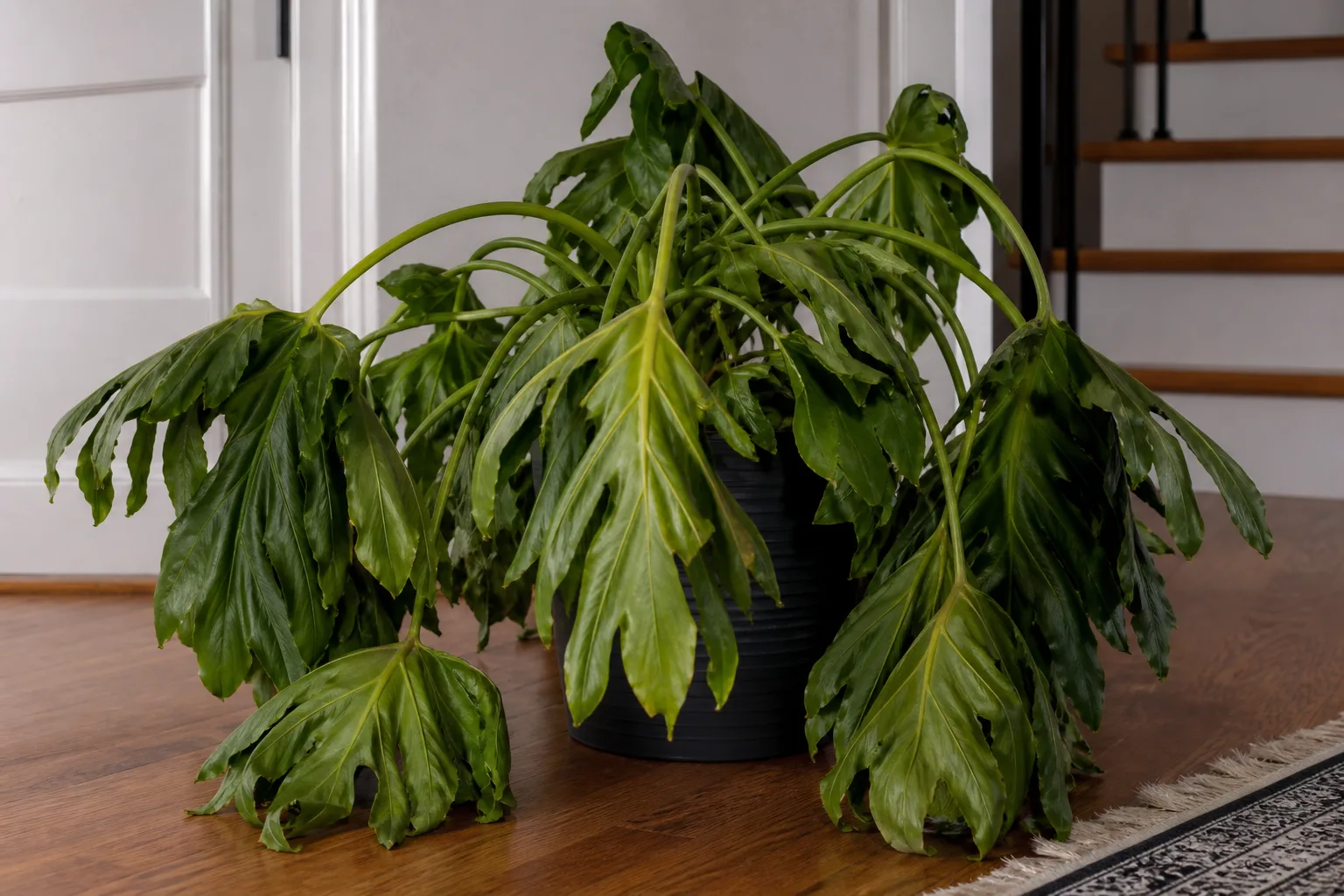
Wilting on Philodendron Selloum: Causes, Checks & Fixes
This guide covers wilting on Philodendron Selloum. See also the general Wilting guide, watering, and light pages for this plant.
Wilting on Philodendron Selloum: Causes, Checks & Fixes
Quick answer
Wilting on Philodendron Selloum (Thaumatophyllum bipinnatifidum) is confusing because huge lobed leaves collapse whether roots are too dry or dying from too much water. The large leaves lie about how roots are doing-a lightweight dry pot and a heavy wet pot can look equally dramatic from across the room. Wilted leaves may indicate soil that is too dry or too wet; rotting roots cannot take up moisture even in wet mix.
First step: finger-test the top 5 cm and lift the pot before you water, repot, or fertilize. Dry means soak and drain; wet means stop watering and inspect roots-not another drink. For baseline rhythm on this self-heading tree philodendron, see the Philodendron Selloum overview and watering guide.
What wilting looks like on Philodendron Selloum
Healthy Selloum holds its crown lobes with stiff petioles arching slightly outward from a thick central stem. Wilting means turgor loss-the internal water pressure that keeps tissue rigid has failed, and blades hang limp on their stalks.
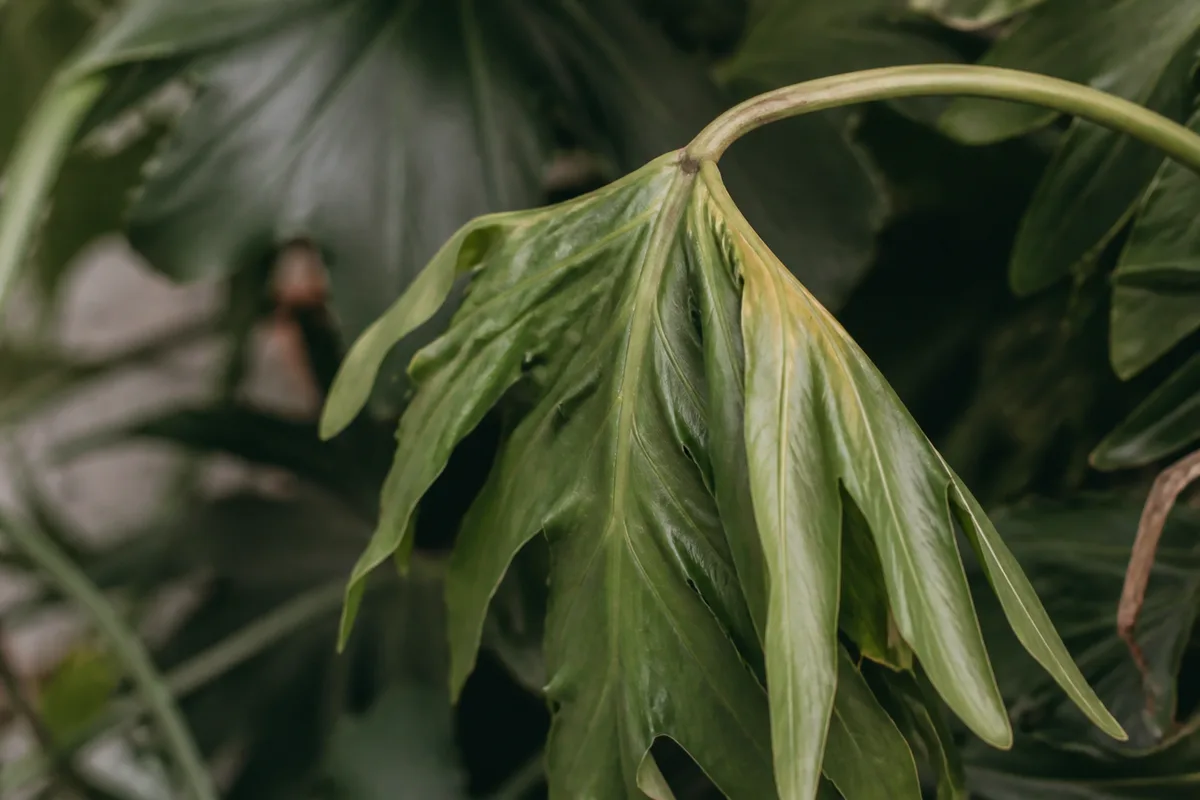
Wilting symptoms on Philodendron Selloum - compare with healthy tissue on the same plant.
Patterns that narrow the cause:
- Large leaf blades hanging straight down on 2–3 foot petioles across much of the canopy
- Soft limp tissue vs. dry crispy edges (dryness clue on the oldest lobes)
- Yellowing lower leaves with wet soil (rot clue before widespread collapse)
- Partial canopy collapse on one side near a heat vent or south window while the opposite side stays firmer
- Whole-rosette slump on a floor specimen that looked fine yesterday-especially alarming on a 4–10 foot indoor canopy
Photo cue (what to compare at home): A wilted Selloum on a heavy wet cachepot shows limp lobes while mix smells sour and the stem base still feels firm-until rot advances. A wilted Selloum on a light dry pot shows the same limp lobes but dusty dry surface and mix pulling slightly from the pot wall; petioles often firm within hours after one thorough soak. Document your pot weight and top-5 cm reading beside the plant so you can tell which pattern you have.
Wilting is not the same as the gradual outer-leaf hang many mature Selloums show on long petioles-that is often normal architecture. See drooping leaves when only older outer lobes angle down while new center growth stays firm.
Why Philodendron Selloum wilts
Selloum is a non-climbing, self-heading tree philodendron with massive transpiring leaf area. When the water pathway between roots and canopy breaks, the whole rosette can collapse quickly because one central root mass feeds the entire crown.
Underwatering
Large canopy loses turgor when mix is dry throughout. Pot feels light; margins may crisp on oldest lobes. Missouri Botanical Garden describes the species as intolerant of drought while still needing aerated mix between drinks-a missed watering on a floor specimen looks catastrophic even when roots are still healthy.
Overwatering and root rot
Root rot in overly moist soils kills uptake. Leaves wilt while soil stays wet-the classic trap on this moisture-loving species. NC State Extension notes overwatering can cause root rot on philodendrons, and container guidance states leaves remaining wilted after watering usually mean rotted roots unable to absorb water. Oversized decorative pots and heavy peat mix keep large root balls soggy for weeks indoors.
Heat or draft shock
Sudden exposure to hot dry air from a heat register can wilt leaves temporarily without root damage. Cold drafts below about 15°C (60°F) slow root function in cool damp mix, mimicking wet-soil wilt.
Recent repotting
Root disturbance on a large ball causes short-term wilt until fine roots reestablish. Watering heavily right after repot into wet fresh mix extends shock-see the repotting guide for floor-specimen timelines.
Root-bound or hydrophobic mix
Frequent wilt that perks after watering but returns within a day or two may mean circling roots fill the pot and water runs through without rehydrating the center. Hydrophobic dry peat that channels water down the sides produces the same limp canopy-details on the underwatering guide.
How to confirm the cause
Dry-vs-wet diagnostic table
| Check | Underwatering | Overwatering/rot |
|---|---|---|
| Top 5 cm | Dry | Wet many days |
| Pot weight | Light | Heavy |
| Soil smell | Neutral | Sour |
| Roots (if inspected) | Firm, pale | Mushy, brown |
| After soak | Perks up | No change or worsens |
Numbered confirmation checklist
Work through these in order before changing culture:
- Pot weight - Lift the container (use a dolly on large floor pots). Surprisingly light with limp foliage suggests dry soil. Heavy with limp foliage suggests oversaturation or root failure, not thirst.
- Moisture at depth - Probe 5 cm into the mix, not just the surface. Wide pots often show dry rim with wet core-or wet surface over a dry interior in hydrophobic mix.
- Cachepot and saucer - Is the plant sitting in runoff inside a decorative sleeve? Blocked drainage keeps the root zone anaerobic.
- Stem base and smell - Press the lower stem near soil. Soft tissue or sour smell points toward rot, not underwatering.
- Leaf pattern - All lobes limp at once suggests water-pathway stress. One-sided collapse near a vent suggests localized heat shock.
- Recent events - Repotting, travel, new window placement, or winter heating change in the last two weeks explains temporary wilt without disease.
- Root inspection - If wet soil and wilt persist together more than 48 hours, unpot gently. Healthy roots are firm and pale; rotted roots are brown, slimy, or hollow. Follow the root rot guide when more than one-third of roots are mushy.
If soil is dry throughout and the stem base is firm, treat as underwatering until proven otherwise. If soil is wet, the pot is heavy, and wilt has lasted more than 48 hours without improvement, treat as root stress or rot until proven otherwise.
First fix for Philodendron Selloum
Match your action to moisture findings-do not water by reflex.
If dry: Soak thoroughly until runoff from drainage holes; empty saucer and cachepot completely.
If wet: Stop watering. If smell or softness at base, unpot, trim mushy roots with clean scissors, and repot dry into chunky aroid mix sized to the trimmed root ball-not a dramatically larger decorative pot.
If heat shock: Move to stable bright indirect light away from vents; target 50–60% humidity at canopy height when practical.
One fix only-do not soak and repot the same day without diagnosis. That dual mistake is how owners turn recoverable dry wilt into advanced rot on self-heading Selloum.
Step-by-step recovery
When soil is dry (underwatering)
- Water evenly until the full root ball is moistened and excess runs out.
- If mix has dried into a hard repelling block, bottom-water 30–45 minutes, then drain fully-see underwatering for hydrophobic-peat recovery.
- Empty any saucer or cachepot so the plant is not sitting in standing water.
- Recheck turgor after 2–6 hours. Mild thirst wilt often improves the same day.
- Resume moisture-guided watering per the watering guide-LeafyPixels indoor starting point: soak when the top 5 cm dries, roughly every 7–10 days in warm bright summer and 14–21 days in cooler dim winter on large containers (adjust to your pot weight, not the calendar).
When soil is wet (overwatering or root rot)
- Stop all watering until the top half of mix dries-often one to two weeks indoors on large pots.
- Confirm drainage holes are open; remove decorative sleeves that trap runoff.
- Unpot and rinse roots if wilt persists more than 48 hours with wet soil or sour smell.
- Trim brown mushy roots; keep only firm pale tissue. Wear gloves-sap can irritate skin on this toxic species.
- Repot into fresh chunky aroid mix; wait for firm new center leaves before fertilizing. Full rescue steps live on overwatering and root rot.
When heat caused temporary wilt
- Move away from hot vents and direct sun.
- Confirm soil moisture at depth; give a deep drink only if dry.
- Expect recovery by the next morning if roots are healthy.
Recovery timeline
Thirst wilt on an otherwise healthy Selloum often shows visible firming within 2–12 hours after a proper soak. Severely dehydrated lobes may keep slight edge curl but should not continue collapsing.
Root-related wilt takes longer. After correcting saturation and trimming bad roots, expect one to three weeks before new crown growth looks normal. Old wilted lobes may not re-harden fully-judge recovery by firm new leaves unfurling from the center, not by saving every mature blade.
Repot shock usually resolves within 5–10 days if you avoid overwatering and keep light stable.
Worsening signs include stem softening at the soil line, spreading yellow-brown lobes despite dry surface soil, or no firm new growth after three weeks of corrected care.
Lookalike symptoms
| Pattern | Likely cause | Where to go next |
|---|---|---|
| Acute soft limp blades, whole canopy | Dry or wet water-pathway failure | Stay on this page-run wet-vs-dry checks |
| Gradual outer-leaf hang, firm center crown | Often normal posture on mature Selloum | Drooping leaves |
| Limp lobes with wet soil and sour smell | Root rot / overwatering | Root rot |
| Papery lobes, extreme crisping, very light pot | Severe drought | Underwatering |
| Yellow lower lobes on damp mix without full collapse | Early overwatering stress | Overwatering |
| One-sided wilt near vent; perks overnight | Heat or draft shock | Relocate; recheck moisture only if dry |
Documented case: wet pot misread as thirst
A 90 cm floor Selloum in a 30 cm inner pot inside a heavy decorative cachepot showed limp lobes across the crown while the owner watered weekly on habit. Pot weight was high; top 5 cm stayed damp for ten days; soil smelled slightly sour. Unpotting revealed mushy outer roots on roughly one-third of the ball while the center stem base was still firm.
Recovery path: stop watering, trim rotted tissue, repot into chunky aroid mix one size appropriate to trimmed roots (not the oversized cachepot), bright indirect light, no fertilizer for six weeks. First firm new center lobe appeared at three weeks; older collapsed lobes never fully re-hardened but did not worsen. The lesson: on self-heading Selloum, wet-soil wilt plus rapid multi-leaf collapse demands inspection-not another soak.
What not to do
- Do not automatically water wilted Selloum-confirm dryness first.
- Do not ignore wilt with wet soil-that is often rot.
- Do not fertilize wilted plants.
- Do not soak and repot the same day without knowing which problem you have.
- Do not confuse acute wilt with normal lower-leaf droop on long petioles-check whether new center growth collapsed.
How to prevent wilting next time
Follow consistent moisture in well-drained soil. LeafyPixels indoor starting point: water when the top 5 cm dries-often 7–10 days in active growth and 14–21 days in winter on large floor containers; warm bright rooms that dry pots faster may need shorter intervals, and cool dim rooms may need longer. Use chunky aroid mix, open drainage, and empty cachepots after every soak.
Toxic if ingested by pets-wear gloves when inspecting roots. If a pet chews foliage, contact your veterinarian or the ASPCA Animal Poison Control Center at (888) 426-4435 (fee may apply).
When to worry - escalate to root rot protocol
Treat as urgent same-day when:
- Wilt persists more than 48 hours with wet heavy soil
- Stem base softens at soil line while mix stays damp
- Multiple lobes collapse rapidly despite moisture in the pot
- Unpotting shows mostly mushy roots or sour anaerobic smell throughout the ball
- Wilt worsens after you corrected dry soil with one proper soak
Standard monitoring is enough when a firm stem base, neutral-smelling mix, and dry-vs-wet diagnosis clearly point to thirst or brief heat shock-and leaves firm within hours after soaking dry mix.
When escalation criteria match, open the root rot guide immediately rather than waiting for yellow leaves.
Related Philodendron Selloum guides
- Overview - species identity, mature size, and baseline care
- Watering - top 5 cm dry-down on floor pots
- Repotting - sizing inner pots and shock timelines
- Overwatering - wet-soil wilt paradox deep dive
- Underwatering - drought and hydrophobic mix recovery
- Root rot - trim, repot, and crown-loss limits
- Drooping leaves - normal hang vs pathological slump
Conclusion
Wilting on Philodendron Selloum demands a moisture diagnosis before action. Dry means soak; wet means stop and inspect roots. The large leaves lie about how roots are doing-trust the pot, not the drama.
Related tool
Use the Plant Watering Calculator to narrow causes for wilting on this plant before changing multiple variables at once.