Philodendron Selloum Problems: Causes & Quick Fixes
Quick answer
Philodendron Selloum is prone to 16 common issues - each link below is a plant-specific fix guide.
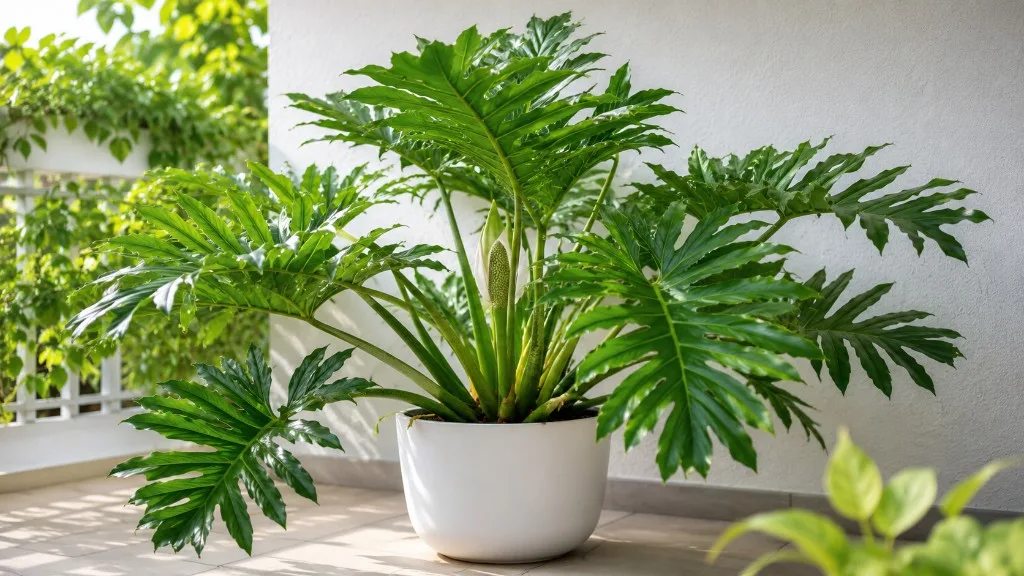
Philodendron Selloum problems
Use the guides below to diagnose and fix common issues on Philodendron Selloum. Each problem page explains why it happens on this species and what to do first.
Or use our problem diagnosis tool to narrow down symptoms.
Common problems on Philodendron Selloum
Brown Tips
MediumLikely cause: Low humidity from dry indoor air
Quick fix: Increase humidity to 50%+; large leaf surface transpires heavily
Full fix guide →Root Rot
HighLikely cause: Dense soil or winter overwatering
Quick fix: Repot in chunky aroid mix; correct winter watering
Full fix guide →Spider Mites
MediumLikely cause: Dry indoor heating on large leaf surface
Quick fix: Rinse leaves; apply neem oil; increase humidity
Full fix guide →Yellow Leaves
MediumLikely cause: Overwatering in winter when growth slows
Quick fix: Reduce watering in winter; allow top 5 cm to dry
Full fix guide →Aphids
MediumLikely cause: Aphids on Philodendron Selloum cluster on soft new lobes at the crown and petiole tips of this self-heading tree philodendron. First step: isolate the plant, wrap the soil surface, and rinse colonies
Quick fix: See plant-specific guide for step-by-step fixes.
Full fix guide →Drooping Leaves
MediumLikely cause: Drooping on Philodendron Selloum (Thaumatophyllum bipinnatifidum) usually means long petioles lost turgor from underwatering, overwatering/root stress, or low humidity-not always an emergency. First s
Quick fix: See plant-specific guide for step-by-step fixes.
Full fix guide →Fungus Gnats
MediumLikely cause: Fungus gnats on Philodendron Selloum mean the soil surface stays too wet too often. First step: let the top 5 cm dry between waterings, set yellow sticky traps, and treat with Bacillus thuringiensis i
Quick fix: See plant-specific guide for step-by-step fixes.
Full fix guide →Leggy Growth
MediumLikely cause: Leggy growth on Philodendron Selloum is self-heading petiole stretch from low light-not vining behavior. Long weak petioles, small pale new lobes, and a sparse crown leaning toward the window are the
Quick fix: See plant-specific guide for step-by-step fixes.
Full fix guide →Low Humidity
MediumLikely cause: Low humidity on Philodendron Selloum is a scale problem-small rooms, huge leaves. First step: run a humidifier to hold 50–60% at canopy height and move the pot away from heating vents.
Quick fix: See plant-specific guide for step-by-step fixes.
Full fix guide →Mealybugs
MediumLikely cause: Mealybugs on Philodendron Selloum hide in leaf axils and along the self-heading stem base. First step: isolate the plant, dab visible clusters with alcohol on a cotton swab, then treat with insecticid
Quick fix: See plant-specific guide for step-by-step fixes.
Full fix guide →Mold on Soil
MediumLikely cause: Mold on Philodendron Selloum soil is usually harmless saprophytic fungus on a constantly wet surface layer - not a leaf disease. First step: scrape off the top half-inch of moldy mix, let the top 5 cm
Quick fix: See plant-specific guide for step-by-step fixes.
Full fix guide →Not Enough Light
MediumLikely cause: Not enough light on Philodendron Selloum shows up as long weak petioles, smaller pale new lobes, and soil that stays wet too long in a dim corner. First step: move the crown to bright indirect light w
Quick fix: See plant-specific guide for step-by-step fixes.
Full fix guide →Overwatering
MediumLikely cause: Overwatering on Philodendron Selloum means the root zone stays wet too long - not one extra cup of water. First step: stop watering until the top 5 cm dries and the pot feels lighter when lifted. If s
Quick fix: See plant-specific guide for step-by-step fixes.
Full fix guide →Slow Growth
MediumLikely cause: Slow growth on Philodendron Selloum is often low light reaching the crown, a root-bound pot, or normal winter rest below about 60°F. First step: confirm season and hold your hand at canopy height for
Quick fix: See plant-specific guide for step-by-step fixes.
Full fix guide →Underwatering
MediumLikely cause: Underwatering on Philodendron Selloum shows when the huge lobed canopy dries out faster than you water - especially in warm bright rooms. First step: soak thoroughly until runoff when the top 5 cm is
Quick fix: See plant-specific guide for step-by-step fixes.
Full fix guide →Wilting
MediumLikely cause: Wilting on Philodendron Selloum can mean underwatering or root rot from overwatering-both block water reaching huge leaves. First step: check if the top 5 cm is dry or wet before adding or withholding
Quick fix: See plant-specific guide for step-by-step fixes.
Full fix guide →