Overwatering on Philodendron Selloum: Causes, Checks & Fixes
Quick answer
Overwatering on Philodendron Selloum means the root zone stays wet too long - not one extra cup of water. First step: stop watering until the top 5 cm dries and the pot feels lighter when lifted. If split leaves droop while soil is soggy, roots may already be failing uptake; if the stem base softens or mix smells sour, switch to the root-rot rescue protocol.
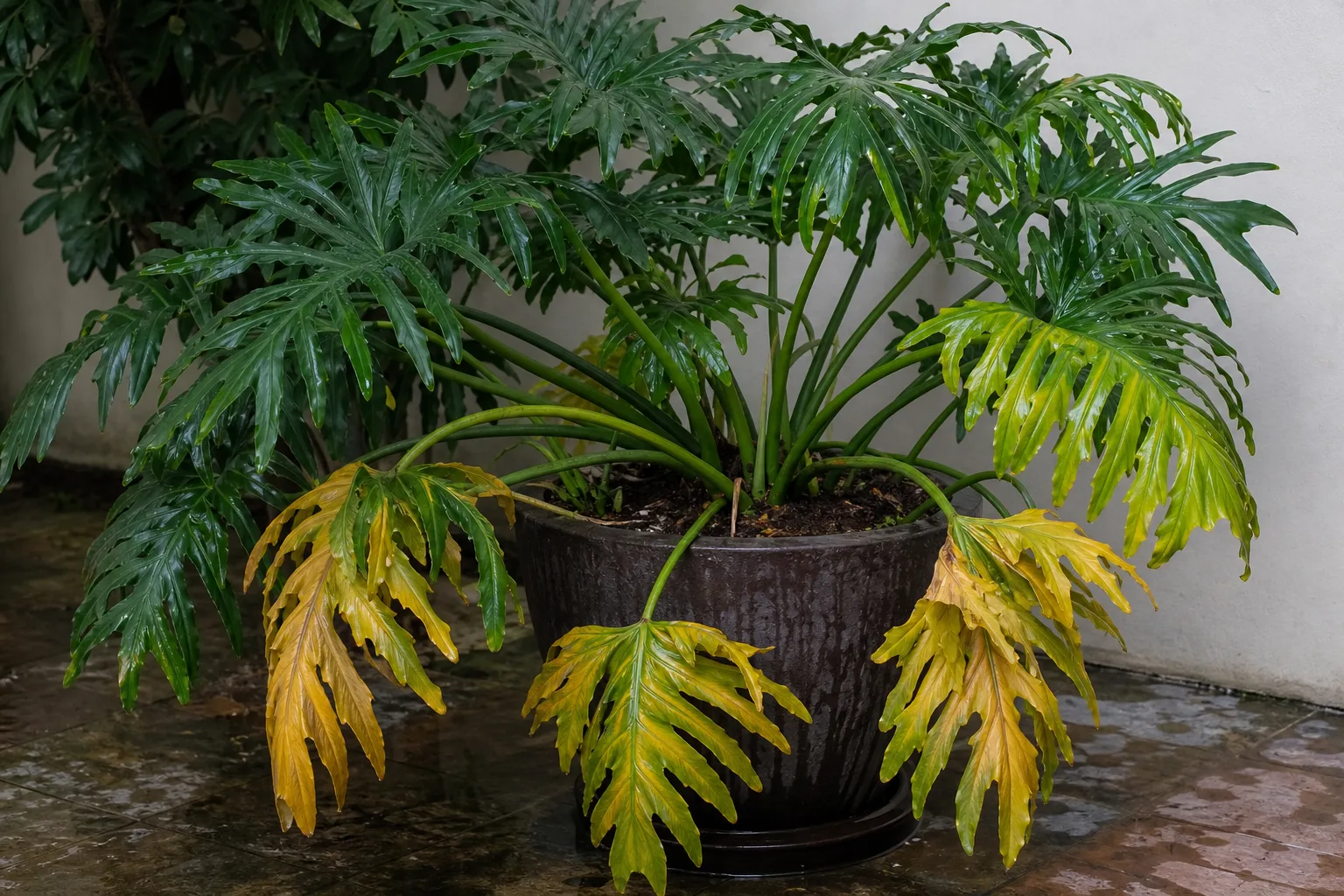
Overwatering on Philodendron Selloum: Causes, Checks & Fixes
This guide covers overwatering on Philodendron Selloum. See also the general Overwatering guide, watering, and light pages for this plant.
Overwatering on Philodendron Selloum: Causes, Checks & Fixes
Quick answer
Overwatering on Philodendron Selloum (Thaumatophyllum bipinnatifidum) means the root zone stays wet too long - not that you gave one extra cup of water. This tree philodendron needs consistent moisture but suffers root rot in overly moist soils. First step: pause watering until the top 5 cm is dry and the pot feels noticeably lighter when lifted.
The confusing trap on Selloum is wilt on wet soil: massive split leaves may droop even though the mix is saturated, because damaged roots cannot absorb oxygen or move water up those long petioles. Do not add water because lobes look limp while the pot is heavy.
Scope on this page: Early wet-feet intervention - drying the root zone before decay spreads. For seasonal soak-and-drain rhythm and pot-weight technique, see the watering guide. If stem base tissue is soft, soil smells sour, or more than a few roots are mushy on inspection, switch immediately to root rot rescue steps.
By sai-ananth · Reviewed by LeafyPixels Review Board · Last expert review: June 2026
Wet soil vs. dry soil vs. active rot
| What you find | Likely cause | First move |
|---|---|---|
| Heavy pot, top 5 cm wet many days after watering, yellow lower lobes, firm stem base, neutral smell | Overwatering - roots stressed but not yet rotting | Stop watering; dry-back protocol below |
| Light pot, dusty dry mix throughout, crispy leaf edges, firm roots if peeked | Underwatering - opposite problem | One full soak, then resume dry-down checks |
| Sour or swampy smell, mushy stem base, black roots, rapid multi-leaf yellow | Advancing root rot | Unpot, trim rot, repot same day - not dry-back alone |
Why Philodendron Selloum gets overwatered
Calendar watering is the top mistake. Selloum uses water quickly in warm, bright summer but slows when indoor temperatures drop below about 60°F in winter. Keeping summer frequency through a cool, dim winter saturates large pots for weeks. UF/IFAS notes that overwatering is the number one way we kill houseplants - and that roots left in standing water begin to rot, often invisible when the main pot sits inside a cachepot that traps runoff.
Cachepot worked example: A 35 cm nursery pot of Selloum sits inside a 40 cm glazed decorative sleeve with no drainage hole. You water until runoff appears - but runoff pools in the sleeve, not the saucer you can see. The outer pot holds 2–3 cm of standing water around the nursery base for days. Even if the top 5 cm eventually feels dry, the bottom third of the rootball stays anaerobic. Empty the sleeve within 30 minutes of every soak, or remove the nursery pot to water at the sink and let it drain fully before sliding it back.
Dense peat-heavy mix, oversized decorative pots, blocked drainage holes, and low light all slow drying. NC State Extension warns that root rot can occur in overly damp soil on tree philodendron even though the species is not drought-tolerant. Clemson HGIC notes that root rot usually results from soil that does not drain quickly or overly frequent watering on philodendrons. On a large self-heading shrub with a 4–10 foot indoor canopy, the visual mass tricks keepers into thinking the plant needs constant drinks - while the center of an oversized rootball stays anaerobic two weeks after one winter soak.
Low light compounds the pattern. A Selloum in a dim corner transpires less, so even correct summer intervals become excessive by autumn. See not enough light when wet soil pairs with pale small new lobes and slow dry-down.
What overwatering looks like on Philodendron Selloum
Watch for these patterns together rather than in isolation:
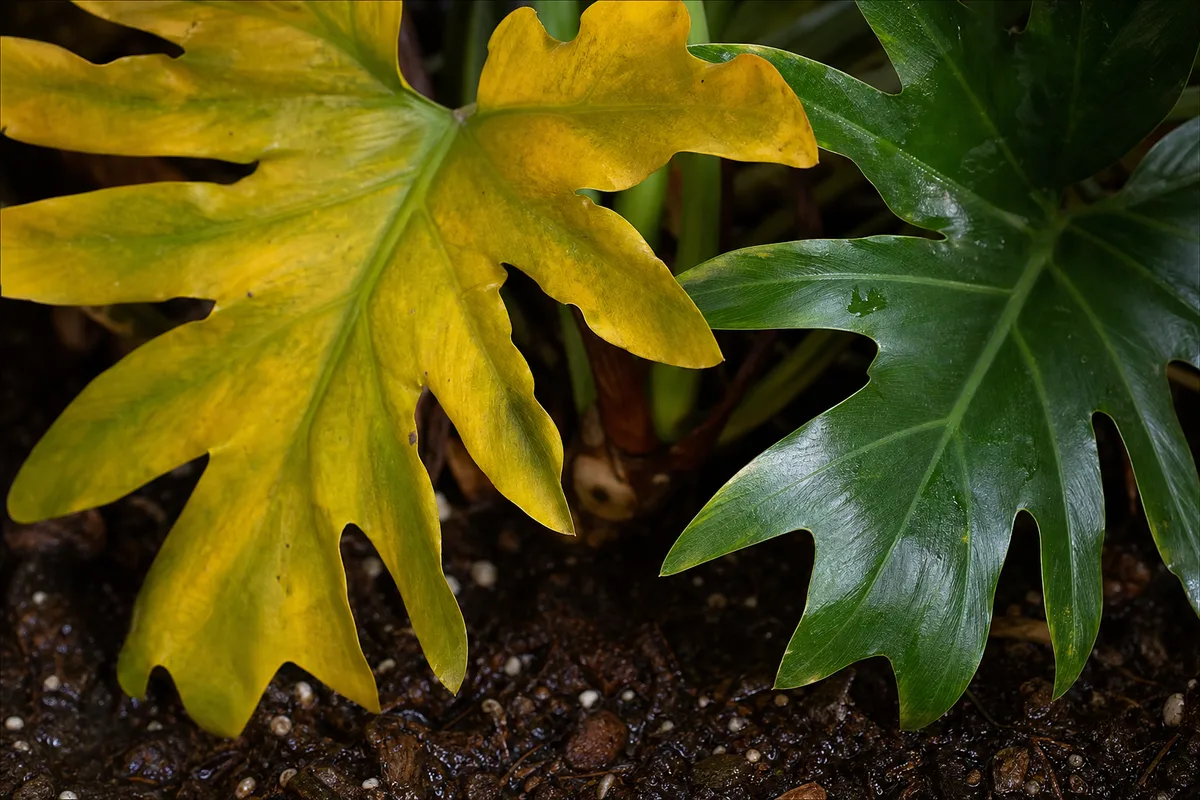
Overwatering symptoms on Philodendron Selloum - compare with healthy tissue on the same plant.
- Yellow lower lobed leaves, sometimes many at once - Clemson links yellowing of lower leaves to overwatering on self-heading philodendrons
- Drooping split leaves while soil is wet - the wilt-on-wet-soil paradox described above
- Soft or darkening stem base at soil level (escalate to root-rot protocol)
- Sour odor from drainage holes - MOBOT notes soil too long without oxygen usually smells sour
- Fungus gnats or white mold on soil surface hovering over chronically wet surface mix
- New leaves small, slow, or browning before opening
- Pot still heavy days after the last watering
On Selloum, the large leaf mass can look partially upright while basal roots are already stressed. Pot weight, smell, and root firmness matter more than leaf color alone.
Photo check (illustrative): Yellow lower lobes on clingy wet mix in a heavy floor pot, firm pale roots versus black mushy tissue on a root peek, and a heavy versus light pot at the same dry-down stage are the three confirmations that separate mild overwatering from advancing rot. Original labeled comparison photos are pending for a future update - use the decision table and five-step checks below until then.
How to confirm the cause
Do not guess from one yellow lobe. Use this inspection order:
- Top 5 cm moisture - Stick a finger or dry skewer 5 cm deep. Still wet many days after watering?
- Pot weight - Lift the pot. Heavy versus light is one of the fastest checks on floor specimens.
- Drainage - Saucer water sitting? Holes blocked? Cachepot hiding standing water?
- Season and light - Winter overwatering is especially common when summer rhythm continues in a cooler, dimmer room.
- Root peek - Unpot only if smell, softness at base, or wilt-on-wet-soil persists after a dry-back pause. Firm pale roots versus mushy brown tissue tells the fork between overwatering recovery and root rot rescue.
Lookalike symptoms to rule out
Underwatering causes limp lobes and dry crispy margins, but the pot feels light, mix is dusty dry throughout, and roots stay firm. Yellow leaves from normal aging usually hit the lowest oldest lobe one at a time while crown and root zone stay stable. Wilting from acute heat or draft can collapse petioles fast, but soil odor stays neutral and stem base remains firm. Advancing root rot shares wet-soil symptoms but adds sour smell, mushy crown tissue, and black slippery roots - that is beyond dry-back alone.
First fix for Philodendron Selloum
Stop watering immediately. This is the single most important first action - not repotting, not fertilizing, not misting limp leaves.
If soil is soggy and roots are still firm when you peek:
- Let the top half of the mix dry before the next soak
- Move the plant to brighter indirect light if it sits in a dim corner - faster transpiration helps dry-down
- Empty any saucer or cachepot water; confirm drainage holes are open
If roots are mushy, stem base is soft, or soil smells sour - skip extended dry-back and follow the root-rot guide the same day.
Step-by-step dry-back recovery
For mild overwatering with firm crown tissue:
- Pause all watering until the top 5 cm is dry and the pot feels lighter - often one to three weeks in winter on a large saturated container.
- Improve airflow and light - bright indirect exposure helps the mix dry evenly without scorching lobes.
- Probe before resuming - finger or skewer to 5 cm depth plus pot weight; do not water on calendar autopilot.
- First soak after dry-back - water until runoff from every drainage hole, then empty the saucer within 30 to 60 minutes.
- Hold fertilizer until new firm lobes unfurl from the crown - salts on stressed roots worsen damage.
- Reinspect roots if wilt-on-wet-soil returns - partial root death may need trim-and-repot even when crown tissue still feels firm.
Make one correction at a time. Do not fertilize, relocate, and repot into a larger container on the same day.
Recovery timeline
Mild overwatering with firm roots and a stable stem base often stabilizes within two to four weeks once the mix dries and watering pauses. Petioles firm up before old yellow lobes recover cosmetically - and yellowed tissue usually will not green up again. Judge progress by neutral-smelling soil, lighter pot weight at dry-down, and eventually new upright lobes from the center rosette.
Editorial observation (March 2026): A floor Selloum in a 35 cm cachepot sleeve kept on a summer seven-day calendar through a dim 65°F winter room showed heavy wet mix and drooping lower lobes after ten days without a drink. Pausing water for eighteen days until the top 5 cm dried and pot weight dropped noticeably stabilized petioles within three weeks - no repot needed because crown tissue and a root peek both stayed firm.
If symptoms worsen during dry-back - spreading yellow, sour smell, soft crown - stop waiting and escalate to root-rot rescue. Honest failure signs include stem base collapse and petioles pulling out with no resistance.
What not to do
- Do not water because large leaves look limp while the pot is heavy - that deepens oxygen starvation in wet mix.
- Do not repot into a larger pot to “dry it out” - extra wet soil volume slows drying further.
- Do not rely on moisture meters alone - Clemson HGIC notes that watering meters vary widely in accuracy and readings can be skewed by fertilizer salts and soil type. In chunky aroid mix, probes may hit air pockets and read dry while the core stays wet. Pair any meter reading with finger or skewer checks at 5 cm depth and pot weight.
- Do not fertilize a waterlogged plant - wait for new growth after rhythm stabilizes.
- Do not leave the plant in a full saucer or cachepot after watering.
How to prevent overwatering next time
Match watering to how fast your pot dries, not a fixed calendar. Many indoor Selloums need water roughly every 7–10 days in warm bright summer and every 14–21 days in cooler dim winter - only after the top 5 cm dries - though pot size, mix, and room conditions can shift that range. See the watering guide for soak-and-drain technique on large floor containers.
Floor specimen vs. younger pot: A mature 30–40 cm floor Selloum in a dense rootball can hold moisture at the core for two to three weeks after one winter soak, while a younger 20 cm plant in fresh airy mix may dry through in seven to ten days in the same room. Do not copy the floor specimen’s calendar onto a smaller pot - or vice versa.
Use well-drained soil in part shade - indoors, bright indirect light per the overview and light guide. Refresh compacted mix every one to two years. Choose a pot sized to the rootball, not the leaf spread. Pour away cachepot runoff you cannot see.
Pet safety: Philodendron Selloum contains calcium oxalate crystals and is toxic to cats and dogs. Keep large floor specimens away from chewing pets. If a pet chews leaves or you suspect ingestion, contact your veterinarian or the ASPCA Animal Poison Control Center (888-426-4435) - do not wait for symptoms to appear.
When to worry
Escalate beyond dry-back if:
- Stem base softens or collapses at soil level
- Soil smells sour even after you stop watering
- More than a few roots are mushy on inspection
- Multiple lobes yellow and droop within seven to ten days
- Wilt-on-wet-soil returns after one corrected dry-back cycle
- Wilt-on-wet-soil returns after two consecutive dry-back cycles - treat as same-day root-rot escalation, not a third pause
Those signs mean active decay - follow the root-rot protocol rather than waiting for more leaves to fail. For acute petiole collapse without sour soil, also read wilting.
If decline continues after one dry-back cycle and a firm crown on inspection, contact your local cooperative extension office or master gardener helpline for hands-on diagnosis before you water again.
Escalation summary: which path to take
Use this fork after pot weight, top-5-cm moisture, smell, and crown firmness checks:
- Pause and dry back - Heavy wet pot, firm stem base, no sour smell, yellowing limited to lower lobes. Stop watering, empty all vessels, let the top 5 cm dry, recheck in 7–14 days (longer on large winter-saturated floor pots).
- Monitor with skewer test - Heavy pot, firm crown, musty smell or fungus gnats, but no crown softening. Pause water, confirm damp core with a dry skewer, improve airflow, watch for yellow spread up the plant.
- Same-day unpot - Softening stem base, sour saturated mix, or limp lobes that stay limp after the mix has dried appropriately once. Inspect roots, trim mushy tissue, repot smaller - see root rot numbered recovery.
- Second failed dry-back - Wilt-on-wet-soil returns after two corrected pause-and-dry cycles with firm crown on first inspection. Partial root death is likely; unpot and trim the same day rather than a third extended dry-back.
- Not overwatering - Light dry pot, crispy margins, mix pulling from the wall. Do not pause water; see underwatering.
Permanent cosmetic note: Yellow lower lobes will not re-green. Judge success by firm new center growth and predictable pot weight between drinks - not by old damaged tissue.
Related Philodendron Selloum guides
- Overview - species identity, mature size, and baseline care
- Watering - seasonal dry-down rhythm and pot-weight checks
- Root rot - unpot, trim, and repot when decay has started
- Wilting - acute turgor collapse and wet-vs-dry emergency fork
- Yellow leaves - when yellowing is not overwatering alone
- Underwatering - light dry pots and crispy margins
- Fungus gnats - secondary signal of chronically wet surface mix
- Mold on soil - white fuzz on wet surface mix
- Repotting - when mix structure or pot size needs correction
FAQs
Why does my Selloum wilt when the soil is still wet?
Damaged roots cannot move water up long petioles even when the mix is saturated - so lobed leaves droop like a thirsty plant while the pot stays heavy. That wilt-on-wet-soil pattern is classic overwatering on this self-heading species. Pause watering, check root firmness at the stem base, and escalate to the root-rot guide if tissue is mushy or soil smells sour.
What should I check first for overwatering on Philodendron Selloum?
Check top 5 cm moisture, pot weight, drainage holes, season, and light level before touching leaves. Winter plus dim corners plus summer watering frequency is the most common Selloum overwatering pattern indoors. A heavy pot days after watering with clingy wet surface mix confirms chronic saturation - not thirst.
Will Philodendron Selloum recover from overwatering?
Mild cases recover once soil dries and roots stay firm - expect firmer petioles and stable crown tissue within two to four weeks. Old yellow lobes will not green up; watch for new center growth. If roots turn mushy, recovery needs unpotting and trim work covered on the root-rot page.
When is overwatering urgent on Philodendron Selloum?
Urgent when the stem base softens, soil smells sour, or multiple lobes collapse within a week despite wet mix. Large decorative pots hide wet root zones until rot is advanced - do not wait for every leaf to yellow. See the root-rot guide the same day you find mushy roots, spreading crown softness, or wilt-on-wet-soil after two failed dry-back cycles.
How do I prevent overwatering on Philodendron Selloum next time?
Water only when the top 5 cm dries - often roughly every 7–10 days in warm bright summer and every 14–21 days in cooler dim winter, though your pot and room may differ. Use chunky aroid mix, multiple drainage holes, bright indirect light, and empty saucers after every soak. Match rhythm to dry-down speed on your specific pot size, not a fixed calendar - see the watering guide for technique detail.