Drooping Leaves on Philodendron Selloum: Causes, Checks &
Quick answer
Drooping on Philodendron Selloum (Thaumatophyllum bipinnatifidum) usually means long petioles lost turgor from underwatering, overwatering/root stress, or low humidity-not always an emergency. First step: check top 5 cm moisture and pot weight before watering or withholding.
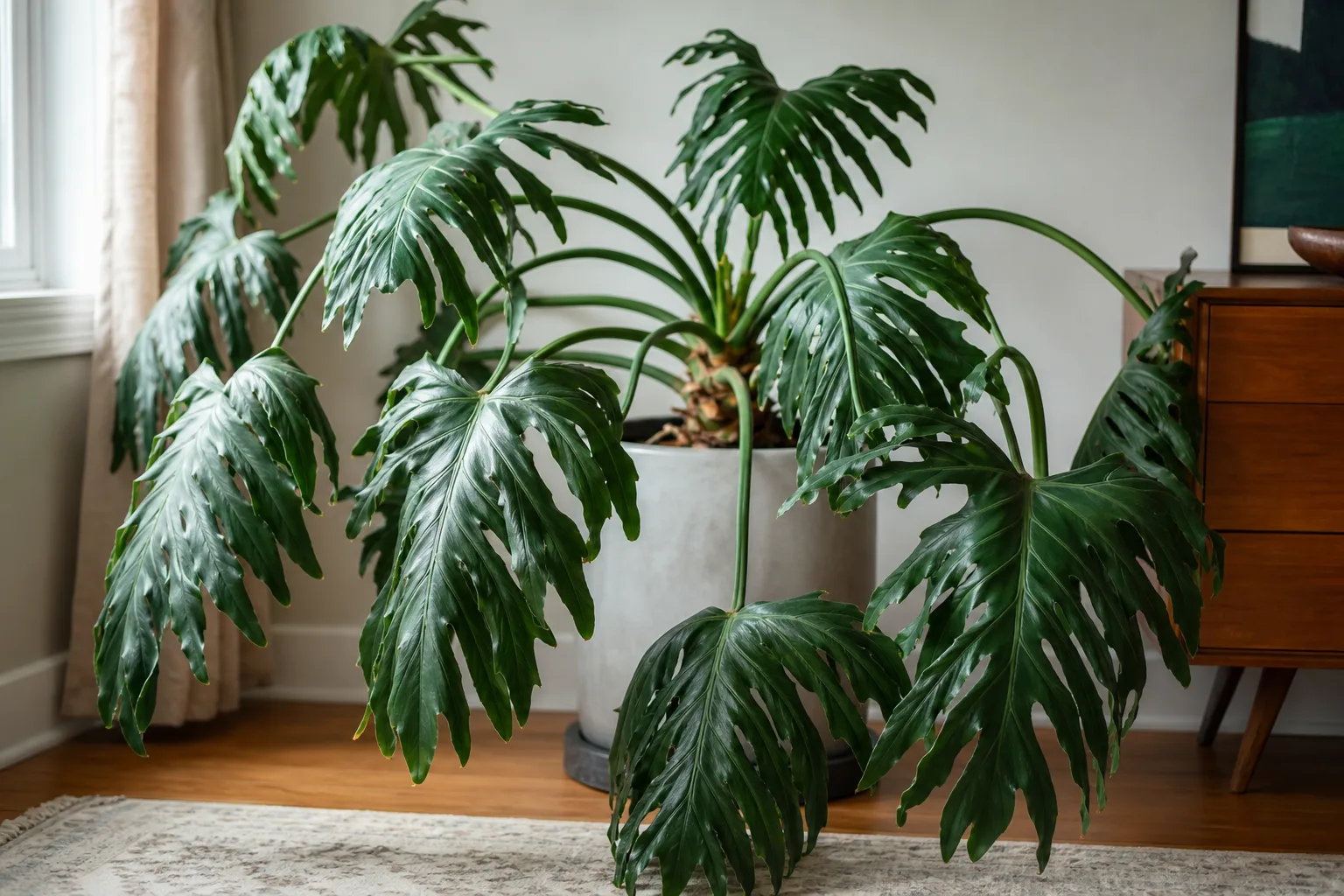
Drooping Leaves on Philodendron Selloum: Causes, Checks & Fixes
This guide covers drooping leaves on Philodendron Selloum. See also the general Drooping Leaves guide, watering, and light pages for this plant.
Drooping Leaves on Philodendron Selloum: Causes, Checks & Fixes
Quick answer
A dramatic slump on Philodendron Selloum (Thaumatophyllum bipinnatifidum) is not always an emergency. Mature tree philodendrons carry massive lobed blades on long petioles that naturally angle downward on outer leaves while the self-heading crown stays upright. Sudden whole-canopy droop, new center growth collapsing, or a posture change from your plant’s usual lean is the signal to diagnose.
When droop is pathological, the large leaves lost turgor-internal water pressure-because roots are not supplying enough moisture. Wilting and slight drooping can signal a plant getting too dry, but wilted leaves with wet soil often mean rotting roots that cannot take up water-the same limp look, opposite fixes. That happens from underwatering, overwatering that damages roots, low humidity, heat or draft shock, or recent repot disturbance. The trap on Selloum is scale: one missed watering on a 4–10 foot indoor canopy looks catastrophic even when roots are still healthy, and wet-soil droop looks identical to thirst until you check the pot.
First step: lift the pot and probe the top 5 cm of mix before you water, repot, or fertilize. A light pot with dry mix needs a deep soak; a heavy pot with wet mix needs drying and possibly a root inspection-not another drink. For baseline care rhythm, see the Philodendron Selloum overview and watering guide.
What drooping leaves look like on Philodendron Selloum
Healthy Selloum holds its crown leaves at a slight upward angle from thick, self-supporting stems. Drooping shows as:
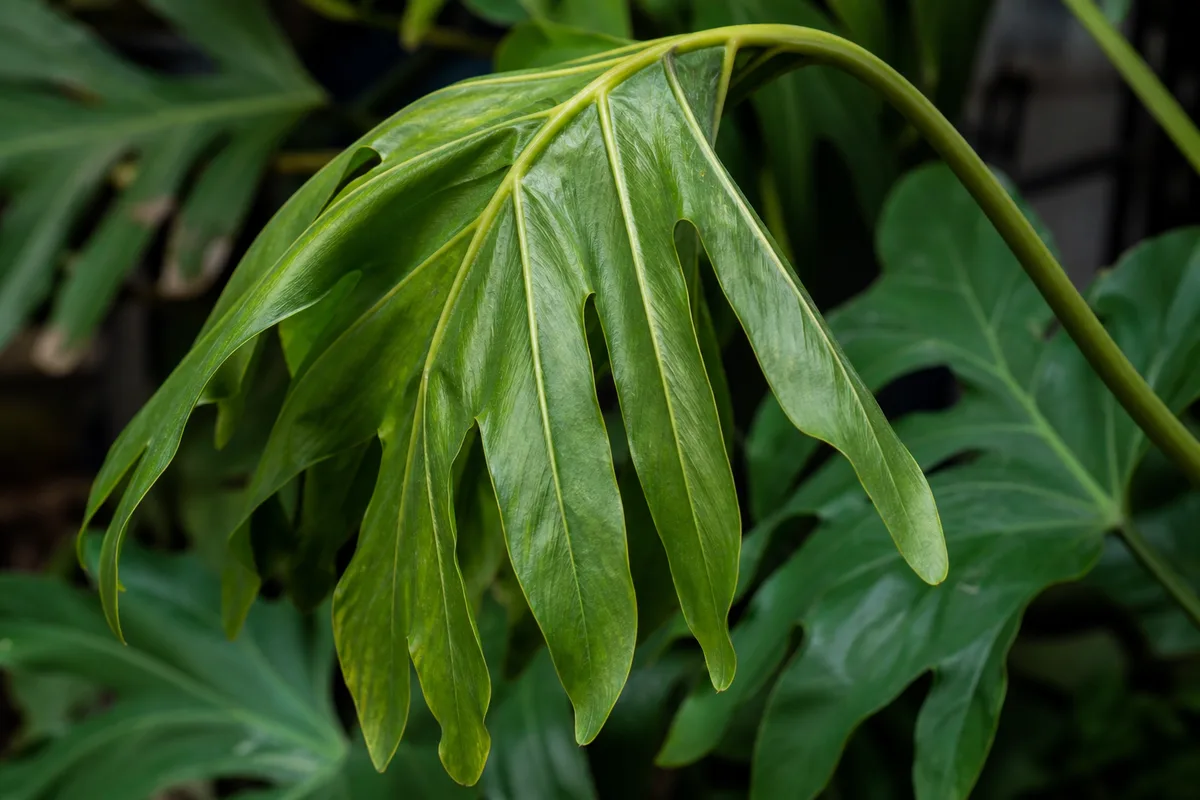
Drooping Leaves symptoms on Philodendron Selloum - compare with healthy tissue on the same plant.
- Limp lobed blades hanging lower than your plant’s normal outer-leaf angle
- Soft petioles where the 2–3 foot leaf stalk meets the stem, sometimes across the whole canopy at once
- Whole-canopy slump on a lightweight dry pot-dramatic on a large specimen
- Paradox droop with wet soil-leaves hang limp while mix stays damp and lower lobes yellow
- Crispy margins alongside slight petiole sag when humidity is too low for the leaf mass
- One-sided droop near a heat vent or south window while the opposite side stays firmer
Selloum is a self-heading shrub, not a trailing vine. When it droops pathologically, the entire crown may look tired rather than one long runner wilting at the tip. That upright habit makes stem firmness at the soil line and new center growth posture especially useful checks.
Normal vs pathological hang: Mature outer leaves on long petioles naturally droop slightly-UF/IFAS describes selloum foliage as “usually drooping” on long smooth petioles in landscape plantings. Indoors, concern is sudden change, new growth drooping, or multiple large leaves collapsing at once. If only older outer lobes hang while the center crown stays firm, you may be seeing normal architecture, not root failure.
Why Philodendron Selloum gets drooping leaves
Underwatering and fast canopy transpiration
Selloum’s huge leaf area loses water quickly in warm bright rooms. NC State Extension notes leaves can reach up to 4 feet long on long smooth petioles-a canopy that transpires far more per day than a compact Birkin or heartleaf philodendron. When the root zone goes fully dry, petioles lose stiffness first; margins may crisp on the oldest lobes.
A lightweight pot, dusty dry surface, and mix pulling away from the pot wall support thirst over rot. Missouri Botanical Garden describes the species as intolerant of drought while still needing aerated mix between waterings-the reconciliation is consistent moisture with a dry surface layer, not bone-dry shock on a massive leaf mass.
Overwatering and root stress
This is the most serious cause indoors. Selloum needs moisture, but oversized nursery pots, heavy peat mix, and watering on a calendar leave large root balls soggy for weeks. Root rot in overly moist soils kills uptake-leaves droop despite wet mix, the classic sign that rotting roots cannot take up water.
The self-heading crown structure matters here: wet-root failure on a tree philodendron can escalate to soft stem base and crown loss faster than on trailing philodendrons because the whole plant depends on one central root mass. Heavy ceramic floor pots compound the problem-they stay wet in the center long after the top looks dry.
Low humidity
Selloum tolerates average room humidity better than many tropicals, but 50–60% supports turgidity on enormous lobed blades. When humidity drops-winter heating, AC season, or placement near a heat register-margins crisp while petioles sag slightly. Humidity droop rarely collapses the whole canopy overnight unless watering is also off.
Heat, light, and draft shock
Sudden exposure to hot dry air from a heat register, or moving a large specimen to a much brighter window without acclimation, increases transpiration faster than roots replace water. Cold drafts below about 15°C (60°F) slow root function; roots in cool damp mix absorb poorly, mimicking overwatering droop even when you have not changed the watering can.
Recent repotting or transplant shock
Selloum often droops for one to two weeks after repotting because fine root hairs were disturbed on a large root ball. Any stress, including recent repotting or location change, can cause leaf drop or wilt while roots re-establish. Watering heavily right after repot into wet fresh mix compounds the problem. See the repotting guide for shock timelines and when to hold off on a full upgrade.
Root-bound or hydrophobic soil
A root-bound floor specimen in an unchanged pot for years may wilt from dry interior pockets while the surface looks slightly moist. Hydrophobic mix that channels water down the pot sides without rewetting the root ball produces the same limp canopy after a superficial watering.
How to confirm the cause
Work through these checks in order:
- Pot weight - Lift the pot. Light means dry; noticeably heavy means wet.
- Moisture at depth - Probe 5 cm into the mix, not just the surface crust. Dry there with limp leaves = thirst. Wet there with limp leaves = suspect root stress.
- Stem base - Press the lower stem above the soil. Firm and green is reassuring; soft, dark, or mushy tissue suggests rot.
- Smell - Sour or swampy odor from drainage holes points to decay in wet mix.
- New growth posture - If the newest crown leaf is still firm while older outer lobes droop, the problem may be localized stress or normal outer-leaf hang rather than total root failure.
- Recent events - Repotted in the last two weeks? Moved windows? Heater season started? Match droop timing to the trigger.
- Humidity context - Crispy tips with slight sag and otherwise normal moisture fit low humidity; see low humidity guidance.
| Check | Underwatering | Overwatering / root stress |
|---|---|---|
| Top 5 cm | Dry | Wet many days |
| Pot weight | Light | Heavy |
| Soil smell | Neutral | Sour |
| Lower leaves | May crisp at edges | Often yellow |
| Roots (if inspected) | Firm, pale | Mushy, brown |
| After thorough soak | Perks up within hours | No change or worsens |
If droop persists more than 48 hours after you corrected moisture-or wet soil never dries-unpot and inspect roots. Brown soft roots confirm overwatering damage; firm pale roots with dry mix confirm thirst.
First fix for Philodendron Selloum
Lift the pot and check whether the top 5 cm of mix is dry or wet before you water, repot, or fertilize.
That single check separates opposite fixes. Watering an already-wet Selloum is the most common way recoverable droop turns into root rot on a self-heading crown. Withholding water from a dry Selloum lets turgor loss spread across more of the massive canopy.
Do not stake drooping petioles, mist repeatedly, move the plant daily, prune heavily, or feed on day one. Those add stress before you know which side of the moisture line you are on.
Step-by-step recovery
If the mix is dry and the pot is light
- Water thoroughly until excess drains from the bottom-use room-temperature water and empty the saucer after 30 minutes.
- If water runs straight through dry, compacted mix, bottom-soak the pot in a tray of water for 20–30 minutes so the root ball rewets evenly.
- Recheck in a few hours. Thirst droop on healthy roots often improves the same day-a 12-inch nursery specimen after a heat-week dry spell can firm within 4–6 hours.
- Resume the watering rhythm: soak when the top 5 cm dries, roughly every 7–10 days in active growth and 14–21 days in cooler months.
If the mix is wet and the pot is heavy
- Stop watering until the top half of the mix dries. Move Selloum to bright filtered light with good airflow-not deeper shade, which slows drying.
- If stems at the soil line are soft or smell is sour, unpot gently, rinse roots, and trim brown mushy tissue with clean scissors. Follow the full root rot protocol for severe cases.
- Repot only if roots are damaged or mix is stale and waterlogged. Use fresh chunky aroid mix; choose a pot only slightly larger with drainage holes.
- Wait until new crown growth looks firm before returning to a normal watering schedule.
If droop followed a recent repot
- Keep the plant in stable bright indirect light and avoid fertilizer for four to six weeks.
- Water lightly when the top 5 cm dries-do not keep mix soggy “to help it settle.”
- Expect one to two weeks of limp older leaves while roots grow; judge recovery by firm new lobed leaves at the crown.
If low humidity or heat shock is the trigger
- Move Selloum away from heat registers, AC blasts, and drafty glass.
- Correct moisture once, then leave the plant in one spot for at least a week.
- Run a humidifier or group plants to hold 50–60% humidity near the canopy if margins crisp while drooping.
Recovery timeline
| Cause | What to expect |
|---|---|
| Mild underwatering | Perking within 4–24 hours after thorough watering |
| Severe dry spell on large canopy | 2–5 days; some older lobes may not fully refill |
| Overwatering without rot | Improvement over 1–2 weeks as mix dries and roots recover |
| Root rot after trimming | Weeks to months; judge by firm new crown leaves, not old ones |
| Repot shock | 7–14 days before petioles feel rigid again |
| Heat or humidity stress | 24–72 hours after environment and moisture stabilize |
Damaged leaf tissue does not perfectly uncurl-success means new lobed crown leaves open firm and droop stops spreading. Crispy tips stay damaged even after turgor returns.
Lookalike symptoms
Wilting with rapid tissue collapse - Often overlaps droop on Selloum, but wilting vocabulary usually means acute turgor loss across the whole blade. Droop on Philodendron Selloum overview more often describes posture change on long petioles, including normal outer-leaf hang. See the drooping-vs-wilting section below when unsure which page fits your plant.
Yellow leaves with droop and wet soil - Often advanced overwatering. Fix roots and drainage before chasing humidity or fertilizer.
Brown crispy tips without full canopy slump - Usually low humidity or salt buildup, not the same emergency as whole-plant collapse. Raise humidity and check watering separately.
Leggy, small new leaves with firm petioles - Not enough light causes shallow lobing and stretch, not classic turgor collapse. Move to brighter filtered light.
Underwatering shrivel - Extreme underwatering may show thin, papery lobes with widespread crisping beyond simple droop. Still start with moisture confirmation.
Drooping vs. wilting - symptom vocabulary and slug choice
On Selloum the words overlap in conversation, but the guides split intent:
- Drooping - Posture change: long petioles angle lower, outer leaves hang, normal mature lean vs sudden slump. This page covers chronic hang, paradox wet-soil droop, and canopy posture diagnosis.
- Wilting - Acute turgor collapse: tissue goes soft and limp quickly, often whole-blade flaccidity. The wilting guide focuses on rapid moisture-failure rescue and the wet-vs-dry emergency fork.
If leaves perk within hours after one thorough watering on dry mix, either label fits-follow the dry recovery path. If wet soil, sour smell, and soft stem base accompany collapse, treat it as urgent root stress on both pages and escalate to root rot protocols.
Mistakes to avoid
- Watering immediately because leaves look limp without checking wet soil first
- Staking drooping petioles without fixing root-zone moisture-the plant will slump again
- Repotting on day one when the only issue is a dry pot or minor repot shock
- Fertilizing a drooping Selloum to perk it up-salts stress roots that are already failing
- Moving the plant daily between rooms while trying to diagnose
- Misting instead of fixing root-zone moisture-surface moisture does not restore turgor on 3-foot lobes
- Using a calendar instead of pot weight and finger checks; large pots dry slower in cool, dim months
How to prevent drooping next time
- Check moisture before every watering; do not water on a fixed schedule.
- Use pots with drainage and repot only one size up when roots circle the mix-see repotting for floor-specimen stability.
- Maintain 50–60% humidity near the canopy in heated or air-conditioned rooms.
- Keep bright filtered light so transpiration and watering stay predictable per the light guide.
- Seasonal rhythm: 7–10 days summer, 14–21 days winter when top 5 cm dries-adjust for your pot size and room.
Pet safety: Philodendron Selloum contains insoluble calcium oxalate crystals toxic to cats and dogs. Chewing causes oral pain, drooling, swelling, vomiting, and difficulty swallowing. Call your veterinarian or ASPCA Animal Poison Control at (888) 426-4435 if ingestion is suspected-especially when inspecting roots or handling trimmed tissue. Keep floor specimens out of reach.
When to worry
Seek deeper intervention if:
- Drooping continues beyond 48 hours after you corrected dry or wet conditions appropriately
- Stems soften or darken at the soil line-urgent on self-heading Selloum where crown loss can follow
- More leaves yellow and drop while mix stays damp
- New crown growth arrives small, curled, or already limp
- Root inspection shows mostly brown mushy tissue with little firm white root remaining
- Multiple large leaves collapse at once on a wet heavy pot-same-day root inspection
Selloum can recover from partial root loss if enough healthy stem and root remain. If rot has climbed through most of the crown base, salvage may require division or stem cuttings from firm tissue above the damage-see propagation before the last viable node fails.
Related Philodendron Selloum problems
- Philodendron Selloum overview - species ID, light, water, soil, and size planning
- Watering guide - top 5 cm dry-down rhythm for large pots
- Wilting - acute turgor collapse and wet-vs-dry emergency fork
- Overwatering - chronic soggy-soil patterns before crown failure
- Underwatering - drought collapse and soak recovery on large canopies
- Root rot - unpot, trim, and repot protocol for wet-soil droop
- Low humidity - crispy margins with slight petiole sag
- Repotting - shock timelines after root disturbance
When to use this page vs other Philodendron Selloum guides
- Philodendron Selloum watering guide - Use for routine moisture checks before assuming drooping leaves is the main issue.
- Philodendron Selloum problems hub - Browse all 4 common issues on this species.
- Root Rot on Philodendron Selloum - Different entry point when symptoms overlap with drooping leaves.