Not Enough Light on Philodendron Selloum: Causes, Checks &
Quick answer
Not enough light on Philodendron Selloum shows up as long weak petioles, smaller pale new lobes, and soil that stays wet too long in a dim corner. First step: move the crown to bright indirect light within 2–4 feet of an east window or behind sheer on south or west glass, then adjust watering to match faster dry-down.
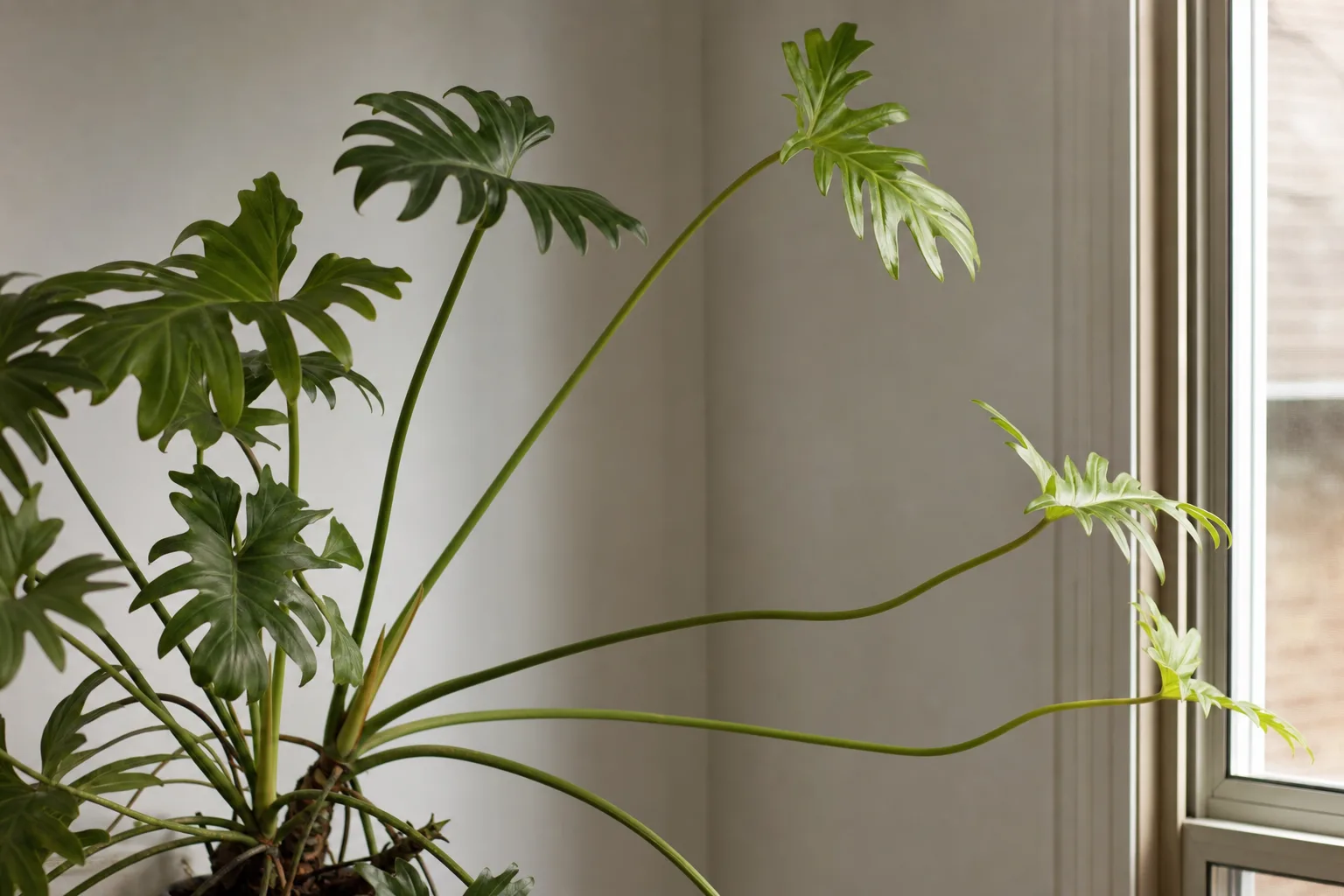
Not Enough Light on Philodendron Selloum: Causes, Checks & Fixes
This guide covers not enough light on Philodendron Selloum. See also the general Not Enough Light guide, watering, and light pages for this plant.
Not Enough Light on Philodendron Selloum: Causes, Checks & Fixes
Quick answer
Philodendron Selloum - the nursery tag most people recognize - is Thaumatophyllum bipinnatifidum, a self-heading shrub with massive deeply lobed leaves rising from a central crown, not a trailing philodendron that survives in a hallway on ambient bounce light. When the crown receives too little usable brightness, new petioles elongate, lobes emerge smaller with shallower cuts, and growth stalls even though older lower leaves can keep the plant looking “fine” for months.
First step: move the crown to bright indirect light - typically within 2–4 feet of an east-facing window, or 4–6 feet back from south or west glass behind a sheer curtain. Do not jump from a dark interior corner to unfiltered afternoon sun in one day; full direct sun scorches leaves on this species.
Scope on this page: Insufficient light means the crown is not receiving enough daily brightness for healthy new architecture - pale small lobes, wet soil that dries slowly, and a plant leaning toward windows. If you already see obvious long petioles and open sparse canopy, also read leggy growth for stretch-specific morphology. If growth has nearly stopped with firm old leaves, see slow growth. For proactive window placement on a large floor specimen, see the light guide.
What insufficient light looks like on Philodendron Selloum
Light stress on selloum has a recognizable pattern on the center rosette, not only on aging lower foliage:
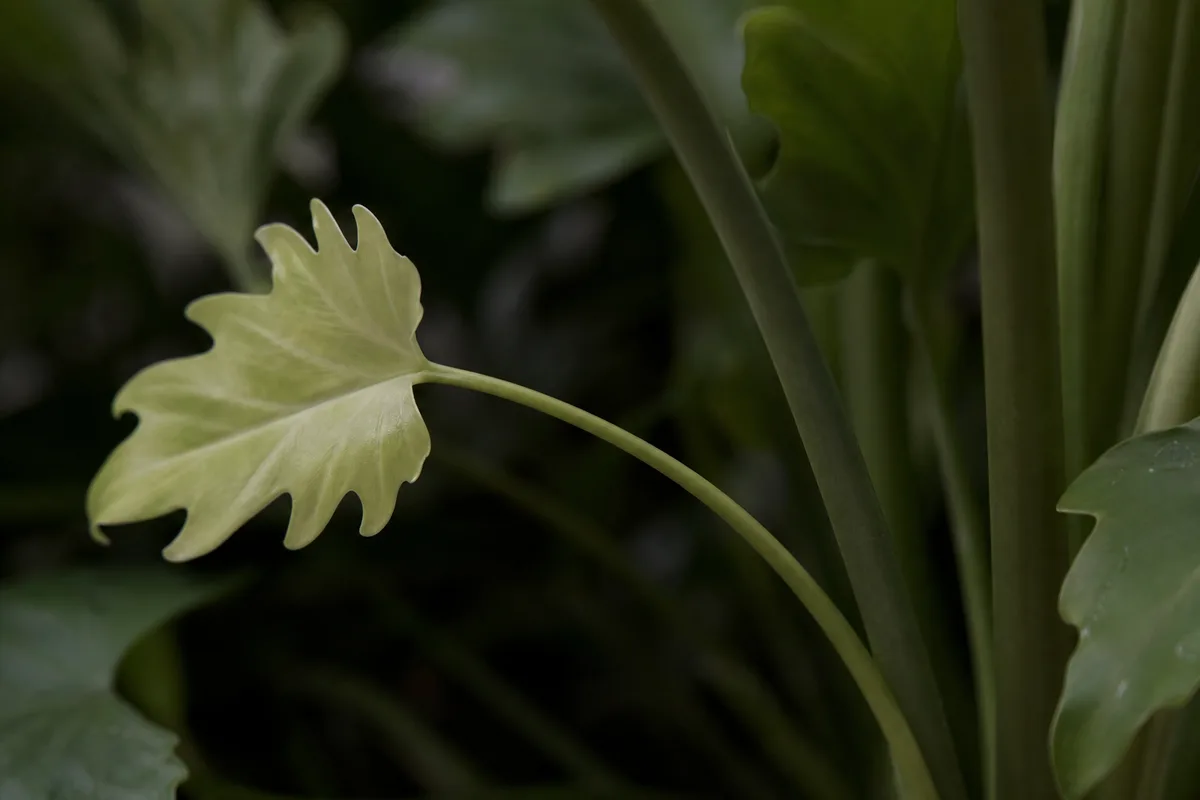
Not Enough Light symptoms on Philodendron Selloum - compare with healthy tissue on the same plant.
- Longer petioles on newest leaves - the stalk between crown and blade stretches as the plant reaches for photons. Unlike vining philodendrons, selloum does not produce long bare runners; stretch shows up as petiole length.
- Smaller leaf blades with shallower lobing - NC State Extension notes that low light produces smaller leaves with fewer or no lobes on tree philodendron. Deep cuts and glossy size are what this species is grown for; dim rooms flatten that architecture first on new growth.
- Pale yellow-green new color - fresh lobes look washed out compared to older, darker lower leaves that formed in better light.
- Strong lean toward one window - the whole crown angles toward the brightest source. Self-heading plants cannot “trail” toward light; they tilt and stretch upright.
- Sparse open crown - fewer active lobes at the top while large older leaves lower on the stem still look impressive, masking the problem.
- Soil that stays wet too long - when photosynthesis drops in dim placement, water uptake slows. Mix that once dried in a week may now take two weeks, raising root rot risk in overly moist soils.
A single yellow lower leaf is not enough to diagnose light stress. The pattern that matters is repeated small pale new lobes plus stretch or lean on a plant whose watering routine has not changed.
How this differs from leggy growth on the same plant
These URLs overlap because low light causes both problems, but the emphasis differs:
| This page (not enough light) | Leggy growth page |
|---|---|
| Room placement, crown-height light, confirmation checks | Visible stretch morphology - petiole length, sparse rosette |
| Prevention, grow lights, large-specimen moves | When stretch is already obvious and you need morphology detail |
| Light–water coupling in dim corners | Distinguishing stretch from rot yellowing |
If your main question is “Is my room bright enough?” stay here. If petioles are already dramatically longer than six months ago, read both - fix placement using this page, then track stretch recovery on the leggy growth page.
Why Philodendron Selloum needs bright light
Selloum is not a low-light plant. NC State Extension states it prefers high light and tolerates lower light only as a survival band. Missouri Botanical Garden lists outdoor culture as part shade with morning sun or sun-dappled conditions - indoors, that translates to your brightest suitable filtered window, not a decorative corner far from glass.
Self-heading crown biology and indoor constraints
This species grows upright from a short stem with leaves attached to long smooth petioles rising in a rosette-like configuration. Mature indoor specimens commonly reach 4 to 10 feet tall and 6 to 10 feet wide. That scale creates placement problems smaller philodendrons avoid:
- Crown height vs. pot position - a selloum may sit on the floor while its active growing tip is four to six feet above the window sill. Light intensity decreases rapidly with distance from the source; the room can feel bright at eye level while the crown reads as medium or low light.
- Lower-lobe shading - large older leaves intercept light meant for the center rosette. A plant that once thrived near glass can decline after lower foliage expands, even if you never moved the pot.
- Ceiling light is not enough - overhead fixtures rarely deliver the sustained brightness a high-light houseplant needs for dense new lobing. Interior designers often place selloum in corners for visual weight; pothos may tolerate that longer, but tree philodendron cannot hold deep lobes there.
Light–water coupling and rot risk in dim corners
Dim placement slows metabolism. The plant drinks less, so soil stays wet longer. Chronic wet mix in low light is a common path to yellowing and root rot - especially on a large root mass that holds moisture. Fixing light without adjusting watering leaves the same rot risk. When you brighten placement, expect faster dry-down and check the top 5 cm before every drink. See the watering guide for rhythm tied to brightness.
Common placement mistakes that trigger insufficient light:
- Treating selloum like a snake plant or ZZ plant in a hallway, foyer, or windowless bathroom.
- Judging brightness at the doorway while the crown sits deep in the room.
- Keeping a north-facing placement in a wide room where daylight never reaches leaf level.
- Leaving the pot in the same spot year-round while winter daylight drops sharply.
- Assuming survival on old large leaves means the crown is getting enough light for new architecture.
How to confirm the cause
Work through these checks before changing fertilizer, repotting, or assuming pests:
- Crown-height window distance and direction - Stand at the tallest leaves. Is the crown more than 4–6 feet from the brightest window? North rooms and interior corners often read as “fine” to human eyes but deliver low light to foliage. Human eyes adapt quickly and are poor judges of intensity.
- Hand-shadow test at crown height - On a sunny day, hold your hand between the window and the crown. A soft diffused shadow with recognizable fingers suggests usable bright indirect light. A faint or absent shadow at crown height means the spot is too dim for vigorous selloum growth.
- New growth vs. old growth - Compare the newest lobe to leaves produced when you first got the plant or when it sat closer to glass. Shrinking size and shallower cuts on fresh growth confirm current light is too low.
- Lean and petiole stretch - Does the crown reach toward one side? Longer petioles on top leaves with smaller blades point to etiolation, not normal self-heading form.
- Soil dry-down speed - Stick a finger 5 cm into the mix. If it stays damp far longer than before and the plant is not actively growing, low light may be slowing water use. Sour smell or mushy stems suggest overlapping rot - see root rot.
- Sky vs. bounce light - Can the crown “see” sky through glass, or only light reflected off walls and ceilings? Bounce alone rarely supports the high light preference NC State documents for this species.
- Seasonal context - Short winter days can push a marginally lit plant into pale small lobes even if placement did not change.
If stems are firm, pests are absent, and yellowing appears only on lower leaves while new growth is pale and small, insufficient light is the most likely primary cause.
First fix for Philodendron Selloum
Move the crown to bright indirect light.
Relocate the plant so the center rosette - not just the pot rim - receives strong filtered daylight most of the day. Practical starting points for floor specimens:
- East window: 2–4 feet back from glass, or behind a thin sheer if midday sun is intense.
- South or west window: 4–6 feet back, or directly behind a sheer curtain - avoid unfiltered hot afternoon beams on unacclimated leaves.
- No usable window: Add a full-spectrum LED grow lamp 12–18 inches above the crown, on a timer for 10–14 hours daily during active growth.
Increase exposure gradually if the plant lived in deep shade for months - shift closer over 7–14 days rather than placing it on an unfiltered west sill in one move. Light is the engine; fertilizer and repotting do not compensate for chronic shade on a tree philodendron.
Reduce watering frequency until you learn the new dry-down speed in brighter light. Check moisture every few days instead of following an old calendar schedule.
Step-by-step recovery by scenario
Once brighter placement is set, follow this order:
- Relocate and observe - Move to filtered bright light at crown height. Wait one week before judging results; existing lobes do not change overnight.
- Rotate weekly - Turn the pot one-quarter turn so all sides of the rosette receive light. One-sided density often means only the window-facing sector was getting enough energy.
- Adjust watering - When growth speeds up in better light, the mix dries faster. Allow the top 5 cm to dry before watering again. See watering guide.
- Hold fertilizer - Skip feed until two to three new lobes show improved size and color. A stressed plant in recovering light does not need extra salts. See fertilizer guide.
- Supplement in dark months - If winter daylight is weak, run a full-spectrum grow lamp 10–14 hours daily above the crown rather than accepting seasonal shrinkage.
- Large-specimen move logistics - Slide heavy pots on a plant dolly rather than dragging by the stem. Clear a path before moving; selloum petioles snap if caught on doorframes. If ceiling height blocks a taller specimen from sitting closer to glass, raise the pot on a sturdy stand or use a grow lamp instead of forcing the plant horizontal.
Scenario: bathroom or interior room with weak natural light
If the only frosted window delivers dim light to the crown, add a grow lamp before the plant stalls entirely. Windowless bathrooms are not long-term homes for selloum without artificial light. Move to a brighter room or commit to daily supplemental lighting.
Scenario: chronic dim plus wet soil
Brighten placement and let the top 5 cm dry before the next drink. If soil smells sour or roots feel mushy on a gentle tug, address rot before expecting new lobes - see root rot.
Recovery timeline
| Timeframe | What to expect |
|---|---|
| Week 1 | Lean may lessen slightly; no visible change on old lobes yet |
| Weeks 2–4 | First new lobe after the move should show firmer petioles and slightly larger blade than the prior leaf |
| Weeks 4–8 | Two to three unfurling cycles with progressively larger, darker lobes confirm the fix |
| Beyond 8 weeks | If new foliage stays small and pale, light is still too low - move closer, add a lamp, or verify crown height receives the beam |
Old stretched petioles do not shorten. Pale lower lobes may not regain the deep green of youth. Judge success by new growth only: lobe size, lobing depth, petiole firmness, and color on the freshest leaves from the center rosette.
Lookalike symptoms
| Problem | Key signs | How it differs from simple low light |
|---|---|---|
| Leggy growth | Dramatically long petioles, sparse crown, lean | Same root cause - see leggy growth for morphology detail |
| Slow growth | Few new lobes, firm old leaves, no dramatic stretch | May be root-bound, cool temps, or seasonal - see slow growth |
| Root rot | Yellowing, limp petioles, sour wet pot, mushy roots | Light stress alone keeps stems firm; rot needs wet mix - see root rot |
| Nutrient deficiency | Pale color across old and new leaves evenly | Low light usually shows patterned change - new lobes degrade while older leaves hold longer |
| Normal lower-leaf drop | Large lower lobes yellow and shed as crown grows | Healthy if new top growth is large and dark; not a light emergency |
Mistakes to avoid
- Fertilizing heavily to “replace” light - Nitrogen pushes weak growth in dim rooms and can burn roots already stressed by wet soil. Fix photons first.
- Moving instantly into direct south or west sun - Acclimate over 7–14 days. Unfiltered hot sun scorches leaves and scars tissue that will not heal on a 2-foot lobe.
- Assuming survival equals health - Selloum can coast on old foliage mass in dim corners while the crown produces no worthwhile new lobes.
- Watering on the old schedule - Dim light slows uptake. Continuing summer-frequency watering in a dark corner invites rot.
- Leaving selloum in a windowless bathroom long-term without a grow light.
- Judging light at the pot rim - Measure at crown height on floor specimens.
How to prevent insufficient light next time
Place selloum where bright filtered light reaches the crown most of the day, not only where the pot looks decorative. East windows and filtered south or west exposures work well in most homes. Keep glass clean; grime and heavy tint cut intensity sharply with distance.
Rotate the pot quarterly for even canopy development. In rooms with weak natural light, plan a grow lamp before buying a large floor specimen - not after a year of pale small lobes.
Match watering to how fast the pot dries in its actual light level. A brighter plant drinks more; a dim plant needs longer dry intervals. See light guide for window-by-direction placement and grow-light starting specs.
Pet safety: Selloum contains calcium oxalate crystals and is toxic to cats and dogs. Keep large specimens elevated or behind barriers if pets chew plants. For ingestion, contact your veterinarian or ASPCA Animal Poison Control at (888) 426-4435.
When to worry
Insufficient light is usually gradual, but act promptly if:
- Soil stays sour and wet while lower leaves yellow rapidly - possible rot layered on light stress.
- Multiple leaves yellow and droop within a week without pest signs.
- The pot smells sour or roots feel mushy on inspection - unpot and address rot before chasing more light alone.
- New growth stays small and pale after six to eight weeks in a spot you believed was bright - crown height is still too dim.
Selloum rarely dies from shade alone, but chronic low light plus overwatering can kill roots. Light correction and watering adjustment together prevent that slide.
Related Philodendron Selloum guides
- Overview - species identity, mature size, and baseline care
- Light - proactive placement for large crowns
- Watering - dry-down rhythm tied to brightness
- Leggy growth - stretch morphology when petioles are already long
- Slow growth - when the crown stalls with few new lobes
- Root rot - wet-soil urgency in dim corners
- Yellow leaves - when yellowing is not light alone
Conclusion
Not enough light on Philodendron Selloum shows up as small pale new lobes, stretched petioles at the crown, slow dry-down, and a plant leaning toward windows - not as a mysterious nutrient shortage. Move the rosette to bright filtered light first, adjust watering to match faster growth in brighter rooms, and read recovery on the next two to three lobes the center produces. Old stretched petioles will not compact; success lives in the architecture of the next leaves.