Slow Growth on Philodendron Selloum: Causes, Checks & Fixes
Quick answer
Slow growth on Philodendron Selloum is often low light reaching the crown, a root-bound pot, or normal winter rest below about 60°F. First step: confirm season and hold your hand at canopy height for a clear shadow-then check whether roots fill the pot or rot in wet soil.
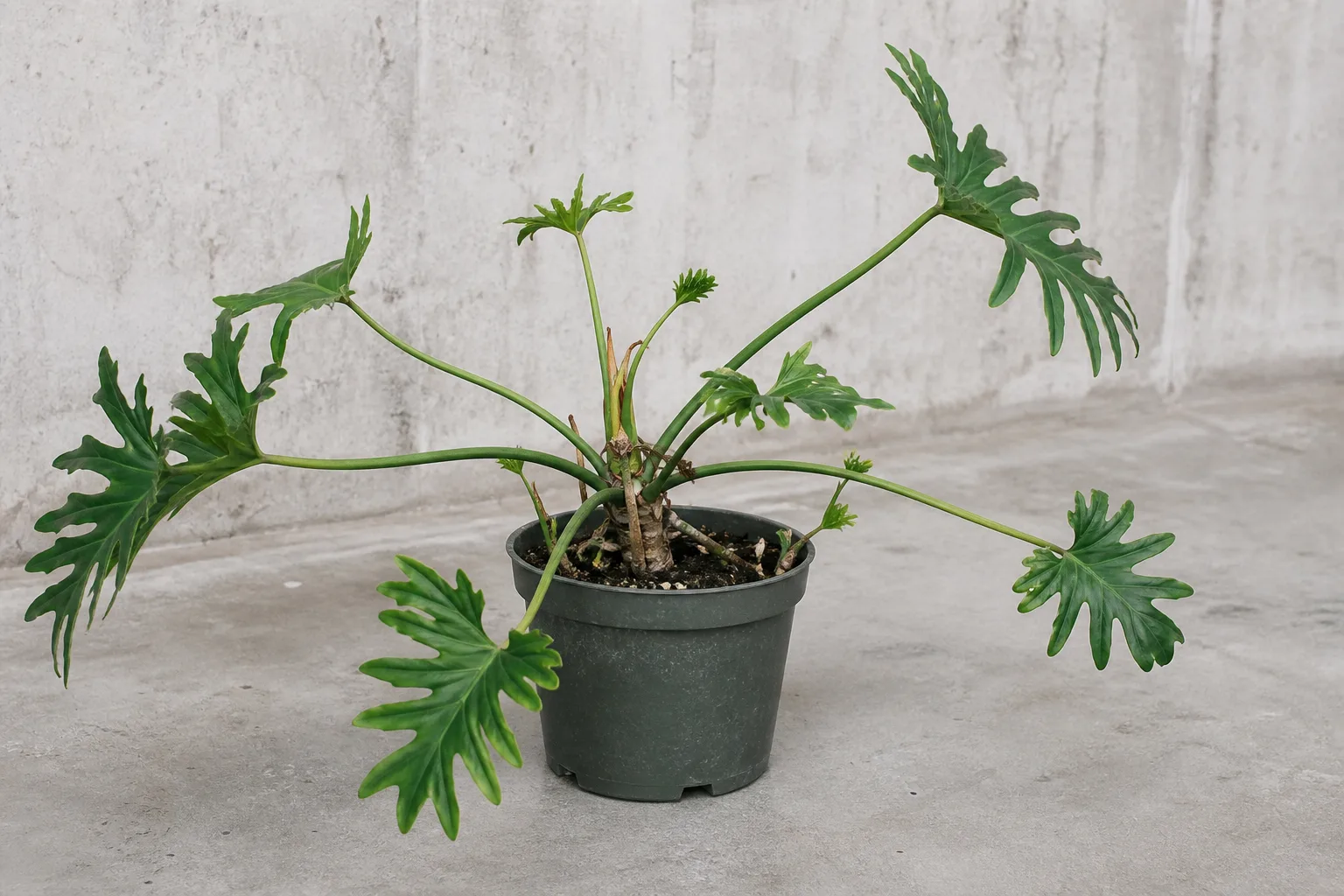
Slow Growth on Philodendron Selloum: Causes, Checks & Fixes
This guide covers slow growth on Philodendron Selloum. See also the general Slow Growth guide, watering, and light pages for this plant.
Slow Growth on Philodendron Selloum: Causes, Checks & Fixes
Quick answer
Slow growth on Philodendron Selloum (Thaumatophyllum bipinnatifidum) is not always a crisis. This large self-heading tree philodendron naturally slows in cool, short-day months-Missouri Botanical Garden notes indoor plants prefer temperatures above 60°F in winter and above 70°F in summer for active growth. A healthy floor specimen in warm bright conditions should still unfurl new deeply lobed leaves through spring and summer, even though indoor plants stay much smaller than the 15-foot outdoor mature size.
Concern starts when no meaningful new foliage appears through an entire warm growing season, or when every new lobe arrives smaller, paler, and less deeply cut than older leaves. On selloum that usually traces to insufficient light reaching the crown, root crowding in tired mix, chronic wet soil damaging roots, cool room temperatures, or hidden pests-not a missing moss pole.
First step: confirm whether the plant should be growing right now. If it is winter or the room stays cool and dim, pause is expected. If it is warm active season with no new lobes for eight or more weeks, move the plant-or supplement light-so bright indirect illumination reaches the crown, and verify the top 5 cm of mix dries before the next drink.
Scope on this page: Slow growth means the crown produces few or no new lobes while existing leaves stay mostly firm. If stems stretch toward windows with long gaps between leaves, see leggy growth. If leaves yellow while soil stays wet, see root rot before assuming simple sluggishness. If the main issue is placement in deep shade, see not enough light.
What slow growth looks like on Philodendron Selloum
Healthy selloum holds a bold floor-specimen silhouette-thick stem, long petioles, and glossy deeply lobed leaves rising from a central crown. Slow-but-healthy selloum still produces occasional new lobes in warm months; old leaves stay firm and green.
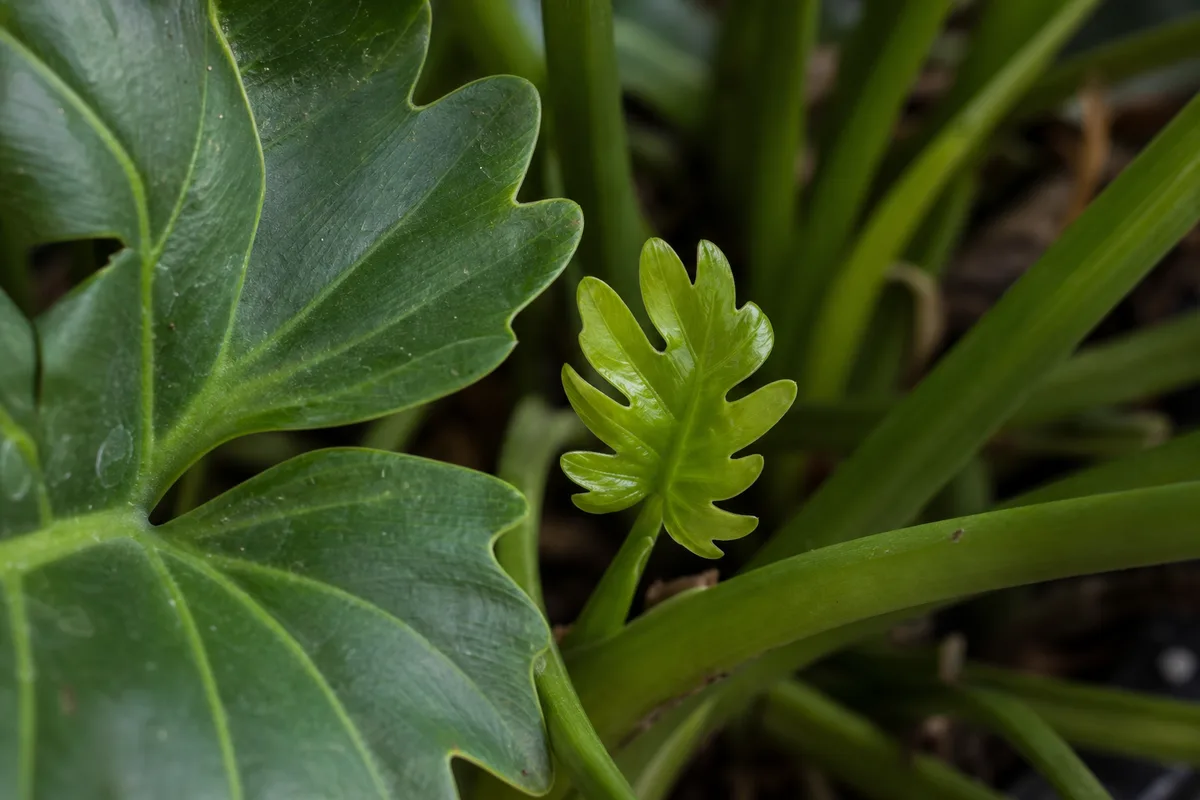
Slow Growth symptoms on Philodendron Selloum - compare with healthy tissue on the same plant.
Problematic slow growth looks different on this large shrub:
- No new leaf unfurling for two or more months during spring or summer despite otherwise stable care
- Smaller new lobes - Latest leaves are shorter or less deeply cut than older baseline leaves
- Fewer lobes per leaf - NC State Extension notes low light and over-watering cause smaller leaves with fewer or no lobes
- Pale or thin petioles on new growth while older crown leaves stay dark green
- Crown stagnation - The center produces no coiled spear; the plant looks “frozen” while neighboring houseplants grow
- Static pot weight - Mix stays damp 10–14 days because low light or root stress reduces water use by the large leaf mass
- Roots visible at drainage holes or circling tightly when you slide the plant partly from its pot
Selloum does not climb. A moss pole will not jump-start a stalled crown. Judge slow growth by new lobe frequency and lobe quality, not by stem length or vining habit.
Normal slow periods you should not panic over
Winter rest is normal indoors. Shorter days and rooms below about 18°C (65°F) slow metabolism on tropical aroids. Selloum may produce little or no new foliage from late fall through early spring without being sick-existing lobes stay firm.
Recent repotting, relocation, or pest treatment can also pause new leaves for two to four weeks in spring. That is normal if the stem stays firm and mix is not soggy.
Why Philodendron Selloum gets slow growth
Natural vigor vs. indoor constraints (not always a problem)
NC State Extension lists tree philodendron growth rate as medium-this is a vigorous shrub that can reach 4–10 feet tall and 6–10 feet wide indoors over time, not a tabletop plant. Even healthy selloum grows on a measured rhythm: a new deeply lobed leaf every few weeks in warm bright conditions, not weekly like heartleaf philodendron.
That vigor also means the plant has a floor plan. Upper lobes intercept window light and shade the crown below, so a specimen that survived for years in a dim corner can look full while producing no new tissue.
Insufficient light (most common fixable cause)
NC State Extension states tree philodendron prefers high light and tolerates low light only at the cost of smaller, simpler leaves. When photons are scarce at the crown, selloum prioritizes maintaining old leaf mass over new lobes.
Low light also slows transpiration from huge leaves, so the pot stays wet longer-setting up secondary root stress if watering continues on a bright-room schedule. University of Maryland Extension describes how insufficient light limits photosynthesis and growth.
On a large floor specimen, the generic “can you read by the plant?” test fails because the pot sits far from the window while the crown rises into dim air. Use the hand-shadow test at canopy height instead (see confirmation section).
Root-bound pots and tired mix
Selloum roots aggressively. A pot-bound root ball with broken-down peat limits uptake even when you water correctly. Growth pauses until roots can expand into fresh airy mix-usually in spring. Circling roots at drainage holes on a plant that has not been repotted in two or more years strongly fit this pattern.
Large specimens need one size up, not a dramatic jump-a pot only 2–5 cm (1–2 inches) wider reduces the risk of wet, stale soil around a small root zone.
Root rot and chronic wet soil
Root rot can occur in overly damp soil on tree philodendron according to NC State Extension. Even before full rot, stressed roots take up water and nutrients poorly, which shows as stalled growth and pale small lobes-not always obvious yellowing at first.
Winter overwatering is a common selloum-specific trigger: growth slows while the watering schedule stays on summer frequency, and the large pot stays saturated.
Winter rest and cool temperatures
Missouri Botanical Garden recommends bringing potted plants indoors when temperatures drop below 60°F and keeping indoor winter temperatures above 60°F. Consistent chill below about 18°C (65°F), cold window glass touching petioles, or AC blasts slow cell division without killing the plant outright.
Underfeeding in depleted mix
Light balanced fertilizer during active growth supports larger lobes-not required in fresh mix the first year. Heavy feeding on a stalled, root-stressed plant pushes soft tissue the crown cannot support.
Hidden pests draining vigor
Low-level spider mites, mealybugs, or scale sap vigor before obvious damage stacks up. Slow growth with stippling, stickiness, or webbing on leaf undersides needs inspection-not more fertilizer. NC State Extension lists aphids, mealybugs, scales, and spider mites as occasional problems on this species.
How to confirm the cause
Work through these checks before repotting, feeding, or installing a moss pole:
- Season check - Is it late fall or winter, or is the room below 18°C (65°F) most days? If yes, slow growth may be dormancy; note the date and recheck in spring.
- Crown light test - Hold your hand at canopy height where new leaves emerge. A soft shadow with clear edges suggests usable indirect light; faint or no shadow means too dim for a large selloum crown.
- New lobe pattern - Are the last two or three leaves smaller with fewer lobes? That fits light stress better than nutrient deficiency alone.
- Soil dry-down speed - If the top 5 cm stays wet 10+ days, pair any watering change with brighter placement or root inspection.
- Pot weight and smell - Heavy damp pot with no new growth raises wet-root suspicion. Sour odor means unpot before feeding.
- Root peek - Slide the plant partly out. Dense white circling roots with crumbling mix suggest crowding; brown mushy roots suggest rot-see root rot.
- Pest scan - Check leaf undersides, stem joints, and the crown center for mites, scale, or mealybugs.
If selloum pushes a new deeply lobed leaf every four to eight weeks in warm months and older leaves look stable, growth is healthy slow-not a problem to force.
First fix for Philodendron Selloum
If it is active growing season and the crown has produced no meaningful new lobes for eight or more weeks, increase light reaching the crown-move the plant closer to a bright east- or west-facing window, shift it so upper lobes do not block the crown from the glass, or add a full-spectrum grow lamp 60–90 cm (2–3 feet) above the crown for 10–12 hours daily in dark rooms.
Good placements include several feet back from a south- or west-facing window with sheer curtain filter, or an east-facing window with morning sun. Missouri Botanical Garden recommends a sunny window slightly filtered by a thin curtain for indoor tree philodendron-not deep shade and not hot direct midday sun on foliage.
If the plant came from a very dim spot, increase light over 7–10 days to avoid scorching large leaves. Rotate the pot a quarter turn weekly so the crown receives even exposure-selloum stems lean toward light over time.
Do not repot, fertilize, or install a moss pole on day one. Photons and stable root moisture come first; those other steps only help after light and watering match the plant’s needs. For large heavy specimens, plan moves with a dolly or helper so you do not damage petioles.
Step-by-step recovery by cause
After the first light check:
Light-limited stall (most common)
- Improve crown illumination as described above.
- Adjust watering to match new light - Brighter rooms dry the pot faster; dim rooms need less frequent drinks. Always test the top 5 cm, not a calendar alone. See watering guide.
- Trim or tie back upper lobes only if they physically block the crown from window light-do not remove healthy leaves unnecessarily.
- Feed lightly after growth resumes - When the next lobe shows better size and lobing, apply diluted balanced fertilizer at half strength monthly during active growth. Hold feed in winter or while the plant is stressed. See fertilizer guide.
Root-bound stall
- Wait for spring warmth unless rot forces emergency action-repotting a large selloum in winter adds stress when growth is already paused.
- Water the day before to reduce root breakage.
- Slide the plant out and tease circling roots gently.
- Repot one size up into chunky aroid mix with perlite and bark; confirm drainage holes. See repotting guide.
- Resume normal watering only after the top 5 cm dries-expect two to four weeks before the next new lobe.
Wet-root stall (rot suspicion)
- Unpot immediately if soil smells sour or roots feel mushy.
- Trim all brown soft tissue; keep firm pale roots.
- Repot into fresh airy mix in the same or slightly smaller pot if root mass was reduced.
- Do not fertilize until firm new growth appears-full rot recovery is covered on root rot.
Pest-related stall
- Isolate the plant from others.
- Rinse leaf undersides; treat visible mites, mealybugs, or scale before feeding.
- Return to cultural fixes once pest pressure drops.
Recovery timeline
Expect the next one or two lobes to show improved size and lobing within four to eight weeks after light and watering align-an editorial typical range, faster in warm bright summer rooms, slower in late winter even with a grow lamp.
Old leaves do not enlarge retroactively. Small or shallowly lobed leaves already unfurled stay that way; judge success by new growth quality, not old tissue changing.
Worsening signs: continued absence of new lobes after six to eight weeks in corrected light, yellowing stack on lower leaves with persistently wet soil, soft stem at the base, or every new lobe smaller than the last despite bright placement. Those patterns need root inspection or pest ID-not more fertilizer.
Lookalike symptoms
| Pattern | Key signs | First action |
|---|---|---|
| Slow growth (this page) | Firm old lobes, no new crown leaves for months in warm season | Improve crown light; check roots and watering |
| Winter rest | No new lobes in cool dim winter; existing leaves firm | Wait for spring warmth; reduce watering frequency |
| Leggy growth | Long petioles, plant leans toward window; some new leaves | Same light fix, often earlier in stress cycle - see leggy growth |
| Not enough light | Dark green smaller leaves, fewer lobes, no total stall yet | Brighter placement - see not enough light |
| Root rot | Slow growth plus limp yellow leaves, sour wet pot, mushy roots | Unpot and trim rot before expecting growth - see root rot |
| Post-repot pause | Two to four weeks without new foliage after spring repot | Normal if stem firm and mix not soggy |
Mistakes to avoid
Do not expect heartleaf-like speed from a large self-heading selloum-measured lobe production is species-normal.
Do not force growth with heavy fertilizer in dim rooms or on wet roots; nitrogen pushes soft tissue the crown cannot support.
Do not repot into a much larger pot hoping for a growth spurt-extra wet soil around a small root ball stalls roots further on a plant this size.
Do not add a moss pole-selloum does not vine; support does not replace light.
Do not repot a heavy floor specimen in winter unless rot is an emergency-cold slow season plus root disturbance often extends the stall by months.
Do not keep a summer watering schedule in winter while light and temperature drop-wet cold mix is a common hidden stall on large pots.
Do not mistake one slow lobe as failure-selloum’s natural rhythm is measured in weeks, not days.
Philodendron Selloum care cross-check
Match these baseline targets when troubleshooting slow growth:
- Light: Bright indirect light reaching the crown, not just the pot rim - see light guide
- Water: Top 5 cm dry before watering; slower in winter, faster in bright summer rooms - see watering guide
- Mix: Well-draining aroid blend with perlite and bark; never dense soggy peat alone - see soil guide
- Temperature: Above 18°C (65°F) for active indoor growth; avoid cold glass and AC blasts
- Feed: Light balanced fertilizer only during active growth, not on a stalled stressed plant
- Space: Plan for 4–10 foot indoor spread over time - ceiling height and floor footprint matter before upsizing pots
How to prevent slow growth next time
Place selloum where light reaches the crown, not just where the pot photographs well. Rotate weekly. Supplement winter windows with a grow lamp before growth stalls, not after months without a new lobe.
Repot every one to two years or when roots circle heavily-before mix collapses and watering becomes unpredictable. Spring timing is safest for large specimens.
Track new lobe count and lobing quality monthly during warm seasons instead of comparing to fast vining philodendrons.
Keep pets away-the ASPCA lists lacy tree philodendron as toxic to cats and dogs due to insoluble calcium oxalate crystals. If ingestion is suspected, call your veterinarian or ASPCA Animal Poison Control at (888) 426-4435 (a consultation fee may apply).
When to worry
Slow selloum alone is rarely an emergency. Escalate when growth stops alongside wet soil and yellowing leaves, the stem base softens, or pests spread despite isolation.
If six to eight weeks of corrected bright indirect light at the crown still produce only pale tiny lobes, verify grow-lamp intensity or try a closer bright indirect position. Chronic decline on a root-bound plant that cannot be safely repotted indoors may require pruning back or division-see overview and repotting guide.
Related Philodendron Selloum guides
- Overview - species identity, size planning, and baseline care
- Light - placement for a large crown
- Watering - dry-down checks for heavy pots
- Soil - chunky aroid mix for vigor
- Repotting - spring timing for floor specimens
- Fertilizer - feed only after growth resumes
- Problem pages: leggy growth, not enough light, root rot, overwatering, yellow leaves
Conclusion
Philodendron Selloum grows on a measured shrub rhythm-a self-heading crown with massive lobed leaves, not a racing vine. When warm-season growth truly stalls, the fix is usually cultural: enough filtered light at the crown, dry-down watering, and root space in fresh mix-not a moss pole or heavy feed. Confirm season first, improve crown light second, then adjust water, repot, and feed in that order. The next deeply lobed leaf tells you whether the bottleneck is cleared.